

Nineteen Years of Ophthalmic Innovation: From Vision to Foresight

Super Vision
Ophthalmic Disease Treatment Product Developer
In the movie *The Legend of 1900*, the friendship between the pianist 1900 and the trumpet player Max is deeply moving. Many people are also impressed by Max's acting: his eyeballs noticeably sway, seemingly captivated by the beautiful melody of the piano, fully expressing his inner emotions.
This eye tremor was not due to the brilliant acting of Plutarco Taylor Vince, who plays Max, but rather because he suffers from a specific type of eye condition——Nystagmus。
This disease causes involuntary eye tremors in patients, and also leads to dizziness, tinnitus, and decreased vision; severe cases may even result in blindness.It is reported that there are approximately 7 million patients with nystagmus globally, with 100,000 new cases each year.But regrettably, there is currently no effective treatment for this disease, which is caused by congenital genetic defects and poor early development of eye movement.
In order to break this clinical deadlock,Professor Wang Lejin, Director of the Department of Ophthalmology at Peking University People's HospitalAlways Committed to Finding a Cure for Nystagmus. Over 19 years have passed, and gray hair has appeared at the temples of Professor Wang Lejin, but he has not abandoned his original aspiration to cure nystagmus. The stars shine on those who travel tirelessly; under Professor Wang Lejin's persistence, curing nystagmus has now become a reality. Moreover, with the help of "fellow travelers," Professor Wang Lejin has also founded his own company—Super Vision Technology, Inc.Super Vision, completed the transformation from a clinical doctor to an entrepreneur.
From One to Three, Behind It Lies Nineteen Years of Persistence
"Doctor! I seem to see more clearly than before, and I'm not dizzy anymore!"
On February 28, 2023, Super Vision Technology, Inc. developed"Implantable Ocular Muscle Neurostimulator"The implant was placed in the patient's eye for the first time, and immediately the patient reported relief from nystagmus, with apparent improvement in vision. After a series of monitoring and follow-ups, it was found that the patient’s vision had improved from 0.6 to 1.2, and all indicators were improving. This implantable ocular muscle neurostimulator indeed played a therapeutic role in treating nystagmus—This marks the success of the first clinical trial of the implantable ocular muscle neurostimulator.
This result made Professor Wang Lejin extraordinarily excited, and he couldn't help but recall nineteen years ago when the implantable ocular muscle neurostimulator was still an immature idea.
At that time, Professor Wang Lejin had been focusing on nystagmus for many years. He found that clinically, neither drug treatments nor surgical methods could fundamentally relieve nystagmus; they only addressed the symptoms, not the root cause, and failed to completely cure the condition. As an ophthalmologist, this was deeply disheartening for Professor Wang Lejin—patients spent vast amounts of time and money, endured significant discomfort during treatment, yet still faced the risk of blindness due to nystagmus.
After years of exploration, Professor Wang Lejin eventually came up with the idea of solving eye tremor problems through nerve stimulation. However, as a clinician, he was not skilled in the development of devices and instruments, so this idea remained just an idea.
By chance, Professor Wang Lejin metProfessor Wang Wensi from Beijing University of TechnologyProfessor Wang Wensi was very interested in Professor Wang Lejin's ideas. With the technical support from Professor Wang Wensi, Professor Wang Lejin's ideas gradually "came to life on paper," bringing them one step closer to entering clinical trials.
Relying solely on the individual efforts of a clinician to push the project into clinical application still seems somewhat "out of reach." However, if a company could be established to pool collective wisdom and efforts, things might be different. Just as this "professor duo" was preparing to set up a company, the addition of Wang Tianfang accelerated the birth of Super Vision.
After graduating from the School of Economics and Management at Tsinghua University, Wang Tianfang participated in and led the investment of several medical device, pharmaceutical, and medical service industry projects, gaining extensive experience in the incubation of startup projects and post-investment management. When he saw "Super Vision," he believed it would undoubtedly be a project with unlimited potential. With that, the three of them quickly reached an agreement and founded Super Vision Technology, Inc.
Now, the Super Vision team has expanded from the original three members to more than fifty. The increasing influx of innovative talent is turning the treatment of nystagmus into a reality. Professor Wang Lejin often jokes about himself:"I have always believed in perseverance and never giving up. As long as we move forward, we will surely meet like-minded people. It seems now that my persistence was not wrong."
The World's First Cured Case of Nystagmus
"Implantable Ocular Muscle Neurostimulator"As the flagship product of Super Vision, it has successfully achieved the world's first clinical implant trial for patients with nystagmus. This success originated from a clever inspiration by Professor Lejin Wang.
"Innovative Use of Neuroelectrical Modulation in the 'Implantable Ocular Muscle Neurostimulator' for Therapeutic Effects." This point, Professor Wang LejinCardiac PacemakerThe inspiration was drawn from this. Professor Wang Lejin conducted in-depth research on this idea and compared the effects of electrical stimulation on patients' eye muscles, confirming that electrical stimulation had a significant therapeutic effect on the patients' symptoms.
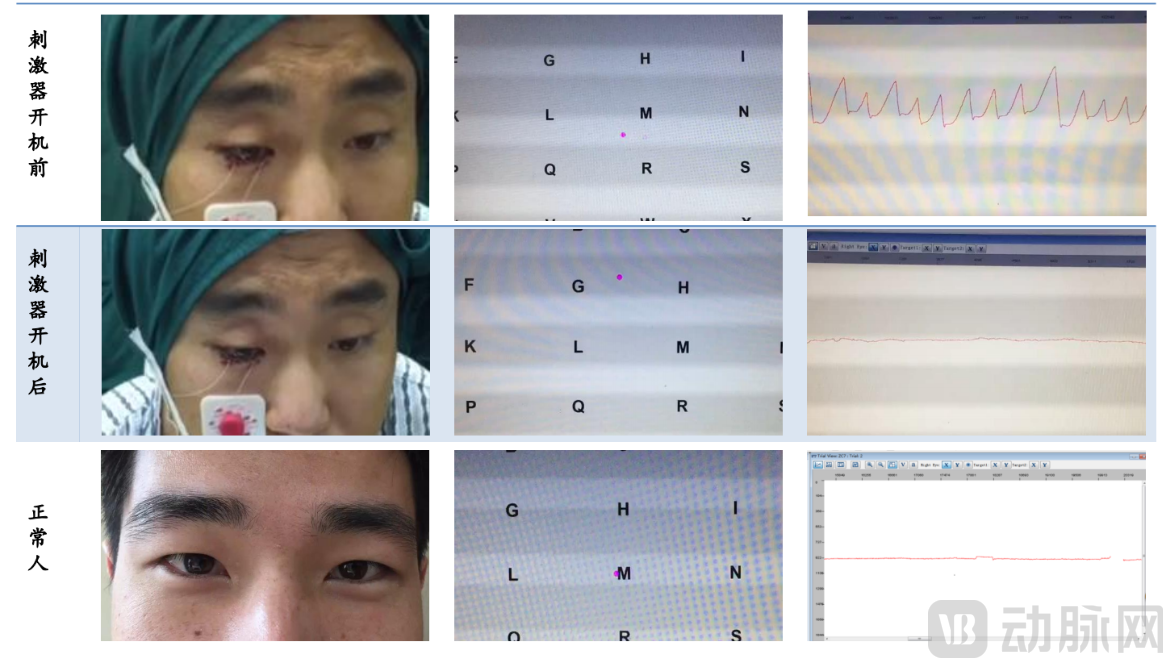
The success of this technology not only brings hope of recovery to patients with nystagmus but also opens up possibilities for "neuro-modulation therapy" to become a treatment for other challenging eye conditions. In the future, some eye diseases caused by neurological abnormalities may potentially be treated through electrical stimulation, repairing abnormal excitation points in the brain or defects on cell membranes, thus achieving a curative effect. This also implies...Neuromodulation technology has thus opened a breakthrough.
Not only that, but this will also set a good precedent for domestically produced technology to make its way onto the global stage. Although China's medical standards and research capabilities have seen substantial growth in recent years, most new technologies are still acquired through..."Introduction-Digestion-Absorption"The approach was carried out through a specific path. The "Implantable Ocular Muscle Neurostimulator" is a completely self-developed and designed technical therapy, and its success is expected to break the international technology monopoly, bringing Chinese technology to the world.
Not Just Curing Eye Tremors
"The name 'Super Vision' originates from Professor Leijin Wang's expectations for the future: 'Super Vision represents super eyes, and it also means beyond vision. I have always believed that opportunities are for those who are prepared. Therefore, we must advance our research ahead of time. Only in this way, when technology becomes a reality, our project will naturally become a reality.'"
Based on this original intention, in addition to the "Implantable Ocular Muscle Neurostimulator," Super Vision is also innovating in other fields, such as glaucoma treatment."Implantable Glaucoma Micro-Drainage Pump"
Professor Wang Lejin told VCBeat: "Currently, there are already many drugs and surgical methods for the clinical treatment of glaucoma, but a complete cure remains a challenge. Moreover, different doctors have different approaches to controlling intraocular pressure, so achieving a full cure is still difficult."
Therefore, the device that Super Vision is currently developing, starting from AI, treating glaucoma through microfluidic methods. According to current research results, this device can reduce medical costs, and the surgical operation is simple, fast, with a high long-term success rate and few complications. Patients' vision is expected to remain stable after use.
In addition, Super Vision has also laid out product pipelines for various eye diseases, including myopia, cataracts, and strabismus, which are currently under research and development and will soon be launched. Regarding forward-looking research, Professor Lejin Wang believes that it is both a responsibility and a future opportunity: "Only by embracing innovation and staying ahead of the times can we truly seize the opportunities presented by the era."
Postscript
It is undeniable that the potential of Super Vision Technology, Inc. did not come out of nowhere. In less than two years since its establishment, Super Vision has gained recognition from several well-known investment institutions.Cumulative financing exceeds 100 million yuan, and its own GMP production base has been established.
The completion of the GMP production base means that Super Vision has achieved full independence from research and development to production, and such original innovation capability is indeed rare and valuable.
We deeply understand that imitation can bring profits more quickly and ensure a higher success rate. However, what is gained through imitation will never truly belong to us. We need more individuals like Professor Wang Lejin.Only by adhering to original innovation and achieving a breakthrough "from 0 to 1" can we truly stand firm in the global arena of scientific and technological innovation.
Today, Professor Wang Lejin is not only the chairman of Super Vision Technology, Inc., but also a clinical doctor. For clinical doctors, solving clinical pain points and alleviating patients' suffering is the most important. Currently, Super Vision's core product, the "Implantable Ocular Muscle Neurostimulator," has entered the clinical registration stage and is expected to reach the market in the second half of 2024.
Looking back at the more than 20 years of Super Vision Technology from an idea, to producing a prototype and successfully completing the first clinical trial, in addition to scientific progress, the most important factor has been unwavering determination. As Professor Wang Lejin said: "Starting from scratch, from an idea to a research project, and then transforming it into a product is indeed a long process. But I believe that with innovative ideas and the strength of the team, success is certain with just a bit of perseverance."