

Soaring Revenues Signal a Breakthrough for Domestic Electrophysiology Companies

APT Medical
Cardiac Electrophysiology and Interventional Medical Device R&D Manufacturer

MicroPort EP
R&D Producer of Cardiac Electrophysiology Interventional Medical Devices

Jinjiang Electronic
Developer of electrophysiology products
In China's electrophysiology market, multinational companies represented by Johnson & Johnson occupy nearly 90% of the market share, holding significant influence, while the progress of domestic substitution has been slow.
As the electrophysiology centralized procurement was implemented in December 2022, the market underwent changes. Recently, MicroPort EP and APT Medical, two listed companies, released their annual reports, showing revenue growth of 36.99% and 46.7%, respectively. The stronghold of multinational giants seems to show signs of weakening. As a barometer of corporate performance, financial reports allow us to see the current state of domestic electrophysiology companies represented by MicroPort EP and APT Medical, as well as glimpse the future of China's electrophysiology market.
Good data speaks for itself.
As the first medical device company to be listed on the Sci-Tech Innovation Board under the "Fifth Set of Standards," Shanghai MicroPort EP MedTech Co., Ltd. (hereinafter referred to as "MicroPort EP") released its first annual report post-listing. The company's total revenue for the year was 260 million RMB, representing a year-on-year increase of 36.99%; net profit reached 2.97 million RMB, marking the first time the company has turned a profit.
According to Choice data, MicroPort EP is the only one among the eight companies listed on the STAR Market under the fifth set of standards in 2022 that achieved profitability in its first year of listing.
From the perspective of revenue regions, MicroPort EP followed the "MicroPort-style" approach of walking on two legs both domestically and internationally, achieving significant breakthroughs in both markets. Revenue in China reached 214 million yuan, representing a year-on-year increase of 29.88%, while international revenue amounted to 43.2 million yuan, marking a year-on-year growth of 77.04%. In terms of main business income, the proportion of international business increased from 12.88% in 2021 to 16.77% in 2022.
Another Chinese electrophysiology company, APT Medical, disclosed its annual report on April 7, 2023. The company achieved a total operating revenue of 1.216 billion yuan in 2022, representing a year-on-year increase of 46.7%; net profit attributable to shareholders reached 358 million yuan, marking a year-on-year growth of 72.2%. Notably, APT Medical has maintained high-speed growth of over 33% for four consecutive years.
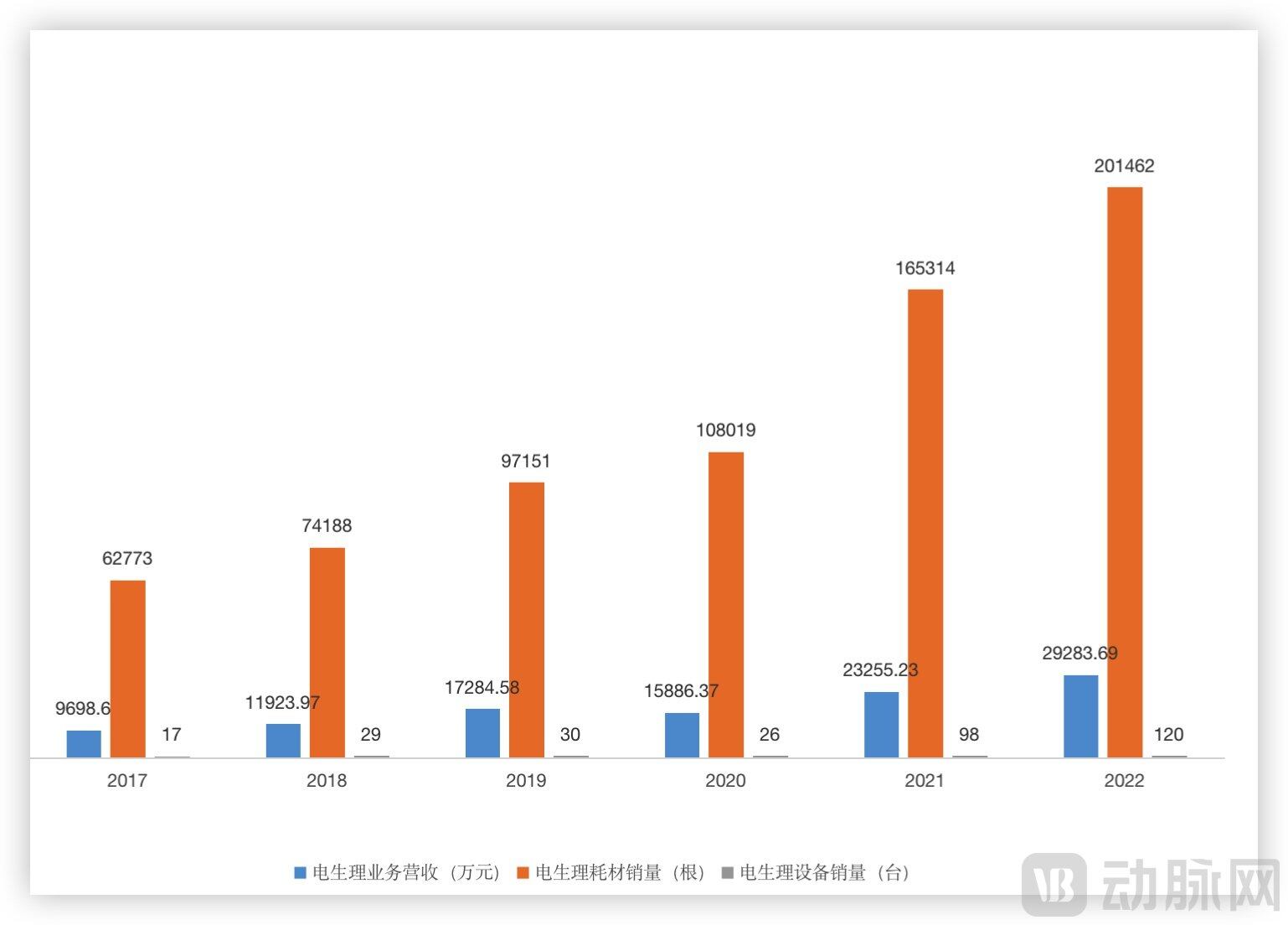
APT Medical's Electrophysiology Business Revenue Data in Recent Years, Data Source: Corporate Announcements
Breaking it down, APT Medical's electrophysiology segment achieved revenue of 293 million yuan, representing a year-on-year increase of 26%. Shanghai Hongtong, the holding subsidiary specializing in electrophysiology equipment, generated revenue of 39.453 million yuan, marking a year-on-year growth of 52%. The overall gross profit margin for the electrophysiology segment reached 77.98%.
According to data from Frost & Sullivan's "China Cardiac Electrophysiology Device Market Research Report," in terms of sales revenue, the top three players in China's electrophysiology device market in 2020 were all foreign manufacturers, with Johnson & Johnson occupying the leading market position at approximately 58.8% market share, ranking first. APT Medical ranked as the leader among Chinese manufacturers, securing the fourth position overall with a market share of about 3.6%, while MicroPort EP held a 2.7% share, ranking fifth.
In terms of revenue, MicroPort EP still lags slightly behind APT Medical, but it is gradually closing the gap. The competition between the two will also drive the healthy development of electrophysiology products made in China.
The main procedures of electrophysiological surgery include electrophysiological examination, mapping, ablation therapy, and follow-up checks. Electrophysiological surgical instruments cover these procedures and are generally divided into two major categories: equipment and consumables.
The equipment mainly includes electrophysiological mapping systems, radiofrequency ablation instruments, perfusion pumps, cryoablation systems, and more. The products have extremely demanding requirements for system performance in terms of real-time operation, precision, signal extraction capability, compatibility, and more. Consumables mainly include mapping catheters, ablation catheters, needle sheath products, and more. Electrophysiology devices present high technical barriers. International giants, represented by Johnson & Johnson, meet clinical needs with a complete solution of "system + equipment + consumables" and continuously iterate and update, thereby building their own moat.
The reason why this moat is not so easy to cross lies in the core fact that the larger-scale 3D atrial fibrillation ablation market has long been dominated by multinational corporations.
From a technical perspective, two-dimensional (2D) systems use X-ray positioning, while three-dimensional (3D) systems adopt electromagnetic technology to achieve precise localization. This significantly reduces operation time, decreases radiation dosage, and enhances the success rate and safety of procedures. Therefore, 3D systems have clear technical advantages over 2D systems in cardiac electrophysiology surgeries. The CARTO3 system from Johnson & Johnson and the EnSitePRECISION system from Abbott are leading examples.
From a market perspective, the trend is similar. According to data from Frost & Sullivan's "Research Report on China's Cardiac Electrophysiology Device Market," the number of domestic three-dimensional cardiac electrophysiology surgeries increased from 71,000 cases in 2015 to approximately 164,000 cases in 2020. It is projected that by 2024, the volume of three-dimensional cardiac electrophysiology surgeries will reach 430,000 cases, with a compound annual growth rate of 27.3%. Notably, behind these figures lies another key point: only companies with three-dimensional system products are qualified to capture the consumables market.
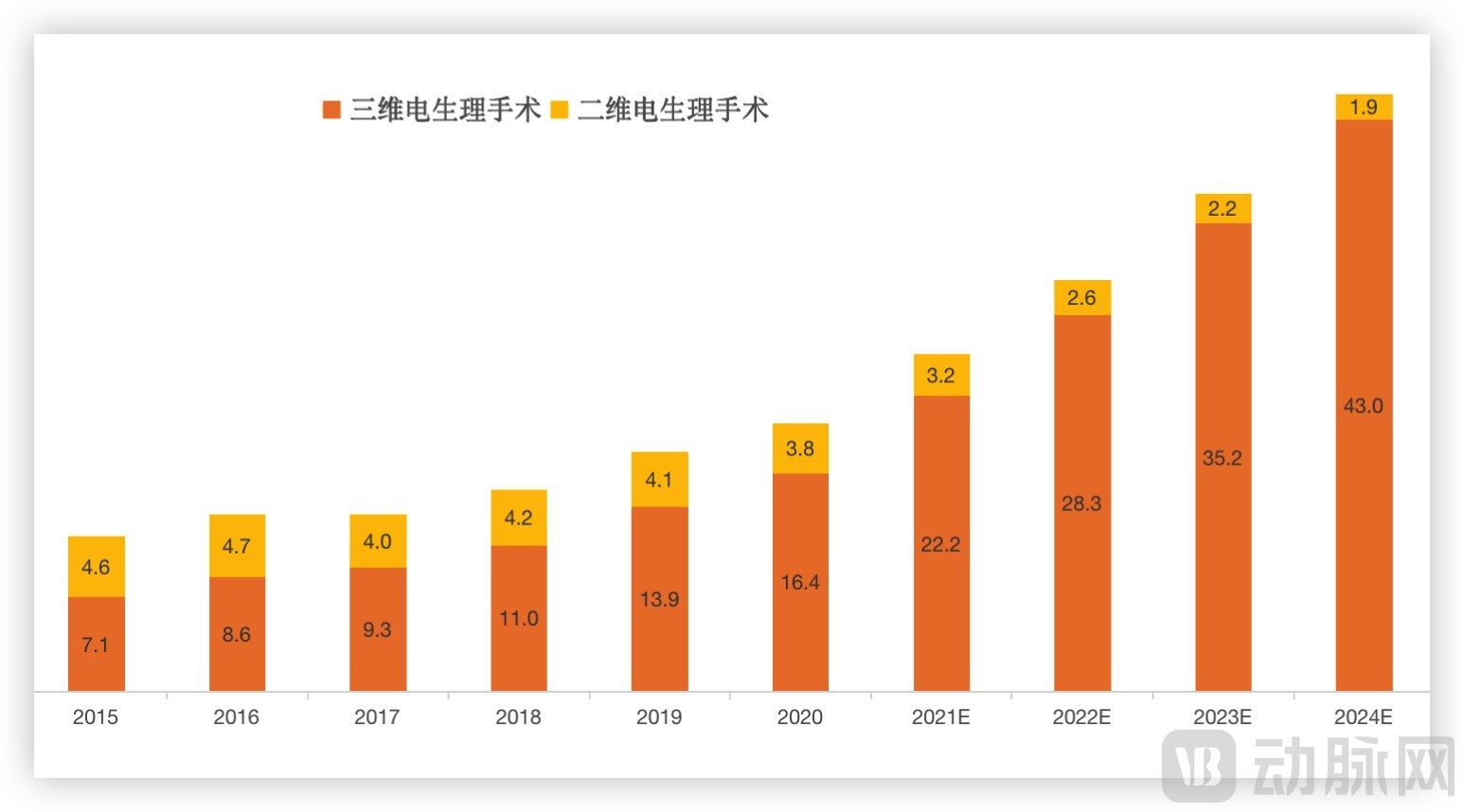
Comparison of 3D and 2D electrophysiology procedure volumes over the years, data sourced from "China Cardiac Electrophysiology Device Market Research Report"
Chinese manufacturers represented by MicroPort EP and APT Medical must find breakthroughs in 3D products if they want to capture market share from international giants. Although their current 3D products may still lag behind similar products from international brands, only by overcoming the phase of going from nothing to something can they accelerate their efforts to catch up.
Thanks to a comprehensive R&D layout, MicroPort EP is the first China-based manufacturer capable of providing a complete solution for three-dimensional cardiac electrophysiology equipment and consumables. The third-generation product of the Columbus® 3D Cardiac Electrophysiology Mapping System independently developed by MicroPort EP was launched in 2020, becoming the first domestically produced magnetic and electrical dual-positioning mapping system approved for marketing. It also took the lead in completing the development of the core module for rapid 3D cardiac chamber modeling, achieving domestically produced imaging-based modeling.
It is worth mentioning that MicroPort EP has made up for the shortcomings of core modules such as high-density mapping and pressure sensing, which is expected to further catch up with international brands. The high-density mapping module enables multi-electrode cardiac chamber modeling and high-precision signal mapping, further shortening the mapping time while synchronously obtaining more detailed electrical information with higher accuracy in ECG signal recognition. The pressure sensing module can precisely indicate the force value and direction of catheter-tissue contact, provide ablation energy guidance, and achieve precise treatment outcomes.
These two core modules received NMPA registration approval in October and December 2022, respectively, filling the gap in domestically produced products of related categories. Meanwhile, the cryoablation system completed the submission of registration documents in China in December 2022 and is expected to be approved in 2023.
In 2022, the cumulative number of surgeries using MicroPort EP's three-dimensional cardiac electrophysiology mapping system exceeded 30,000 cases, covering more than 700 hospitals in China. A total of 60 academic activities were conducted around the functions of the three-dimensional mapping system, radiofrequency ablation products, and cryoablation products, reaching over 500 doctors from approximately 200 hospitals across China.
At the same time, MicroPort EP is advancing the upgrade of its three-dimensional mapping system. The fourth generation Columbus® three-dimensional cardiac electrophysiology mapping system, while optimizing its structural design, can achieve newly developed integrated automatic marking of ablation points and visually present ablation effects. It also enhances the stability of pressure monitoring algorithms and force direction display. A domestic product registration application was submitted in December 2022.
Although APT Medical's electrophysiology devices have gradually transitioned from 2D to 3D systems, the catheters配套的导管 that accompany them have not kept pace with the equipment updates.
According to the prospectus data, in 2019, the revenue from APT Medical's electrophysiology segment was 121 million yuan for mapping catheters, accounting for 69.9%; the revenue from catheter products increased from 64 million yuan in 2017 to 121 million yuan in 2019, with a compound annual growth rate of 37.5%. The explosive growth of these products drove the expansion of APT Medical's electrophysiology business.
Before 2021, APT Medical mainly focused on two-dimensional consumables, among which the electrophysiological electrode catheter, controllable radiofrequency ablation catheter, and floating temporary pacemaker electrode catheter were all the first domestically produced products in China to obtain registration certificates in this category.
In January 2021, APT Medical's three-dimensional cardiac electrophysiology device HT Viewer obtained NMPA registration. HT Viewer is the world's first integrated three-in-one magnetic and electrical fusion three-dimensional platform, combining a three-dimensional mapping system, a 128-channel multi-recorder, and a cardiac stimulator into a single integrated platform, greatly improving work efficiency.
In the first year after its listing, APT Medical achieved the sale of 98 sets of three-dimensional electrophysiology equipment and 165,000 consumables, completing over 600 three-dimensional electrophysiology surgeries in nearly 200 hospitals. By 2022, the company sold 120 sets of electrophysiology equipment and 201,000 consumables, completing more than 3,000 three-dimensional electrophysiology surgeries across over 400 hospitals, with rapid growth in both hospital coverage and the number of surgeries. Equipment sales increased by 22.45% year-on-year, while consumable sales grew by 21.87%, maintaining a strong growth momentum.

Product Layout of Some Electrophysiology Manufacturers in China, Data from Company Websites and Announcements
However, in the field of 3D electrophysiology consumables, APT Medical's progress has been relatively slow. Apart from obtaining domestic registration for its magnetic localization cold saline irrigation radiofrequency ablation catheter, two important modules—the high-density mapping catheter and the pressure-sensing ablation catheter—are still in the clinical trial stage, with the R&D progress lagging slightly behind MicroPort EP.
High-density mapping catheters and pressure-sensing ablation catheters are essential consumables for performing 3D atrial fibrillation electrophysiology procedures. They play a crucial role in high-precision mapping, rapid modeling, and precise and safe ablation. Other catheters compatible with 3D systems are still in the research and development phase, which prevents APT Medical's products from forming a complete solution of "system + equipment + consumables," lacking comprehensive competitiveness.
In response to the rapid catch-up of MicroPort EP, APT Medical needs to intensify its research and development efforts while enhancing the forward-looking nature of its corporate strategic research.
The PFA technology with sustained temperature rise is considered the future development direction.
At the 2023 American College of Cardiology Annual Scientific Session (ACC 2023) in March, Dr. Atul Verma from the McGill University Health Centre in Montreal, Canada, presented the results of the Pulsed AF Pivotal trial, once again drawing attention to the popular PFA. The results showed that among the 300 patients included in the primary analysis cohort, pulsed field ablation successfully eliminated abnormal heart rhythms in up to two-thirds of atrial fibrillation patients, with effects lasting at least 12 months. The incidence of major safety adverse events was low (0.7%).
Although it is still a distance away from becoming the mainstream method for atrial fibrillation ablation, the future of PFA looks promising. It may stand alongside radiofrequency and cryoablation, forming a three-way balance in the field of atrial fibrillation ablation treatment.
Back in China, for many domestic companies, PFA will be an important tool for them to participate in sharing the electrophysiology market. Therefore, all parties are taking it very seriously.
APT Medical announced on February 15 that the pre-market clinical trial of its innovative product, the cardiac pulse ablation PFA system, has successfully completed the enrollment of all patients in a multi-center study in China. Meanwhile, MicroPort EP also revealed during its investor meeting that its PFA project is currently in the clinical enrollment phase.
It is worth mentioning that APT Medical's product is the world's first ablation system to integrate three key features: "pressure sensing/contact indication," "magnetic and electrical dual-positioning 3D mapping," and "pulse ablation." In clinical trials, the average intraoperative treatment time was only about 50 minutes, with an immediate pulmonary vein isolation rate of 100%. The follow-up results of the surgeries completed so far have been positive, with no serious device-related adverse events reported, further demonstrating the safety and efficacy of the PFA catheter.
Not only listed companies like APT Medical and MicroPort EP, but also a group of unlisted companies are making rapid progress in PFA development. According to incomplete statistics, around 10 domestic companies, including Denovo EP, Jinjiang Electronic, Xuanyu Medical, Maiwei Medical, Yuanshan Medical, etc., are all pushing forward with great urgency.
Johnson & Johnson, Medtronic, and Boston Scientific's PFA products have all entered the NMPA's innovative medical device "green channel." In March, Boston Scientific announced the official launch of a real-world study on the use of its PFA system in China's paroxysmal atrial fibrillation population. Considering that all three giants have laid out their cardiac electrophysiology 3D mapping systems, the synergy of product promotion in clinical applications will exert immense competitive pressure on latecomers.
The fastest progressing PFA product globally is Boston Scientific's Farapulse system, which received CE certification in 2021. The competition in China’s PFA market is intense, with the PFA products from the three giants—Johnson & Johnson, Medtronic, and Boston Scientific—all entering the NMPA’s innovative medical device “green channel.” However, in PFA technology, the integration of 3D mapping products to drive clinical applications is a core requirement. Due to weaknesses in 3D mapping technology and immature PFA technology, most domestically produced devices still lack true competitiveness.
Currently, no PFA products have been approved in China. Domestic companies hope to leverage PFA technology to overtake competitors and change the pattern of electrophysiology imports monopolizing the market, but they still need to work hard at the product level.
Cardiac electrophysiology companies profit from a business model of equipment + consumables, so the centralized procurement of high-value consumables is an unavoidable hurdle.
Although the localization rate of cardiac electrophysiology-related products is relatively low, in October last year, Fujian still led the group purchasing of electrophysiology products, which was included in the list of key recommended alliance procurement in 2022.
Overall, this round of centralized procurement was relatively moderate. In terms of product categories, the procured products basically cover all the consumables required for electrophysiological surgeries. Regarding the grouping rules, the setup of three modes—kits, single items, and accessories—is more reasonable, allowing most companies to participate.
At the same time, this centralized procurement has set an entry line, and as long as the price is reduced to a certain extent, the qualification for proposed selection can be obtained. For example, under the group procurement model, group packages with a reduction of ≥30% in the same group will obtain the qualification for proposed selection; under the single-item procurement model, a reduction of ≥50% will secure the qualification for proposed selection.
Currently, domestic brands generally lack in the categories of unusual/star-shaped diagnostic catheters and pressure-sensing therapeutic catheters. As a result, set-based solutions are mostly monopolized by imported brands, with foreign-funded enterprises that hold larger market shares becoming the main force in bulk procurement. Meanwhile, domestic companies can participate in single-unit or complementary models, and the establishment of entry criteria also provides convenient conditions for domestic brands to qualify.
This centralized procurement has granted 16 companies provisional winning qualifications, including domestic enterprises such as MicroPort EP, APT Medical, XinoPrimo, and Jinjiang Electronic. Both domestic and overseas leading companies have successfully secured bids. Thanks to the established rules, the threshold for price reductions was set relatively leniently. In the future, domestic companies aiming to quickly increase volume through centralized procurement will need to enhance their product portfolios to participate in more groups, thereby achieving product volume growth and increasing market share.
In the short term, it should be difficult for any company to break the strong position of multinational brands represented by Johnson & Johnson in the field of electrophysiology.
This status relies on the product portfolio of "mapping system + energy platform + catheter consumables" to build comprehensive competitiveness with high technical barriers, and continuously strengthens these barriers through ongoing product iteration and upgrades.
In the past two years, Chinese manufacturers such as MicroPort EP, APT Medical, and Jinjiang Electronic have successively launched their own 3D electromagnetic mapping systems based on years of market cultivation and technical accumulation. These systems enable them to build complete solutions for electrophysiological procedures, thereby capturing part of the market from multinational competitors.
The emergence of PFA has given many followers hope of catching up, prompting them to enter the market. These companies are characterized by quickly adopting PFA technology, but they generally have less accumulation in electrophysiological catheter consumables or 3D mapping systems. Without the support of 3D mapping technology, the competitiveness of their subsequent products will be significantly affected.
Data shows that the number of catheter ablation procedures for arrhythmia patients in China increased from 118,000 cases in 2015 to 212,000 cases in 2020, with a compound annual growth rate (CAGR) of 12.5%. According to Frost & Sullivan, electrophysiology procedures are expected to reach 489,000 cases by 2024, with a CAGR of 23.3%.
Driven by market demand, the potential of the electrophysiology market will continue to emerge. Facing strong competitors, domestic companies must possess sufficient research and development capabilities and technical advantages, establish a technologically unique and competitive platform, and create products that can significantly reduce the complexity of electrophysiological procedures and the cost of consumables in order to stand out in future competition.