

Lancet Publishes Phase 3 Trial Results of Pfizer’s JAK Inhibitor Ritlecitinib for Adolescent Alopecia Areata

Yale University
A Private Ivy League Research University in the United States
Pfizer
Pharmaceutical R&D Developer
Alopecia areata is an autoimmune condition characterized by patchy hair loss.ImmunityAlopecia areata, the second most common cause of hair loss globally, is only surpassed by androgenetic alopecia. Alopecia areata results from immune cells attacking healthy hair follicles, leading to partial or complete hair loss on the scalp, face, or other parts of the body.
The average age of onset for alopecia areata is between 25 and 35 years, but it can also affect the elderly, children, and adolescents, and is observed in both men and women across all ethnicities. Alopecia areata is associated with health-related issues in many patients.Quality of LifeThese patients may suffer from severe psychological disorders, including depression and anxiety.
Ritlecitinib is an orally administered Janus kinase (JAK) inhibitor developed by Pfizer. JAK inhibitors were initially used to treatRheumatoid ArthritisAnd for certain blood disorders, after more than a decade of research led by Dr. Brett King, a dermatologist at Yale University, JAK inhibitors have been approved for treating a range of refractory skin conditions, including alopecia areata.
In 2022, the United StatesFDAApproved Eli Lilly/Incyte's oral JAK inhibitor Baricitinib for the treatment of severe alopecia areata, but only in adults. Brett King was the principal investigator of the Baricitinib clinical trial and also led the clinical trial for Ritlecitinib.
On April 13, 2023, Brett King and others from Yale University School of Medicine in "The Lancet》Published a clinical trial paper titled: Efficacy and safety of ritlecitinib in adults and adolescents with alopecia areata: a randomised, double-blind, multicentre, phase 2b–3 trial.
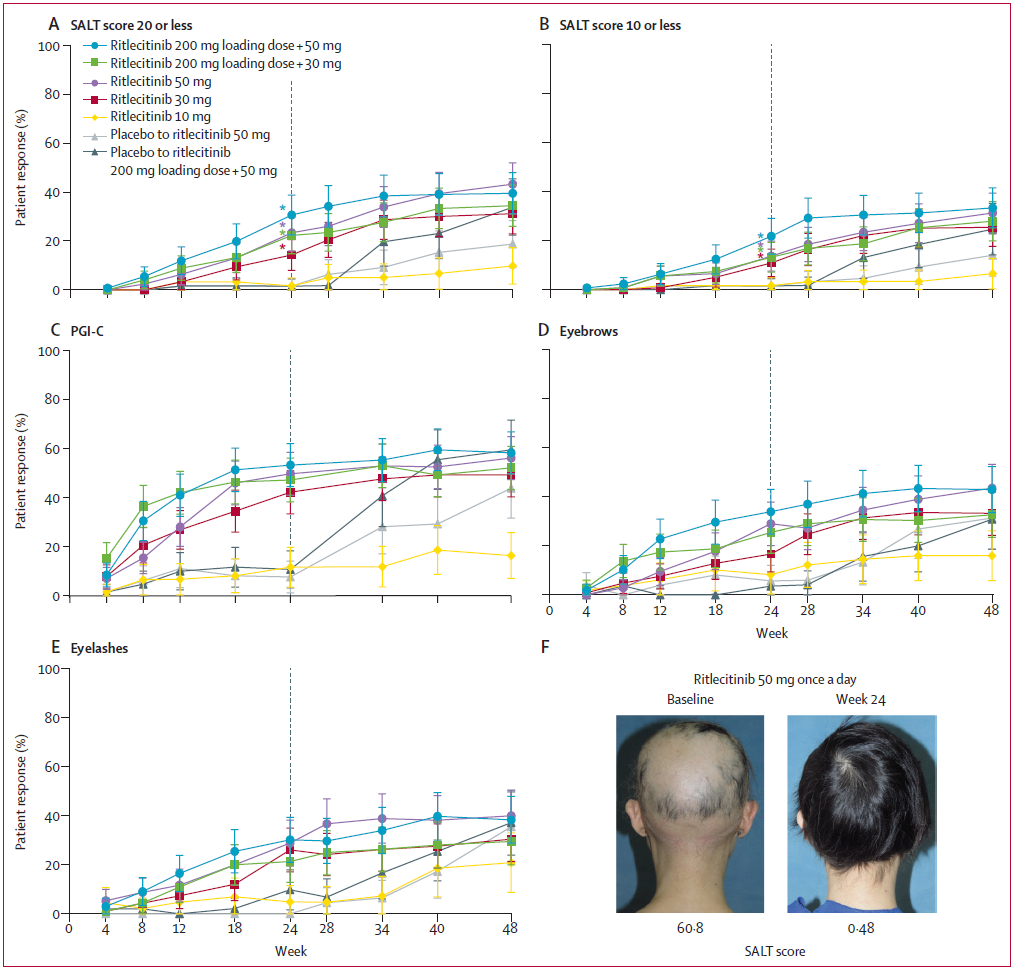
In the Phase 3 clinical trial, 718 patients with alopecia areata from 18 countries participated, including more than 100 adolescent (12-18 years old) patients. Regardless of age, all participants had more than 50% scalp hair loss.
Results Show That After 24 Weeks of Ritlecitinib Treatment, Many Patients Achieved Complete or Near-Complete Hair Regrowth. After Continuing Ritlecitinib Treatment for Another 24 Weeks, More Patients Achieved Hair Regrowth. Throughout the Study, Patients Tolerated the Drug Well. Importantly, This Treatment Outcome Was Consistent Across All Age Groups, Including Adolescent Patients.
Dr. Brett King said that alopecia areata usually brings great pain to adults and children. Being a child is hard enough, so imagine how a child with a bald head, possibly without eyebrows or hair, would feel. This clinical research represents a significant advancement in the treatment of alopecia areata, which often affects children and adolescents. Therefore, developing a safe and effective drug for young patients with alopecia areata is groundbreaking.