

TT Medical's Coronary Spiral Balloon Dilatation Catheter Receives NMPA Approval as Another Globally Proprietary Product

TT Medical
Coronary Interventional Device Developer
Next-generation product of coronary artery balloon dilation catheter--Coronary Screw Balloon Dilation CatheterRecently approved for marketing by the National Medical Products Administration, this is reportedly the second globally exclusive product obtained by TT Medical this year. It made its debut at the 26th National Interventional Cardiology Forum (April 20, 2023, Xi'an) and garnered widespread attention in the industry.
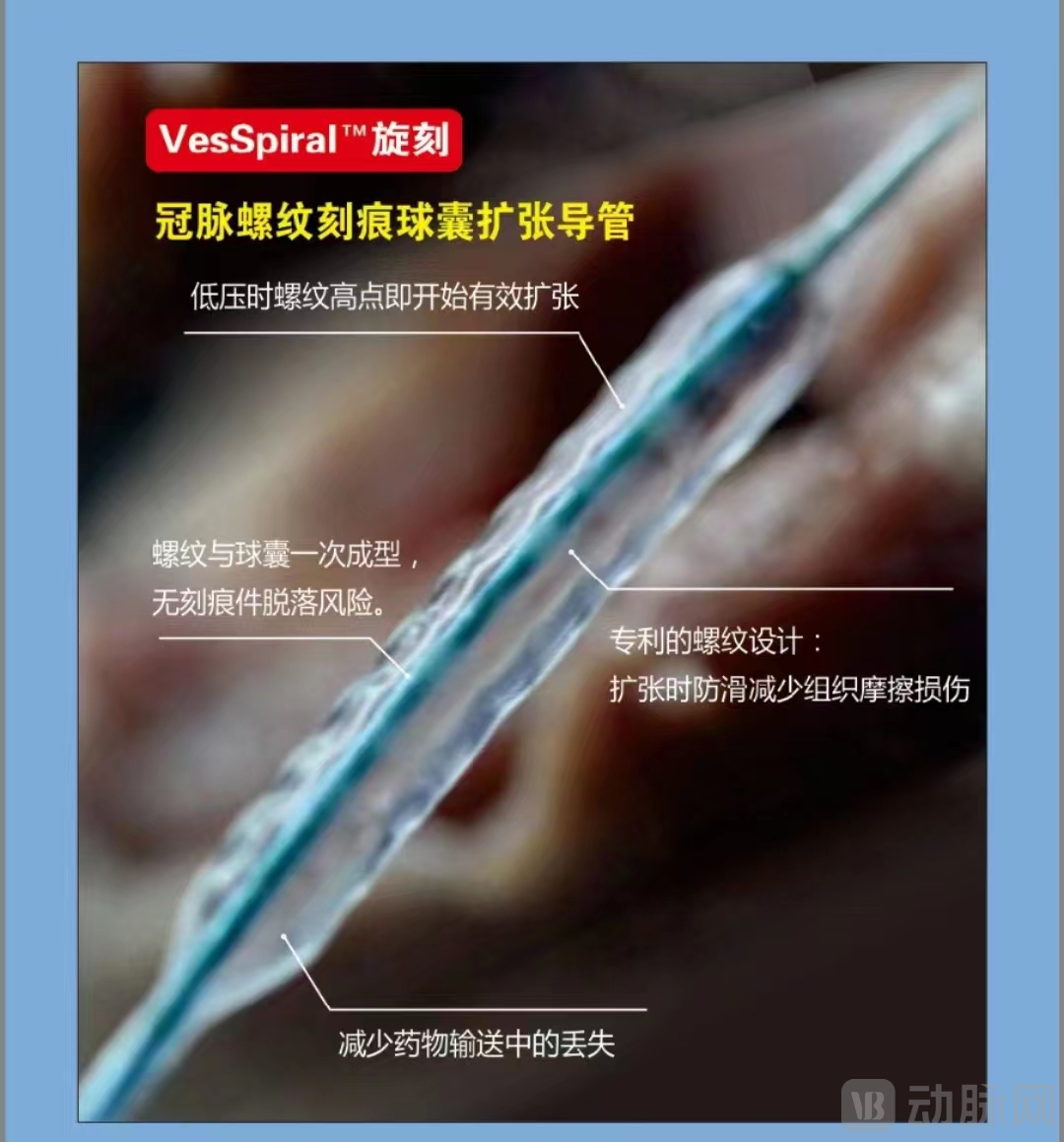
Coronary Threaded Balloon Dilation Catheter (Trade Name: VesSpiral®. XuanEngraving®) is a specialized scoring balloon with an integrated balloon and scoring component, specifically designed for the dilation treatment of coronary artery stenosis. It is an upgraded version of the commonly used standard coronary artery balloon dilation catheters currently available on the market, independently developed by TT Medical over nearly three years.
TT Medical is a national high-tech enterprise oriented towards clinical needs and focused on full-chain innovation in interventional devices. It possesses the Guangdong Provincial Medical Polymer Materials Engineering Center and the Guangdong Pearl River Talent Innovation and Entrepreneurship Leading Team, and has established five major technological platforms: polymer materials engineering, balloon and balloon catheter, catheter weaving and composites, coating and drug-device combination, and stent design and production.
In the field of interventional devices, TT Medical possesses full-chain innovation capabilities ranging from clinical source problem analysis, product design, prototype production, development verification, to scaled manufacturing. Meanwhile, in the field of polymer materials, it has底层技术储备 covering a complete set of technologies and processes, including precision extrusion, injection molding, balloon forming, catheter braiding, and various welding and assembly techniques.
So far, TT Medical has developed thirty products in the fields of cardiovascular, cerebrovascular, peripheral vascular, digestion and respiration.
TT Medical stated: "The approval of the coronary threaded balloon dilation catheter has enriched the company's product portfolio in the field of cardiovascular intervention, including the coronary balloon dilation series (pre-dilation VesTraveler®, post-dilation Vexpander® and CTO Vespenetrator™), scoring balloon series (rotational scoring VesSpiral®, rotational cutting VesSculpt®), drug-coated series (paclitaxel EverFlow®, sirolimus SuperFlow), and bioresorbable scaffold (Powerscaffold®) among other interventional non-implant product series."。”
Today, balloon dilation has become the cornerstone of vascular interventional therapy.
Traditional PTCA balloon catheters consist of a tip, balloon, transition segment, and push rod. During use, the balloon catheter is advanced along a guidewire to the target lesion in the coronary artery. The balloon is then pressurized and inflated, generating an expansion force that dilates the narrowed coronary artery, thereby improving myocardial perfusion.
In clinical practice, traditional balloons, due to their smooth cylindrical shape, mainly rely on blunt balloon expansion, which can easily cause intimal tears. In addition, traditional balloons are prone to slippage in atherosclerotic or calcified lesions, potentially leading to uneven expansion or vascular abrasion, and subsequently causing complications such as vascular wall edema, bleeding, thrombosis, and acute vascular occlusion.
To reduce complications caused by traditional plain balloon angioplasty, researchers have developed new functional balloons by attaching structures such as microblades, metal wires, papillae, or spinous processes to the surface of standard balloons through methods like thermal fusion or adhesive bonding, as an alternative to conventional balloons for coronary angioplasty treatment.
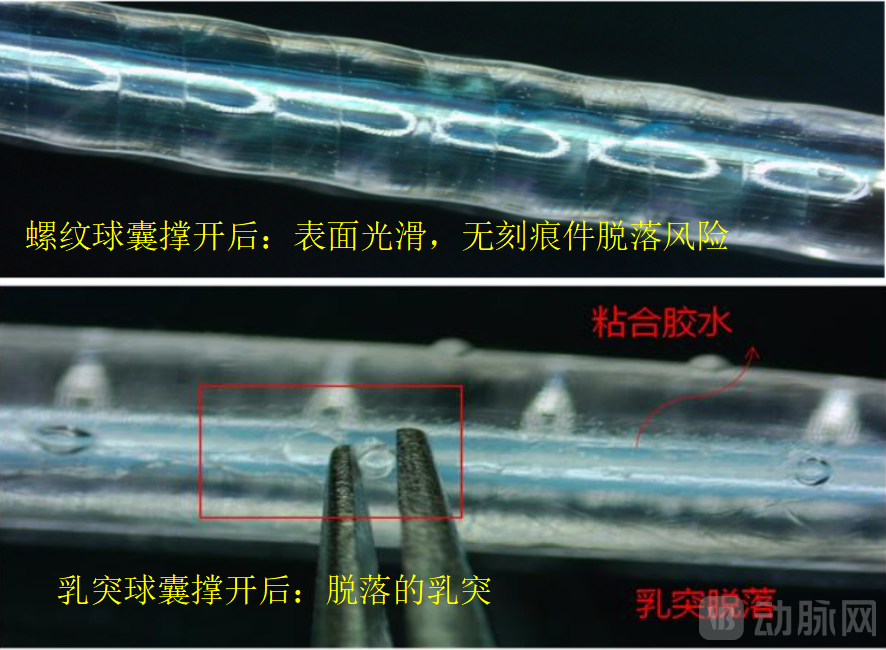
Currently, the scoring elements on the surface of functional balloons are mainly made of solid plastic materials, which are fixed to the balloon surface through secondary molding methods such as physical or chemical adhesives. Functional balloons with such scoring elements have protruding scoring structures after folding, making the surface rough, and resulting in a larger and harder folded diameter, thus affecting the delivery and passage performance of the balloon catheter. Additionally, secondary molding methods like welding or adhesives provide low bonding strength and are sensitive to ethanol-based solvents, posing a risk of scoring element detachment during clinical applications such as the expansion of in-stent restenosis.
To address the aforementioned clinical issues, TT Medical innovatively integrated the scoring element into the balloon during the balloon-forming process, developing the world's exclusive "Coronary Thread Balloon Dilation Catheter."
Inside the human body, the vascular system is an extremely complex network. Due to variations in vascular distribution, different blood vessels endure significantly different pressures. For instance, compared to the coronary arteries and aorta, cerebral blood vessels operate under lower pressure and require a gentler balloon for dilation. Additionally, diseased vessels demand varying directional pressures depending on the distribution of the lesion.
In clinical practice, conventional balloons provide uniform pressure around the surrounding area. The principle of vascular dilation is achieved by continuous expansion and compression of the narrowed vessel as the balloon inflates, which often leads to intimal tearing or dissection. During the process of sustained expansion, especially in cases of atherosclerotic or calcified plaques, conventional balloons frequently experience displacement or slippage, causing abrasion of the intima.
To address the aforementioned issues of conventional balloons, scored balloons have evolved by incorporating numerous scoring elements on the balloon surface, which enhance directional pressure. While these elements provide fixed anchor points, directionally open plaques, and expand the lumen, the pressure exerted by the scoring elements also increases linearly with balloon inflation, similar to conventional balloons. When excessive pressure is concentrated on the scoring elements, they are more likely to cause subintimal bleeding during vessel expansion.
On the other hand, there is a significant difference between the pressure of the notched balloon component and the pressure on the balloon surface. This extreme pressure difference causes issues such as balloon stress, which can instead lead to vascular damage.
The coronary threaded balloon dilation catheter approved this time has made innovative breakthroughs in this aspect: with the special engraved threads on the surface of the balloon, the threaded balloon dilation catheter changes the pressure distribution of the balloon, making the pressure more balanced. At the same time, the coronary threaded balloon dilation catheter can begin effective expansion at a low pressure, and when reaching the rated burst pressure, it performs similarly to an ordinary balloon, thus achieving a balanced expansion effect.
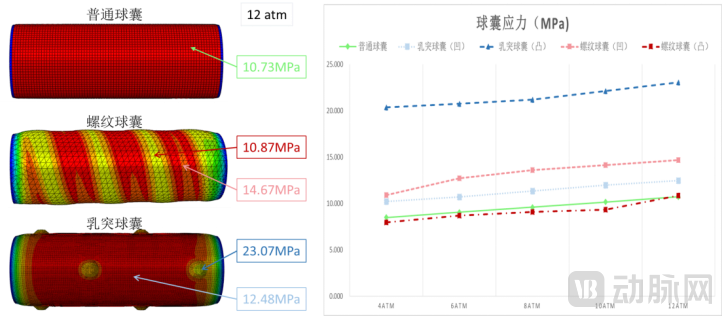
(At 12ATM inflation pressure,The surface stress of the ordinary balloon is consistent; the pressure distribution at the uneven parts of the threaded balloon is reasonable (15MPavs.11MPa);MastoidThe pressure difference between the convex and concave parts of the balloon is very large (23MPavs. 12MPa), which can easily cause subintimal hemorrhage in the protruding parts of blood vessels.)
Director Jiang Xuejun of Renmin Hospital of Wuhan UniversityEvaluation: Compared with the blunt and disordered expansion of traditional balloons, the threaded balloon catheter can uniformly dilate blood vessels at a lower pressure, causing minimal intimal tears and thus less vascular injury. This reduces reactive smooth muscle cell or fibroblast proliferation. During pre-treatment for "intervention without implantation," the threaded balloon can minimize or reduce the occurrence of dissections to the greatest extent.
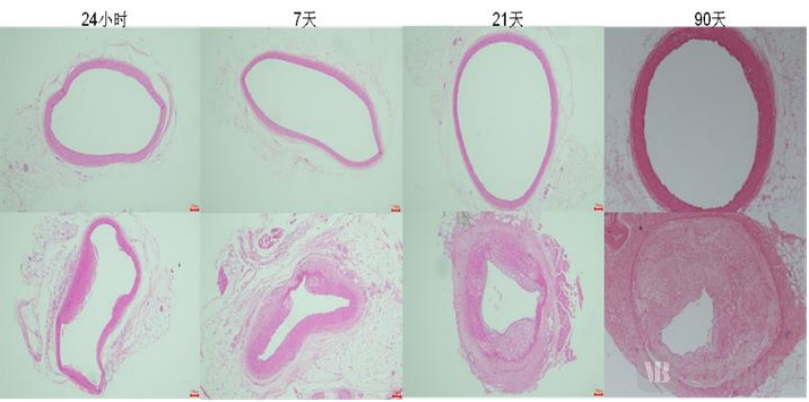
Histopathology of Common Balloon (Below) and Threaded Balloon (Above) After Expansion in Pig Coronary Arteries: Common BalloonIntimal edema can be observed within 24 hours, and intimal hyperplasia occurs after 21 days, showing significantly inferior results compared to threaded balloons.
It is reported that the forming process of the threaded balloon dilation catheter is the same as that of a regular balloon, both being integrally formed. Meanwhile, the surface of the threaded balloon dilation catheter also features an integrally formed scoring element, with the material of the scoring element being the same as that of a regular balloon catheter.Therefore, the outer diameter of the threaded balloon dilation catheter after folding is the same as that of a regular balloon, offering the same ease of operation, flexibility, and trackability in clinical use, and is significantly superior to traditional scored balloons.
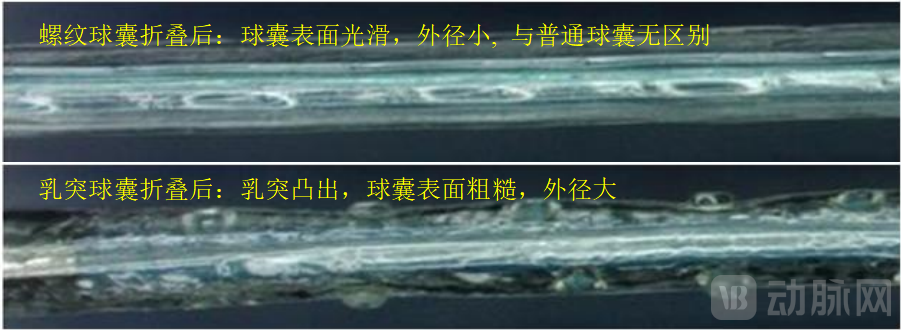
Currently, the scoring balloons on the market have scoring components made of secondary-formed metal or hard plastic that are fixed to the balloon surface by welding or adhesive. Compared with ordinary balloons, in addition to the abovementioned poor passability, there is also a safety hazard of scoring component detachment. Especially when used within stents, at bifurcation lesions, or in calcified lesions, the scoring components may get stuck in the stent mesh or calcified tissue. However, the threaded balloon uses a patented one-step molding technology to integrate the scoring components with the balloon, completely avoiding this clinical safety hazard.
"Intervention without implantation" is the current developmental direction of coronary intervention. The core device of this approach—balloon catheters—are crucial to the success or failure of the procedure. The launch of the threaded balloon dilation catheter provides a new platform for "intervention without implantation," applicable in multiple aspects such as pre-dilation, post-dilation, stent delivery, and drug delivery.
Vascular Pre-dilation (Pre-expansion) is the First Step in Implant-Free Intervention. The threaded balloon, akin to a tank equipped with tracks, can easily traverse mountains and rivers, providing safe and effective expansion within vessels affected by atherosclerotic or calcified plaques. Additionally, the threaded balloon is integrally molded, eliminating the risk of notch parts falling off, making it suitable for special conditions such as stent restenosis.
Non-compliant anti-slip balloons are required for post-dilation after stent implantation. Threaded balloons made of non-compliant materials can secure the implanted stent to the vessel wall without the risk of notched parts rolling into the stent mesh.
The dilation of bifurcation lesions requires high-performance balloons. The unique one-piece structure of threaded balloons allows them to pass through stent mesh holes easily, without the risk of the scoring elements getting caught in the mesh, which is a common issue with other scoring balloons.
Stent delivery, especially the delivery of biodegradable stents, has always been a challenging issue in clinical practice. Using a threaded balloon as the delivery balloon for biodegradable stents, the threads on its surface can effectively prevent the stent from slipping during delivery.
Drug-coated balloons are the main product of the "intervention without implantation" approach. One of the current technical bottlenecks of drug balloons is the excessively low transfection rate of drugs in blood vessels. Pre-dilation using a threaded balloon creates uniformly distributed micro-tears in the vascular tissue, resembling a well-plowed field, which facilitates drug absorption.
From a pan-vascular perspective, the threaded balloon dilation catheter can be used not only for cardiovascular applications but also for peripheral vessels. Additionally, due to its characteristics such as low pressure and uniformity, the threaded balloon dilation catheter can also be applied to fragile vessels like cerebral and pulmonary vessels.
Besides, in the field of non-vascular intervention, the threaded balloon dilation catheter can also be used for airway dilation and biliary dilation through endoscopy... In terms of principle and effect, the expansion performance and stability of the threaded balloon dilation catheter in areas such as the respiratory tract and biliary ducts are at a leading level.
Overall, the threaded balloon dilation catheter is an upgraded version of the conventional balloon dilation catheter and is expected to replace traditional standard balloons in the future due to its clinical advantages. TT Medical has already obtained the invention patent for the threaded balloon and is currently developing its applications in various fields.
Indications for the coronary threaded balloon dilation catheter: dilation treatment for coronary artery stenosis. The corresponding procedure is primarily percutaneous coronary intervention (PCI).
In 2022, the number of PCI procedures in China was approximately 1.29 million (excluding military hospitals). With the advancement of medical education, reduction in surgery costs, and improvements in screening and diagnostic methods, it is expected that there will be an increasing number of PCI procedures annually in the future.
Therefore, when the threaded balloon dilation catheter replaces traditional products, its market space will be extremely broad.
In addition, TT Medical has successfully built a series of technical platforms such as threaded balloons, cutting balloons, and drug-coated balloons, enabling rapid development, innovation, and iteration of products like threaded balloons, drug-coated threaded balloons, and cutting threaded balloons.
Dr. Wu Tiangen, Chairman of TT Medical, further introduced: TT Medical's development strategy in the interventional device field is "Three Alls" – full-chain technology innovation, full product line layout, and global market sales. Currently, the threaded balloon has been simultaneously submitted for registration with the U.S. FDA and EU CE. In 2022, the company obtained seven China certifications, and it is expected that more than ten products will receive certifications from China, CE, and FDA this year. The company is in a phase of rapid development.
TT Medical (Dongguan) - A wholly-owned subsidiary of Wuxi Tiantai Technology, is a national high-tech enterprise oriented towards clinical needs and focused on the full-chain innovation of interventional devices. It owns the Guangdong Provincial Medical Polymer Materials Engineering Center and the Guangdong Pearl River Talent Innovation and Entrepreneurship Leading Team. In the field of interventional devices, the company possesses full-chain innovation capabilities ranging from analyzing problems at the clinical source to product design, prototype production, development verification, and large-scale manufacturing. The company has established five major technology platforms: polymer materials engineering, balloon and balloon catheters, catheter braiding and composites, coatings and drug-device combinations, and stent design and production. In the field of medical polymer materials and applications, TT Medical has comprehensive underlying technical reserves, including precision extrusion, injection molding, balloon forming, catheter braiding, and various welding and assembly techniques. To date, TT Medical has developed a portfolio of thirty products across cardiovascular, cerebrovascular, peripheral vascular, gastrointestinal, and respiratory fields. For more information, please visit the TT Medical official website:https://cn.ttmedicalinc.com