

TCBridge: China's First Approved 3D-Printed Custom Implant for Long-Segment Bone Defect Reconstruction

AK Medical
Medical Device R&D Manufacturer

According to the news from Peking University Third Hospital, recently, the TCBridge system, jointly developed by Professor Tian Yun's team from the hospital's orthopedics department and AK Medical Holdings Limited, has been approved for marketing by the National Medical Products Administration. The TCBridge system has become the first metal product in China to receive registration approval.3D PrintingCustomized Long-Segment Bone Defect Repair System Fills Industry Gap
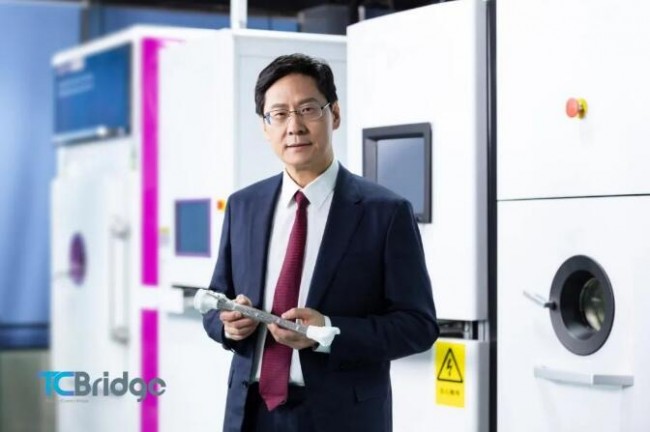 Professor Tian Yun
© Peking University Third Hospital
 Reconstruction for Large Segmental Bone Defects in Limbs
The approval and market launch of the TCBridge system marks a safer and more effective solution for the repair and reconstruction of large segmental bone defects in the limbs, and also signifies that the repair and reconstruction technology in orthopedic trauma has reached a new level.
Compared with traditional bone grafting technology, Ilizarov technology, periosteum induction technology, traditional segmental artificial prostheses and other treatment methods, the TCBridge system can overcome the limitations of the above technologies and solve the significant challenge of reconstructing large segmental bone defects of the limbs exceeding 5 centimeters, especially in areas with anatomical morphological variations in the metaphysis. It eliminates the key obstacles of long treatment cycles, complex processes, and unsatisfactory treatment outcomes associated with traditional techniques, allowing orthopedic surgeons to handle the repair and reconstruction of complex large segmental bone defects of the limbs with greater ease, safety, and reliability.
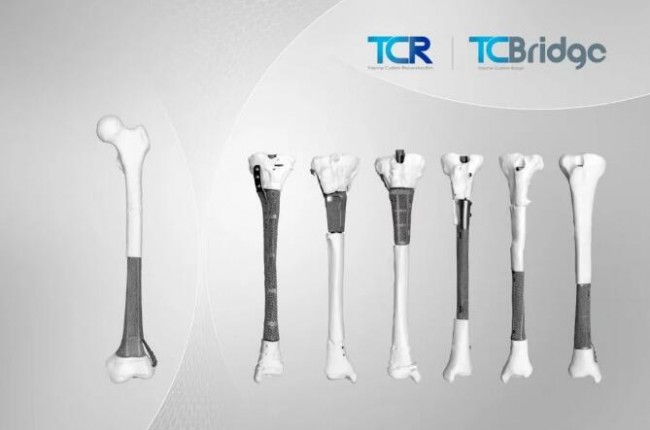 TCBridge (Trauma Custom Bridge) System
The TCBridge system can be custom-developed, eliminating the need for bone grafting during the treatment process. Through stress stimulation in the contact area between the microporous prosthesis and bone structure, new bone formation and reconstruction are achieved, which is a prominent advantage of this technology. Initial fixation is realized through auxiliary structural designs such as intramedullary nails and fixation plates. Ultimately, osseointegration between the prosthesis and bone structure is achieved via trabecular-like technology, ensuring long-term stability. This allows each patient to have a personalized surgical plan, achieving precise treatment.
As one of the many excellent clinical innovation solutions from the Department of Orthopedics at Peking University Third Hospital (Beijing No.3 Hospital), the TCBridge system provides support through an in-depth physician-engineering interaction system, offering services from preoperative planning to physician-engineering interactive design.3D PrintingCustomized design and manufacturing processing, to the overall solution for final delivery to clinical completion of surgery. The TCBridge system can assist doctors in repairing and reconstructing complex large segmental bone defects in limbs caused by various reasons (severe trauma, tumors, infections, osteomyelitis, etc.), helping patients restore the anatomical and mechanical structure of limb bones, rebuild health, and help them return to normal work and life.
Professor Tian Yun from the Orthopedics Department of Peking University Third Hospital stated, "The successful launch of the TCBridge system is due to3D Printing TechnologyThe profound technological accumulation applied in the orthopedic field is inseparable from the efforts and pioneering work of the orthopedic team at Peking University Third Hospital (Beijing No.3 Hospital). The realization of these achievements is the result of the sincere cooperation of the orthopedic team at Peking University Third Hospital, as well as the multi-dimensional collaboration between clinical practice and enterprises in basic research, applied research, original development, and technological upgrades.
The TCBridge system, supported by the Beijing Municipal Science and Technology Commission's key project "Clinical Application Research of 3D-Printed Porous Titanium Alloy in Treating Large Segmental Bone Defects in Long Bones of the Limbs," is the first approved product from Professor Tian Yun's team's five-year exploration and effort in developing the Trauma Custom Reconstruction (TCR) system.
In the future, Professor Tian Yun's team will conduct more in-depth and extensive research and development on the TCR system, launching a comprehensive solution covering the shoulder, elbow, wrist, ankle, pelvis, and other areas for customized reconstruction in trauma, helping more patients regain their health and confidence.
(Editor in charge: admin)