

Shuimu Future Lights the Path for Drug Discovery with Accessible AI-Powered Cryo-EM

Shuimu Biosciences
Novel Drug Developer
In April 1965, Gordon E. Moore, then Director of the Research and Development Department at Fairchild Semiconductor, published an article in the American magazine *Electronics*, in which he proposed: "As the number of components in a circuit increases, the cost per unit decreases." He also predicted that the circuit density of microprocessor chips would double every year. This statement became the well-known Moore's Law, which has been repeatedly validated over decades of chip development, indirectly driving the upgrading and iteration of the entire IT industry.
In the field of drug research and development, it is difficult to escape the "inverse Moore's Law": as the peak of drug research and development continues to rise, pharmaceutical companies are bound to find it increasingly difficult to harvest the fruits of innovation.
"Undruggable targets have been troubling the entire biopharmaceutical industry for decades, and the underlying reason is still that our technological innovation and tools were far from sufficient in the past."Guo Chunlong, Co-founder and CEO of Shuimu BiosciencesTo explain this way.
He said that the druggable space of small molecules is about 10.50To 1060"Traditional drug screening methods are like fumbling in the dark with eyes closed. However, as the latest technique and tool in structural biology, cryo-electron microscopy (cryo-EM) has made significant breakthroughs in recent years. Using cryo-EM, researchers can clearly visualize the molecular structure of a target and the binding details of small molecules and target complexes. 'This is equivalent to providing the R&D team with both a map and a telescope. Starting from a point, they can optimize in a directed and targeted manner, rapidly identifying the most suitable molecule, much like crafting a precise key for a lock,' said Guo Chunlong."
Shuimu Biosciences is an "AI + cryo-EM"-driven company that accelerates and empowers new drug research and development. It owns the world's largest commercial platform for next-generation full cryo-electron microscopy based on AI and is the sole strategic partner of Thermo Fisher in the Asia-Pacific region.
Combining the new generation of graphene carrier network consumables with full independent intellectual property rights and AI algorithms, Shuimu BiosciencesDedicated to significantly improving the efficiency and accuracy of biomacromolecular structure analysis and drug discovery., integrating the entire wet lab process, to assist global innovative pharmaceutical companies in promoting more efficient and precise drug research and development and therapy innovation in the fields of small molecules, antibody drugs, protein degradation, and gene therapy.
New Breakthrough in Cryo-EM Expected to Transform Blind Screening in Drug Discovery
Professor Richard Feynman, Nobel laureate in Physics, once said that many fundamental questions in biology could be easily answered if only we could "see" them clearly. With sufficiently high resolution to distinguish the atomic-level details of various biomolecules, their mechanisms of action would become straightforward, enabling future drug development to truly achieve digitally designed processes.
To a certain extent, the electron microscope has fulfilled this physicist's wish, allowing scientists to clearly observe the microscopic structures of life components such as proteins and nucleic acids, analyze the atomic composition of organic macromolecules and their spatial positional relationships, and serve as an essential tool in structural biology research.
Guo Chunlong stated: "The development of electron microscopy can be somewhat analogous to the evolution of the sequencing industry and sequencing technology over the past 20 years. As is well known, at the beginning of the century, the first complete human genome sequencing cost about $3 billion. Today, 20 years later, anyone who wants to have their whole genome sequenced only needs to spend less than $500, reducing the cost by millions of times. Electron microscopy will also undergo a similar revolution in efficiency."
At the same time, due to continuous improvements in cryo-electron microscopy hardware and algorithms, the speed and resolution of its structure analysis have also been constantly improving. "Initially, it took several months for cryo-EM to analyze a high-resolution structure, but now it takes less than a week or even shorter."
Moreover, compared with X-ray crystallography, electron microscopy requires very little sample and does not need to generate crystals, which brings new hope for the study of some difficult-to-crystallize proteins and also offers new opportunities for protein research.
Therefore, this technology is considered the most advanced, promising, and broadly applicable technology in the current biopharmaceutical field, with the potential to completely revolutionize the blind screening model in new drug development.
As an industry service provider,One of Shuimu Biosciences' major missions is to make electron microscopy more accessible, enabling top-tier scientific research equipment to reach the frontlines of drug development, becoming faster, better, and more affordable.
Shuimu Biosciences was founded in 2017 at Tsinghua University, with a core team composed of outstanding life and computational scientists, IT/internet experts, and pharmaceutical industry professionals.
Since its establishment, Shuimu Biosciences has successfullyProvided structural biology and drug discovery services to more than 300 innovative pharmaceutical companies and top research institutions worldwide., including multinational pharmaceutical companies such as Sanofi, Amgen, and Novo Nordisk, as well as leading domestic innovative drug companies like BeiGene, VTRion, Huahui Anjian, and Yanming Biotechnology.
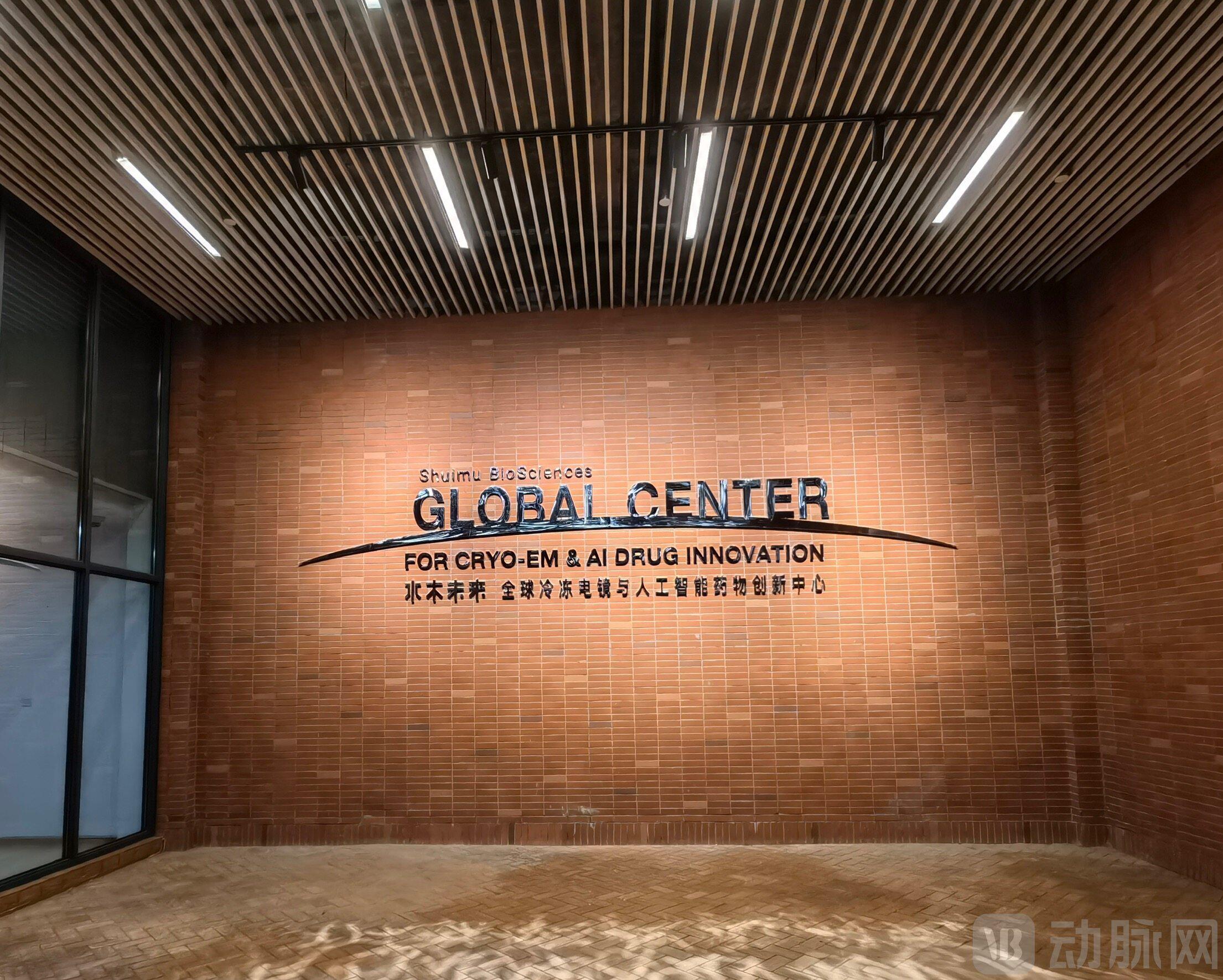
Shuimu Biosciences - Global Cryo-EM and AI Drug Innovation Center
At the same time, Shuimu Biosciences has established "Global Cryo-EM and AI Drug Innovation Center", aiming to establish the world's largest cryo-electron microscopy platform and high-precision structural database for biological macromolecules, providing services to global research institutions and innovative pharmaceutical companies while co-developing innovative therapies; collaborating with Tsinghua University and top-tier research institutions both domestically and internationally to enhance fundamental research standards, integrating basic research, technology development, and result transformation, creating a global base for structural and AI-driven drug discovery innovation.
As of September 2022, Shuimu Biosciences has completed the debugging and operation of a total of eight top-configured 300kV cryo-electron microscopes, officially becoming the world's largest and technologically leading commercial cryo-electron microscopy structural analysis platform.
Serving more than 300 pharmaceutical enterprises and research clients, promoting the greater accessibility of AI + electron microscopy
"Cryo-electron microscopy is not a device that can be used right after purchase. It requires professional equipment debugging personnel, as well as experimental operators and structural analysis computing staff who are proficient in this technology," said Guo Chunlong. Relying on the academic accumulation of Tsinghua University, Shuimu Biosciences has more advantages in terms of speed and capability in building its cryo-electron microscopy platform compared to its peers. "The teachers at Tsinghua University have provided significant support to Shuimu Biosciences, enabling it to become the first commercial company in Asia to independently operate a high-end 300kV cryo-electron microscope, thus gaining an early advantage in this field."
In fact, Shuimu Biosciences formulated a "three-step" strategic plan at the time of its establishment. The first step was to complete within the first three years of the company's founding.From 0 to 1 Breakthrough: "Enabling the First Electron Microscope to Achieve Output Surpassing Global Peer Laboratories""In terms of efficiency, resolution, or success rate, it has reached the best level globally." Currently, the first phase goal has been completed ahead of schedule.
The second step is to expand from 1 to 10 and then to 100, upgrading the technological advantage into a scale advantage. "In this phase, we hope that Shuimu Biosciences can achieve an annual structural output accounting for more than half of the global total, realizing...Large-scale, high-throughput, high-efficiency structural analysis platform, making a huge contribution to cracking the underlying code of life and solving difficult diseases." Guo Chunlong stated that this phase of the plan is from 2023 to 2025.
With sufficient structural data of biological macromolecules, the best AI prediction model can be trained, which has already been validated in AlphaFold 2. The third step isPromote Data-Driven Drug Discovery Platform, and based on this platform, extend upstream to research, develop, and produce China's own electron microscope hardware and software, reaching the forefront of global scientific innovation in large-scale instrument equipment. According to reports, Shuimu Biosciences is developing advanced cryo-electron microscopes for a new generation of in-situ structural analysis. The goal is not merely to achieve basic domestic substitution but to take another significant step forward in advancing humanity’s fundamental understanding of microscopic structures in life sciences.
"In the future, based on high-throughput and high-resolution structural output, the number of entirely new drug pipelines driven each year will far exceed current human levels, including a large number of previously undruggable novel targets. Drug design based on high-resolution structures and AI computation may initially be slower than traditional methods, with a challenging start, but once past a certain tipping point, it will experience exponential growth. In the future, all drug research and development, including small molecules, large molecules, and gene therapies, will rely on cryo-electron microscopy and computational methods," said Guo Chunlong.
In terms of commercialization, the company achieved more than a 60% increase in revenue last year, capturing over 80% of the domestic market share in China; overall revenue is expected to triple this year. Guo Chunlong stated: "Due to the impact of the pandemic, we only began to see substantial breakthroughs in overseas markets in the second half of last year, and we expect several-fold growth this year, with a clearer outlook moving forward."