

Zhejiang University Hospital Team Successfully Completes Another Transcatheter Tricuspid Edge-to-Edge Repair Surgery, Highlighting Chinese Innovation and Device Capabilities

Valgen Medtech
Minimally Invasive Interventional Device Developer
Recently, the cardiac valve team led by Professor Wang Jian'an from the Second Affiliated Hospital of Zhejiang University School of Medicine successfully completed another transcatheter tricuspid valve edge-to-edge repair (T-TEER) surgery at the Cardio-Cerebrovascular Disease Branch (Boao Branch) of Zhejiang University Second Hospital. Professor Scott Lim from the University of Virginia Medical Center, a top expert in the international TMVr and TTVr fields, participated in the on-site exchange.
The surgical instruments selected are Valgen Medtech's DragonFly-T delivery system and the globally innovative DragonFly™ pro-sized valve clip.
In 2020, Professor Wang Jian'an's team successfully applied the DragonFly-T to complete the first human clinical application in mainland China. This marked the first time that a domestically developed transcatheter tricuspid regurgitation repair product was successfully used in clinical practice in China, and it was also the first transcatheter tricuspid valve repair surgery in mainland China. The patient’s regurgitation almost disappeared after the operation, with significant immediate results. The excellent surgical outcomes fully demonstrated the proficiency of the cardiac valve team in transcatheter tricuspid valve intervention technology and the feasibility of the DragonFly-T device in TR treatment.
Currently, there are no registered and marketed T-TEER therapeutic devices in China. DragonFly-T is the world’s third original minimally invasive transcatheter edge-to-edge valve repair system, following TriClip and PASCAL.
The patient in this surgery is an elderly female with a history of atrial fibrillation, acute exacerbation of chronic heart failure, hypertension, radiofrequency ablation, left atrial appendage closure, and bilateral carotid artery atherosclerosis accompanied by plaque formation on the left side. Echocardiography indicated severe tricuspid regurgitation (TR5+), VCW=11.5cm, Tri-Score=6. The patient is at high surgical risk for tricuspid valve procedures.
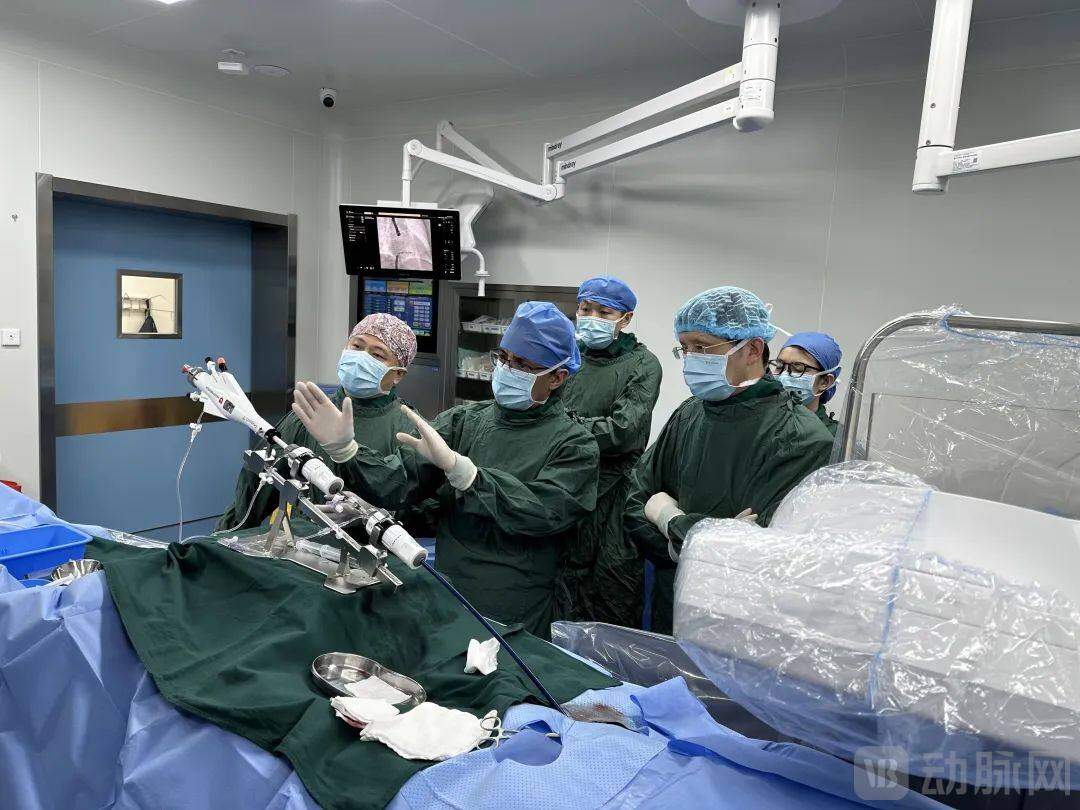
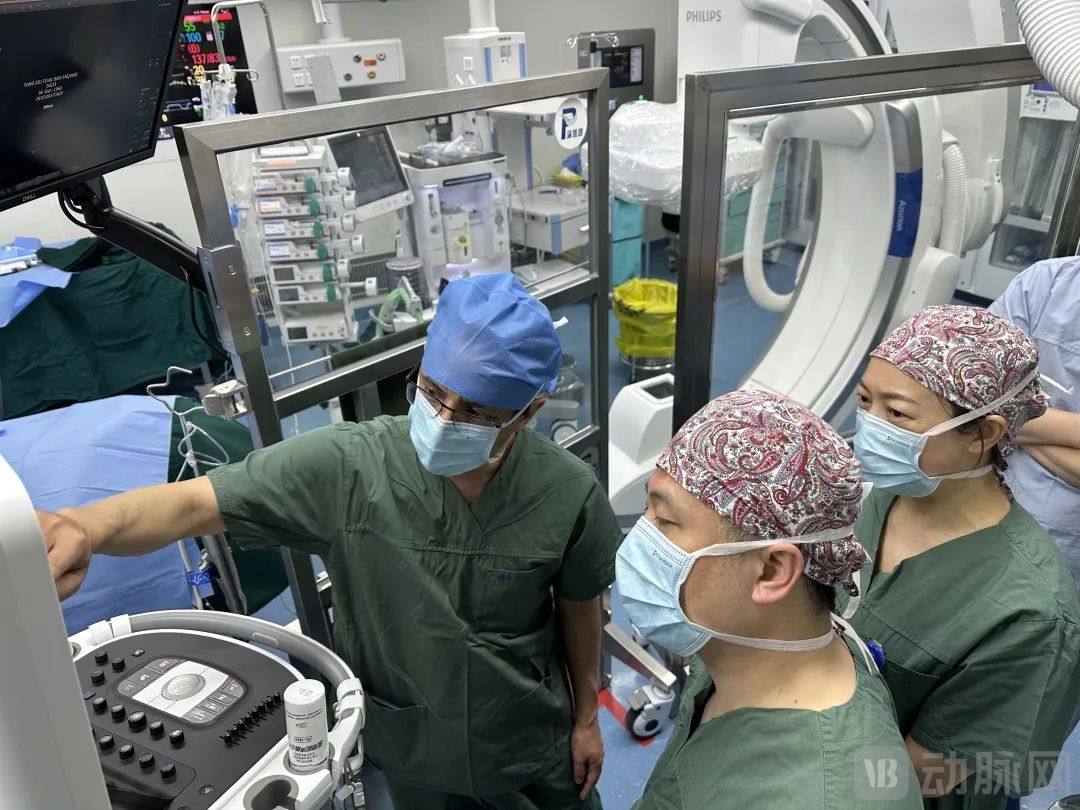
The surgery was performed under the guidance of transesophageal echocardiography (TEE) and digital subtraction angiography (DSA). A guidewire was inserted through femoral vein puncture to establish femoral venous access. Along the guidewire, a 24F steerable sheath was advanced into the right atrium. Under the guidance of TEE and fluoroscopy, a valve clip was then delivered through the guiding sheath into the right atrium. With TEE guidance to direct the valve clip towards the septal and anterior leaflets, precise adjustments were made to the Trajectory and Orientation, allowing the clip to be advanced into the right ventricle, where it successfully grasped both the septal and anterior leaflets of the tricuspid valve. The valve clip was closed, and TEE showed residual regurgitation near the central area of the tricuspid valve. Based on the intraoperative situation, Professor Scott Lim and Professor Jian'an Wang's team decisively decided to implant another valve clip between the anterior and septal leaflets. After closing the second valve clip, the tricuspid regurgitation was significantly reduced to TR1+, marking the complete success of the procedure.
Previously, the data results of relevant studies announced at the European Society of Cardiology Annual Meeting once again validated the effectiveness of transcatheter edge-to-edge repair technology in treating tricuspid regurgitation. Although transcatheter tricuspid valve intervention treatment technology in China is still in its infancy, it will be a significant breakthrough in the field of tricuspid valve treatment, with domestic edge-to-edge repair technology gradually maturing.
In recent years, the state has successively issued a number of policies and measures to encourage the development of innovative medical devices. The "14th Five-Year Plan for the Development of Medical Equipment Industry" clearly stated that it is necessary to focus on breaking through technical equipment bottlenecks, accelerate the filling of gaps in high-end medical equipment, and actively promote the high-quality development of the industry. The project "Development of Transcatheter Mitral Valve Clip System," led by Valgen Medtech Co., Ltd. under the "14th Five-Year Plan" National Key R&D Program for Diagnosis and Treatment Equipment and Biomedical Materials, has been approved for establishment.
The DragonFly™ Transcatheter Mitral Valve Clip System, jointly developed by Valgen Medtech, the Second Affiliated Hospital of Zhejiang University School of Medicine, and the National Engineering Research Center for Biomaterials at Sichuan University over many years, has successfully been implanted in approximately 300 cases in China as of now. With excellent clinical data, it is expected to be the earliest domestically produced transcatheter mitral valve repair product to be launched in China, achieving a leap from zero to one locally. It is poised to "overtake on a curve," breaking foreign monopolies and enabling reverse technology export.
Valgen Medtech's excellent R&D philosophy and transformation capabilities provide cutting-edge medical innovation technologies and interventional treatment solutions for patients with mitral and tricuspid valve diseases worldwide, making it a core force in China’s structural heart disease intervention industry. Currently, the gap between China’s innovative medical devices for structural heart diseases and international standards is gradually narrowing. In the future, Valgen Medtech will further deepen the integration of innovative technologies with clinical needs, transform academic achievements into clinical practice, support the development of clinical research and the output of academic results, and go global to benefit structural heart patients worldwide.