

NSC-Derived Exosomes Enhance Therapeutic Efficacy of Neural Stem Cell Transplantation in Ischemic Stroke

iRegene Therapeutics
Cell Therapy Product Developer
Stroke is the second leading cause of death globally, and it is divided into two types: ischemic stroke and hemorrhagic stroke. Ischemic stroke accounts for approximately 80% of cases and is characterized by high incidence, high disability, and high recurrence rates. Patients often experience dysfunctions in movement, sensation, speech, and other areas.Quality of LifeSeverely affected.
NerveStem Cells(Neural stem cell, NSC) has rich regenerative and differentiation capabilities and has become a research hotspot for treating ischemic stroke in recent years. However, the survival and differentiation rates of NSCs transplanted into hosts are low. Therefore, enhancing NSC treatment for stroke through the use of adjuvants to improve therapeutic outcomes is an urgent need in this field.
On April 27, 2023, the research team of Dong Zhiqiang from Huazhong Agricultural University, the team of Wei Jun from iRegene, and the team of Xiong Nanxiang from Zhongnan Hospital of Wuhan University collaborated to publish a research paper titled **NSC-derived exosomes enhance therapeutic effects of NSC transplantation on cerebral ischemia in mice** in the prestigious international academic journal *eLife*.
This study applied a middle cerebral artery occlusion/reperfusion (MCAO/R) mouse model to reveal the significant therapeutic effects of neural stem cells (NSCs) combined with NSC-derived exosomes on ischemic stroke. It elucidated that exosomes, through the miRNAs they carry, regulate downstream target genes, thereby reducing oxidative stress and inflammation in brain tissue, inhibiting apoptosis, and promoting the survival and differentiation of transplanted NSCs, providing new insights into the treatment of ischemic stroke.
The study found, through various detection methods, that the combination of NSC and NSC-secreted exosomes significantly improved cerebral infarction in MCAO/R mice, increased brain weight, and notably promoted the recovery of motor function in MCAO/R mice compared to the groups treated with NSC or exosomes alone. Meanwhile, the combined treatment significantly reduced neuronal apoptosis in the brains of MCAO/R mice. Compared to the groups treated with NSC or exosomes alone, the combined treatment markedly suppressed excessive proliferation of astrocytes, thereby reducing glial scar formation and more effectively promoting neural remodeling.
This study further elucidates the mechanism of action of exosomes. The results indicate that exosomes can inhibit neuronal apoptosis, reduce the proliferation of A1-type reactive astrocytes, and significantly decrease the levels of MDA and inflammatory cytokines such as Tnfa and Il1b in the brains of mice in the combination treatment group, while increasing the expression of the anti-inflammatory cytokine Il10. This suggests that exosomes alleviate the inflammatory microenvironment in the brains of MCAO/R mice, creating a favorable microenvironment for the colonization and differentiation of NSCs. Additionally, exosomes can promote the differentiation and migration of NSCs in vivo. Further molecular mechanism studies reveal that miRNAs carried by exosomes play an important role, potentially promoting the survival and differentiation of NSCs by regulating target genes. These mechanistic studies provide an important theoretical foundation for new approaches to the clinical combined application of exosomes in NSC-based treatment of ischemic stroke.
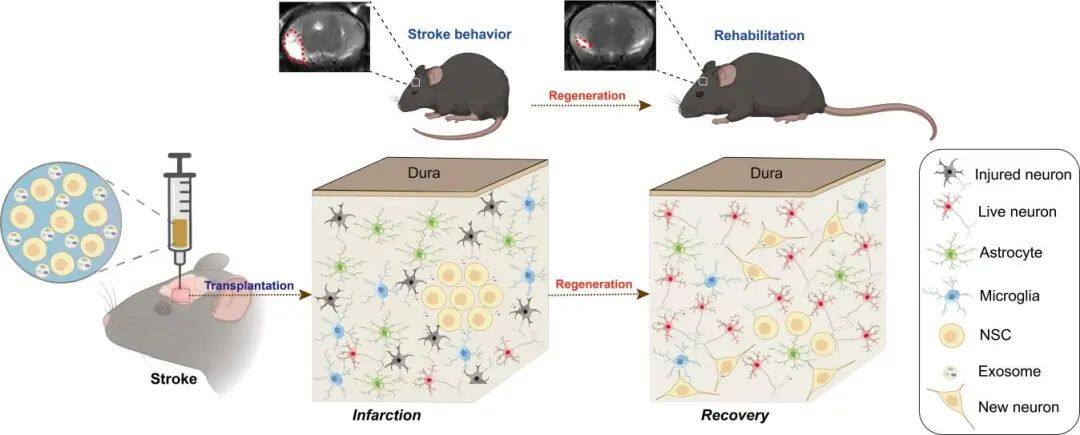
Figure 1: Schematic diagram of the mechanism of NSC combined with exosomes in the treatment of MCAO/R mice
Overall, this study demonstrates that the combination of NSC and exosome therapy can reduce infarct volume and inflammatory responses in MCAO/R mice, alleviate neurological damage caused by ischemic stroke, and thereby promote neuroprotection and functional recovery. The miRNAs carried by exosomes may play a crucial role in this process. These findings provide important guidance for the future clinical application of NSC in treating ischemic stroke.
Prof. Dong Zhiqiang from Huazhong Agricultural University, Prof. Wei Jun from iRegene, and Prof. Xiong Nanxiang from Zhongnan Hospital of Wuhan University are the corresponding authors of this article, while Dr. Zhang Ruolin from Huazhong Agricultural University is the first author.
The research group led by Dong Zhiqiang from the College of Biomedicine and Health, and the College of Life Science and Technology at Huazhong Agricultural University, focuses on the regulation of neural stem cell development, as well as nerve injury and repair. Their related findings have been published in journals such as eLife, Advanced Science, Developmental Cell, Neuron, Briefings in Bioinformatics, Bioactive Materials, and Cell Reports (2 articles).