

1 platform, 10+ diseases, 254 patents: how Cytori is building a regenerative ecosystem

Cytori
--
In the public consciousness, fat is often synonymous with health burdens. Yet medical research is overturning this view, revealing that adipose tissue is rich in regenerative cells—positioning it as one of the most promising biological resources in regenerative medicine.
As this perception evolves, the therapeutic potential of adipose tissue is gaining significant recognition, positioning it as a novel therapeutic avenue for a range of diseases. Nonetheless, the historical challenge has been translating this potential into safe, efficient, and standardized clinical applications—a key bottleneck that has long constrained progress in the field.
Over the past five years, Shanghai Cytori Therapeutics ("Cytori") has successfully navigated this challenge. The company established a fully integrated closed loop, from acquiring core technology assets and patents to localizing production, conducting secondary R&D, and achieving clinical deployment. Its flagship product, the Celution® system, has obtained a National Class III Medical Device Registration Certificate, enabling the standardized and large-scale application of adipose-derived regenerative therapies. This milestone effectively translates the medical potential of adipose tissue from the laboratory to the clinic, offering new treatment options to a broad patient population.
1The Strategic Choice Behind a Transnational Lawsuit
The technological roots of Cytori trace back to the U.S.-based Cytori Therapeutics, Inc.. As early as the 2000s, the U.S. entity pioneered the concept of harvesting regenerative cells from adipose tissue for tissue repair and developed the Celution system platform. However, due to regulatory ambiguity in Western markets, which clouded its commercial viability, the technology never achieved widespread adoption.
In 2013, Cytori's founder, Ma Xudong, and his team first encountered this pioneering technology. At the time, the global regenerative medicine field was dominated by research on bone marrow and umbilical cord stem cells, while adipose tissue was largely dismissed as a mere "filler material." The Cytori team concluded that this vital regenerative resource was overlooked not because of an inherent technological flaw, but due to the absence of standardized equipment and compliant preparation systems.
Spurred by this conviction, Cytori entered into a collaboration with the U.S. Cytori Therapeutics. However, when its commercial rights were violated, Cytori proactively filed a lawsuit in the United States in 2015. After a four-year legal battle, a settlement was reached in 2019. This resulted in Cytori acquiring the entirety of the U.S. entity's core regenerative medicine assets and the global rights to the Celution® technology. This move marked a pivotal transition from being a mere licensee to becoming the definitive technology owner.
Securing global technology ownership was merely the prelude to commercialization. Cytori immediately launched a comprehensive indigenization of the system. This involved re-engineering the device to better align with local clinical practices, establishing localized production for consumables and reagents to build a self-sufficient supply chain that broke monopolies and reduced costs, and reconstructing a complete quality system to meet the stringent regulatory requirements of China's NMPA for Class III medical devices.
Driving Cytori to pursue this technological pathway are the irreplaceable biological advantages of adipose tissue. Ma Xudong highlighted that data shows each gram of adipose tissue yields 500 to 2500 times more regenerative cells than bone marrow. Furthermore, these cells are conveniently harvested, require no in vitro expansion, and demonstrate a high safety profile. Their cellular components work synergistically through three key mechanisms—promoting angiogenesis, inhibiting fibrosis, and modulating immune responses—thereby demonstrating significant clinical potential.
Confronted with the inherent limitations of traditional manual extraction methods—including complex procedures, poor batch-to-batch consistency, and high contamination risks—the team at Cytori recognized that only through an enclosed, automated process could the full potential of the technology be translated into viable clinical solutions. This critical insight was the driving force behind the maturation of the Celution® system.
2Fully Enclosed Automated Preparation Platform with Core NMPA Class III Certification
The Celution® system comprises four core modules: the Celution 800 Automated Station for Autologous Fat and Stromal Vascular Fraction (SVF) Harvesting, Celution 805 Single-Use Processing Circuit Kit for Adipose Tissue and Stromal Vascular Fraction (SVF), the Celase Peptide Purification Reagent, and the Celbrush Syringe Assist Device. Together, they form a fully enclosed, automated platform for preparing adipose-derived regenerative cell populations. The core technological advantages are reflected in the following four aspects:
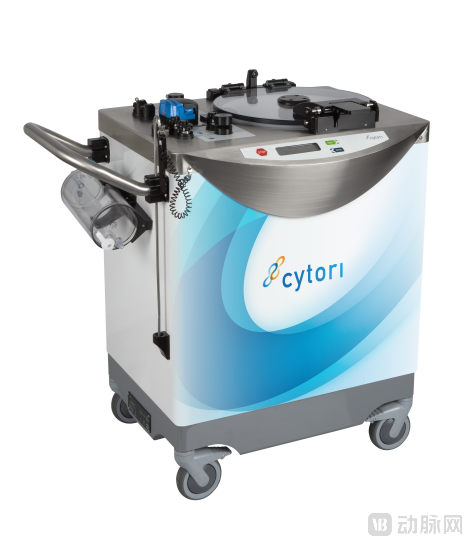
Celution 800 Automated Station for Autologous Fat and Stromal Vascular Fraction (SVF) Harvesting
The Celution 800 Automated Station for Autologous Fat and Stromal Vascular Fraction (SVF) Harvesting acts as the intelligent core of the system. Its integrated advanced algorithms provide real-time monitoring of centrifugation speed, temperature, and fluid pressure, achieving a control precision of ±10 rpm and ±0.5°C. This precision control guarantees exceptional batch-to-batch consistency in the final preparation, ensuring its reliability for clinical use.

Celution 805 Single-Use Processing Circuit Kit for Adipose Tissue and Stromal Vascular Fraction (SVF)
The Celution 805 Single-Use Processing Circuit Kit for Adipose Tissue and Stromal Vascular Fraction (SVF) features a hermetically sealed design that serves as the system's sterile barrier. This ensures the entire procedure—from adipose tissue infusion to final cell reinfusion—is conducted within a closed pathway, effectively maintaining a contamination rate below 0.1%.
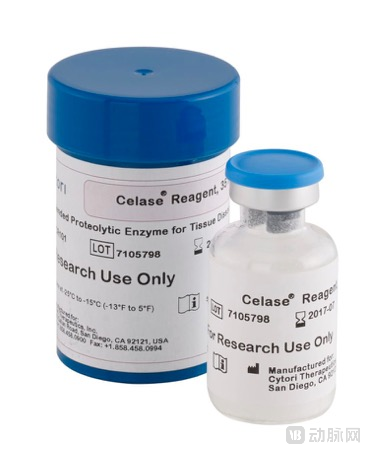
Celase Peptide Purification Reagent
The Celase Peptide Purification Reagent represents a core technological breakthrough in the system. This specially formulated compound enzyme reagent efficiently dissociates the adipose stromal matrix while maintaining a cell viability rate exceeding 80%. Furthermore, it is the world's first to achieve this while limiting enzyme residue to the stringent safety threshold of just 10 ng/mL.
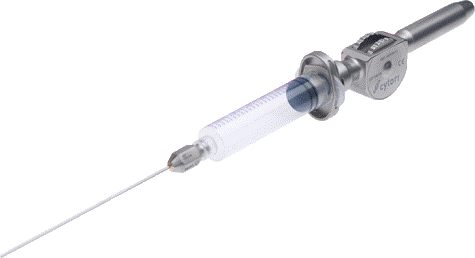
Celbrush Syringe Assist Device
The Celbrush Syringe Assist Device ensures precise delivery of the cellular product. Its adjustable needle design allows clinicians to optimize the injection for different treatment sites, enabling uniform distribution of ADRCs.
Together, these four components collectively form a complete clinical solution. The process begins when a physician obtains adipose tissue through minimally invasive liposuction. The Celase reagent then precisely dissociates the extracellular matrix, releasing the regenerative cell population. These cells undergo automated washing, enrichment, and concentration within the closed consumable set. Finally, the entire process is completed under the system's precise control. The entire procedure takes only 90-120 minutes, enabling true point-of-care transplantation.
Compared to traditional manual methods, the system represents a leap forward in key performance indicators such as contamination control, washing efficiency, and processing time:
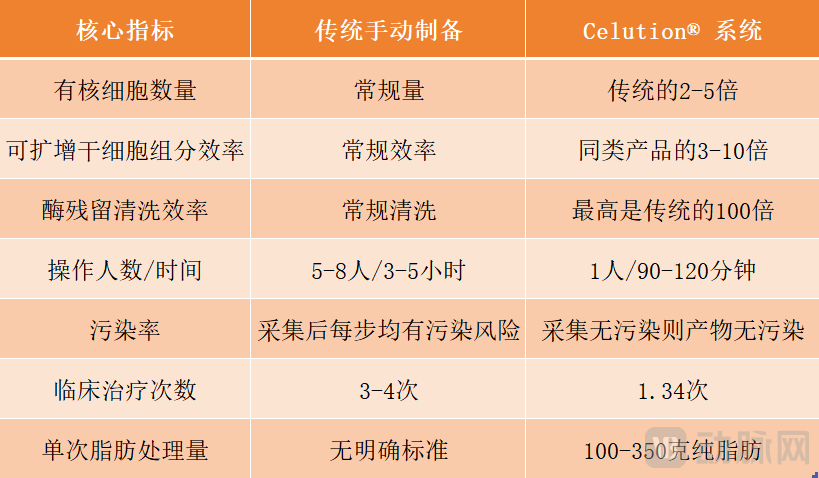
Quantitative Comparison of Core Metrics Between the Celution® System and Traditional Manual Preparation
The launch of the Celution® system signifies the transition of adipose-derived stromal cell technology from a research-grade laboratory procedure to a mature medical device solution. Crucially, its core components—the Celution 800 Automated Station for Autologous Fat and Stromal Vascular Fraction (SVF) Harvesting, Celution 805 Single-Use Processing Circuit Kit for Adipose Tissue and Stromal Vascular Fraction (SVF)—were the first in their category to receive a Class III medical device registration certificate from China's National Medical Products Administration (NMPA). This milestone establishes a standardized, regulatable, and traceable clinical pathway for regenerative medicine treatments.
3Covering Multiple Diseases with Accelerating Global Approvals
The true value of a technology is ultimately determined by its clinical efficacy. As of 2025, the Celution® system has been utilized in 47 registered clinical studies, both within China and internationally. These studies span more than ten disease areas, including reproductive health, plastic and reconstructive surgery, wound healing, and rare diseases.
For instance, in the field of obstetrics and gynecology, the system is used to treat patients with thin endometrium by promoting angiogenesis and tissue repair, thereby improving endometrial thickness. In breast surgery, ADRCs are utilized for post-mastectomy reconstruction, helping patients restore chest contour and enhance local tissue elasticity. In terms of wound healing, the system is applied to treat chronic wounds such as diabetic foot and skin defects, accelerating healing and reducing recurrence rates.
While solidifying its applications in common diseases, Cytori is also actively exploring treatments for rare disorders. In 2025, the company, in collaboration with Professor Wang Jiucun's team from Fudan University, the Chinese Organization for Rare Disorders, and the Chengdu Purple Shell Public Service Center, launched a project on "Autologous Adipose Stromal Component Transplantation for Improving Hand Dysfunction in Systemic Sclerosis." If approved by regulators, this would become China's first officially supervised adipose-derived regenerative therapy for scleroderma, offering a novel treatment option for patients.
Concurrently, the Celution® system is gaining validation through international multi-center applications.
Globally, the system is demonstrating significant clinical impact: At the Mayo Clinic in the U.S., its application in treating avascular necrosis of the femoral head has enabled 80% of patients to avoid joint replacement. The Danish National Center for Regenerative Medicine has utilized it for rehabilitating post-prostatectomy erectile dysfunction, with 70% of patients resuming normal sexual function. Furthermore, Japan's Ministry of Health, Labour and Welfare (MHLW) has approved the system for treating male stress urinary incontinence, making it the first regenerative medicine device included in Japan's national health insurance reimbursement list.
Bolstered by growing clinical evidence, the Celution® system is gaining significant momentum in global regulatory pathways. The system's indication for scleroderma has received Orphan Drug Designation from the U.S. FDA, while certification under the EU's new Medical Device Regulation (MDR) is targeted for completion by 2026. Concurrently, the company is strategically advancing market entry in Australia, ASEAN, and Belt and Road Initiative countries, driving multi-national registration and access initiatives.
This series of advancements demonstrates that the Celution® system is transitioning from a single technological platform to a globally standardized regenerative treatment tool.
4Clinical Adoption in 10+ Hospitals with Sustained R&D Fueling the Future Ecosystem
Cytori's commercialization path has benefited from precise strategic layout and policy support.
On the policy front, aligned with China's 14th Five-Year Plan for biopharmaceutical development, the company is set to launch a new synthetic biology production line. Furthermore, its Celution 805 Single-Use Processing Circuit Kit has been designated as a "Shanghai High-Tech Achievement Transformation Project," a recognition that underscores its role in accumulating valuable expertise for the domestic production of regenerative medical devices.
For market expansion, Cytori has adopted an innovative "tiered penetration" strategy. From 2025-2026, the focus is on establishing flagship clinical centers in leading top-tier hospitals across China. Starting in 2027, the reach will extend to regional medical hubs. The company's "online training + expert fellowship" model has effectively lowered the barrier to clinical adoption. To date, over ten hospitals in China routinely use the Celution® system for various clinical treatments and research.
The steady market expansion is sustained by continuous R&D. Cytori maintains an annual R&D investment of approximately 43% of its expenditure. By 2025, the company had filed 254 patents, covering fields from device architecture and enzyme systems to consumable manufacturing and clinical applications. The team is now advancing the next-generation Celution® system with a core focus on achieving full automation and enhanced regulatory compliance, thereby paving the way for its future expansion into primary care markets in China and internationally.
Looking ahead, Cytori emphasizes its commitment to building a more comprehensive "regenerative medicine ecosystem."
On one hand, the company is collaborating with domestic and international universities—including Sweden's University of Gothenburg and Chalmers University of Technology, as well as China's Taiyuan University of Technology and Jiangnan University—to develop an integrated "cell-material-printing" 3D bioprinting system for complex tissue repair. On the other hand, Cytori plans to launch a fat banking system, offering long-term personal health management services through the storage of adipose tissue and regenerative cells, thereby expanding the application boundaries of regenerative medicine.
5Conclusion: Adipose Tissue – A New Frontier for Chinese Medical Innovation
From securing global technology ownership through transnational litigation to overcoming the challenges of automated preparation; from bringing hope to scleroderma patients to gaining clinical recognition from leading global hospitals—the journey of Cytori mirrors the broader ascent of China's regenerative medicine capabilities.
While the commercialization of regenerative medicine continues to face challenges such as prolonged regulatory cycles, difficulties in cost control, and insufficient accumulation of evidence-based data, Cytori's experience demonstrates that device-based standardization is the crucial pathway toward sustainability—transforming adipose-derived regeneration into a viable therapeutic tool adoptable by mainstream healthcare systems.
Driven by the dual engines of policy support and technological innovation, Cytori is turning the regenerative potential of adipose tissue into a global hallmark of Chinese medical innovation. With the development of next-generation products and expansion into international markets, this "key" to unlocking the value of adipose-based regenerative medicine is creating new possibilities for the future of care.