

Crescendo Biologics Advances Next-Generation Humabody® VH Platform in Strategic Collaborations with Takeda and BioNTech
Crescendo Biologics
Pharmaceutical R&D Developer
In January 2023, the UK DBT Life Sciences Innovator Showcase selected life sciences companies across six categories. After a rigorous screening process, Crescendo Biologics Ltd. (hereinafter referred to as Crescendo) was awarded the champion in the biopharmaceuticals and vaccines category of the 2023 Life Sciences Innovator awards.
Crescendo Biologics, Ltd., founded in 2008, is an immuno-oncology company based in Cambridge, UK, dedicated to developing novel targeted T-cell enhancing therapies. Over the past decade, Crescendo has collaborated with global partners such as Takeda Pharmaceutical and BioNTech on the discovery and development of multi-target drugs using its next-generation HumabodyVH technology platform. Additionally, it signed an exclusive global licensing agreement with Zai Lab for the localized treatment drug ZL-1102.
With Crescendo being named the winner in the biopharmaceuticals and vaccines category by UK DBT this time, it has once again drawn market attention.
University laboratories in the UK have always been the main battleground for incubating startup companies, especially in the field of life sciences.
Beauhurst counted more than 1,500 spin-outs from UK academia, and the data showed that nearly a third (425) are in the life sciences sector. Crescendo Biologics is one of them. Spun out of the Babraham Institute in 2008, it embarked on the development journey of a new generation of immunotherapy.
The Babraham Institute used to be part of the Institute of Animal Physiology and Genetics at the University of Edinburgh and became independent in 1993. Their goal is to bring academia and industry together to accelerate scientific research and development.
A research team led by Dr. Marianne Bruggemann at the Babraham Institute observed in a 2007 paper that mice lacking the ability to produce antibody L chains could spontaneously generate their own HCAbs, albeit with lower efficiency. This laid the theoretical foundation for the Humabody VH platform.
In addition to its highly promising theoretical foundation, Crescendo has continuously updated its leadership team after its establishment, recruiting talent from companies such as AZ, Cambridge Antibody Technology, GSK, and Intel.The current leadership team has extensive experience in advancing antibody-related therapies and various immunotherapies into the clinic.
 From left to right: Theodora Harold (CEO), Philip Bland Ward (CTO), Julia Tilson (COO)
Source: Crescendo Biologics official website
Theodora Harold, CEO of Crescendo, has raised significant capital for the industry and initiated and executed numerous business development and licensing deals over her 20-year career. She was a founding team member at MISSION Therapeutics and PsiOxus Therapeutics and held executive roles at companies including Cytomyx Holdings Plc and Orthomimetics.
Chief Information Officer Philip Bland Ward also has more than 20 years of experience in biopharmaceutical R&D and has held senior operational and leadership roles in the development of novel antibody therapies. His career began at the GSK Institute of Applied Pharmacology and Glaxo Wellcome. Phil has also served as Chief Strategy Officer at Navion, a company focused on antibody therapies, and SweetSpot Therapeutics.
Julia Tilson, a veteran with 32 years of experience, serves as the Chief Operating Officer at Crescendo Biologics. Prior to this, she held the position of Key Project Scientific Director at companies such as MedImmune, GSK, PowerMed, and Xenova. Additionally, she has an outstanding track record in leading the implementation of corporate strategies. Most recently, she sold a key project from Dezima to Amgen for $350 million.
Each team member has their own focused field and expertise.In Crescendo's strategic layout, members perform their respective duties, facing the unique global competition in the industry. From a single platform to multiple pipelines, utilizing Biopharma as a growth springboard, expanding industry-academia-research cooperation, and adopting different growth strategies at various stages, Crescendo has been forged into today's "champion."
Targeted immunotherapy is a cash cow and still a rapidly growing track.
According to a Global Market Insights report, the antibody therapeutics market size exceeded $186 billion in 2021, and with new therapies and drugs being approved for disease treatment, it is projected to grow at a compound annual growth rate (CAGR) of 13.2% from 2022 to 2028. The increasing demand for targeted drug therapies and continuous technological advancements will drive the growth of the antibody therapeutics industry.
Crescendo Biologics has entered the targeted immunotherapy field with its Humabody VH platform.The Humabody VH platform is Crescendo Biologics' proprietary transgenic mouse platform, which can generate fully human VH antibody fragments, namely single-domain antibodies based on the VH (variable heavy chain) domain of an antibody structure.
Stronger tissue accumulation and tissue penetration capabilities
The fully human VH antibody fragment is the smallest part of an antibody capable of specific antigen binding.About one-tenth the size of a standard antibody.Its small size means that fully human VH antibody fragments can accumulate quickly in tumors. Compared with conventional antibodies, this small size enables stronger penetration, easier clearance of tumors, thereby avoiding potential toxicity and achieving a better therapeutic index.
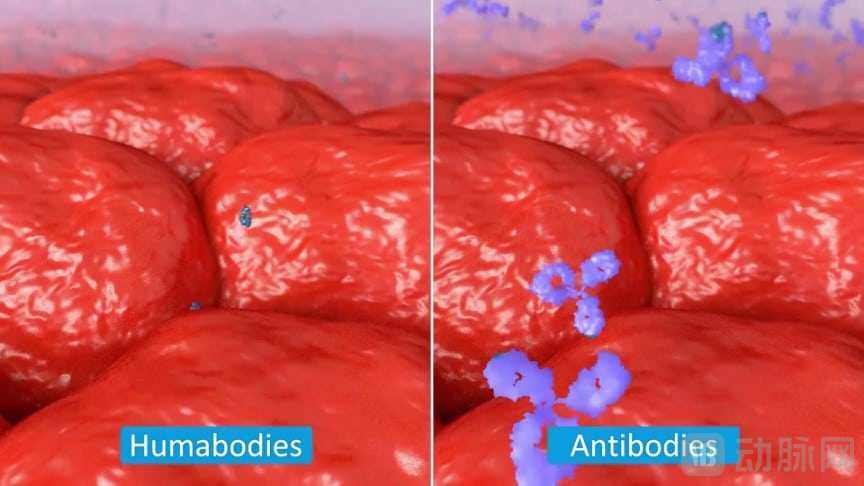
Their small size and biophysical properties mean they can penetrate tumors and tissues faster and deeper than conventional antibodies.
Source: Crescendo Biologics official website
Different specificities boost the development of multi-target immunotherapy
Like monoclonal antibodies, these fully human VH antibody fragments can exist as independent monovalent proteins or in a "linked" form. When connected, they can have the same or different specificities, targeting a single antigen or multiple targets, respectively.VH generated against different targets can be formatted with flexible linkers to create multispectral, multifunctional therapeutic molecules, a novel mechanism of action that standard antibodies cannot achieve. Additionally, the Humabody VH platform can also extend the half-life of antibodies.
Wider application scenarios, providing multiple drug delivery routes
Fully human VH antibody fragments can offer a range of administration routes, such as intravenous, subcutaneous, local, pulmonary, oral, and ocular injections. Moreover, they can be used in combination with prodrugs or radioisotopes, showing extensive potential for clinical applications.
Supported by the Humabody VH platform, Crescendo Biologics is progressively advancing its T-cell enhancer pipeline in the field of oncology. The pipeline's advantages in safety and efficacy mainly include:
Safety can be enhanced by the conditional activation of tumor-specific T cells that are only localized in the tumor microenvironment.
Proliferation of Tumor-Specific T Cells Drives Extensive Tumor Cell Killing
Survival of Tumor-Specific T Cells for More Durable Anti-Cancer Effects ("Memory" Response)
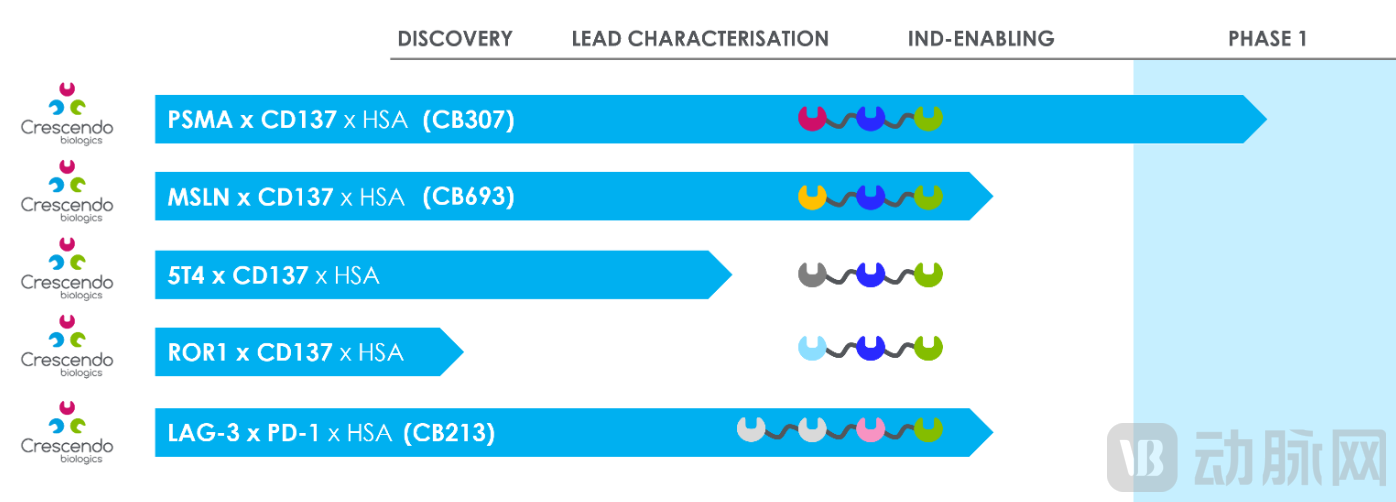
Crescendo's R&D Pipeline
Source: Crescendo Biologics official website
Crescendo's lead program, CB307, is a novel half-life extended CD137 x PSMA-targeted therapeutic that selectively activates tumor-specific T cells. The unique format of CB307 helps avoid systemic toxicity and has the potential to be applied across a wide range of PSMA-positive cancer indications to address significant unmet medical needs. It is currently in Phase I clinical trials.
In addition, CB213 is a preclinical molecule targeting PD-1 x LAG-3, designed to provide safer and more effective therapeutic interventions for cancer patients who are resistant or refractory to PD-1 blockade alone.
The preclinical study of CB213 has been published in the British Journal of Cancer. The data shows that CB213 can significantly induce T-cell proliferation in the peripheral blood of non-small cell lung cancer patients and demonstrates notable anti-tumor activity in preclinical models.
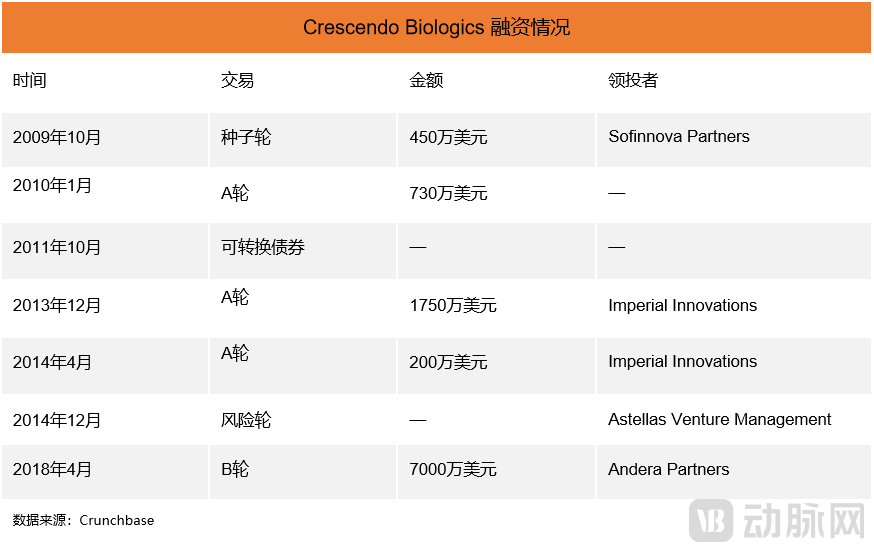
Since the seed round in 2009, Sofinnova Partners has been continuously investing in Crescendo Biologics, without missing a single round.In the most recent Series B financing round, Crescendo Biologics secured $70 million in funding. The round was led by Andera Partners and Biodiscovery V, the largest life sciences fund in Europe. This represents the largest disclosed Series B biotechnology financing in Europe in 2018.This financing brings Crescendo's total funding to $116.2 million.
In the view of Graziano Seghezzi, Managing Partner at Sofinnova Partners, this round of financing demonstrates the potential of Crescendo Biologics' Humabody VH platform.
Currently, Crescendo is further validating the Humabody VH platform through collaborations with Biopharma and research institutions in the field of immuno-oncology and other diseases.
In the development of CB307: In September 2019, Crescendo Biologics signed a collaboration with world-leading oncology research groups at the University of Oxford and the University of Surrey; in October 2021, it further advanced the drugability research of CB307 in collaboration with The Institute of Cancer Research, London.
In addition, Crescendo Biologics has also partnered with Takeda, BioNTech, and Zai Lab to advance pipeline development.
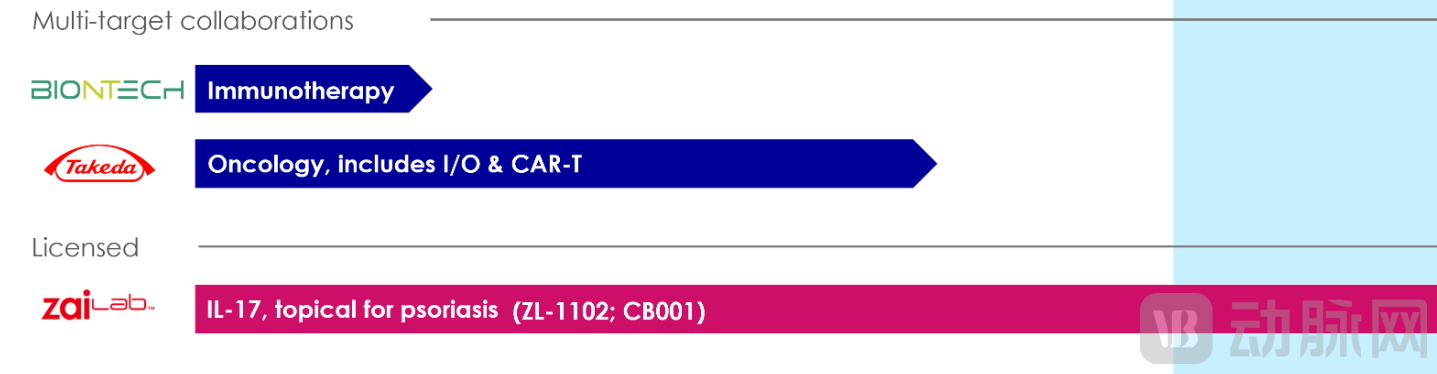 Crescendo's Pipeline in Collaboration with Other Pharmaceutical Companies
Source: Crescendo Biologics official website
In October 2016, Crescendo Biologics signed a global strategic collaboration and licensing agreement with Takeda Pharmaceutical Company. In 2019, Takeda Pharmaceutical incorporated the development of Humabody VH domains into its CAR-T therapy.
In 2018, Crescendo's first topical treatment drug for inflammatory conditions, ZL-1102, was licensed to Zai Lab. Following a Phase 1b clinical trial in psoriasis patients, Zai Lab plans to continue the full development of ZL-1102.
Crescendo and BioNTech signed a global collaboration agreement in January 2022. The two parties will develop and commercialize multiple differentiated immunotherapies.