

Umoja Biopharma Files for IPO After Raising $263M to Advance Next-Generation In Vivo CAR-T Therapies

Umoja Biopharma
Cancer Treatment Drug Developer
Data shows that 90% of cancers manifest as solid tumors, but traditional chimeric antigen receptor (CAR) T-cell immunotherapy is only effective for a few hematologic malignancies and melanoma. Cancer patients who respond to conventional CAR-T cell immunotherapy face challenges such as long waiting times, potential adverse reactions, risk of infection, and exorbitant treatment costs.
Limited scalability and other logistical challenges mean that patient demand far exceeds the capacity to supply treatments. Patients with solid tumors and blood cancers are in urgent need of more effective and safer treatment options.
In response, Umoja Biopharma (hereinafter referred to as Umoja), a U.S.-based preclinical biotechnology company, is committed to using its proprietary integrated technology to reprogram immune cells in vivo, creating next-generation immunotherapies for the treatment of solid tumors and hematologic malignancies.
Umoja was founded in 2019 and is headquartered in Seattle, Washington.Established only three years ago, Umoja Biopharma, Inc. has completed a $263 million financing.Leap to become the second place in the 2022 Emerging Life Sciences Companies list selected by BioSpace, a well-known media website in the biopharmaceutical industry.
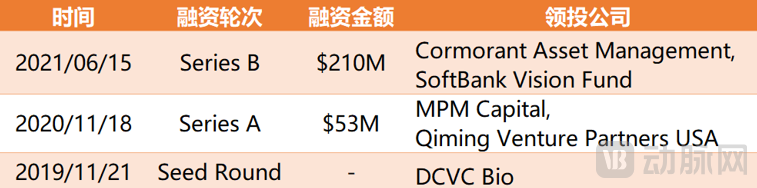
Umoja Historical Financing Situation, Source: Public Information Compilation
Umoja Biopharma integrates its four developed platforms (VivoVec, iCIL, RACR/CAR, and TumorTag) to work collaboratively, overcoming many limitations of the current generation of ex vivo cellular immunotherapies by generating and supporting anti-tumor T cells that target both tumor and stromal cells.
According to Dr. Ryan Larson, Vice President and Head of Immunology at Umoja, the company's four technology platforms have two main goals – improving therapeutic outcomes and addressing issues related to solid tumor heterogeneity and the engraftment, survival, and expansion of therapeutic cells.
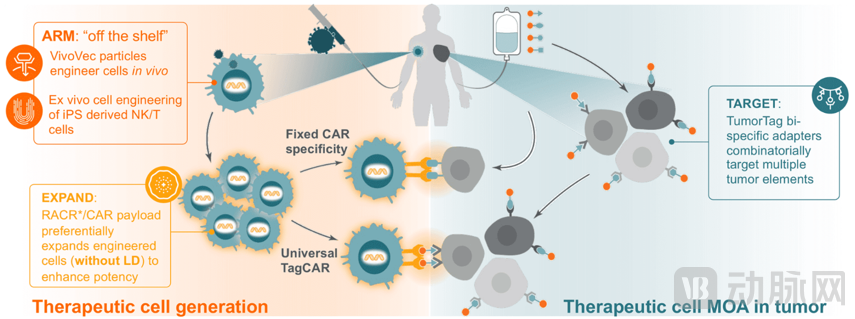
Umoja's Integrated Immunotherapy Platform, Image Source: Umoja
VivoVec Platform: In Vivo Gene Delivery
Umoja Biopharma, Inc. has developed the VivoVec gene delivery product based on its proprietary third-generation lentiviral vector technology. After introducing VivoVec into the body, patients are able to produce their own anti-cancer CAR-T cells. These cells undergo genetic recombination through the RACR/CAR system, enabling clinicians to control their functionality.
This ready-made technology avoids the complexity and delays of in vitro cell therapy, reduces treatment costs, and provides in vitro applicability in settings more suitable for traditional CAR-T in vitro therapies.
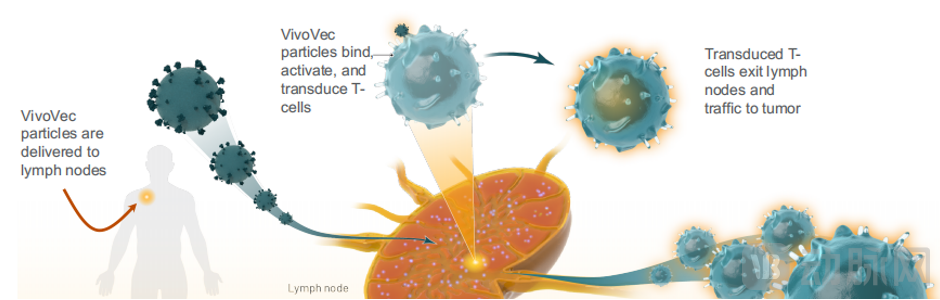
Operation Process of VivoVec Platform, Image Source: Umoja
RACR-Induced Cytotoxic Lymphocyte Platform (RACR-iCIL)
This platform is based on a novel cell manufacturing process that utilizes Rapamycin-Activated Cytokine Receptor (RACR) technology to mass-produce synthetic anti-cancer cells from induced pluripotent stem cells (iPSC). These cells, known as induced cytotoxic innate lymphocytes (iCIL), can enhance the patient's endogenous anti-tumor immune function and work in conjunction with in vivo CAR-T cells produced by VivoVec.
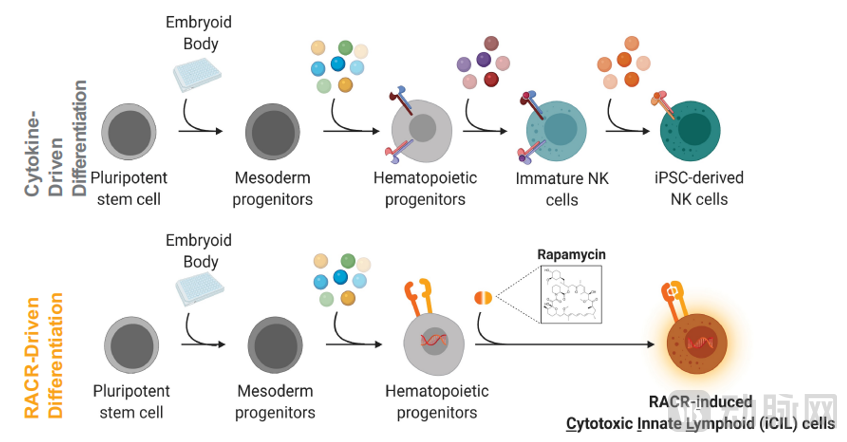
RACR-iCIL Cell Synthesis Process, Image Source: Umoja
RACR/CAR: In Vivo Cell Programming
RACR uses small-molecule drugs (rapamycin) approved by the FDA with long-term safety, replacing the depletion of lymphocytes in traditional therapies. By directly providing survival and expansion signals to engineered immune cells, the transduced T cells become resistant to rapamycin's native anti-proliferative activity.
Rapamycin activates and enhances VivoVec transduction cell activity through the RACR system while inhibiting tumor growth, suppressing the immune response to VivoVec particles, enabling re-dosing of VivoVec-transduced drug products, and inhibiting the rejection of transgenes expressed in VivoVec-transduced cells.
These secondary mechanisms of action of rapamycin are part of the core design principles of the RACR system, crucial for maximizing the potency of RACR expression products and achieving long-term survival and expansion of CAR-T cells produced in vivo.
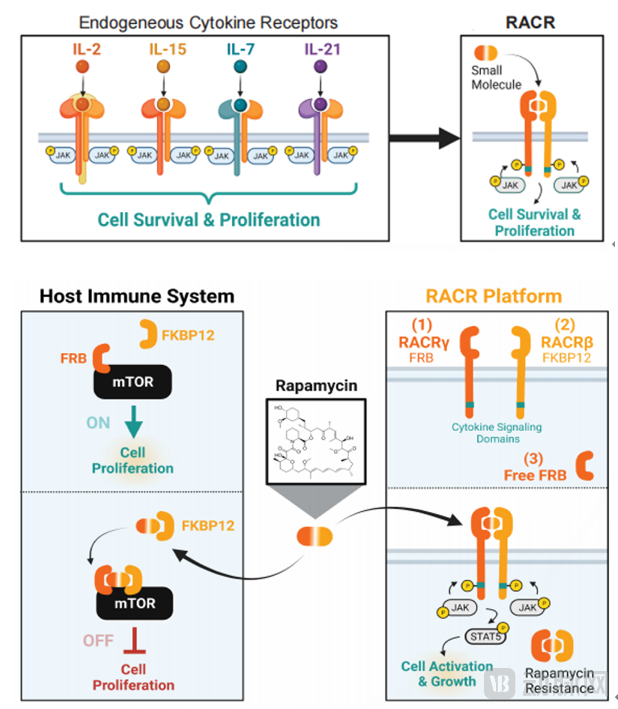
RACR Platform System, Image Source: Umoja
TumorTag: Universal CAR Tumor Targeting
TumorTags can target and effectively attack the combination of cancer cells and stromal elements that tumors use to evade the body's defenses. It is suitable for various cancer treatments and can be used with universal CARs in conjunction with ex vivo manufactured cells (autologous or allogeneic cells) to increase targeting flexibility.
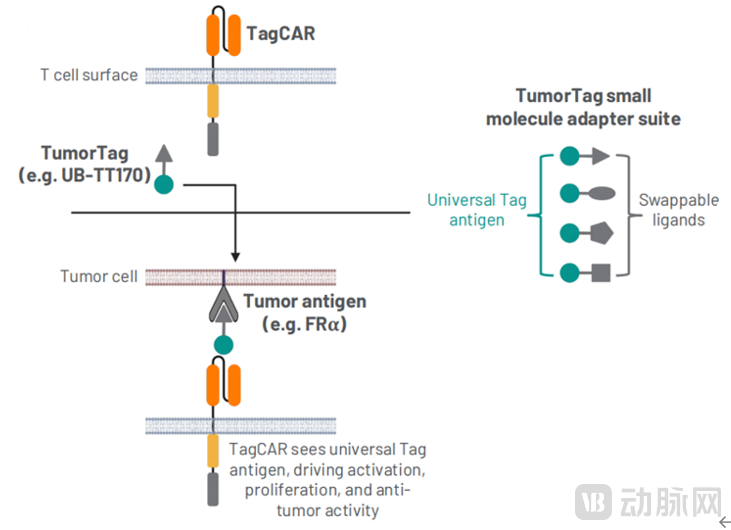
TumorTags and TagCAR, Image Source: Umoja
Umoja is Swahili for unity.
This word also reflects the principle behind Umoja's operations: bringing the right people and the right technology together to do something truly transformative.
In addition to the multi-platform technology "unity," Umoja's "unity" is also embodied in its gathering of a world-class team of scientists, researchers, and drug development experts who are working together towards the common goal of unlocking the true potential of CAR-T cell therapy.
The founders of Umoja include Andy Scharenberg and Ryan Crisman, Phil Low, and Michael Jensen, who are professors from the Seattle Children's Research Institute, Seattle Children’s Hospital, and Purdue University respectively. Umoja was established based on the groundbreaking work of the Seattle Children's Research Institute and Purdue University.
Moreover, Umoja's research team covers multiple fields such as lentiviral vector biology, synthetic biology, stem cell biology, and immunology. Such a highly collaborative R&D team enables Umoja to rapidly advance new discoveries into its product pipeline.
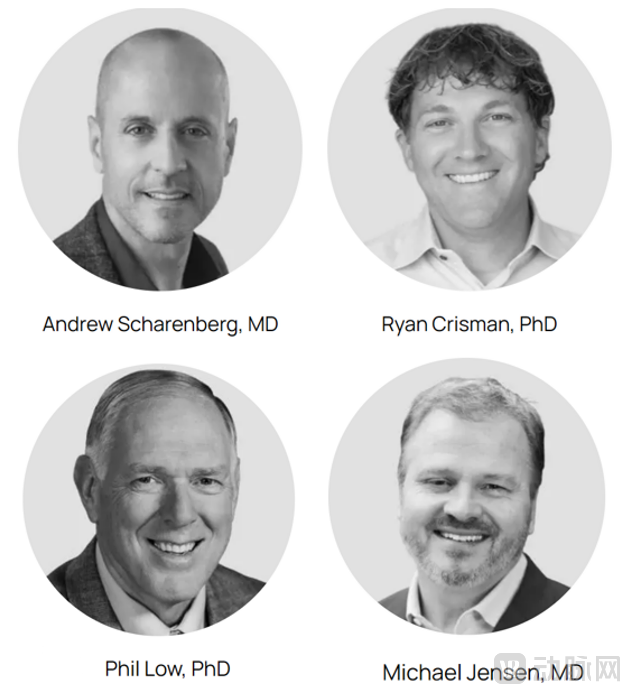
The four co-founders of Umoja, image source: Umoja
In addition, Umoja actively promotes external "solidarity" cooperation to expand the application of platform technology.
On May 23, 2022, Umoja Biopharma announced a collaboration with Lupagen aimed at revolutionizing cancer treatment by combining Lupagen's novel ex vivo gene delivery technology with Umoja’s next-generation in vivo therapies, thereby transforming patient care.
On June 10, 2022, Umoja Biopharma and TreeFrog Therapeutics announced a collaboration to evaluate Umoja's iPSC platform within TreeFrog's C-Stem technology for the expansion and immune cell differentiation in bioreactors.
On November 21, 2022, Umoja Biopharma and IASO Biotherapeutics announced a collaboration to evaluate Umoja’s iCIL platform with IASO's most advanced CARs. The collaboration will focus on providing off-the-shelf therapies for patients with hematologic malignancies (initially Acute Myeloid Leukemia (AML)), with the goal of improving patient accessibility.
Currently, Umoja's main clinical program is UB-VV200+UB-TT170 for the treatment of solid tumors.The project is currently in the data generation phase to support IND, and is expected to be successfully advanced to IND as early as 2023.In addition, Umoja will continue to advance the UB-VV111 and UB-iC200 projects, which are also in the IND-supporting data generation phase, as well as the preclinical development of UB-iC300 in collaboration with IASO.
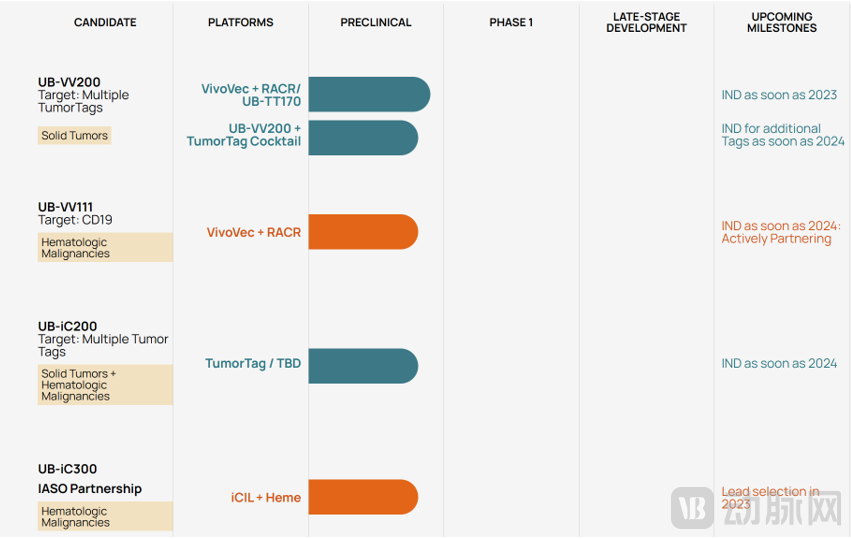
Umoja's R&D Pipeline, Source: Umoja
Regarding the future, Umoja is full of confidence: "Umoja's fully integrated approach can design the patient's own immune system to attack and destroy tumors in a simple and cost-effective manner, enabling widespread application. We believe our team has the capability to deliver the next generation of immuno-oncology therapies, bringing transformative benefits and allowing more patients to receive effective treatment," said Dr. Ryan Crisman, Co-founder and Chief Technology Officer of Umoja.