

MaiTe Medical Materials secures tens of millions of RMB in angel round to pioneer bioenergetic materials and biodegradable 3D-printed implants

Maite Medical Materials
R&D and Production of Medical-Grade Bioactive/Bioenergetic Medical Materials
Recently, MaiTe Medical Materials has secured nearly RMB 50 million in funding. The round was led by Shaanxi Financial Asset Management, with joint investments from Jingwei Heying, Chipoly Tech Group, Powerseed Investment, Xincheng Investment, and Daiquan Chemical Technology.
Concurrently, MaiTe Medical Materials announced the completion of its merger and acquisition of Tongguang Biotech. The raised capital will be allocated to establishing a new production line for novel bioactive raw materials, obtaining certification for 3D-printed artificial bone, and advancing the development and commercialization of innovative medical aesthetic products.
MaiTe Medical Materials was established by integrating the scientific research capabilities of Xi'an Jiaotong University's team in the field of highly active medical raw materials with the industrial expertise of T-Bright Biotechnology in biodegradable medical devices. The company focuses on the R&D and supply of medical-grade bioactive/bioenergy materials, as well as the development of innovative medical devices for orthopedics, dentistry, and medical aesthetics.

R&D and Office Space of MaiTe Medical Materials
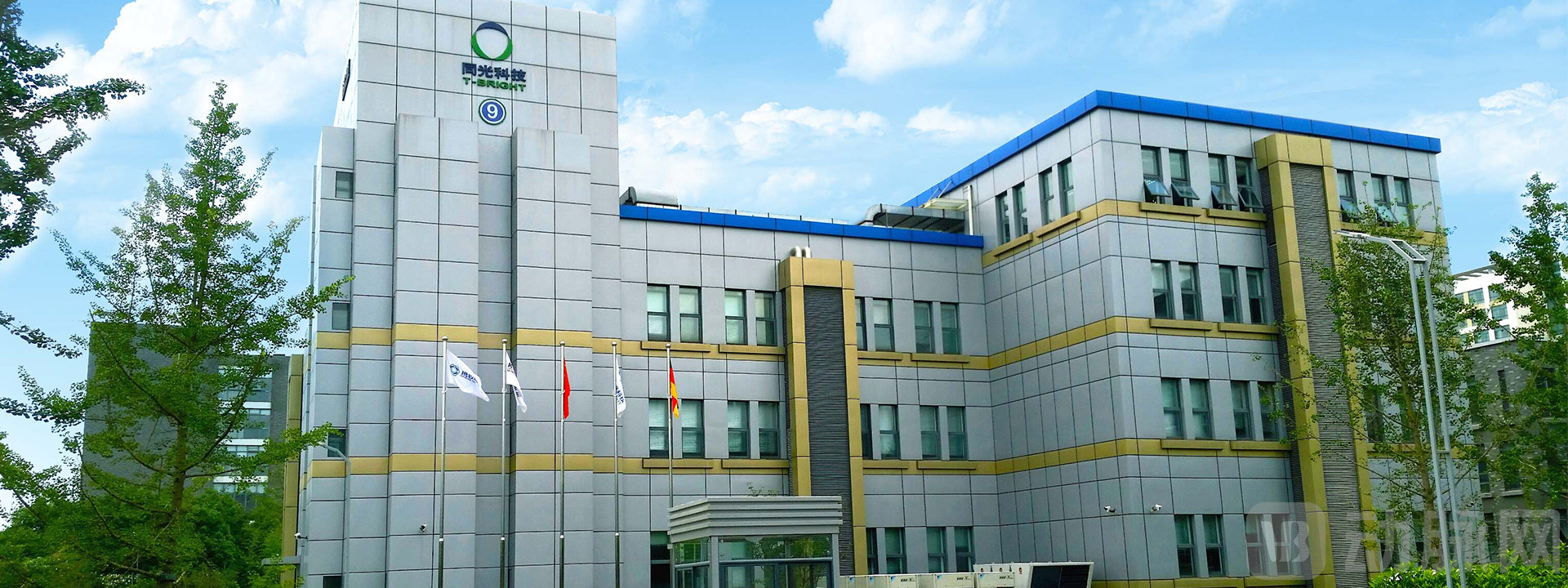
Tongguang Biotechnology R&D Building
1 Novel Absorbable Polycitrate Bioactive Energy Material
Poly(1,8-octanediol citrate) (POC), as a new-generation bioenergetic and bioactive medical polymer, demonstrates significant advantages in tissue regeneration and medical aesthetics, positioning itself as a key candidate to replace traditional biodegradable polymers like PLA and PCL. In terms of chemical structure and degradation properties, POC possesses abundant carboxyl and hydroxyl active sites, enabling controllable cross-linking and tunable flexibility through molecular design. Unlike the hydrophobicity and brittleness of PLA and PCL, POC exhibits excellent hydrophilicity and adjustable mechanical properties. Its degradation products are non-toxic citric acid and small-molecule metabolites, which can directly enter the tricarboxylic acid (TCA) cycle to participate in cellular energy metabolism, endowing it with unique "metabolic compatibility" and "bioenergetic regulation" capabilities.
In the field of tissue regeneration, POC materials effectively modulate the extracellular microenvironment. By releasing citric acid, they enhance cellular metabolic activity, promote angiogenesis and collagen deposition, thereby accelerating the regeneration and repair of bone, soft tissue, and skin. Their excellent elasticity and degradability make them superior to traditional materials like PLA and PCL for applications such as soft tissue scaffolds, vascular repair membranes, and bone regeneration carriers. In medical aesthetics, POC holds significant application potential in areas like dermal fillers, tissue remodeling, anti-aging, and injury repair, owing to its injectability, mechanical compatibility, antioxidant activity, and energy metabolism activation. Its metabolites help maintain local cellular energy homeostasis, promote fibroblast activation and collagen regeneration, establishing its inherent characteristics as a natural "bioactive skin rejuvenation material."
The synthesis of high-molecular-weight, high-purity Poly(1,8-octanediol citrate) (POC) has been a persistent challenge, largely due to the branched-chain structure of its citric acid monomer. This fundamental hurdle explains the current global absence of commercial-scale POC production. To overcome these industrialization barriers, MaiTe Medical Materials, in collaboration with researchers from Xi'an Jiaotong University, has developed a novel POC platform. This initiative is dedicated to enabling the scaled production of medical-grade POC by tackling key issues such as low molecular weight, inadequate mechanical strength, and difficult purification.
To date, no medical device based on poly(1,8-octanediol citrate) (POC) has been approved for market in China, indicating that the overall R&D and industrial landscape for this material remains in its nascent stages. Globally, Acuitive Technologies in the United States stands as the only company to have successfully commercialized a POC-based medical product. According to Mr. Chen Feihao, General Manager of Mate Medical Materials, the company is the pioneer in developing novel POC raw materials in China. With over a decade of dedicated technical accumulation and an extensive portfolio of dozens of invention patents, the company has established a pronounced first-mover advantage.
The novel poly(1,8-octanediol citrate) (POC) developed by MaiTe Medical Materials exhibits multiple technological advantages in both synthesis and performance. Research from the company's R&D team indicates that POC enhances the regenerative activity of bone cells and skin-related cells through mechanisms involving direct targeting of cell membrane proteins and activation of intracellular aerobic phosphorylation energy metabolism. Animal studies have demonstrated significantly superior outcomes compared to traditional materials such as PLA and PCL.
Furthermore, POC shows considerable promise for medical aesthetics applications. Its degradation rate exceeds that of polylactic acid (PLA), and its breakdown products are metabolized by the body without inducing inflammation. Unlike materials that depend on inflammatory stimulation, POC functions through active induction of collagen regeneration. The newly formed collagen demonstrates greater resistance to degradation, creating a beneficial cycle where "repeated injections lead to progressively enhanced effects." This contrasts with PLA-based products that typically "require ongoing treatments to sustain results." Additionally, through strategic molecular weight optimization, POC offers enhanced processability, making it particularly suitable for applications such as aesthetic injectables.
2Nanoscale Bioactive Microcrystalline Glass Material Platform
Bioactive glass (BG), a class of inorganic amorphous materials with controllable bioactivity, was first developed by American scientist Larry L. Hench in 1969. As the world's first biomaterial capable of both tissue repair and integration, it has seen widespread clinical application in bone and dental regeneration, skin wound healing, and oral desensitization, with remarkable efficacy. However, conventional BG biomaterials are hampered by several inherent shortcomings, including highly alkaline degradation byproducts, energy-intensive synthesis, slow degradation rates, and limited functionality. These issues significantly constrain their broader application in clinical and aesthetic medicine.
The research team led by the Chief Scientist of Maite materials has achieved significant breakthroughs in the field of novel nano-bioactive glass-ceramic materials in response to the aforementioned clinical application bottlenecks in recent years. For instance, the synthesis of nano-glass-ceramic raw materials with controllable structures and functions through low-temperature in-situ crystallization technology is expected to achieve large-scale mass production. Glass-ceramics combine the dual advantages of bioactive ceramics and bioactive glass, effectively overcoming the intrinsic issues of alkalinity, energy consumption, and functionality associated with traditional materials. Meanwhile, nanoscaling significantly enhances its in vivo degradability, improves the repair capabilities of hard and soft tissues, and facilitates the preparation of microsphere medical formulations.
It is reported that Shaanxi Lemon Biomaterials Co., Ltd., a subsidiary of MaiTe Medical Materials, is currently developing a range of new materials, including bioactive glass and glass-ceramic microspheres, as well as micro-nano bioactive glass-ceramics, to expand the frontiers of their innovative clinical applications.
3World's First 3D-Printed Artificial Bone Made of High-Ratio Active β-TCP and PCL Composite Material
Single-material systems face inherent limitations in mechanical properties, bioactivity, or degradation characteristics, making them unsuitable for direct use in artificial bone applications. For instance, certain materials possess excellent bioactivity but are hampered by poor mechanical strength, or conversely, demonstrate robust mechanical performance yet lack sufficient bioactivity.
The artificial bone, developed by MaiTe Medical Materials' wholly-owned subsidiary T-Bright Biotechnology, utilizes material composite technology. It combines tricalcium phosphate—selected for its excellent osteogenic capability and degradation profile—with the elastomeric polymer polycaprolactone (PCL), which offers outstanding mechanical toughness. This approach is designed to harness the advantages of both materials, ensuring robust bioactivity while enhancing the composite's toughness and mechanical properties. Leveraging its proprietary PCL/β-TCP composite technology, the artificial bone successfully replicates mechanical properties similar to those of autologous bone and achieves a dual effect of bone repair.
As an innovative medical enterprise, MaiTe Medical's near-term strategy channels its efforts into two pillars: first, securing market approval and commercial success for its innovative orthopedic and dental materials; second, achieving scaled production of POC and bioactive glass raw materials and pioneering their use in medical aesthetics and regenerative medicine.
Long-term, the company is positioning itself as an international leader, leveraging its scientific prowess to bridge serious and consumer medical markets. Its core mission is to become a driving force in regenerative medicine by delivering groundbreaking products that accelerate patient recovery and empower clinicians with superior treatment options.
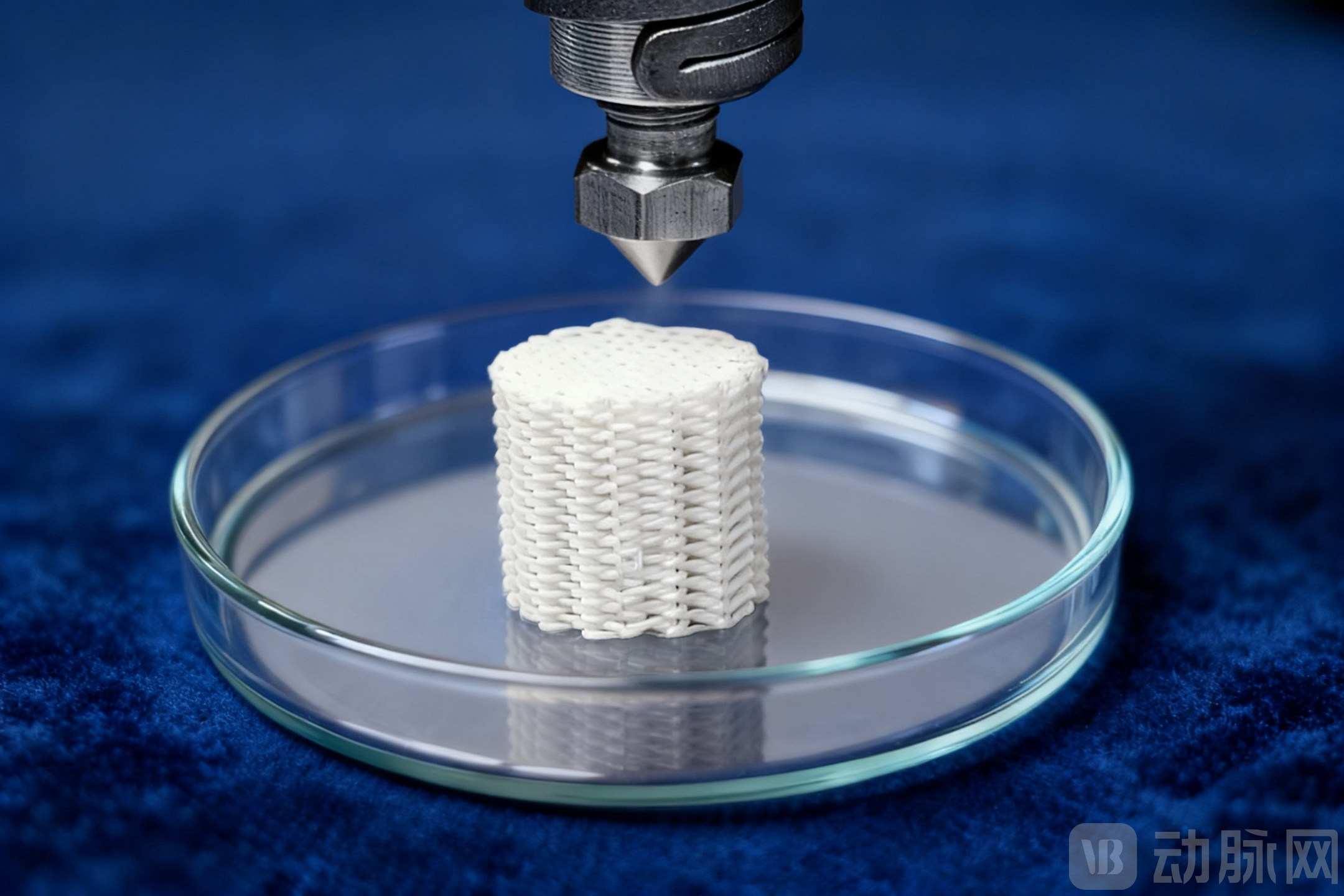
3D-Printed Artificial Bone