

Five Breakthrough Medical Device Sectors Captivating Investors: IPO Filings Reveal Cutting-Edge Innovations

HearHill
Cardiovascular Innovation Product Developer
In the pastOver the past 20 years, China's medical device industry has broken overseas monopolies through "imitative innovation," rapidly narrowing the gap with developed countries. Particularly in the fields of low-value medical consumables and mid-to-low-end medical equipment, domestically produced products have already gained a certain competitive edge in the global market.
Today, China's medical device market has become the second largest market globally, and by 2025, the market size willBreakthrough 1 Trillion Yuan. In this market规模超万亿元, "imitative innovation" clearly can no longer meet the demand. Therefore,China's medical device industry needs to shift from "imitative innovation" to "original innovation based on clinical needs"。
However, for investors, "original innovation based on clinical needs" usually has high technical barriers and thresholds, and is characterized by a long R&D cycle, large initial investment, high uncertainty, and significant risks. Nevertheless, "original innovation based on clinical needs" has the potential to disrupt existing market structures and bring about a new wave of industrial revolution.
On one side is enormous risk, on the other side is tremendous reward. In response, an increasing number of investors are choosing to put real money into "early-stage and small-scale" investments to drive technological innovation and accelerate industrial transformation. Currently, these investors, with substantial funds at their disposal, are searching for the next disruptive innovation in medical device technology.
VCBeat, through communication with several investors and based on previous financing data and the development stage of innovative technologies, has foundFive innovative technologies with strong innovation, high commercialization potential, and the ability to potentially disrupt existing markets.For your reference.
The percutaneous ventricular assist device (pVAD), namely the percutaneously inserted ventricular assist device, is a small blood pump inserted into the ventricle through the skin in an interventional manner. The blood pump drains blood into the arterial system, partially or fully replacing the heart's pumping function and maintaining the body's blood circulation.
Interventional artificial heart can be applied in clinical scenarios such as the treatment of acute myocardial infarction and protection during high-risk PCI surgeries, helping to improve the survival rate of related indications. Among these, treatments for acute myocardial infarction and PCI surgeries exceed one million cases annually in China, indicating a huge market potential.
Abiomed has validated the clinical and commercial value of interventional artificial hearts overseas. Clinically, Abiomed's interventional artificial heart product line, the Impella series, has been globally applied and recommended by multiple clinical guidelines. However, the penetration rate of this product remains relatively low, indicating significant room for development.
Commercially, in the fiscal year 2022, Abiomed achieved a revenue of $1.03 billion, representing a 22% year-over-year increase. Of this, $985 million came from its interventional artificial heart products, accounting for over 95% of total revenue. It can be said that Abiomed’s $16.6 billion valuation (approximately RMB 115 billion) is largely supported by its interventional artificial heart products. In November 2022, Johnson & Johnson announced the acquisition of Abiomed for $16.6 billion. Additionally, if predetermined commercial and clinical trial milestones are achieved in the future, Abiomed’s shareholders will be entitled to an additional cash payment of up to $35 per share.
Globally, currently only Abiomed's Impella series has received FDA approval, while in China, no interventional artificial heart products have been approved yet. However,In China, companies such as Tongling Biomimetic, HearHill, HeartPower Medical, DiYuan Medical, FengkaiLi Medical, XinHengRui Medical, and Core Medical have made their moves., as well as other well-known investment institutions such as Sequoia China, Legend Capital, CDH VGC, Qianji Capital, Yahu Investment, TF Capital, Vivo Capital, CD Capital, Lilly Asia Ventures, and ZhenXinGu Capital.
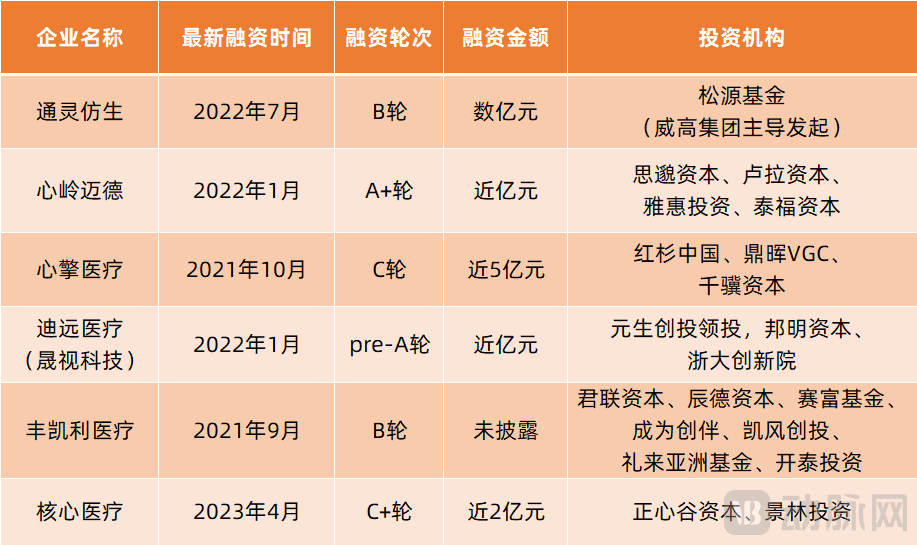
Among them, Tongling Biomimetic has completed animal experiments and type inspection, and is about to enter clinical trials; HearHill, Heart Power Medical, Di Yuan Medical, and Core Medical have all carried out animal experiments; the SynFlow®3.0 independently developed by Fengkai Li Medical entered the NMPA Innovative Medical Device Special Review Process in January 2023.
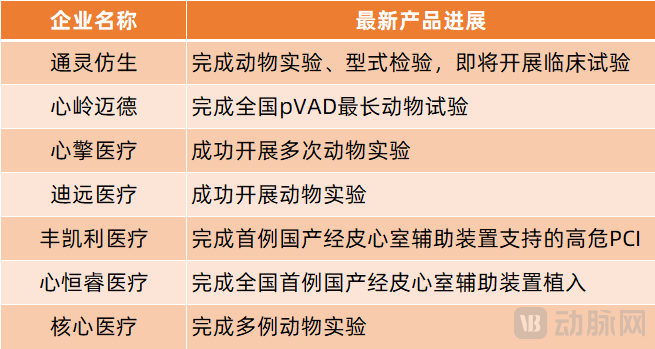
(Source: Collated from public information)
When human blood vessels cannot transport blood normally due to diseases, trauma, and other factors, artificial blood vessels can replace the vessels or serve as bypass grafts to ensure normal blood transportation. Currently, artificial blood vessels are widely used in various clinical scenarios, including aortic replacement or bypass, peripheral vascular bypass grafting, vascular trauma repair, vascular access for hemodialysis, and coronary artery bypass grafting.
According to the "Global and Chinese Artificial Blood Vessel Industry Research and 14th Five-Year Plan Analysis Report," the global artificial blood vessel market size reached 23.5 billion yuan in 2020 and is expected to reach 31.8 billion yuan by 2027.
According to the caliber size, artificial blood vessels are divided into three specifications: large, medium, and small. Typically, those above 10 millimeters are referred to as large-caliber artificial blood vessels, those between 6 millimeters and 10 millimeters are medium-caliber, and those below 6 millimeters are small-caliber. Among these, the main types currently used in clinical applications are large and medium-caliber artificial blood vessels, and globally, no small-caliber artificial blood vessels have been approved yet.
In contrast, small-caliber arterial disease has a high incidence and mortality rate. If small-caliber artificial blood vessels were developed, it would not only save more patients with vascular diseases but also greatly expand the market for artificial blood vessels and bring substantial commercial returns.
It is reported that large and medium-diameter artificial blood vessels are mainly made of polyester and expanded polytetrafluoroethylene (ePTFE). However, when these materials are used to manufacture small-diameter artificial blood vessels, issues such as thrombosis, intimal hyperplasia, and infection arise, leading to poor clinical performance. Nevertheless, withBreakthroughs in Materials Science and Tissue Engineering TechnologyThe development has led to several innovative companies researching and developing small-diameter artificial blood vessels, with excellent clinical data already achieved.
Industry insiders believe: With the rise of artificial blood vessel companies relying on new materials and technologies, traditional non-absorbable polymer artificial blood vessels will exit the historical stage.
For example, the human acellular tissue-engineered blood vessel (HAV) developed by Humacyte, a leading company in artificial blood vessels, utilizes tissue engineering technology to generate "living" human blood vessels outside the human body, demonstrating excellent clinical performance. As of the end of 2021, HAV has been implanted in approximately 471 patients without any immune rejection reactions to date. Humacyte estimates that if the HAV product ultimately receives FDA approval, the potential peak annual sales of its vascular products could reach $12.1 billion.
It is worth mentioning that, in 2018, Fresenius signed a $150 million strategic cooperation agreement with Humacyte for the commercialization rights of HAV technology.
In China,Lingbo Biotech, Roumai Medical, Wuhan Yangsen, Haimai MedicalInnovative companies such as HearHill have also relied on technologies like tissue engineering to develop small-diameter artificial blood vessels.
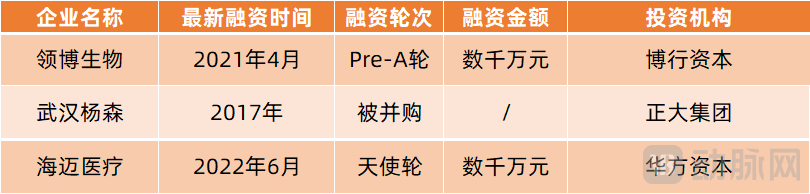
Among them, the biologically engineered artificial blood vessel independently developed by LeadBio has completed its first clinical cohort in August 2022; Roumai Medical has developed a small-caliber tissue-engineered artificial blood vessel and a tissue-based electronic blood vessel; the small-caliber artificial blood vessel developed by Wuhan Yangsen has been approved to enter the green channel and progressed to the animal testing phase; Haimai Medical has developed autologous and allogeneic decellularized matrix small-caliber artificial blood vessels.
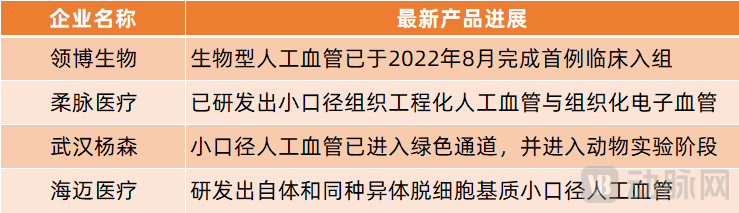
(Source: Collated from public information)
Polymeric valve is an innovative device based on new materials and technologies that can better treat heart valve disease.
"The Report on Cardiovascular Health and Diseases in China 2021" shows that there are approximately 25 million patients with valvular heart disease in China. Valvular heart disease is becoming increasingly common among people aged 65 and above in China. With the growing trend of an aging population, the incidence of valvular diseases is expected to rise annually.
Clinically, the heart has four valves: the mitral valve, tricuspid valve, aortic valve, and pulmonary valve. By 2030, it is projected thatMitral ValveThe interventional treatment market size will reach 120 billion yuan;Aortic ValveThe interventional treatment market size will reach 110 billion yuan... The market space is extremely broad.
In terms of treatment, replacing artificial heart valves is the most effective treatment for patients with severe valvular heart disease. According to reports, artificial heart valves commonly used in clinical practice can be divided into mechanical valves (made of pyrolytic carbon) and biological valves (made from biological tissues sourced from pigs, cows, etc.) based on materials.
The advantage of mechanical valves is their long service life, with a design life exceeding 50 years. However, the blood compatibility of pyrolytic carbon material is poor, which can easily lead to complications such as thromboembolism. Moreover, patients must take anticoagulant drugs for life after surgery, significantly impacting their quality of life.
The advantage of biological valves lies in their construction from biological tissue, offering better blood compatibility and requiring only 3-6 months of postoperative anticoagulant medication. However, the service life of biological valves is only 10-15 years, which struggles to meet the needs of increasingly younger patients with valvular disease. Some patients even experience valve tissue calcification and valve degeneration shortly after valve replacement.
With the breakthroughs in material science, an innovative company has developed a polymer valve that combines the dual advantages of mechanical and biological valves.Compared with traditional mechanical valves and biological valves, polymer valves have excellent fatigue resistance, long service life, and excellent blood compatibility, and patients do not need to take anticoagulants for a long time.
For example, the polymer valve product launched by Foldax, a pioneer in the global polymer valve field, has entered the human clinical trial stage. Existing clinical data shows that: Foldax's polymer valve product has a longer service life than traditional biological valves, lasting up to 25 years; one year after the implantation of the polymer valve, patients' transvalvular pressure difference, effective orifice area (EOA) of the valve, and cardiac function have significantly improved, and patients do not need to take anticoagulants for a long time.
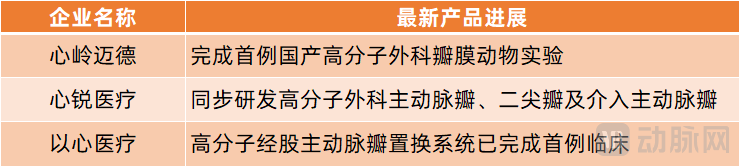
Currently, only a few companies globally have mastered polymer valve technology. Among them, companies such as HearHill, Xinrui Medical, and Yixin Medical are active in China.。
As of now, HearHill has completed the first animal experiment in China for a domestically produced polymer surgical heart valve; HeartRui Medical has simultaneously developed polymer surgical aortic valves, mitral valves, and interventional aortic valves; YiXin Medical's self-developed polymer transfemoral aortic valve replacement system completed its first clinical case in July 2022.
(Source: Collated from public information)
Pulse Field Ablation (PFA) is an innovative ablation method based on the effect of irreversible electroporation, currently being explored for application in atrial fibrillation ablation. Irreversible electroporation refers to the permanent permeabilization of the cell membrane under a certain electric field intensity, leading to leakage of cellular contents and resulting in apoptosis.
Studies show that: Pulsed electric field ablation technology has tissue selectivity. For example, under specific electric field parameters targeting cardiomyocytes, irreversible electroporation occurs in cardiomyocytes, while endothelial cells, nerve cells, smooth muscle, etc., remain unaffected.
Currently, the main ablation treatments for atrial fibrillation are radiofrequency ablation and cryoablation. Radiofrequency ablation uses radiofrequency current to generate thermal effects on the diseased tissue, ablating myocardial cells to treat atrial fibrillation; Cryoablation utilizes the heat-absorbing effect of refrigerant evaporation to rapidly lower the temperature of the affected area, damaging or killing cells in the lesion region to treat atrial fibrillation.
Similar to the principles of radiofrequency ablation and cryoablation for treating atrial fibrillation, pulsed electric field ablation also restores the normal and orderly electrical activity of the atria by "killing" the corresponding diseased cells.
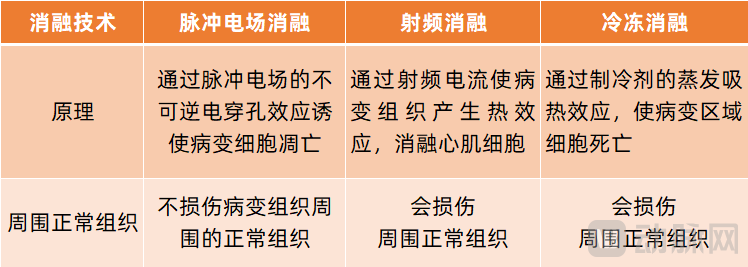
However, radiofrequency ablation and cryoablation use temperature effects to ablate cells, which can easily damage normal tissue surrounding the lesion area and cause complications. In contrast, pulsed electric field ablation technology, based on tissue selectivity, can selectively destroy myocardial tissue while ensuring the safety of other normal tissues such as the phrenic nerve, nerves, and coronary arteries, thereby improving treatment efficacy and reducing postoperative complications.
In fact, pulsed electric field ablation technology can also be applied to various clinical scenarios, such as tumor ablation. Compared with common methods like radiofrequency ablation and cryoablation in tumor treatment, pulsed electric field ablation can selectively ablate tumor tissues while preserving important structures within the treatment area, such as arteries, bile ducts, nerve bundles, and bronchi. It is also capable of treating tumors that other devices cannot ablate, such as those around blood vessels and nerves.
From the market perspective, the size of China's cardiac electrophysiology market is expected to reach 12.32 billion yuan by 2023, and the tumor ablation industry market size is projected to reach 6.15 billion yuan by 2023. Pulsed electric field ablation technology has principle-based advantages over radiofrequency ablation and cryoablation and is expected to become the mainstream ablation technology in the future.
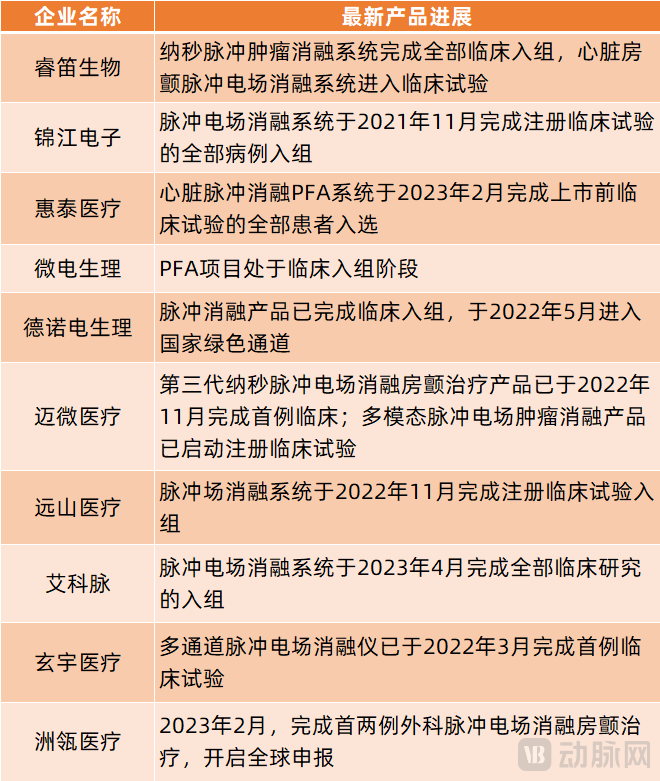
Perhaps for this reason, multinational medical device companies such as Boston Scientific, Johnson & Johnson, and Medtronic have all begun to develop related product pipelines. In China, companies like HT Medical,捍宇医疗, and MicroPort EP are also involved.Jinjiang Electronics,Hangzhou Ruidi Biotechnology Co., Ltd.Denovo EP, Xuanyu Medical,Aikangmai, Zhouling Medical, Ruidao Medical,Maivision Medical, Farvision MedicalCompanies like these have also made their moves, and the progress has been extremely rapid.。
Among them, Hangzhou Ruidi Biotechnology Co., Ltd.'s nanosecond pulse tumor ablation system has completed all clinical enrollments, and its cardiac atrial fibrillation pulsed electric field ablation system has entered clinical trials; Jinjiang Electronics' pulsed electric field ablation system completed all case enrollments for the registration clinical trial in November 2021; Hutai Medical's cardiac pulse ablation PFA system completed all patient enrollments for the pre-market clinical trial in February 2023... Overall, it is expected that domestically produced pulsed electric field ablation systems will be rapidly approved one after another.
(Source: Collated from public information)
Intravascular Shockwave Technology is a new technology innovated by Shockwave, a U.S.-listed company inspired by ultrasonic lithotripsy technology, and is suitable for vascular calcification. Meanwhile, Shockwave has also developed shockwave balloons for coronary and peripheral vascular calcification based on intravascular shockwave technology.
Currently, Shockwave's market value is approximately $10.6 billion (equivalent to about 73.5 billion yuan). On May 11, media reports stated: Johnson & Johnson and Medtronic are considering a joint acquisition of the medical company Shockwave. Previously, in April, media reported that Boston Scientific was exploring the acquisition of Shockwave. Regardless of the authenticity of these reports, it is evident that the market has a high level of attention on intravascular shock wave technology.
The moderate to severe vascular calcification targeted by intravascular shockwave technology is also a long-standing challenge in the industry. It not only can lead to the failure of angioplasty but also increases surgical risks, the incidence of immediate complications, and the rate of stent thrombosis. On the other hand, vascular calcification is a common pathological manifestation present in atherosclerosis, hypertension, diabetic vascular disease, vascular injury, chronic kidney disease, etc., characterized by high incidence and significant harm.
Based on the large number of patients and the severe harm of the disease, shock wave balloons may become a necessity for patients with vascular calcification.
Previously, there were various solutions on the market, such as Rotational Atherectomy (RA), Excimer Laser Coronary Atherectomy (ELCA), and Orbital Atherectomy System (OAS). However, these treatment methods all have certain limitations.
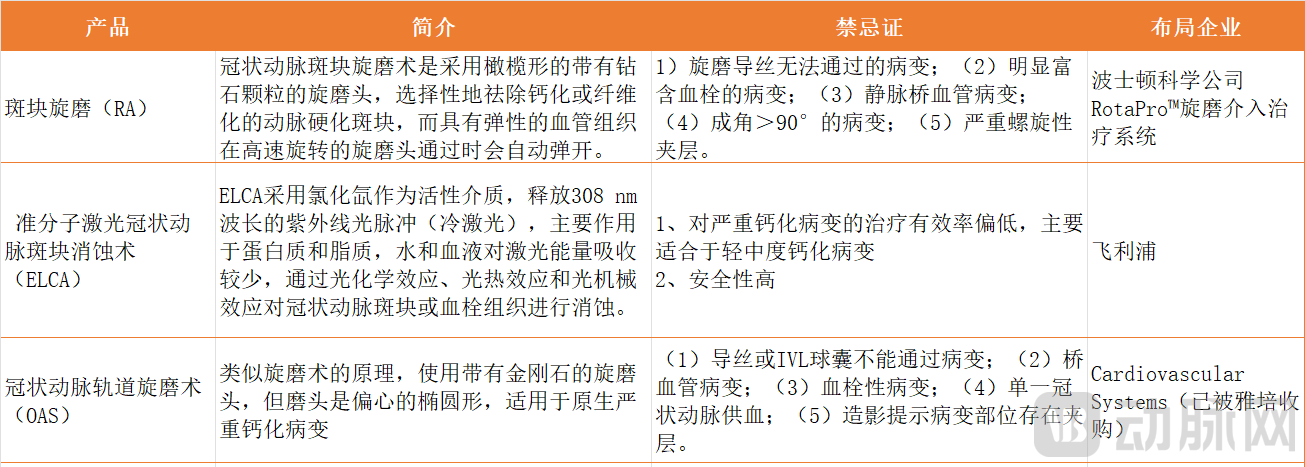
Compared with traditional treatment options, the shockwave balloon can release pulse sound pressure waves after being implanted in the diseased blood vessel segment, "shaking loose" the calcified plaque, ultimately allowing for the easy implantation of stents and other therapeutic devices. This restores blood flow and normal heart function in patients.
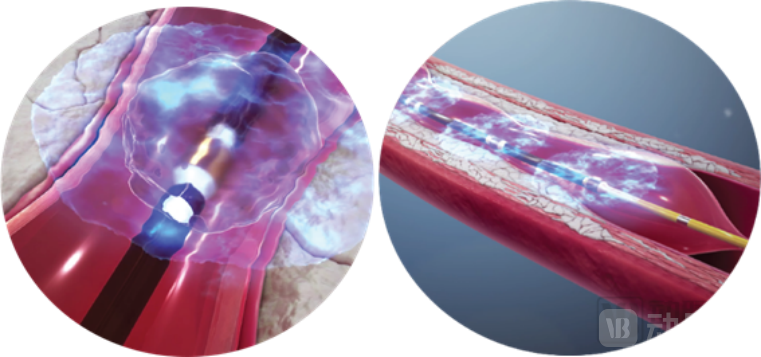
(Schematic diagram of Shockwave's product acting on blood vessels)
In terms of treatment efficacy, clinical trial data released by Shockwave shows that the shockwave balloon is highly safe and has a low incidence of major adverse cardiovascular events in the treatment of vascular calcified lesions, with no serious complications such as perforation, distal embolism, or acute occlusion. It is highly effective, with a high surgical success rate, immediate high luminal gain post-surgery, low residual stenosis rate, and good stent expansion.
Now, Jianshi Medical has collaborated with Shockwave to introduce its shock wave balloon to China and received NMPA approval in 2022.In addition to Gynocular Medical, several other companies in China, such as Puchuang Medical, Zhonghui Medical (a subsidiary of Huihe Medical), Saihe Medical, Lepu Medical, Bluestar Medical, and Beixing Medical, have also invested in intravascular shock wave technology.
Among them, the peripheral shockwave balloon and coronary shockwave balloon independently developed by Spectrum Medical have already initiated registration clinical trials in 2021; the shockwave catheter system developed by Zhonghui Medical entered confirmatory registration clinical research in 2021; the intravascular lithotripsy system for coronary and peripheral arteries developed by Saihe Medical entered clinical trials in 2022; the pulsed acoustic balloon system developed by Lepu Medical completed the first case of severe calcified popliteal artery lesion opening surgery in February 2022; the intravascular lithotripsy system for coronary arteries under Blue Sail Medical completed its first clinical enrollment in February 2023...
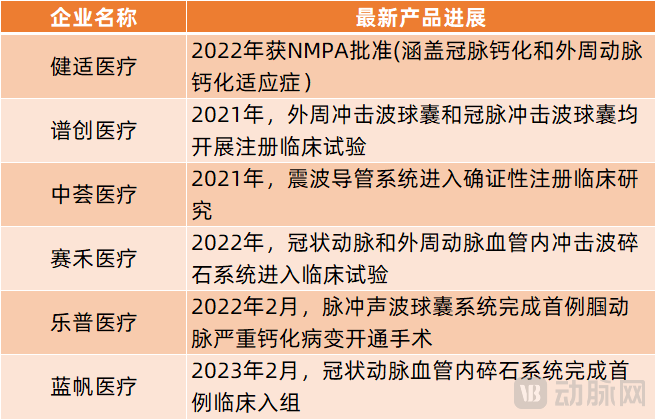
(Source: Collated from public information)
In addition, Peijia Medical has also developed a shock wave valve treatment system, expanding the application of intravascular shock wave technology to the treatment of calcific stenosis of heart valves. Currently, Peijia Medical's shock wave valve treatment system has completed multiple surgeries, all of which have demonstrated good safety and therapeutic effects.