

Five Industry Veterans Discuss Deglobalization, 'Point' Breakthroughs, and the Next Wave of Biotech Entrepreneurship

Panlin Capital
Technology Innovation-Oriented Early-Stage and Mid-Stage Venture Capital Institutions

EndoCell
Developer of in vitro regeneration technology for human tissues and organs

Ribo Life Science
Small Nucleic Acid Drug Developer
Global Biomedical Capital Market Cools Down, Returning to Rationality, which imposes higher requirements on Biotech companies—whether it is底层技术创新 (innovation in underlying technologies), 产业转化 (industrial transformation), or 公司的运营 (company operations). Meanwhile, innovationStill here.Continuously emerging, including new targets, new mechanisms, as well as new understanding and new treatment methods. Looking domestically in China, the number of INDs is increasing year by year, and License-out also reached 5 billion US dollars last year.TheMajor Transaction Events.
Against this backdrop, the 2023 Seventh Future Healthcare 100 SummitHealthcare Fund PartnerForumAbove, several senior biopharmaceutical investors and entrepreneurial scientist representatives, based in China with a global perspective.,Discussed the new changes and trends in the global biopharmaceutical ecosystem:
After a decade of rapid development in China's biomedicine industry, where do we stand globally?
Why Are There Still Many Opportunities in the Biomedical Industry Despite Globalization No Longer Being a Linear Trend?
How Should We Evaluate the Current Biotech Innovation Environment in China?
This dialogue has been edited and organized by VCBeat as follows:
Roundtable Moderator: Li Yuhui (Founding Managing Director of Panlin Capital)Partner)
Roundtable Guest: Liang Zicai (Chairman of Suzhou Ribo Life Science Co., Ltd.,CEO)
Cheng Xin (Founder of EndoCell)
Xu Qian (Redhill Capital)Partner, BeijingGeneral Manager)
Ji Changtao (Huada Win Win InvestmentPartner)
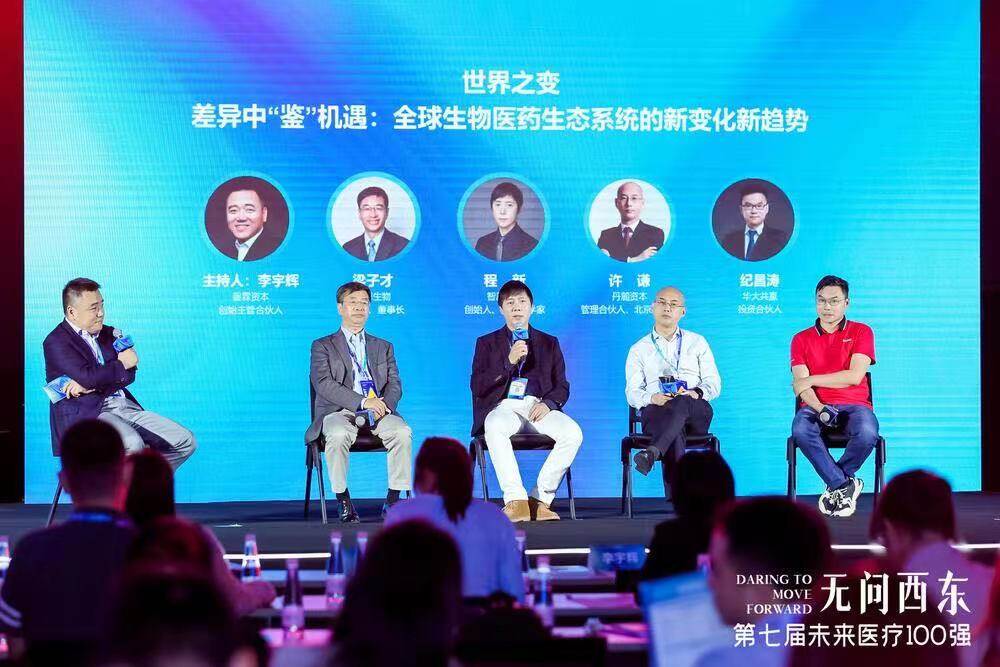
Healthcare Fund Partners Forum
"Breakthroughs have been made in 'points,' but we need patience in 'areas.'"
Matching or even surpassing the United States has been a continuous topic in China's innovative drug industry. On one hand, we must acknowledge that there is still a significant gap between China and the U.S. in basic research for innovative drugs. On the other hand, at the application level, especially regarding product development, the gap is narrowing significantly. Combined with China’s enormous market demand and large-scale research teams, the industry is in a state of vigorous growth. However, China’s innovative drug industry is still very "young" and has yet to undergo the test of cycles and major challenges. Perhaps it shouldn’t always aim for "overtaking on a curve." Long-term accumulation and patience are key for China’s innovative drug sector to establish itself within the global biopharmaceutical ecosystem.
Li Yuhui (Panlin Capital)):We are witnessing a series of new changes occurring in the global biopharmaceutical ecosystem. Whether in early discovery or upstream industrial chain localization, China's biopharmaceutical sector has achieved new breakthroughs. All of you are experts in the biopharmaceutical industry with presence across multiple global regions. Regarding some of the emerging trends in the global biopharmaceutical industry, do you have any particular observations that you would like to briefly share? Especially between China and the U.S., we see the gap in the development of the biopharmaceutical industries narrowing. What insights does this bring? What new impact and value does it hold for global innovation?
Liang Zicai (Ribo Life Science):What remains unchanged amidst global changes? It is humanity's pursuit of health. The wealthier a society, the more it invests in health. Nearly 20% of the U.S. GDP is invested in biomedicine. As China progresses through its great rejuvenation, its investment in biomedicine will continue to grow—this trend remains constant. At present, the competition between China and the U.S. in the field of biomedicine itself demonstrates that China has already gained a certain level of competitiveness.
What has changed?At different times, international and domestic policies, economic environments, and even technological innovation paths will have different changes and fluctuations.。The biopharmaceutical industry is a marathon-like long-term industry,Facing change, we can only truly build and maintain an advantage by identifying the right direction and committing to long-term efforts.
Ji Changtao (Huada Win Win):I would like to review that. Let’s take a look at the development of the biopharmaceutical industries in the United States, Europe, Japan, and South Korea. China has a unified population, language, culture, and market, which makes it appear very large in scale. However, when comparing China's generic drugs, innovative drugs, biomedicine, medical devices, domestic talent, medical engineering transformation, interdisciplinary research, and national regulatory systems to those in Europe and the U.S., there is still a significant gap. In fact, China has only truly been developing pharmaceuticals in the last 7 to 8 years. The attention on innovative medical devices only began after 2018. This market is still too young.
The second current situation: take a look at the more than 5,000 healthcare-related publicly traded company stocks globally. The U.S. has about 1,300 to 1,400, of which around 500 are worth paying attention to. If we compare this with the three to four hundred companies listed in China, you will notice a significant difference in the industrial structure. For example, when it comes to pharmaceuticals, China has a large number of original research drug companies, generic drug companies, and traditional Chinese medicine companies. Regarding medical devices, China has many orthopedic companies, consumables companies, and even in recent years, a surge of minimally invasive companies, but with considerable repetition. In fact, if you look at the top 20 medical device companies in the U.S., there is a notable difference compared to China, such as Intuitive Surgical (maker of the Da Vinci surgical system).Such enterprises cannot be found in China, and there are significant differences in the industrial structure.
Back to this topic, what are the major changes now? We have noticed several points,The innovation cycle of the industry itself is greatly reduced,Previously, the industrialization of a technology required 30 or 40 years, but in recent years, the cycle of industrialization has been compressed to 10-20 years, or possibly even shorter. Secondly,China indeed has many things that are already ahead of the United States.,Thanks to market and some special factors. You will find that the gap between China and the US is not as large as people think. There are still gaps in early-stage talent, technology, and academia, but they are narrowing significantly.
From the "point" of view, China stands out in certain "points.". These "points" are highlights that can generate driving force and are important factors in continuously expanding the "scope." At the same time, these "points" are built on long-term accumulation rather than shortcuts, representing areas where China can continue to make breakthroughs. How to integrate these points with the broader scope will have a profound impact on the development of China's biomedicine industry.
Xu Qian (Redhill Capital):Following Professor Cheng's points on the broader perspective, it's evident that China's biomedicine industry has truly embraced innovation only in recent years. Previously, there was a noticeable gap compared to international standards, especially in developed countries. However, after several years of vigorous catch-up efforts, this gap is rapidly narrowing. A landmark event can be observed before 2015 when the number of License-out deals for innovative drugs in China was in single digits. In the past decade, both the quantity and the amount have been growing rapidly.Last year's statistics showed 44 License-out deals, with disclosed transaction amounts reaching 27.55 billion US dollars, indicating that multinational companies have recognized China's R&D capabilities and level in innovative drugs. This is a vote of confidence with money, which investors value the most.Recognition from multinational companies is an important indicator. China's innovative companies, or in terms of innovative technologies, have started to make breakthroughs in some areas, and it can even be said that in certain aspects, they are beginning to compete on the same stage as companies from Europe and the United States.
Currently, in terms of the innovative drug sector, China, whether considering the number of R&D pipelines or clinical products, ranks second globally, just behind the United States, and stands at the forefront of the second tier.
De-globalization is unstoppable in the short term, but in the long run, it remains an issue of innovation capability.
"America First" Continues: The Constant Emergence of Policies and Actions Across the Ocean Leads to Ongoing Politicized Interpretations at Home, Impacting Confidence in the Biopharmaceutical Industry. From the Perspective of "Chokepoints," the Industry Universally Fears That Instruments, Reagents, or Talent May Be "Choked Off." Additionally, Communication on Cutting-Edge Scientific Research Could Be Hindered. These Factors Will Affect Biomedical Companies, Especially R&D-Oriented Firms. In the Short Term (Three to Five Years), There Are No Issues, but Over the Long Term, If These Areas Become Restricted, It Will Have an Impact. During a Period of Globalization's Retreat, Innovative Chinese Pharmaceutical Companies with Strong Innovation Capabilities, Commercialization Skills, and Adaptability Can Better Seize Opportunities.
Ji Changtao (Huada Win Win):Three points to make clear: First, China, the United States, Europe, Russia, and third-party countries are definitely divided in terms of military, economy, and politics.The Short-term Trend of Deglobalization is Unstoppable, and the Biomedical Industry May Not Be the Most Critical Sector Affected, but in light of the pandemic, reliance on imports was not possible and domestic production became essential. This situation has, however, given Chinese companies immense confidence due to the competitive advantage of China's manufacturing industry chain.
Against this backdrop, everyone is actually seeking independence, security, and stability in the supply chain system. This demand also exists in parts of the biopharmaceutical supply chain. Many third-party countries do not have much trust in China, and although many countries are small, they still want to have a complete set of systems. This issue cannot be helped.
Third, our country is actually also introducing corresponding biosafety laws and regulations. From an investment perspective, we used to talk about internationalization, but in the future, it may not be feasible. Technologies involving human genetic resources, such as cell therapy, stem cells, gene therapy, gene editing, and nucleic acid drugs, may possibly be restricted from export by our country. The current international market capitalization could also be problematic, which is worth our consideration.
Cheng Xin (EndoCell):"The phenomenon of 'chokepoints' has always existed. From basic research to industrial transformation, such as reagent materials, the stability and reliability of domestically produced alternative products still need improvement. Therefore, it is necessary to better stimulate the motivation of upstream enterprises in China to continuously advance this issue."
At present, the China-US relationship is presenting both challenges and opportunities for upstream and downstream enterprises in the biomedical industry. Downstream enterprises, when facing challenges, must maintain innovative strategies and a long-term vision — the former addresses current enterprise development issues, while the latter tackles the ultimate goal of humanity's collective progress. Upstream enterprises, on the other hand, are encountering opportunities; as previously mentioned, there is an urgent need for improvement in reagent raw materials.Now market opportunities have emerged., this will be a very good opportunity to push everyone to do things that they didn't have the chance to do well before.. Other "choke points" are the same.
Liang Zicai (Ribo Life Science):In fact, I am not so pessimistic about "de-globalization." A review of global history shows that the radius of human communication is closely related to the convenience of transportation. Since modern times, with continuous improvements in transportation methods, the exchange of people and information has reached unprecedented heights, especially in the internet era. This inevitably leads to the flow and interaction of people, goods, information, and technology on a global scale. Therefore, "globalization" remains the trend, and the current "de-globalization" is merely a trough in the process of "globalization."
Today, there are two types of people present at the scene: some are engaged in long-term work, while others are involved in short-term work.People engaged in short-term work need to make corresponding adjustments to the current temporary "de-globalization" trend to weather the trough. However, those involved in long-term work can overlook this "de-globalization" episode and continue to position their industries towards the global market.
Xu Qian (Redhill Capital):On globalization, I think it is certainly a major trend in terms of the development process of humanity. However, when the tide comes, there are both high tides and low tides. We may currently be in the process of a low tide, which could last for quite a long time. This process might be relatively complex, with some areas still moving towards globalization while some sensitive fields experience a phase of deglobalization. Different fields and industries vary. For example, in the healthcare sector, such as cancer drugs, it would be hard for other countries to impose an embargo or restriction, as doing so would go against human values.
From the perspective of the supply chain, I think biopharmaceuticals are relatively better because its upstream, midstream, and downstream sectors are all fairly decentralized.Mentioning the impact on US-China relations, we can actually see that there were some restrictions in the US before but now they have been lifted. From the perspective of us investors, it's hard to impose restrictions on biopharmaceuticals.
From a business or investment perspective, I believe what we are competing on is innovation capability or an innovation system. For instance, Mr. Liang and Professor Cheng here are engaged in innovation—developing new products to alleviate patients' suffering. On the other hand, when we invest, including investments by Mr. Li and Mr. Ji, our goal is to deliver better returns for investors. If innovation capability is insufficient and technological standards lag behind, it may feel like others are holding us back. But essentially, it still boils down to a problem of innovation capability.
Long Biopharmaceutical, Long China
China's accession to ICH and the return of a large number of overseas talents to start businesses marked the beginning of China's Biotech industry. Scientists brought their research back to China to establish startups, renewing the mindset and operational systems of China's innovative drug development. However, the current environment has changed significantly since the early days of China's Biotech industry. In terms of policies, regulations, and the transformation of scientific research, starting a Biotech business has become much smoother than before. Yet, from the perspective of technology itself and the capital market, Biotech entrepreneurship is no longer easy on a global scale. But unique challenges often come with exceptional surprises.
Liang Zicai (Ribo Life Science):Let me share with you my experience of returning to China to start a business. I completed my Ph.D. in Sweden, then worked as a postdoctoral researcher at Yale for three years, and later returned to work in Sweden. In 2001, I shifted my research focus to siRNA, and in 2006, I began teaching at Peking University. At that time, in China, whether in academia or industry, the field of small nucleic acids was almost a barren desert. Upon my return, I aimed not only to advance scientific research but also to build up the small nucleic acid pharmaceuticals industry. In this process, I have come to realize that returning to China to start a business is closely linked with the development of the times.
In recent years, China has leapt from a relatively low starting point to the forefront globally in the field of biopharmaceutical innovation. In the future,China's advantages will continue to expand, making it highly suitable for more people to start businesses.
Ji Changtao (Huada Win Win):Many people review and say that the past 5-10 years were the golden age of entrepreneurship, and they analyze that the next 10 years or even longer will not be friendly to entrepreneurs. But I don't see it that way., we will not talk about the entrepreneurial efforts of returned overseas Chinese in the industrial sector over the past decade, nor the scientific entrepreneurs from the 60s and 70s. However, in recent years, many young returned scientists in their 30s and 40s have undergone a revolutionary change in their thinking after returning. They have become very open to innovation, entrepreneurship, and industrial thinking, and there is also an increasing pool of industrial talent available for collaboration.
In addition, from the perspective of supervision, our country has been increasingly improving in terms of laws and departmental regulations, whether it is the transformation of scientific and technological achievements or the encouragement and support for institutional innovation. I read a report from 2021, which showed that the knowledge achievements, intellectual property ownership, usage rights, and benefit feedback for returned overseas students and teachers at domestic universities are relatively well-established. Moreover, the issue of equity ownership for teachers at universities and research institutions who start businesses has also been largely resolved, indicating that the overall environment is quite favorable. Thirdly, over the past two years, there have been significant changes in the trend of integrating medicine with engineering and interdisciplinary approaches in China (which differs from the traditional Soviet-style discipline system). Additionally, the concept of "engineering" has gained prominence (in the field of synthetic biology, I recently purchased many books and was particularly impressed by this concept). Entrepreneurship is not just about solving scientific and technological problems; rather, it involves how to integrate industry and academia, along with issues like control rights and profit-sharing mechanisms.
Li Yuhui (Panlin Capital):What are our new changes in the judgment of startups, the pipeline portfolio of technology platforms, the profile of founders, and investment strategies? What are the new investment practices in this context?
Xu Qian (Redhill Capital):This is a very good question. Overseas returnees in the biopharmaceutical field bring back cutting-edge technologies and scientific achievements from laboratories around the world, giving them a distinct advantage in entrepreneurship and making them a focus for investors. The success rate of overseas returnees starting businesses in China is relatively more guaranteed. Of course, in recent years, with the increase in local funding and policy support,Local original innovations begin to emerge., so from an investment perspective, we think it still depends on the specific situation. Having an overseas returnee background is definitely a plus.
Li Yuhui (Panlin Capital):Panlin Capital's view on this issue is that scientists returning from Europe and the U.S. remain the main force of innovation and entrepreneurship. Changes in U.S.-China relations may lead to a stronger willingness for them to return to China, contributing to the continued prosperity of China’s biopharmaceutical industry. If this group does not return, then scientists who have received systematic scientific training overseas and developed their careers in China will take up the responsibility of advancing the domestic biopharmaceutical industry.The phenomenon of investing in laboratories, professors, or Ph.D. holders that has gained momentum over the past two years will continue.
This places higher demands on the judgment of founders. We will choose overseas returnee entrepreneurs who have a strong sense of belonging to China, while also paying attention to local scientists. This will also place higher demands on investors, requiring them to identify original innovations, evaluate innovative technologies, and invest in promising sectors, among other things.