China's Universities Add 104 Medical Programs in Three Years—Signaling a Strategic Shift in Healthcare Talent and Innovation
TowardPi
High-end Ophthalmic Medical Device Developer
Recently, the Ministry of Education of China released the "Record-filing and Approval Results of Undergraduate Majors in Ordinary Higher Education Institutions for the Year 2022."Approval Passed for 27 Professional Disciplines Directly Related to Medical CareIn addition, among the newly added registered majors, there are 176 majors directly related to medical fields, accounting for a total of 10%.
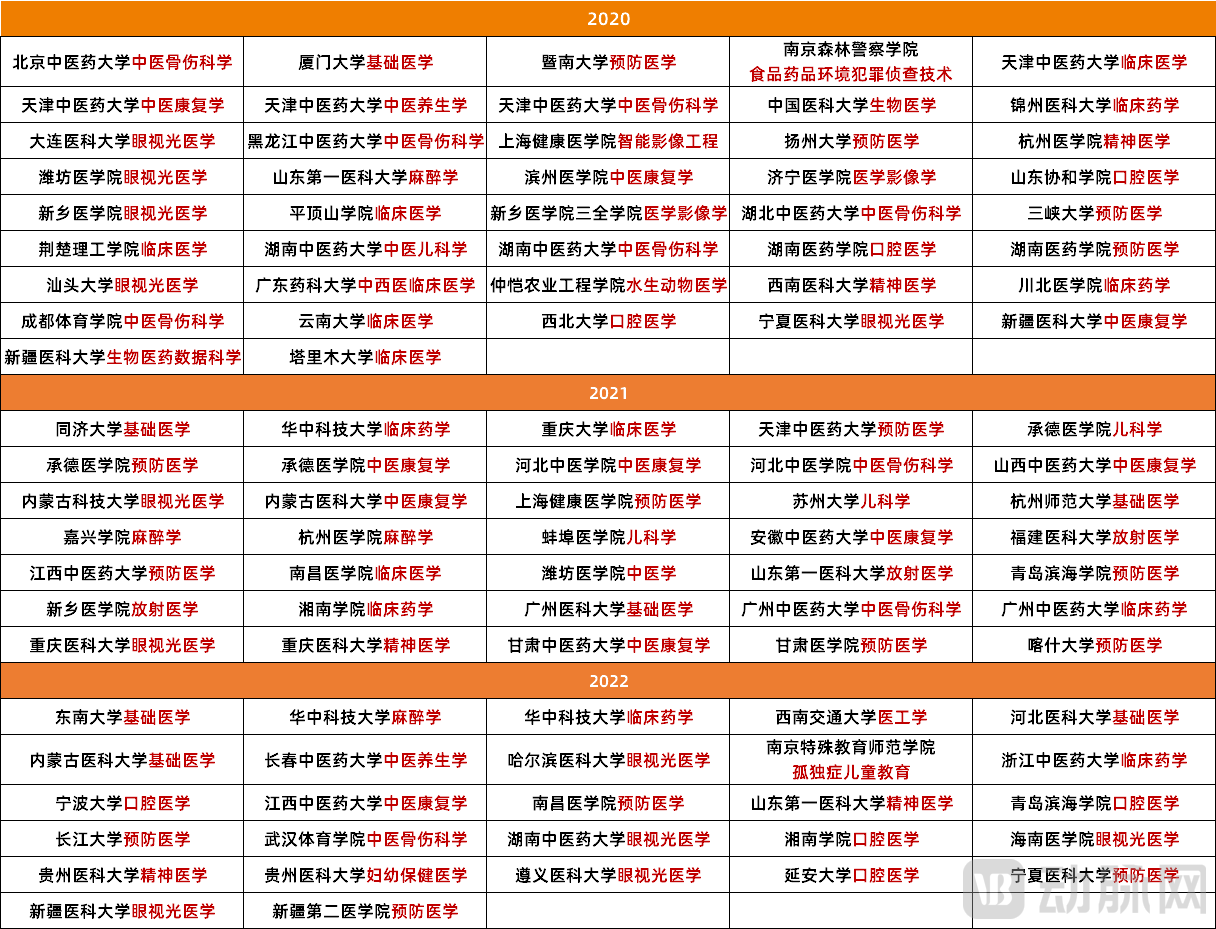
In fact, not only in 2022, but since 2020, domestic universities have shown a strong preference for adding medical disciplines. According to statistics from VCBeat,Over the past three years, the China's Ministry of Education has approved 104 professional disciplines directly related to healthcare, involving 87 institutions., including top universities such as Xiamen University, Jinan University, Tongji University, Huazhong University of Science and Technology, and South China University of Technology.
As the source of industrial development, every move of universities attracts attention from the industry, especially in the current medical field.Early Innovation and Hard TechAgainst the backdrop of this theme, the importance of universities has become increasingly evident. Of course, in recent years, universities have also been very active at the medical level, with a typical manifestation being the vigorous addition of professional disciplines related to healthcare.
So, what exactly are the reasons behind this? What medical directions do the 104 newly added specialized disciplines target respectively? Looking further ahead, what kind of transformation will these new specialized disciplines bring to the entire healthcare industry? Do they contain potential opportunities? For this reason, VCBeat has conducted a review and analysis.
Universities Align with Healthcare: Both Active and Passive
In recent years, driven by the ongoing pandemic, societal attention towards healthcare has been particularly intense, including within universities, which can be roughly reflected in four aspects:First, establish professional disciplines related to healthcare; second, attract medical talent from home and abroad with substantial incentives; third, promote the incubation of early-stage medical projects within the university; fourth, frequently engage in various levels of collaboration with hospitals, medical companies, investment institutions, and other industry players.。
The reasons for this may vary slightly due to the different positions and stages of development of each university, but the core logic is generally consistent.For domestic universities in China, the focus remains on technological research in specific fields and the cultivation of corresponding professional talents. Based on this, they further promote the industrial development of these fields.Therefore, the current collective efforts of universities towards the medical field are largely due to China's healthcare industry entering a new stage of development, which requires more resources and forces to be involved.
But this also needs to be analyzed separately.
First, from the goal-oriented perspective of technical research, universities mainly focus on cutting-edge fields in the medical industry. For instance, Tsinghua University recently inaugurated and established"Institute of Organ Transplantation and Bionics Medicine"The purpose is to focus on research in the fields of organ transplantation, bionic medicine, and regenerative medicine, promoting a series of major innovative achievements. These three areas are precisely the segments in China's medical field that are still in their early stages and urgently require original technological innovation to support rapid industrial development.
Secondly, from the perspective of talent cultivation, there are mainly two factors:On the one hand, it is to cultivate research-oriented talents in a certain cutting-edge technology field.Such as the previously mentioned organ transplantation, bionics medicine, and regenerative medicine, similar fields include synthetic biology and brain science, among others. These细分sectors in the medical field generally possess two typical characteristics: one is that the industry is still in the exploratory stage; the other is that the industry has an enormous market potential.
Another aspect of talent cultivation is to fill the gap in service-oriented professionals in a specific medical field.According to statistics from VCBeat, among the 104 professional disciplines directly related to healthcare that have been newly added by universities in the past three years,The top four in terms of quantity are ophthalmology, medical imaging, traditional Chinese medicine, and dentistry., which are precisely the four sub-directions with a significant current talent gap in the service sector.
Taking ophthalmology as an example, according to the "China Eye Health White Paper" released by the National Health Commission in 2020 as a reference, China's myopic population has reached 600 to 700 million people, but there are only 44,800 ophthalmologists in China, which meansOne ophthalmologist has to face 15,000 ophthalmic patients., and with the aging population and the increasing trend of younger people suffering from ophthalmic diseases becoming more prominent, the talent gap in the ophthalmology field will gradually widen in the future. The same is true for the medical imaging field. As early as 2020, DXY Talent released a report stating that the talent gap in China's radiology department had reached 700,000, making it the most understaffed department among doctors in China.
One of the more special aspects in this isTraditional Chinese Medicine (TCM), The reason for the structural shortage of talent in this area may differ from the other three fields. Specifically, on the one hand, the country is vigorously developing traditional Chinese medicine (TCM), and on the other hand, the current level of talent in the TCM field is uneven, necessitating the establishment of a systematic mechanism for standardized training.
Finally,In addition to focusing on technology and talent cultivation, one of the major reasons why universities have been closely collaborating with the healthcare sector in recent years is to promote the transformation of research results.. As everyone knows, in the medical field in recent years, the transformation of achievements has become a keyword. The reason for this is that under the traditional business model of "domestic substitution," the low-hanging "apples" in the industry have mostly been picked. More opportunities in the medical field will inevitably come from interdisciplinary areas centered on original technological innovation. Following this trend, as technology holders, universities naturally bear more "performance pressure."
Therefore,Universities that excel in engineering disciplines are actively collaborating with hospitals to promote the integration of medicine and engineering, jointly exploring innovative technologies and their intersection with medical scenarios. At the same time, they are frequently engaging with medical companies and investors, leveraging market forces to accelerate the transformation of university innovations into practical applications.。
What Signals Are the 104 Newly Added Medical Majors Sending?
As mentioned earlier, as the source of industrial development, a series of changes in universities will largely have a certain impact on the industry in the future. So, what key information can we gain from the 104 newly added medical majors?
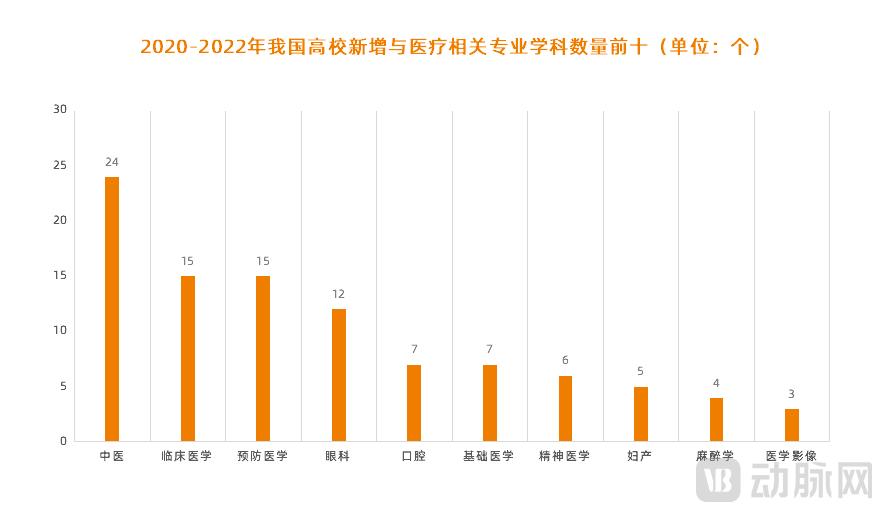
Figure 1. Top 10 Newly Added Medical-related Majors in Chinese Universities from 2020 to 2022
(Source: Ministry of Education of the People's Republic of China, compiled by VCBeat)
After sorting, VCBeat listed the top ten medical specialties in terms of quantity, which areTraditional Chinese Medicine, Preventive Medicine, Clinical Medicine, Ophthalmology, Stomatology, Basic Medicine, Psychiatry, Obstetrics and Gynecology, AnesthesiologyAndMedical Imaging, and then analyze it according to its market orientation and industry changes, VCBeat has compiled the following trends:
First observed is Traditional Chinese Medicine (TCM).According to statistics, among the 104 newly added medical majors, there are 24 in the field of Traditional Chinese Medicine (TCM), accounting for a total of 23%, and the main targeted disciplines areOrthopedics of Traditional Chinese MedicineAndTraditional Chinese Rehabilitation MedicineAs analyzed earlier, the fact that Traditional Chinese Medicine (TCM) is favored by many universities is largely due to the strong promotion of TCM development at the national level. However, from the perspective of industrial development, this also reveals potential opportunities in the TCM market.
On March 30, 2022, the "14th Five-Year Action Plan for the Enhancement of Grassroots Traditional Chinese Medicine Service Capacity" was officially released, stating that by 2025, TCM halls in community health service centers and township health centers will achieve full coverage. Local areas with conditions are encouraged to complete service connotation construction for 15% of community health service centers and township health centers’ TCM halls. This means that in the next three years, tens of thousands of TCM halls will emerge in China.
Following this market demand, we see the rise of "Digital and Intelligent Traditional Chinese Medicine (TCM)": On one hand, digital technologies are increasingly being applied to TCM service scenarios, gradually covering a full-cycle service network from prevention, diagnosis, treatment, medicine purchase to rehabilitation, addressing the challenge of TCM standardization; on the other hand, an integrated online and offline service ecosystem is gradually forming, significantly improving the accessibility and convenience of TCM services.
Next observed are ophthalmology and dentistry, which also belong to consumer healthcare.According to reports, among the 104 newly added medical majors, 19 are related to the fields of ophthalmology and stomatology, accounting for a total of 18%. The main focus of these disciplines isStomatologyAndOphthalmic Optometry Medicine. In fact, there are two core reasons why oral and ophthalmology have gained significant attention in recent years:
First, there is a huge market space.Taking ophthalmology as an example, according to statistics from VCBeat Industry Research Institute, the market size of China's ophthalmic medical services industry reached 112.57 billion yuan in 2020 and is expected to reach 256.31 billion yuan by 2024, with a high certainty of continuous market expansion. Dentistry is also a high-growth track. According to data from iiMedia Research, the market size of China's dental medical services was approximately 146.1 billion yuan in 2021, representing a year-on-year increase of 16.2%.
Second, the continuous iteration of technology and the pace of domestic substitution are gradually accelerating.Although the oral and ophthalmic markets have significant potential, they are currently dominated by imports, especially in certain specific niche markets where the import rate can reach 80% to 90%, leaving a rather limited share for domestically produced products. However, this trend has shown some changes in recent years. On one hand, the sophistication of corresponding materials and technologies has been gradually improving. On the other hand, domestic substitution has started to become the main theme in the industry, accelerating the development of China-produced products in the oral and ophthalmic fields.
It is precisely because of this that in recent years, dentistry and ophthalmology have not only become popular fields that universities are vying to develop, but have also drawn attention from the capital market. According to incomplete statistics from the VCBeat database,In the past three years, there have been over a hundred financing events in both the dental and ophthalmology fields in China, and currently, many companies are preparing for IPOs.。
The last observed fields are psychiatry and obstetrics/gynecology.Unlike traditional Chinese medicine, which is gaining prominence due to policy support, and dentistry and ophthalmology, which are rapidly growing due to market demand, psychiatry, which focuses on mental health, and obstetrics and gynecology, which centers on women's health, are relatively niche sectors despite having significant market potential. However, with the comprehensive development of the entire healthcare industry and the iteration of related core technologies, psychiatry and obstetrics and gynecology have also started to receive widespread attention.
Taking psychiatry as an example. According to the "2022 Blue Book on the Digital Mental Health Service Industry," the lifetime prevalence of mental disorders in China is 16.6%. Among them, the prevalence rates of anxiety disorders and depressive disorders are the highest, reaching 7.6% and 6.8%, respectively. In addition, in recent years, psychological problems among young people seem to be more severe, with both the proportion of cases and the severity of conditions showing a significant increase compared to the past.
In response to this market demand, digital therapeutics has provided a new direction for the mental health field. It not only makes the diagnosis and treatment of psychotherapy more standardized but also narrows the physical distance between patients and doctors, effectively improving patient compliance. From the current industry perspective, the integration of digital therapeutics and mental health is being accepted by the market. According to incomplete statistics from the VCBeat database, nearly half or more of the financing in the mental health field in recent years has been related to digital therapeutics.
Will Special Medical Foods and Rehabilitation Become the New Trend in the Medical Industry?
In the "2022 Annual Filing and Approval Results of Undergraduate Majors in Ordinary Higher Education Institutions," in addition to announcing the newly approved majors each year, it also discloses the newly filed major disciplines each year. To some extent,Compared with the professional disciplines that have already been approved, the newly added filed disciplines may better indicate the future development direction of an industry.。
According to statistics from VCBeat, in 2022, a total of 1,641 programs in China completed the registration process, among which 176 were directly related to medical fields, accounting for 10.7% of the total. Upon further analysis, VCBeat listed the top ten medical majors with the highest number of newly registered programs, which are...Food Nutrition and Health, Rehabilitation Physical Therapy, Medical Laboratory Technology, Intelligent Medical Engineering, Midwifery, Traditional Chinese Medicine, Sports Rehabilitation, Dental Technology, Medical ImagingAndMedical Insurance。
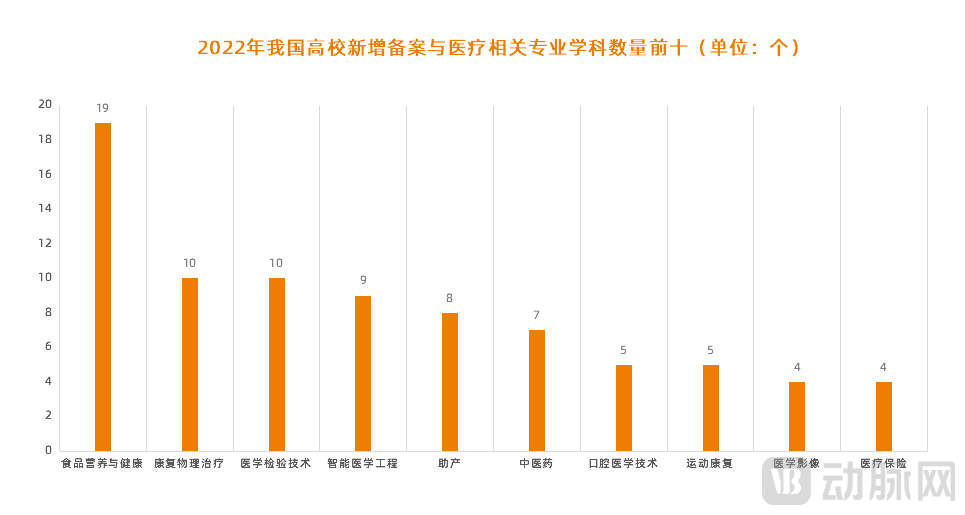 Figure 2. Top 10 Newly Added Medical-related Majors in Chinese Universities in 2022
(Source: Ministry of Education of the People's Republic of China, compiled by VCBeat)
So, what can we see from this?
The first focus is on food nutrition and health.According to statistics, in 2022, a total of 19 universities in China registered this emerging discipline, including top domestic universities such as South China University of Technology, Ocean University of China, and Jiangsu University. It is reported that food nutrition and health covers a wide range, including core areas such as food science research, food processing and distribution, and food production. However, when placed in the medical field, it is combined with...Medical Food Field。
According to the report, from 2016 to 2020, the market size of China's special medical food industry increased year by year, with an average annual compound growth rate of over 30%. Especially in 2020, the outbreak of the pandemic made immunity-boosting foods and functional foods popular in the market, causing the scale of the special medical food market to rapidly increase to 7.72 billion yuan, a year-on-year increase of 32.19%.
Although the growth rate is fast, the market size of special medical food in China accounts for less than 3% of the global market. At this stage, there is still a large gap compared with developed countries, and the industry is still in its early stage of development. The core reason for this lies inIndustry Standards Lag BehindAndDifficulty in Hospital Access for Products。
Currently, China has three national food safety standards for special medical purpose foods (FSMP): the "General Principles for Infant Formula Foods for Special Medical Purposes," the "General Principles for Special Medical Purpose Formula Foods," and the "Good Manufacturing Practices for Special Medical Purpose Formula Foods." However, with the development of the industry, these product standard categories are struggling to meet market demands. Moreover, the content of these standards consists mostly of broad regulations, making it difficult to apply them to the production and supervision of different types of products. In addition, the challenge of FSMP "entering hospitals" has left the entire industry in a bind. On one hand, FSMP shares a "high threshold" similar to pharmaceuticals, but on the other hand, it struggles to compete with drugs at the terminal level, remaining marginalized over the long term.
But the future growth space of special medical food is still worth expecting. First, against the background of aging and rapid development of the market economy, the market scale of special medical food has expanded to more than 100 billion yuan; second,As of the end of 2022, only 94 special medical foods have been approved in China, while more than 700 special medical foods have been launched globally, indicating a significant market growth.; Finally, Abbott, Nutricia, Nestlé, Mengniu, and other leading companies are currently making significant investments in the field of special medical foods. In 2022, Nestlé launched China's first tumor-specific full-nutrition formula product, Su Yi Su, indicating that special medical foods are rapidly advancing in terms of technology.
After observing the special medical field, focus on the rehabilitation track.In the top ten medical specialties ranked by the number of newly filed records in 2022, there are two disciplines related to rehabilitation, namelyRehabilitation Physical TherapyAndSports Rehabilitation, involving prestigious institutions such as China Medical University and Capital Medical University.
Unlike special medical foods, the typical characteristic of the rehabilitation field is a large market space but a low product penetration rate.One of the core reasons is insufficient market awareness., Due to the characteristics of the industry, rehabilitation is a relatively long-cycle and high-cost niche field. Moreover, because it is not a medical necessity and its effectiveness is difficult to quantify, it is easily overlooked by the market.
The second core reason is the shortage of talent.The most representative example is rehabilitation therapists. According to data from the "China Health and Wellness Statistical Yearbook," in 2020, the number of practicing (including assistant) physicians in China's rehabilitation medical industry was 16,400, accounting for less than 0.5% of the total scale of practicing (assistant) physicians. This, to a certain extent, makes it difficult for the rehabilitation industry to achieve large-scale marketization.
Even so, the rehabilitation track is still recognized as a golden track, mainly due to the huge demand population in China. Take sports rehabilitation as an example. According to the "National Fitness Plan (2021-2025)", by 2025, the proportion of people who regularly participate in physical exercise will reach 38.5%, about 500 million people. The incidence of sports injuries is 10%-20%, which means that in the next two years, at least 50 million people will have a market demand for sports rehabilitation. It is no wonder that sports rehabilitation is regarded as "the next gold mine in medical services."
Of course, apart from special medicine and rehabilitation, other professional disciplines also receive a certain level of attention.For example, Intelligent Medical Engineering, which actually means promoting the organic integration of more engineering technologies with medical scenarios. This has been the core development direction in the medical field in recent years.Such as midwiferyDriven by strong policy support, the assisted reproductive industry is beginning to boom, with a surge in market demand. However, this field is still in its early stages, and whether in terms of technology or market expansion, it remains immature at this stage, holding immense potential.Finally, Traditional Chinese Medicine, The main academic direction is the cultivation and identification of Chinese herbal medicines., which on one hand signifies that the market is paying attention to the development of Traditional Chinese Medicine (TCM), while on the other hand, TCM is rapidly entering a process of standardization and digitalization.
In conclusion
There is no denying that universities are particularly important for the development of the medical industry. Especially in recent years, this characteristic has become more pronounced. On the one hand, it is due to the cyclical changes in the medical industry, which have placed universities in a very important position; on the other hand, it is because universities are doing more and more, and their distance from the industry is also constantly narrowing.
Take the addition of medical professional disciplines as an example,It is not only driving the technical research in this field to achieve "overtaking on a curve," but also, by cultivating corresponding talents, addressing the developmental shortcomings in this area.For instance, in areas like dentistry, ophthalmology, and rehabilitation, a major pain point is the lack of service-oriented talent. Therefore, universities cultivate specialized talents in these specific fields accordingly. In contrast, in fields such as Traditional Chinese Medicine (TCM) and special medical services, the core issue is the lack of standardization within the industry. Hence, universities focus on policy or institutional improvements while also balancing technological advancements and market strategies.
Attachment: The situation of medical-related majors and disciplines newly added in Chinese universities from 2020 to 2022: