

Billion-Dollar Cognitive Impairment Screening Market Poised for Explosive Growth as Company Files IPO
iNEURO
Provider of Comprehensive Brain Science Medical Solutions
A Major Breakthrough in the Field of Cognitive Disorders May Be Bringing New Hope — Eli Lilly announced that its investigational drug donanemab slowed clinical decline by 35% and reduced the rate of decline in daily living abilities by 40% in patients with early Alzheimer's disease in a Phase III clinical trial, significantly slowing cognitive and functional decline in early Alzheimer's patients.
This is yet another advancement in the recently bustling field of neurodegenerative diseases — in China, the prevention and control of cognitive disorders has already begun. Large-scale cognitive impairment screenings have started to be implemented in pilot areas and have made remarkable progress in a short period of time. VCBeat (WeChat ID: VCBeat) has learned that it’s not just about screening; the construction of an entire system for the prevention, control, and treatment of cognitive disorders is poised to take off.
The human brain, an organ composed of hundreds of billions of nerve cells, has not been fully understood in its connection with the human body, which speaks volumes about its complexity. This also leads to the fact that most neurodegenerative brain diseases have hardly any effective treatments to this day.
Alzheimer's disease is undoubtedly one of the most typical examples. The pathogenesis of this central nervous system degenerative disease remains not fully understood. Since 1998, approximately 100 drugs for Alzheimer’s have been tested worldwide, but only a few have been approved for use. Moreover, these drugs are highly restricted in terms of applicable population and symptoms, offering mostly symptomatic relief without the ability to reverse cognitive impairment or slow disease progression, resulting in very limited effectiveness.
Including Alzheimer's disease, neurodegenerative diseases are closely related to age. As we all know, the aging of Chinese society is constantly accelerating – from 2012 to 2021, the population aged 60 and above in China has rapidly increased from 14.3% to 18.9% of the total population.
This has led to the growing recognition of the potential harm caused by neurodegenerative diseases. Currently, the prevalence of Alzheimer's disease in individuals aged 65 and above in China is 5.56%, with approximately 10 million Alzheimer’s patients, ranking first in the world and accounting for nearly one-third of the global Alzheimer's patient population!
The socio-economic costs resulting from this are extremely high. As early as 2015, the average annual socio-economic cost per Alzheimer's patient in China had already reached 119,269.36 yuan. By 2030, the total annual socio-economic cost of Alzheimer's disease in China is expected to exceed 3 trillion yuan, and by 2050, it will reach 11.77 trillion yuan.
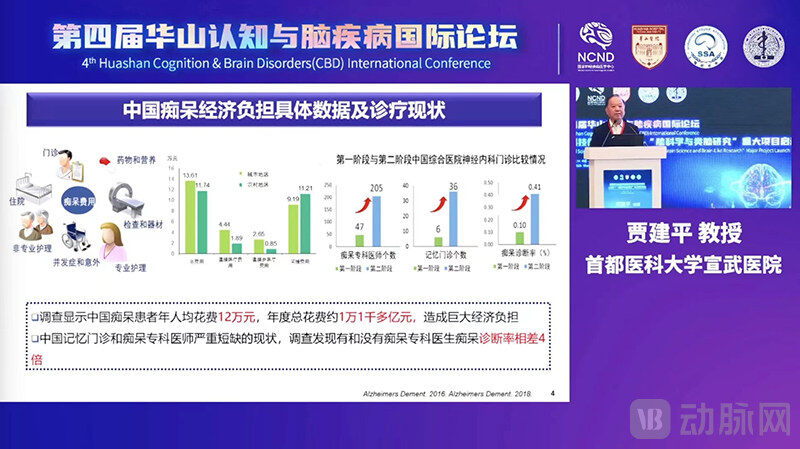
The Current Status of the Economic Burden of Dementia in China (Image Source: Special Sharing by Jia Jianping at the 4th Huashan International Forum on Cognition and Brain Diseases)
The freezing of three feet of ice is not the result of one day's cold; the onset of Alzheimer's disease is a prolonged process. Patients typically go through three stages: Subjective Cognitive Decline (SCD), Mild Cognitive Impairment (MCI), and Alzheimer's Disease (AD). Progression from Subjective Cognitive Decline to an Alzheimer's diagnosis usually takes more than ten years. If effective interventions are applied in the early stages, the progression of the disease can be significantly delayed.
However, there was almost no prevention and control of cognitive impairment in China before. This has resulted in more than 85% of Alzheimer's patients being directly diagnosed with moderate to severe Alzheimer's disease at their first visit, bypassing the stage of cognitive impairment, leaving them beyond help. Therefore, early screening, diagnosis, and intervention are particularly crucial for the prognosis of patients.
The "Healthy China 2030" plan, released in 2019, calls for "strengthening effective interventions for Alzheimer's disease and others," which has become a watershed moment for cognitive impairment disorders in China. In 2020, the National Health Commission issued the "Work Plan for Exploring Special Services in Alzheimer’s Prevention and Treatment" to take effective measures to prevent and slow down the occurrence of Alzheimer’s disease. Among them,Most importantly, the "two 80%" targets – by 2022, increase public awareness of dementia prevention and treatment knowledge to 80%, and raise the screening rate for cognitive function among elderly people in communities (villages) to 80%.。
However, due to the impact of the COVID-19 pandemic, this work progress has been somewhat delayed. It was not until 2022 that the National Health Commission and 15 other departments jointly issued the "14th Five-Year Plan for Healthy Aging," planning to formulate the "National Action Plan to Address Alzheimer's Disease" and establish a comprehensive prevention and control mechanism for early screening, early diagnosis, and early intervention of Alzheimer's disease in the elderly.
Thus, the pilot work of cognitive impairment screening quickly got on track. Shanghai was one of the prominent regions in 2022. The Shanghai Mental Health Center has conducted cognitive screenings for nearly 10,000 elderly people across 16 community health institutions in Shanghai and several streets in Songjiang District. Meanwhile, a senior-friendly community demonstration site was established in Pudong New Area, covering a total population of nearly 20,000.
Shanghai Tehuofen Intelligent Technology Co., Ltd. has participated in the pilot work of cognitive impairment screening in Shanghai. Its founder and CEO, Yi-Jie Du, told VCBeat that the screening work is accelerating significantly: "This year, we have clearly felt that the work of cognitive impairment screening and prevention has started to advance very rapidly in many regions. Not only the National Health Commission system but also the civil affairs system is actively promoting the construction of dementia-friendly communities. The screening and intervention for cognitive impairment are beginning to be implemented quickly in some communities."
Beyond the explicit reasons, cognitive impairment screening will also serve as a prelude to a larger national plan. Through screening, the profile and scale of China's high-risk population for cognitive impairment will be revealed, providing a basis for formulating subsequent policies regarding investment in healthcare systems and integrated medical-care services targeting cognitive disorders. The importance of this cannot be overstated.
Among these,Cognitive centers may become the foundation for future efforts. Large-scale construction of cognitive centers is emerging.。
Due to the extreme lack of medical resources for cognitive disorders in China, there will be a need for large-scale "catch-up" investments in the future. In this regard, the experience from the construction of Chest Pain Centers and Stroke Centers can serve as a reference — the nationwide promotion of these centers in previous years greatly enhanced the diagnosis and treatment capabilities of grassroots medical institutions for these two types of diseases.
In 2021, the "Launch Conference of the Cognitive Impairment Disease Specialty Capacity Building Project by the National Health Commission's Capacity Building and Continuing Education Center," held in Beijing, mentioned,China will strive to establish more than 2,000 cognitive centers at various levels within five years, and train 2,500 to 5,000 professional talents for these centers. With the neurology department of hospitals as the core, in collaboration with departments such as psychiatry, rehabilitation, geriatrics, cardiology, endocrinology, and even pediatrics and obstetrics, as well as relevant specialized hospitals, a multi-level prevention and intervention system for cognitive disorders will be built that effectively links hospitals, communities, families, and patients.。
"We have been dealing with county-level hospitals for many years, and the models of chest pain centers and stroke centers have indeed greatly improved the grassroots response capabilities in these specialties. Before the construction of stroke centers, grassroots hospitals had no way to handle stroke patients at all, and could only provide intravenous fluids at most. After years of construction, thrombolysis and thrombectomy have become routine operations in many grassroots stroke centers," said Dai Shen, founder and CEO of iNEURO.
"Cognitive centers should also be primarily expanded in grassroots hospitals to form a hierarchical diagnosis and treatment system for cognitive disorders with higher-level tertiary hospitals. The number of such patients is actually quite large, and it is impossible for all patients to go to the top-tier hospitals in regional central cities; it must be a hierarchical diagnosis and treatment system. Since experience can be drawn from the construction of chest pain centers and stroke centers, I believe the progress of building cognitive centers will be significantly faster," she added.
This is undoubtedly a massive, systematic project for the prevention and control of cognitive disorders. Once the entire tiered diagnosis and treatment system is completed, it will form a funnel-shaped system. Through this system, populations at risk of cognitive disorders at different stages will be screened and managed or treated according to methods specific to their respective stages.
"Screening is about identifying at-risk populations, and subsequently, it is essential to guide these individuals to hospitals with diagnostic and treatment capabilities for further diagnosis. Only after diagnosis can corresponding pharmaceutical and non-pharmaceutical interventions be carried out. However, prevention can occur simultaneously with screening. If screening merely provides a result without follow-up actions, it could lead to unnecessary anxiety. This is the whole process, which is fairly clear," Du Yijie introduced to VCBeat.
For example, people at risk who have not yet shown any symptoms can significantly reduce the likelihood of developing the disease by changing their lifestyle habits. The industry believes that by altering lifestyles—ensuring at least 7 hours of sleep per day, limiting sedentary time to within 4 hours, and increasing exercise volume and intensity to a moderate-to-high level—a 41% reduction in dementia risk can be achieved.
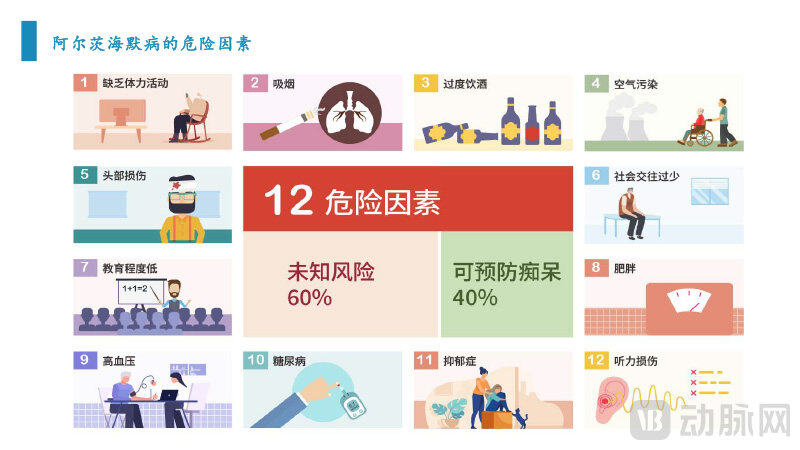
12 Risk Factors for Alzheimer's Disease (Image Source: Special Sharing by Yu Jintai at the 4th Huashan International Forum on Cognition and Brain Diseases)
In addition to age, many factors are considered to be high-risk factors for cognitive impairment, including lack of physical activity, smoking, excessive alcohol consumption, air pollution, head injuries, insufficient social interaction, low education level, obesity, hypertension, diabetes, depression, hearing loss, and more.
In a study quantifying risk factors for cognitive impairment, lifestyle accounts for 16.6% of the risk factors, the largest proportion. This is followed by medical history (14%), socioeconomic status (13.5%), physical indicators (12.8%), psychological factors (9%), and living environment (6.7%). By mapping out these risk factors and implementing proactive interventions, more than 47% of cognitive impairment cases can be prevented.
Dai Shenyi introduced to VCBeat that cognitive impairment screening is of great significance, and the earlier the screening, the lower the risk: "The greatest significance of cognitive impairment screening is to help us detect risks earlier.If screening is conducted just 5 years earlier and cognitive behavior improvements are applied, the likelihood of cognitive impairment progressing to Alzheimer's disease can be reduced by as much as 50%.!”
Based on this, this field is expected to have broad market potential. Du Yijie stated,Based on the increasing number of elderly people and screening costs, a simple estimate reveals that the annual market scale for cognitive screening is at least in the billions, not including the subsequent market driven by screening.. More importantly, due to policy promotion, the government, pharmaceutical companies, and insurance providers are all clearly defined payers, offering a high level of certainty.
Accurate screening is a precondition to addressing the treatment of cognitive impairment. Cognitive impairment can develop into various subtypes of neurodegenerative diseases. Some subtypes have available medications, but their indications are narrow. If used for non-indicated subtypes of cognitive impairment, they may worsen the condition.
"For instance, a patient might have Hunter syndrome but is mistakenly given medication for Parkinson's disease, which could lead to a rapid progression of the condition. Therefore, medication use requires great caution," Dai Shenyi told VCBeat.
However, current screening technologies still struggle to accurately identify early cognitive impairment. Combined with often overlapping clinical symptoms and even atypical manifestations, misdiagnosis can easily occur. These are some of the challenges faced in cognitive impairment screening.
Generally, there are several main methods for cognitive impairment screening. The first is neuropsychological scales. The second is electroencephalogram (EEG) technology, followed by imaging techniques such as magnetic resonance imaging (MRI). Lastly, there are biomarkers like peripheral blood and cerebrospinal fluid. Each of these technologies has its own advantages and disadvantages, making it difficult for any one to replace the others.
Neuropsychological scales are commonly used tools for screening cognitive impairments in clinical settings. However, there are several challenges. First, the scales contain hundreds of questions, and completing them normally takes more than half an hour, making it almost impossible to expect patients to fill them out during the screening phase. This also places high demands on survey staff, leading to longer training periods. Second, the scales require a certain level of education from the participants; if their educational background is insufficient and they struggle to understand the questions, the objectivity of the scale may be compromised.
EEG technology has been applied for many years and is relatively mature, serving as a fairly objective quantitative indicator. At the same time, it is relatively cost-effective, requiring only a few minutes of testing time, and is easy to operate, with good acceptance by both patients and clinicians. However, EEG requires multiple data collections to build a more accurate recognition model, making it difficult to achieve an effective risk assessment from the first data collection.
Eye movement detection, which has recently drawn much attention, is also an emerging screening method. However, as a mid-to-late stage detection technology, its application in early cognitive impairment screening still needs further development.
Imaging technologies such as MRI can accurately reflect changes in brain structure, but so far, relying on imaging still cannot identify conditions when there is no visible change in brain structure, even though the disease may have already progressed. How to assess risks through subtle structural changes remains an ongoing challenge for imaging technology. Additionally, the accessibility of MRI is limited, as both the equipment cost and examination fees are unaffordable for grassroots screening.
Biomarker tests, such as cerebrospinal fluid testing, have rapidly gained prominence in recent years due to their ability to detect changes in brain function at an earlier stage. However, in clinical practice, they require specific implementation settings and face practical challenges such as difficult sample collection and high costs. Moreover, only a few tertiary hospitals and research institutions in China currently have the capability to perform comprehensive pathogenic gene testing.
It is not difficult to see that it is unrealistic to rely solely on a single method to complete cognitive impairment screening. They cannot replace each other but should instead complement one another, leveraging their respective strengths to be applied in a targeted manner across different application scenarios.
Du Yijie, founder and CEO of Shanghai Tehuofen Intelligent Technology Co., Ltd., believes that large-scale grassroots cognitive impairment screening must address several key issues: accuracy, efficiency, and convenience. Digital therapeutics have already demonstrated their enabling role in this context.
First is accuracy. As mentioned earlier, scales in screening are susceptible to various influences, with screening sensitivity potentially reaching only around 60%. However, gamified screening technology that combines digital technology and brain science has achieved over 85% sensitivity in real-world settings, with compliance rates as high as 90%.
In terms of efficiency, the original screening time of 40 minutes has been significantly reduced to within a few minutes, and the simple operation method minimizes the need for manual intervention, thereby greatly improving efficiency. Only under this premise is large-scale screening possible.
Digital technology has also enhanced the convenience of screening. "According to the requirements of China's National Health Commission, the screening rate needs to reach 80%. This means that screeners cannot just sit in the hospital and wait for patients to come in for screening; they need to actively go out to urban communities and even rural fields to conduct screenings. The portability of screening tools becomes very important. If grassroots workers still need to carry equipment for screening, it is obviously much less convenient compared to smartphones," said Du Yijie.
"The integration of digital technology and brain science technology can effectively address these three issues, thereby significantly reducing the cost of screening—not only the equipment cost but also the labor cost. By leveraging technology, the cost of one screening case, which previously amounted to several hundred yuan, can be reduced to less than几十元. Only then can large-scale implementation of cognitive impairment screening be achieved."
"In addition, digital screening can evaluate various dimensions of cognitive function during the screening process, such as attention, memory, and executive ability. This way, the evaluation results are not simply negative or positive, but include corresponding dimensional assessments, which allow for targeted interventions on the impaired dimensions," Du Yijie added.
Of course, digital technology should play a role at the very beginning of the "funnel-shaped" screening system. Risk groups identified through digital therapeutics can then undergo further screening at medical institutions. Dai Shenyi stated that once entering the hospital stage, EEG can leverage its simplicity and affordability as an additional screening tool in grassroots hospitals and physical examination centers.
"The advantage of EEG is its high sensitivity, as it is extremely sensitive to trends in brain changes, especially in diseases like cognitive impairment, where even the slightest change can be detected. However, the most challenging aspect lies in finding specific biomarkers for particular diseases. In simpler terms, while EEG can relatively easily detect cognitive impairment, determining whether the impairment is due to Alzheimer's disease or Parkinson's disease still requires sifting through large amounts of data to identify specific indicators."
"We are currently cooperating with experts in Fujian to conduct the largest EEG cohort study on cognitive impairment in China. We are performing EEG tests on at-risk populations in local communities over a three-year period, collecting data every six months. We believe that using this data to build a risk identification model will significantly improve accuracy compared to previous methods." Dai Shenxi introduced some progress in EEG screening to VCBeat.
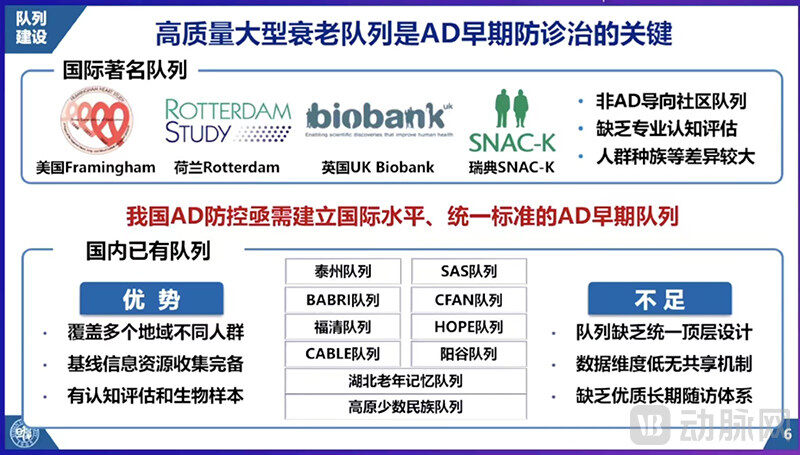
High-Quality Large-Scale Aging Cohort Studies Are Key to the Prevention, Diagnosis, and Treatment of Cognitive Impairment (Image Source: Professor Yu Jintai's Special Presentation at the 4th Huashan International Forum on Cognition and Brain Diseases)
"We cannot simply say that a single project can solve all problems; instead, we may need to develop a tiered screening system. At the front, there is a large funnel where one or two methods are used for initial screening, then it moves to the second-level funnel, and finally to the third-level funnel, with increasing accuracy and precision in judgment. Importantly, the cost at the beginning should not be too high, and more expensive tests can be conducted when certain high-risk factors are identified. Such a tiered screening system is what proves to be useful," she added.
Cognitive disorders progress slowly and have always been regarded as a difficult fortress to conquer. However, as the saying goes, "A journey of a thousand miles begins with a single step." With the accumulation of vast amounts of data over the past decade, numerous studies on this subject have emerged, and many of them have made breakthrough progress.
As China begins to promote cognitive impairment screening and establish a corresponding prevention, control, and treatment system, this policy-driven push will further advance progress in this field. VCBeat believes that, due to the前置性 of screening, cognitive impairment screening may experience a surge in the next two to three years, leading the construction of the entire cognitive impairment prevention and control system. We will also keep a close watch on this field.
References:
Zuo Yan, Xinmin Evening News: Shanghai pioneers "Golden Three Minutes Cognitive Impairment" video game-style screening tool for accurate and rapid cognitive impairment assessment
People's Daily Online: "Symposium on the Launch of the Cognitive Impairment Disease Specialty Capacity Building Project Held"