

AstraZeneca Receives Chinese Clinical Trial Approvals for Three Novel Class 1 Drugs: AZD9592, AZD3427, and AZD9833

AstraZeneca
Biopharmaceutical Manufacturer
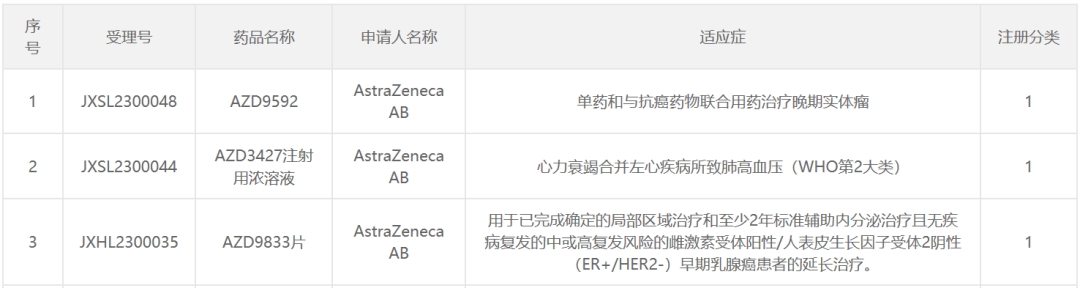
Intelligent Finance APP learned on May 15 that the official website of the Center for Drug Evaluation (CDE) of the China National Medical Products Administration announced that three Class 1 new drugs from AstraZeneca (AZN.US) have received implied permission for clinical trials. They are: 1) The antibody-drug conjugate (ADC) AZD9592, intended for monotherapy and combination therapy with anticancer drugs to treat advanced solid tumors; 2) The relaxin mimetic AZD3427 injectable concentrate solution, intended for treating pulmonary hypertension caused by heart failure combined with left heart disease; 3) The oral selective estrogen receptor degrader (SERD) AZD9833 tablets, intended for extended treatment in patients with estrogen receptor-positive/human epidermal growth factor receptor 2-negative (ER+/HER2-) early breast cancer at moderate or high risk of recurrence.
1. Antibody-Drug Conjugate AZD9592
According to publicly available information from AstraZeneca, AZD9592 is an innovative product targeting EGFR-cMET. It was developed using AstraZeneca's proprietary ADC technology with topoisomerase-1 as the payload. The drug can target EGFR and cMET proteins on the surface of cancer cells and directly deliver cytotoxic drugs to these cells. This targeted approach aims to minimize damage to healthy cells and reduce side effects.
2. Relaxin Mimetic AZD3427
AZD3427 is a relaxin mimetic in AstraZeneca's cardiovascular disease research pipeline. Relaxin is an endogenous heterodimeric insulin-like peptide that exerts beneficial physiological effects on the cardiovascular system and has a favorable safety profile.
3. Oral estrogen receptor degrader AZD9833
Public information shows that AZD9833 (camizestrant) is a next-generation oral selective estrogen receptor degrader (SERD). SERDs can reduce the stability of estrogen receptors (ER) by binding to ERs on the surface of cancer cells, inducing their degradation through the cell’s normal protein degradation mechanism, thereby lowering estrogen receptor levels and inhibiting the growth of cancer cells. Unlike modulators that inhibit estrogen activity, estrogen receptor degraders theoretically provide more comprehensive suppression of estrogen receptor function by mediating the degradation of estrogen receptors and may address drug resistance caused by estrogen receptor mutations.