

Sanofi Launches Innovative 'China Solution' Soliqua® in China to Enable 'High-Quality Glycemic Control' for Type 2 Diabetes Patients

Sanofi
Pharmaceutical R&D Developer
BeijingMay 19, 2023PR Newswire -- Today, Sanofi announced its innovative hypoglycemic drug, Soliqua.®[Insulin Glargine and Lixisenatide Injection (I)/(II)] Officially Launched in China, This Product is Suitable for Adult Type 2 Diabetes Patients (T2DM) with Poor Blood Sugar Control. On the Basis of Diet and Exercise, It is Combined with Other Oral Hypoglycemic Drugs to Improve Blood Sugar Control. In the Past 20 Years, with the Iteration of Diabetes Management Concepts and the Continuous Improvement of Patient Treatment Needs, While Achieving Blood Sugar Targets, More Attention Needs to Be Paid to Hypoglycemia and Weight, Namely "High-Quality Target Achievement." Multiple Clinical Studies Have Confirmed: Soliqua®Can balance the efficacy of lowering blood sugar, the risk of hypoglycemia, and weight benefits, which is of great significance in advancing diabetes treatment in China into the era of "high-quality target achievement."
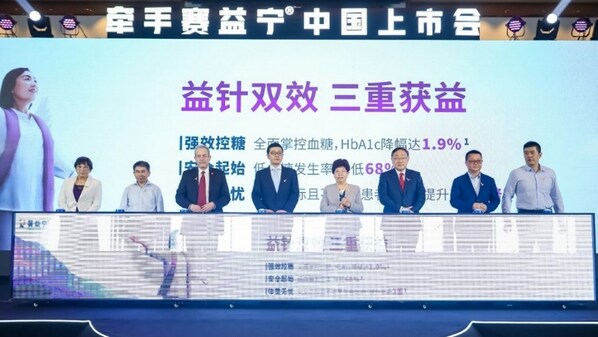
Soliqua Officially Launched in China
Sanofi Greater China President Shuang Shi introduced:"This year marks the launch of Sanofi's first insulin product.100Anniversary, coinciding with the time of Soliqua®It is very exciting to be launched in China.Rooted in China40For many years, Sanofi has always placed the needs of patients first,With a century of accumulation in the diabetes field, continuously seeking and exploring treatment solutions suitable for Chinese patients. Facing significant unmet health needs., we actively respond to national policies by participating in bulk procurement, accelerating the introduction of innovative solutions, and continuously increasing our investment and strategic layout in the diabetes sector.Soliqua®The launch is another practice of our firm commitment to patients in China.Currently, the first batch of this product has achieved local subcontracting in China, and it is expected to realize ‘local production’ in the future, continuously improving the accessibility of high-quality innovative drugs.。We look forward toBy innovating diverse product portfolios and medical services, creating health 'miracles' for the people of China.。"

Mr. Wang Shi, President of Sanofi Greater China, Delivers Speech at the Conference
More Than Half of Blood Sugar Levels Not Meeting Standards,"Dual High" Issues Become Key Breakthrough Points
China has more than 140 million diabetes patients.[1], The high incidence of complications due to poor blood glucose control has imposed a certain medical burden on both patients' families and the country. Data shows that: China ranks second globally in diabetes-related medical expenditures, and the future economic burden of diabetes in China is expected to grow faster than the同期GDP growth rate.[2]The "Healthy China 2030" Planning Outline proposes that by 2030, the "Diabetes Prevention and Treatment Action" should achieve a standardized management rate for diabetes patients of 70% or higher.[3]; but currently, the blood glucose target achievement rate among patients in China is less than 50%.[4], improving blood glucose control rate is imminent.
Professor Jinan Li, Director of the Endocrinology Department at Peking University People's Hospital, stated:"InExistingUnder the treatment regimen, the blood glucose management needs of patients in China are not fully met. On one hand, the blood glucose target achievement rate for patients using oral hypoglycemic agents is only 30%.[5]; On the other hand, traditional insulin therapy easily leads to problems such as hypoglycemia and weight gain, causing patients to experience 'insulin hesitation' and 'treatment interruption'. This results in the current situation in China of untimely, insufficient insulin treatment with low compliance, affecting the overall blood glucose target achievement rate. 'High-quality target achievement' is the key to future diabetes management. How to address these 'obstacles' in the process, achieve blood glucose targets, and at the same time...Reduce the occurrence and development of complications, improve patients' quality of life and extend their lifespan,Is a key focus that urgently needs to be addressed collectively at present."
The HbA1c (glycated hemoglobin) indicator is the "gold standard" for measuring blood glucose control. Achieving blood glucose control as early as possible can bring more long-term benefits. The "Chinese Type 2 Diabetes Prevention and Treatment Guidelines (2020 Edition)" recommend that the HbA1c control target for non-pregnant adult T2DM patients should be <7%.[6]. Human blood glucose levels are like the sea, with fasting blood glucose being the sea level and postprandial blood glucose being the crest of the waves; blood glucose fluctuations are the size of the waves. As the human blood glucose level continues to rise, the wave crests also "rise with the tide." Various organs in the body are not only soaked long-term in a "sea of sugar" but also battered by large waves, leading to complications. Data shows that over 50% of diabetes patients in China have excessive fasting blood glucose, and nearly 80% experience elevated postprandial blood glucose. Fasting and postprandial blood glucose exhibit a "dual high" phenomenon, which exacerbates the risk of complications such as heart, kidney, and retinal lesions in diabetes patients.[7]。
"China Solution" Breaks the Deadlock, Assisting in Achieving Blood Sugar Management"High-Quality Achievement"
Innovative Compound Preparation Soliqua for Current Diabetes Management Pain Points®The launch will bring an innovative and convenient solution to the challenge of dual hyperglycemia, with a once-daily injection that addresses both fasting and postprandial blood glucose. On one hand, insulin glargine (a basal insulin analog) mimics physiological insulin secretion in the human body, providing steady control of 24-hour basal blood glucose. On the other hand, lixisenatide (GLP-1RA*) promotes insulin secretion in response to elevated blood glucose levels during meals, reducing glucose spikes while also delaying gastric emptying, controlling appetite, and enhancing post-meal glucose control for all three meals. Together, they improve insulin resistance and β-cell dysfunction, delivering benefits to pancreatic islet function.
As Sanofi®Principal Investigator of the Phase III Clinical Trial Lixilan-O-AP in China,Professor Yang Wenying from China-Japan Friendship HospitalRepresentation:"The combination of insulin glargine and lixisenatide is an "intelligent" innovative therapy, with twoIIIPhase ResearchLixiLan-O APAndLixiLan-L CNIt simultaneously demonstrated more pronounced clinical benefits in the Chinese population compared to the European and American populations. This tailored solution for China undoubtedly helps Chinese diabetes patients achieve "high-quality target" blood glucose control more precisely and efficiently. Moreover, as a compound preparation, its simple dosing method and frequency can help improve the current low compliance rate of insulin therapy in China.
With Sanofi®The patient assistance program "Ning Ju Xin Sheng," jointly launched by Sanofi and the China Medical Health Development Foundation, has also been initiated simultaneously with its official market launch in China. This program aims to support patients in achieving a positive initial treatment experience and help more diabetes patients realize "quality living" in blood sugar management as soon as possible.
About Sanofi China
Sanofi is a global leading innovative pharmaceuticals and healthcare company with the mission of "Chasing Scientific Miracles, Revitalizing the Radiance of Life." As one of the first multinational corporations to enter China after the reform and opening-up, Sanofi established its office in China in 1982. Currently, it operates 12 offices with diverse business models, 3 production bases, 4 major R&D centers, and 1 digital innovation hub. Its diversified businesses cover pharmaceuticals, human vaccines, and consumer healthcare. Walking hand-in-hand with China, Sanofi is committed to accelerating the introduction of innovative medicines and vaccines into China, continuously transforming medical practices, benefiting more Chinese people, and creating a better life for its partners, communities, and employees.
For more information, please visitwww.sanofi.cn, or follow the "Sanofi China" WeChat Official Account.
About Sanofi
Sanofi is a global leading innovative pharmaceuticals and healthcare company. Our mission is to pursue scientific miracles and revitalize the brilliance of life. Sanofi's presence spans over 100 countries worldwide, committed to transforming medical practices and turning the impossible into possible. We provide potentially life-changing healthcare solutions and vaccines that prevent fatal diseases to people around the world, while placing sustainability and social responsibility at the core of our ambitious strategy.
Sanofi Forward-Looking Statements
This press release contains1995Forward-looking statements as defined in the Private Securities Litigation Reform Act of 1995. Forward-looking statements are not statements of historical fact. These statements include forecasts and estimates regarding the marketing and other potential of the product, or forecasts and estimates of the potential future revenues of the product. Such forward-looking statements can generally be identified by words such as "expects," "anticipates," "believes," "intends," "estimates," "plans," and similar expressions. While Sanofi's management believes that the expectations reflected in these forward-looking statements are reasonable, investors are cautioned that these forward-looking statements and information are subject to numerous risks and uncertainties, many of which are difficult to predict and generally beyond Sanofi’s control, which may cause actual results and developments to differ materially from those expressed, implied, or predicted in the forward-looking information and statements. These risks and uncertainties include, among other things, decisions or delays by regulatory authorities, or decisions by authorities regarding matters that may affect the availability or commercial potential of the candidate product, the possibility that approved products may not achieve commercial success, including inherent uncertainties in research and development, future clinical data and analysis, including data and analyses obtained after the product has been marketed, unexpected safety, quality, or manufacturing issues, general competition, risks related to future litigation associated with intellectual property and the ultimate outcome of such litigation, and volatile economic and market conditions, including the impact of the COVID-19 pandemic on us, our customers, suppliers, and other business partners, as well as the financial condition of any of them, and also the impact on our employees and the global economy. Significant impacts of the COVID-19 pandemic on any of the above parties may also negatively affect us. This situation is rapidly evolving and may lead to additional impacts that we are currently unaware of, potentially exacerbating previously identified risks. These risks and uncertainties also include those detailed in Sanofi’s public filings with the U.S. Securities and Exchange Commission (SEC)and the French Financial Markets Authority (AMF) has been discussed or clarified in the report, including those listed in Table20-FSanofi Annual Report (as of2020Year12Month31"Risk Factors" and "Forward-Looking Statements" in Japanese"Caution". Unless there are applicable legal provisions, Sanofi assumes no obligation to update or modify any forward-looking information or statements.
[1] Sun, Hong et al Diabetes research and clinicalpractice 183 2022):109119
[2] https://diabetesatlas.org/atlas/tenth-edition/
[3] http://www.gov.cn/zhengce/content/2019-07/15/content_5409492.htm State Council's Opinions on Implementing the Healthy China Initiative (Guo Fa [2019] No. 13) _ Government Information Publicity Column (www.gov.cn)
[4] Wu Jing, Guo Lixin. China Diabetes Map 2021
[5] Gao Leili, et al. Investigation on Medication Treatment and Blood Glucose Control Status of Type 2 Diabetes Patients in China from 2009 to 2012. Chinese Journal of Diabetes. 2014, 22(7): 594-598
[6] "Chinese Guideline for the Prevention and Treatment of Type 2 Diabetes (2020 Edition)" Chinese Journal of Endocrinology and Metabolism, April 2021, Vol. 37, No. 4
[7] Liu G, et al. Diabetes Metab Syndr Obes 2020,13:4651-4659.