

Generative AI in Healthcare: A $10B+ Market Growing at 60% CAGR Dives Deep into Medical Applications

DP Technology
Simulation R&D Platform Developer

THORUGH FUTURE
Artificial Intelligence Pathology Image Diagnosis Technology Developer

InSilico Medicine
Intelligent Drug Development Platform and New Drug Research and Development Provider

Qiming Venture Partners
Healthcare Investment Institutions
How hot is AIGC (Generative AI)? If you attended the "Generative AI and Healthcare Forum" held at the Zhangjiang Science Hall in Shanghai in early May during the "7th Future Healthcare 100 Summit," you would have a tangible sense of it. The conference room, originally designed to accommodate nearly 200 people, was packed with almost 300 attendees. Moreover, there were still people attempting to enter at the door of the meeting room, but many had to give up due to the overwhelming turnout. In fact, even the official photographer arranged by the organizer nearly failed to get into the venue when the forum began.
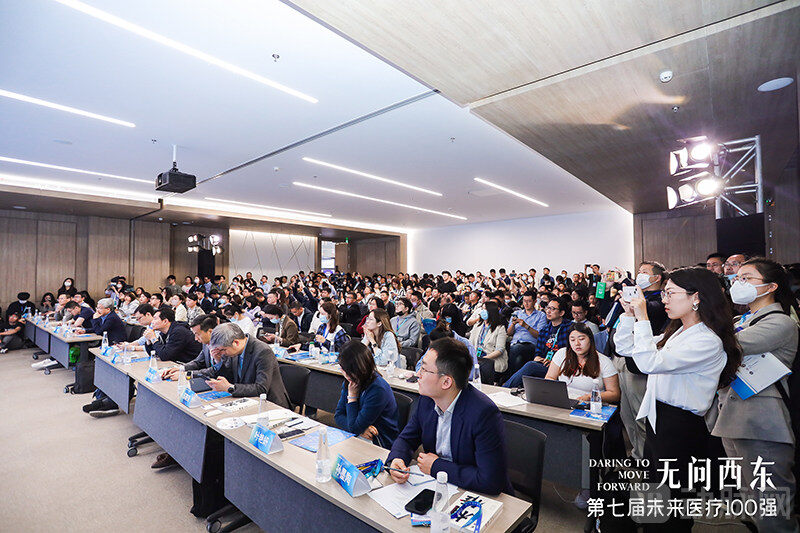
The Scene of the 7th Future Healthcare 100 Forum on Generative AI and Healthcare
A look at the guest list reveals clues: experts from the China Hospital Association Information Committee, Qiming Venture Partners, ZhiPu HuaZhang, Insilico Medicine, DP Technology, Left Hand Doctor, ReMove Muscle Bone, ZhengAn Technology, VCBeat, and Thorough Future, Inc. gathered together, covering all aspects of AIGC + healthcare, including policy, research, investment, and application.
In What Aspects Can AIGC Empower Healthcare? What Progress Has Been Made in China? VCBeat Examines the Industry Landscape to Provide Insights for Reference.
Since the popularity of AIGC represented by Chat-GPT at the beginning of the year, its huge application potential has been noticed by the healthcare industry. Currently, AIGC has been integrated into the entire clinical process from pre-diagnosis to post-diagnosis.
During the pre-diagnosis stage, AIGC can enhance the prediction of patients' diseases by utilizing its powerful data retrieval and reasoning capabilities, thereby improving the accuracy of triage and referral. The anthropomorphism of AIGC is much stronger than previous human-computer dialogues, which helps improve patient experience. This is considered an important application breakthrough in AIGC + healthcare.
During the diagnosis phase, AIGC is considered to play a role in multiple细分 scenarios such as assisted diagnosis, AI imaging, and surgical robots. Assisted diagnosis is the focal point of AIGC applications in the medical field. Based on multimodal data such as patients' medical records, symptoms, and disease history, AIGC can provide doctors with辅助诊断, treatment guidance, and prognosis plans through data analysis and intelligent algorithms.
AIGC can also help optimize clinical pathways by analyzing large amounts of clinical data to identify best practices and treatment patterns. This contributes to improving patient outcomes while reducing healthcare costs, and predicting treatment results based on individual characteristics, disease types, and treatment plans. Doctors can use this information to select the most appropriate clinical pathway, enhancing patient satisfaction.
For doctors, AIGC is also a convenient medical guideline library that can help them stay updated on the latest medical research progress, evidence-based medical evidence, and clinical guidelines, thereby enhancing their professional level and promoting the improvement of medical quality.
AIGC's powerful capabilities in natural language processing make it especially suitable for accelerating the automation and enhancement of clinical documentation workflows, as well as optimizing interactive scenarios. For instance, it can assist doctors in generating structured electronic medical records through dictation or handwritten notes, significantly reducing the time physicians spend on paperwork. Meanwhile, the model can also extract valuable information from medical records to identify characteristics and trends within patient populations. Currently, not only have international giants implemented these solutions, but relevant products have also emerged in China.
Medical imaging is already one of the fields where AI applications are most deeply integrated, and AIGC can enhance it in three aspects. The first is generating synthetic data based on raw data, which can be applied to the generation of final results, achieving image enhancement. This will break the limitations of imaging principles and technical restrictions of imaging equipment, reducing the impact of improper operation on image quality.
The second is during the model training phase, where AIGC can generate a large amount of synthetic image data for data augmentation to be used in model training. This will help developers explore scenarios with missing data, such as rare diseases or fields with uneven data distribution.
The third is to use AIGC to predict the future based on existing data. Unlike traditional analytical AI, which obtains relatively certain results through data training, AIGC focuses more on estimating health conditions and disease risks. For instance, the industry has achieved the capability to let AIGC self-learn and evaluate the developmental changes of subjects by observing the evolution of retinal blood vessels and nerves in a population, assessing the risk of cardiovascular and cerebrovascular diseases in the future. In addition, AIGC is also being explored in areas including Alzheimer's disease risk prediction and myopia progression prediction.
The application of AIGC in surgical robots is essentially an extension of AI imaging. As technologies based on AI imaging, such as intelligent surgical navigation, are already widely used in surgical robots, AIGC can generate entirely new surgical plans during the preoperative planning and guidance phase, reducing surgical risks and complexity. At the same time, AIGC can also support more precise and reliable quality control and risk management through the analysis of existing data.
Another extension based on AI imaging is the exploration of AIGC in the field of pathology. According to statistics, the number of pathologists and assistant pathologists in China is approximately 10,000, far lower than that in developed countries such as the United States and Europe. The number of pathologists per million people in China is about 0.08, significantly lower than 0.9 in the United States and 0.81 in Europe. This results in the workload of pathologists in China being 5-10 times higher than that of their foreign counterparts.
AIGC can accelerate the standardization of evaluations, assisting doctors in reducing misdiagnosis and missed diagnosis. More importantly, AIGC can also help doctors complete the heavy workload of report documentation and generate more precise and quantitative reports.
In the post-diagnosis phase, AIGC can serve as an auxiliary tool for follow-up consultations, answering patients' questions about their condition, drug side effects, preventive measures, and more online 24/7. It can also act as an educational tool, imparting correct health knowledge and preventive strategies to patients. All of these will help improve patient satisfaction and reduce the workload of medical staff.
AIGC can also further expand the application boundaries of AI in out-of-hospital health management or rehabilitation training. AIGC can provide diversified and personalized health management and rehabilitation services based on patients' multimodal data, greatly extending the "upstream and downstream" services of chronic disease management. Currently, China's chronic disease industry and rehabilitation industry have both launched corresponding large models to explore the application of AIGC in this field.
Taking the rehabilitation field as an example, the lack of rehabilitation medical resources in China can be greatly alleviated by the combination of AIGC and remote treatment. Patients can quickly receive remote assessments without leaving their homes and obtain targeted rehabilitation plans. At the same time, AIGC can play a role in standardizing treatment in rehabilitation, and the plans it generates can serve as references for junior therapists. Additionally, the automated operations of AIGC can significantly help reduce costs and improve efficiency for rehabilitation institutions.
In rehabilitation treatment, AIGC analyzes multimodal evaluation data of patients (including basic user information, assessment results, consultation outcomes, medical records, posture assessments collected through machine vision, and data gathered from wearable sensors) to generate a near-optimal rehabilitation plan.
AIGC can predict the recovery status of rehabilitation patients, break down rehabilitation plans by时间节点, and generate progressive rehabilitation plans. It can output corresponding rehabilitation training exercises and, based on these exercises, produce further actions in a chain reaction to enhance the effectiveness of patients' rehabilitation treatment.
Fortunately, AIGC has also demonstrated great potential in the field of mental health. Similar to rehabilitation training, mental health medical resources are severely insufficient and have poor accessibility in China. Therefore, digital therapeutics empowered by digital technology have gained significant attention in the mental health sector.
In digital therapies based on the CBT core, the primary mode of interaction is human-computer dialogue. However, the industry widely acknowledges that the biggest challenge with human-computer dialogue is the current technology's poor ability to simulate human-like conversations between a real therapist and a patient—precisely in mental health treatment, the trust relationship built between the patient and the therapist is crucial for therapeutic success. This leads to patients having difficulty trusting the therapy, resulting in poor compliance, which ultimately affects treatment outcomes.
Compared with the past, the human-computer dialogue ability of AIGC is very remarkable, which can improve the fluency, naturalness, and logic of the dialogue, thereby enhancing the treatment effect.
However, the industry believes that AIGC is not yet perfect in psychotherapy. The keynote speaker stated that psychotherapy requires long-term treatment based on dialogue. In an ideal model, AIGC could remember a user's history and communicate with patients based on past feedback. However, currently, even the most advanced AIGC lacks long-term memory capabilities due to limitations in model structure design, which still needs improvement in the future.
In addition to clinical applications, new drug development is considered a field where AIGC can disrupt existing models. Traditional drug development faces challenges such as high research and development costs, low success rates, and long development cycles. These issues mainly stem from three aspects: the first is the difficulty in discovering good targets, which is a biological problem; the second is the difficulty in synthesizing effective molecules, which is a chemical problem; and the third is how to better design clinical trial protocols.
The keynote speaker in the new drug R&D field believes that in previous drug development, First-in-Class products held significant value, but being a pioneer often means there is no existing data for reference. However, at the microscopic level, drug action can be abstracted as the interaction between drug molecules and proteins, which can essentially be accurately solved by physical models of atomic interactions. AIGC can learn these complex physical laws and solve the corresponding industrial R&D problems, significantly accelerating what has traditionally been a very slow solving process.
In addition, AIGC can also process data with particularly large volumes or difficult-to-handle data, such as protein structure prediction problems. What any given protein can do depends on its unique 3D structure. For example, antibody proteins that make up our immune system are "Y-shaped," similar to unique hooks. By locking onto viruses and bacteria, antibody proteins are able to detect and tag disease-causing microorganisms for destruction.
DNA Information Only Contains Data About the Sequence of Protein Building Blocks and Forms Long Chains. These long chains have countless possibilities when folding into the complex 3D structures of proteins, and predicting their structures was once considered nearly impossible. AIGC can learn the mapping relationship from protein sequences to protein structures and solve complex high-dimensional data mapping problems based on its powerful computing capabilities, thereby achieving protein structure prediction.
Not only can it predict protein structures, but currently, AIGC can even generate entirely new proteins that do not exist in nature based on predefined properties and structures.
Whether it is using AIGC to study the underlying scientific principles of how things work and applying them, or re-extracting complex scientific data to help people discover underlying patterns, AIGC has already proven its value in new drug development. According to VCBeat, China's exploration in this field is particularly noteworthy. The industry not only began applying AIGC as early as 2016 but has also built a complete AIGC platform targeting biological and chemical problems.
It is reported that China's new drug research and development industry has utilized AIGC to discover a new target for idiopathic pulmonary fibrosis, a rare disease, and generated new candidate compounds based on this, which may potentially replace current drugs with strong side effects in the future. In addition, significant progress has been made in developing new compounds targeting COVID-19 and even broad-spectrum coronaviruses.
However, the development of AIGC also faces corresponding challenges. Among them, due to the heavy reliance of AIGC on data, challenges from data are increasing daily. In 2022, China released the "Opinions of the Central Committee of the Communist Party of China and the State Council on Building a Basic Data System to Better Play the Role of Data Elements" (referred to as the "Data Twenty Articles"), which provided a foundation for the release of data value.
According to IDC research, the growth of healthcare data is the fastest among all industries, with an annual compound data growth rate as high as 36%. However, due to various constraints, this data is scattered across different sectors like shale oil, making it difficult to realize the value of data applications.
Among these, the most important reason for the obstruction of data application lies in the unclear ownership of medical and health data. The "Twenty Articles of Data" avoids the trap of data ownership through institutional innovation, separating the rights of use, control, processing, and benefits into a "three-rights division" system, allowing data resources to flow and create value.
The keynote speaker believed that there are two key issues to be particularly mindful of regarding AIGC's application of data. The first is data accessibility—data and its implications are tied to specific scenarios and subjects, and poor accessibility can hinder a concrete understanding of the data’s meaning within those scenarios. This is a critical issue that must be addressed for AIGC based on large models. The second issue pertains to data ethics, especially the need to address data bias and ensure fairness in AIGC training data; otherwise, it could lead to unintended consequences.
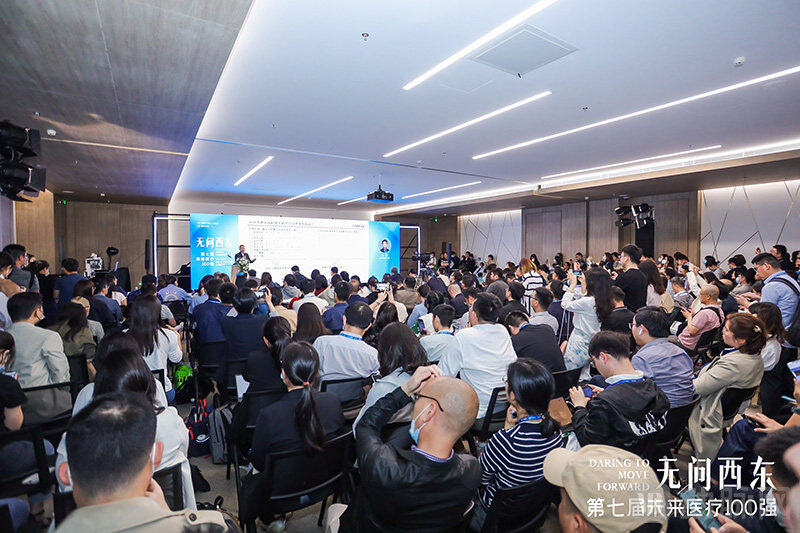
The Scene of the 7th Future Healthcare 100 Forum on Generative AI and Healthcare
In addition to the challenges in data, the industry believes that there will be many more challenges during the upcoming rapid development of AIGC infrastructure. The first is the lack of interdisciplinary talent. Prior to this, AIGC models did not have such large-scale engineering systems and capabilities, which has raised new requirements for interdisciplinary talent.
Secondly, there is a series of challenges related to the hardware infrastructure required for the development of AIGC, such as the demands for chips, networks, storage, and other aspects. This issue is particularly prominent against the backdrop of China's current emphasis on independent innovation.
Finally, there are challenges for the application side. For the application side, the most crucial aspect in the AIGC era is how to transform these issues into a series of problems suitable for AI solutions. This will lead to changes in the R&D process, particularly in how to pose key questions for AIGC to address.
Currently, China is accelerating the improvement of AIGC infrastructure construction, with high-performance base models being the top priority. Since the popularity of ChatGPT in 2023, multiple domestic enterprises and scientific research institutes have followed up successively, releasing their own large models. According to incomplete statistics, there are currently more than 20 AIGC large models in China, mainly divided into three categories: large technology companies, scientific research institutions, and startup technology teams.
Compared with international advanced levels, China's large models are slightly behind but not out of reach. In fact, as early as 2022, China’s high-precision bilingual dense trillion-parameter large model basically matched or even slightly surpassed GPT-3 in evaluations by foreign authoritative institutions.
In contrast, given the potential limitations of domestic computing power, one direction for the development of large models in China may need to emphasize optimization more. Currently, China has achieved large models that can operate at only one-tenth or even one-fifteenth of the typical cost of large models, with a parameter scale surpassing 100 billion. More remarkably, these models have also proactively provided support for domestically produced chips.
Moreover, the output of AIGC still has the problem of being difficult to distinguish between true and false. Because of this, ChatGPT can solemnly spout nonsense. This is absolutely unacceptable in the serious field of healthcare and requires optimization and supervision in the future.
Taking the application of large models in the rehabilitation field as an example, AIGC will also produce some "absurd" results during the early stages of model training. For instance, the model might suggest swimming as a solution when the patient has just undergone surgery and is still in a cast. Of course, these issues will be greatly improved with the iteration of the model.
It is reported that AIGC can already provide results that are relatively recognized by therapists. Through adjustments and optimizations made by professional therapists and doctors, the final outcomes will serve as a supplement to the model training data, enabling the model to be iterated.
Because of this, the industry believes that AIGC is expected to become the foundation of the healthcare sector. On one hand, AIGC can help doctors improve efficiency and avoid missed or incorrect diagnoses; on the other hand, AIGC also has powerful learning capabilities, gaining more expert experience by continuously learning from experts over time, achieving the inheritance of expert knowledge, allowing everyone to have an intelligent doctor.
Moreover, AIGC is not omnipotent. In the process of AIGC empowering healthcare, it should be particularly clear that it is about empowerment rather than replacement. Therefore, the most important aspect is business understanding and considering how to utilize AIGC capabilities to redesign products. During this process, it is essential to understand the strengths and weaknesses of AIGC and design corresponding modules to compensate for its shortcomings based on the needs of the business scenario.
Taking the long-term memory issue of the aforementioned mental health AI applications as an example, the keynote speaker believed that a more appropriate approach would be to incorporate small models during the conversation process to extract key information from the dialogue data, which could then be retained as user profiles. During subsequent treatments, AIGC can retrieve this key information, indirectly achieving long-term memory capabilities.
It is not difficult to see that the popularity of AIGC in the future does not mean the extinction of small models. The two should be complementary. Taking psychotherapy as an example, large models represent the future, but in psychological analysis tasks, small models can still play an important role.
According to research, the global AIGC market size is growing rapidly, with a market size of approximately USD 900 million in 2022, expected to reach USD 1.8 billion in 2023, and potentially reaching USD 12.1 billion by 2027, with an annual compound growth rate as high as 60%. Because of this, an increasing number of entrepreneurs are attempting to capitalize on the AIGC track.
But the entrepreneurial path of AIGC is destined to be challenging, and choosing the most suitable path is undoubtedly the primary problem to solve.
According to the summary by professional investors, there are currently two models for AIGC startups. One model suits large companies with strong capital, technology, and data assets, allowing them to build their own powerful AIGC models. The other model is more suitable for a wide range of innovative enterprises, which means leveraging the existing large model capabilities of big companies and combining them with their own unique features to create specialized capabilities.
But either way, a huge investment issue needs to be resolved. According to VCBeat, professional investors pay more attention to AIGC companies' capabilities in three aspects. The first is imagination, which means how to abstract and digitize medical problems, and this will be a great test of the team's imagination. The second is data acquisition capability. The third is product strength and commercial strength, indicating that the team needs to have a very keen sense to understand customers' core demands.
Even the most optimistic people have to worry about the huge impact AIGC may bring to the existing human systems in the upcoming AIGC era. Currently, AIGC can already replace humans in solving various engineering problems across many fields such as code engineering and experimental automation. However, the keynote speaker told VCBeat that as long as people possess three core capabilities, they need not worry about being replaced by AIGC.
First is engineering thinking, which represents the way of discovering and defining problems — as long as a good problem can be defined, an AI automation tool can be found to solve it.
Second is creativity. Creativity refers to ideas that can break through the existing boundaries of human cognition or productivity, stemming fundamentally from humanity's curiosity about science or concern for the humanities. Whether it is creating new literature or discovering new scientific laws, the essence remains creativity.
Finally, the ability that AIGC can never replace in humans is leadership. Only humans can unite people, bring a team together, and lead the team to solve difficult problems that individuals cannot accomplish alone.
In the upcoming AIGC-empowered healthcare era, VCBeat will continue to bring you first-hand reports as always. Stay tuned.