

Disclaimer: The views expressed in this article are solely those of the author and do not represent the position of PharmNet. We welcome exchanges and supplements in the comment area; if you need to reproduce, please be sure to indicate the author and source of the article. If it involves the content, copyright, and other issues of the work, please leave a message on this platform, and we will handle it promptly.
Astellas' Veozah: The First NK3 Receptor Antagonist Approved for Menopausal Hot Flashes Amid a $600 Billion Estrogen Therapy Market
May 29, 2023 09:58
CST Updated
09:58

Astellas
Pharmaceutical R&D Manufacturer

FDA
U.S. Food and Drug Administration
Introduction: $600 billion, estrogen drug market analysis.
Recently, the FDA approved the listing of Veozah (fezolinetant), an oral non-hormonal drug developed by Astellas, mainly for the treatment of moderate to severe vasomotor symptoms in menopausal women, commonly known as hot flashes.
It is reported that Veozah is the first oral non-hormonal NK3 receptor antagonist approved by the FDA for the treatment of hot flashes, which will bring good news to tens of thousands of menopausal women.
Excellent data
Analysis of Veozah Phase 3 Clinical Trial
The primary objective of SKYLIGHT1 is to evaluate the efficacy of Veozah compared to placebo on the frequency and severity of moderate to severe vasomotor symptoms. The primary endpoint is the mean change from baseline to Week 4 and Week 12 in the frequency and severity of moderate to severe vasomotor symptoms.
After 4 weeks and 12 weeks of treatment with Veozah, the frequency and severity of moderate to severe vasomotor symptoms in subjects taking 45mg of Veozah were significantly reduced compared to the placebo group; both studies were statistically and clinically significant.
In terms of safety, the most common side effects of Veozah include diarrhea, abdominal pain, back pain, and elevated liver transaminases. It is important to note that Veozah should not be used in combination with CYP1A2 inhibitors. Additionally, patients with cirrhosis, severe renal impairment, or end-stage renal disease should not use Veozah.
Will Elinzanetant Be Available Soon?
Analysis of Hot Flush Drugs in Development
The drug treatment for hot flashes can be mainly divided into two types: hormone replacement therapy and non-hormonal therapy.
The principle of hormone replacement therapy is easy to understand, that is, "whatever is lacking, replace it."
Due to the decline in ovarian function, estrogen and progesterone levels decrease, leading to menopause. Hormone therapy involves replenishing the lost hormones to restore them to normal levels. Table 1 below lists some common hormone medications.
Table 1 Common Hormonal Drugs
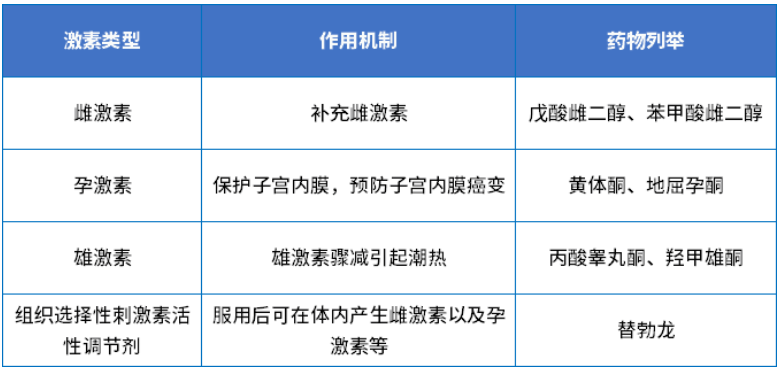
Long-term clinical studies have shown that although hormone replacement therapy can effectively improve vasomotor symptoms in menopausal women and reduce symptoms such as hot flashes and night sweats, long-term or excessive use of estrogen increases the risk of cardiovascular disease and cancer. Therefore, the use of hormonal drugs should be approached with caution.
Due to the various drawbacks of hormone replacement therapy, people have gradually turned their attention to non-hormonal therapies.
Clinically, it has been confirmed that NKB and its G protein-coupled receptor NK3R are involved in the regulation of GnRH release. Based on this mechanism, the NK3 receptor antagonist drug Veozah was developed.
In addition to Veozah, there are currently several non-hormonal drugs in the clinical stage. The author searched for "hotflash" on the clinicaltrials.gov website and selected "recruiting," yielding 19 clinical entries that met the criteria. These also included clinical trials for hormonal therapies, acupuncture, and more. This indicates that research on non-hormonal treatments for hot flashes is still relatively limited at present.
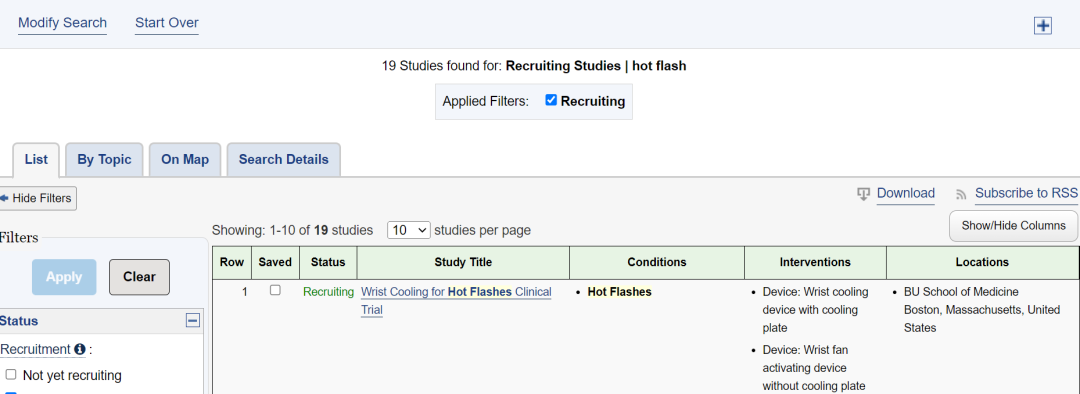
Figure 1 Hot Flash Medication Clinical Information
Image Source: clinicaltrials.gov
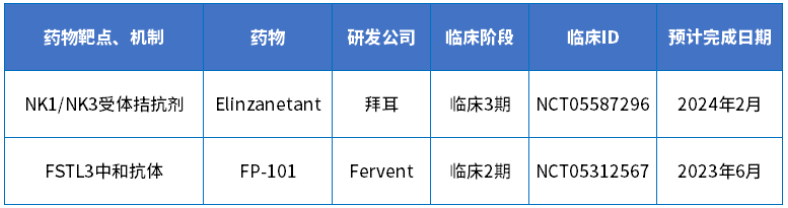
Table 2 below shows the information on several non-hormonal drugs currently in the clinical stage that I have queried.
Among them, the most noteworthy is Elinzanetant, a drug developed by Bayer. It is an NK1/NK3 dual receptor antagonist and also an oral medication. The Phase 3 clinical trial is expected to be completed in 2024.
The mechanism of action of Elinzanetant can be considered superior to Veozah, as Elinzanetant is an NK1/NK3 receptor antagonist, while Veozah is an NK3 receptor antagonist. However, the specific efficacy still awaits the results of Phase 3 clinical trials. If the Phase 3 results are excellent, it will undoubtedly secure a position in the market for treating hot flashes in women.
Table 2 Non-hormonal drugs in clinical stage
In addition to the two therapies mentioned above, Brisdelle (Paroxetine) can also be used for the treatment of hot flashes. This drug was launched in 2013 and is the first non-hormonal drug for the treatment of hot flashes. It is a selective serotonin reuptake inhibitor (SSRI), and its mechanism of action is currently unclear.
$600 billion,
Estrogen Drug Market Analysis
According to research data from the U.S. Female Founders Fund, it is estimated that there will be 1.1 billion menopausal women globally by 2025, and the menopause market will reach a scale of $600 billion.
But in China, this field is almost a blank slate, with the annual market size for estrogen drugs in public hospitals being only around 20-30 billion yuan. The chart below shows the changes in China's menopausal drug market in recent years.
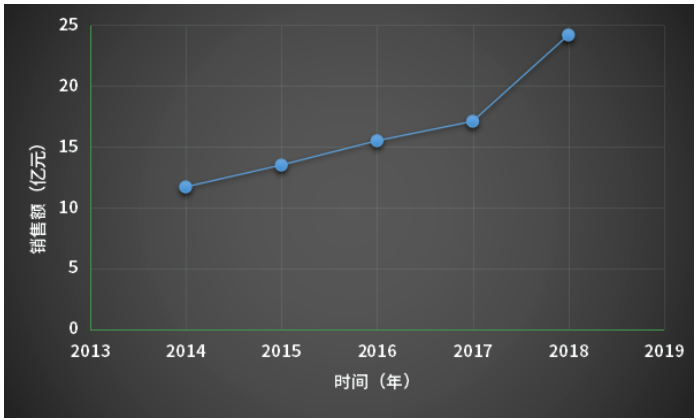
Figure 2: China's Menopause Drug Market
Data source: Zhiyan Consulting
According to a 2021 global survey report, among 3,460 menopausal women, approximately 10% of women were unable to use hormone therapy (9% from the United States, 12% from Europe, and 8% from Japan). Additionally, about 50% of women reported that despite being eligible for hormone therapy, they did not want to use it (54% from the United States, 56% from Europe, and 79% from Japan). Thus, the market potential for non-hormonal therapies is extremely significant.
From the above data, it can be seen that whichever non-hormonal drug is the first to enter the market will have the opportunity to exclusively dominate the menopause drug market.
Currently, Veozah is ahead of all competitors. Whether Veozah can quickly capture the market remains to be seen based on its real-world efficacy and marketing strategies moving forward. Meanwhile, Veozah faces competition from Elinzanetant, and if Elinzanetant successfully enters the market, intense competition will be inevitable, with efficacy determining the winner.
Summary
Hot flashes are a common symptom for women during menopause, impacting not only quality of life but also mental health. The new drug Veozah, approved by the FDA, is specifically for the treatment of hot flashes, bringing new hope to menopausal women.
In the management of menopause, effective drug treatment is crucial. As China's aging population accelerates, the impact of menopausal syndrome on women's health is becoming increasingly evident. However, the lack of effective drugs in this field indicates significant market potential.
It is believed that in the future, more new therapies for treating menopausal syndrome will continue to emerge.

Editorial Responsibility: Sanqi

Related Tags:China`,NK3 Inhibitor`
0
0