


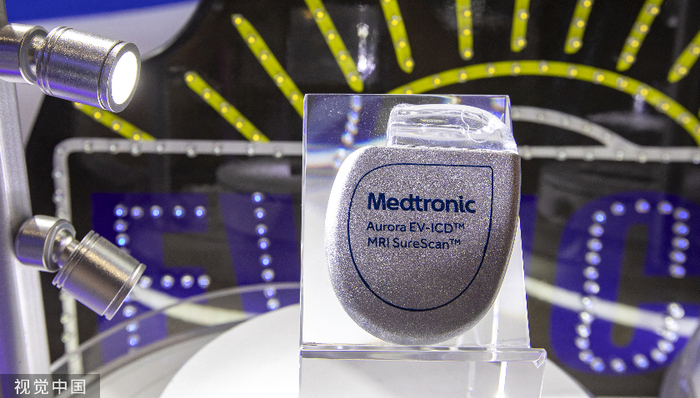
Interface News reporter |
Interface News Editor |Xie Xin
On May 30, the official website of the National Medical Products Administration (NMPA) showed that Medtronic (Shanghai) Management Co., Ltd. reported that during high-voltage therapy, when the programming setting is AX>B, specific batches of implantable device products may experience an increased likelihood of reduced or no energy delivery. Consequently, the manufacturer, Medtronic Inc., initiated a voluntary recall of implantable cardioverter defibrillators and other implantable devices (for registration certificate numbers, see attachment). The recall level is Class I.
Regarding this matter, The Paper sent an interview outline to Medtronic. Apart from the publicly available "Medical Device Recall Event Report Form," Medtronic has not provided any further response.
According to the "Medical Device Recall Event Report Form," the products involved in this recall include implantable cardioverter defibrillators, implantable resynchronization therapy cardioverter defibrillators, and implantable cardiac resynchronization therapy cardioverter defibrillators, covering six registration or filing certificate codes. The countries and regions involved include the United States, Australia, Singapore, China, and other areas. The number of production (or imported into China) batches and quantity is 27,175 units; the number sold in China is 23,803 units.
It should be noted that a Class I recall is the highest level of recall, indicating that the use of the medical device may or has already caused serious health hazards. However, according to the aforementioned "Report Form," so far, Medtronic has not received any complaints or adverse events caused by the aforementioned issues within China.
For corrective actions, the Report Form shows that Medtronic will issue warning information on its official website and send proactive recall notification letters to all affected platform vendors to implement software upgrades for the aforementioned affected products. In addition, this corrective action does not involve the discontinuation or return of the affected products.
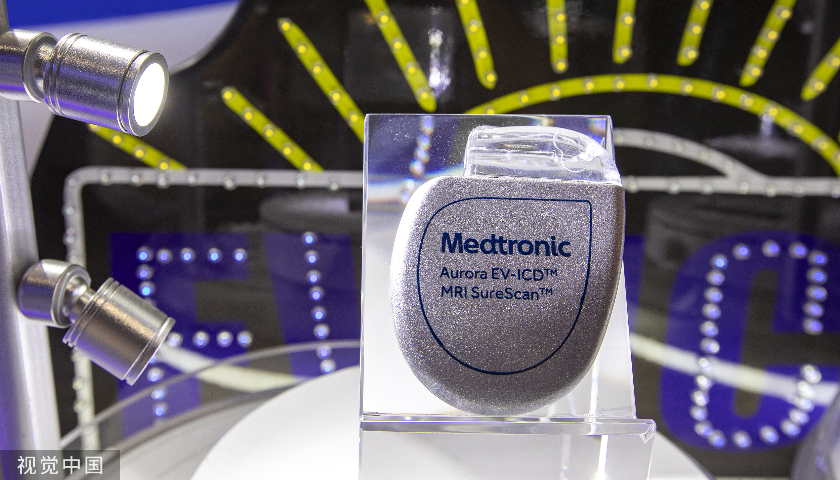
In fact, this is not the first recall of Medtronic-related products. In April 2021, Medtronic's implantable cardiac resynchronization therapy defibrillators (CRT-Ds) and implantable cardioverter-defibrillators (ICDs) were also voluntarily recalled. The reason was that through continuous monitoring and data modeling, Medtronic found that due to the lithium plating mechanism in lithium batteries, approximately 0.22% of devices containing Blackwell batteries produced before July 2017 would prematurely display an "elective replacement indicator" (ERI), and the time between the "elective replacement indicator" and "end of service" (EOS) would be shortened. The recall was also classified as a Class I recall.
In addition, Boston Scientific and St. Jude Medical, a subsidiary of Abbott, have had several records of voluntary recalls of similar products in recent years, with recall levels involving Class I, II, and III.
An Implantable Cardioverter Defibrillator (ICD) is an electronic device implanted in the patient's chest, connected to the heart through defibrillation leads. It automatically detects and promptly terminates malignant ventricular arrhythmias, belonging to the category of active implantable medical devices in cardiac rhythm management (CRM). Due to its small size and high technical threshold, this type of implantable defibrillator has always been regarded as a "black technology" product.
Since the first implantation in the human body in the 1980s, ICDs can now not only detect tachycardia and deliver defibrillation therapy but also identify bradycardia and provide pacing functions. According to the latest edition of the "Guidelines for the Management of Patients with Ventricular Arrhythmias and Prevention of Sudden Cardiac Death" published at the 2022 European Society of Cardiology (ESC) Congress, ICD is the only effective treatment measure for preventing sudden cardiac death (SCD).
However, this life-saving device, which is implanted in the body and needs to respond at any time, has high requirements for timeliness, effectiveness, and safety. ICD is also considered by the industry as one of the Class III active implantable medical devices with the highest technical barriers and R&D risks. Currently, the domestic ICD market in China is mainly divided among four foreign companies: Medtronic, Abbott, Boston Scientific, and Biotronik. These four companies also dominate the global CRM market. According to a Frost & Sullivan report, in 2021, their respective shares of the global CRM device market were 44.6%, 19.2%, 18.3%, and 15.4%.
However, Chinese players are gradually emerging. In May 2022, the Platinium™ series ICD introduced by MicroPort's subsidiary MicroPort Cardiac Rhythm Management (MicroPort CRM) received NMPA approval. As early as 2017, MicroPort, in conjunction with Yunfeng Fund, invested approximately 1.5 billion Hong Kong dollars to acquire Sorin, obtaining the CRM product line. In May this year, MicroPort CRM also filed for listing on the Hong Kong Stock Exchange. For domestic medical device companies, centralized procurement is a way to increase market penetration and achieve...China-made substitutionThe dividend policy. Data show that the number of ICD implantation surgeries performed annually in China is only between 8,000 and 9,000, which is significantly lower than the levels abroad and disproportionate to the annual number of sudden cardiac deaths in China.
In 2020, ICDs were included in the second batch of high-value medical consumables centralized procurement list. In November 2022, the Guangdong Provincial Pharmaceutical Trading Center released the "Alliance Centralized Bulk Procurement Document for Pacemaker-Type Medical Consumables," leading the acceleration of the centralized procurement process. This April, the results of this procurement were implemented. ICDs became the product with the largest price reduction. The price in Guangdong decreased from an average of 140,600 yuan per unit to 65,100 yuan, reducing patients' consumable costs by 75,500 yuan per unit.