

Embody, Inc. Announces FDA-Cleared Soft Tissue Repair Innovations Ahead of Proposed IPO

Embody
Implantable Medical Device Developer
Athletes constantly break and push the limits of human physical potential on the field, but beneath their muscular armor lies a "fatal" weakness—the ligaments and tendons, the "Achilles' heel" that hinders athletes from chasing their dreams on the field. Injuries or even ruptures of ligaments and tendons also occur occasionally in the daily lives of ordinary people.
Embody is an American medical device developer dedicated to advancing tendon and ligament repair.
Since its founding in 2014, Embody has been committed to enhancing the outcomes of soft tissue surgeries by utilizing innovative biomaterial design and biofabrication technologies. One of Embody's key technological innovations is the application of its patented BIOSPIN collagen technology for the treatment of tendon and ligament injuries.
Embody has received multiple rounds of financing along the way, with investors including the U.S. Defense Advanced Research Projects Agency (DARPA), Genesis Innovation Group, etc.
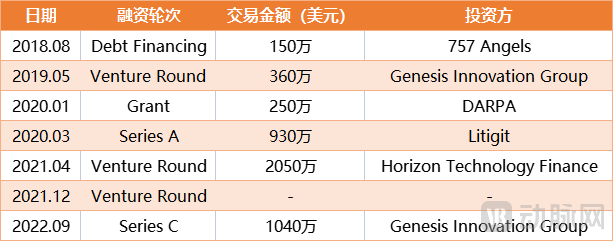
Embody Financing History
Data source: Crunchbase, compiled and produced by VCBeat
In January this year, Zimmer Biomet (NYSE and SIX: ZBH), a global orthopedic giant, acquired Embody for $155 million and committed to an additional $120 million if Embody achieves regulatory and commercial milestones within the next three years. The total acquisition amount reached $275 million.
This is Zimmer Biomet's first acquisition deal after acquiring Biomet in 2015 and renaming to Zimmer Biomet. So, what unique technologies and product advantages does Embody possess to attract the full acquisition by the orthopedic giant Zimmer Biomet?
Ligaments and tendons are composed of fibrous connective tissue, with ligaments connecting bones and tendons connecting muscles to bones, playing a crucial role in the movement and stability of joints. Therefore, achieving high mechanical strength and good integration with host bone to withstand high loads during intense joint movements is critical for the development of soft tissue repair products.
Embody has innovatively solved this problem through its patented technology — BIOSPIN biospinning.BIOSPIN is an innovative fiber assembly process that uses a hybrid electrospinning/blow-spinning technique and low-temperature annealing technology.
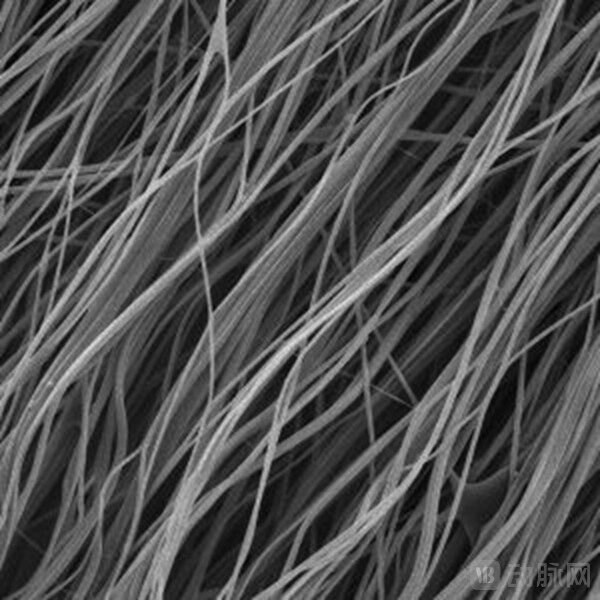
BioSpin
Source: Embody Official Website
Based on BIOSPIN biospinning technology, Embody has developed TAPESTRY, a bio-integrated implant specifically for tendon and ligament repair.TAPESTRY is a clinical-grade polymer of Type I collagen and polylactic acid (PDLLA).
Among them, type I collagen is the main component of tendons and ligaments, and polylactic acid is a biodegradable thermoplastic aliphatic polyester polymer material, with raw materials mainly derived from natural sources.
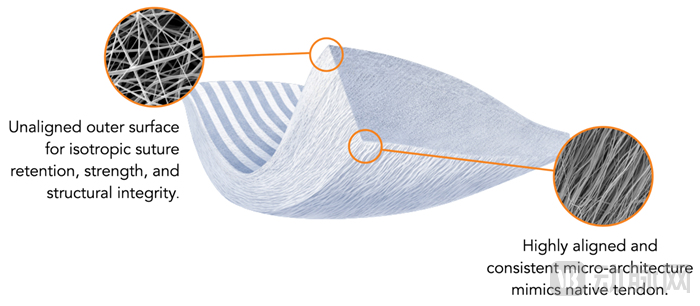
TAPESTRY
Source: Embody Official Website
Unlike the acellular dermis or extracellular matrix (ECM) materials used in traditional orthopedic surgeries (such as Achilles tendon or rotator cuff repair),TAPESTRY is a degradable implant with customized fiber diameter and pore size, and possesses the mechanical properties of natural tissue.
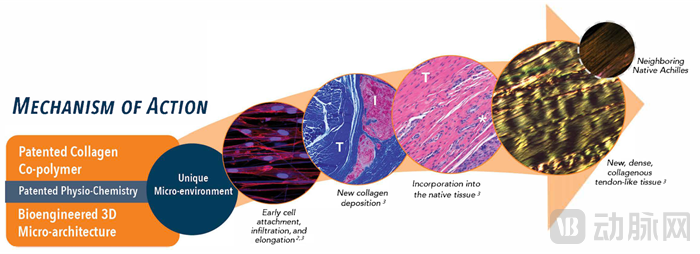
Comparison of Mechanisms of Action
Source: Embody Official Website
By mimicking the microstructure of natural ligaments and tendon tissues, the R&D team controlled the pore size of BIOSPIN within 50 to 300 μm. Therefore,After being implanted in the human body, BIOSPIN can form a highly adhesive and dense collagen connective tissue around and at the site of the implant, aiding in the proliferation of human cells to form new tendon tissue, thereby reducing the body's rejection response to the implant.
TAPESTRY received FDA 510(k) clearance in 2020.
In recent years, with the development of sports medicine, an increasing number of patients with rotator cuff injuries have been identified and diagnosed clinically. Most of these patients experience relief or recovery after early arthroscopic surgery. However, insufficient soft tissue healing post-surgery may lead to secondary pain, loss of function, and in severe cases, the need for revision surgery, imposing a greater financial burden on the patient.
Embody’s TAPESTRY RC Arthroscopic Delivery and Fixation System is a system designed for arthroscopic rotator cuff implants. This system combines the healing advantages of TAPESTRY with streamlined arthroscopy and bioabsorbable anchors, primarily used in arthroscopic procedures to treat partial to full-thickness rotator cuff tears.
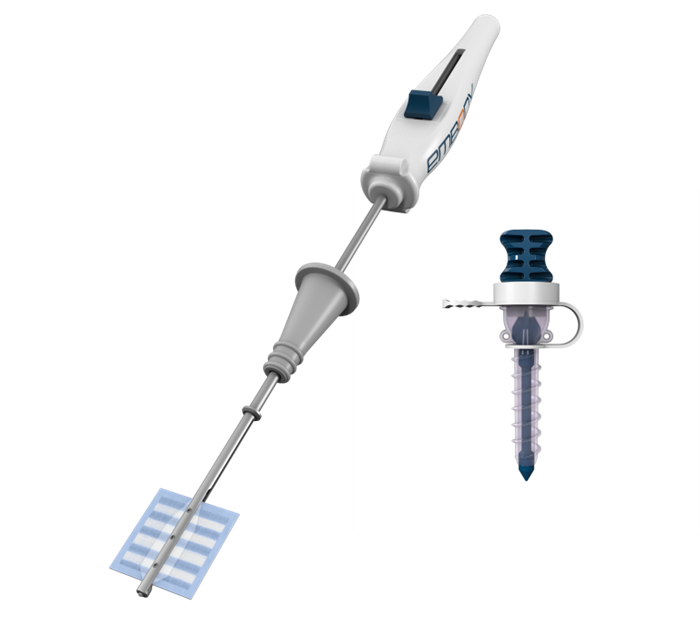
TAPESTRY RC
Source: Embody Official Website
All implants of TAPESTRY RC are preloaded in the device, requiring no additional preparation during surgery. Multiple absorbable fixation anchors can be preloaded in the TAPESTRY RC inserter. With just one insertion, the inserter can deploy multiple fixation anchors according to the surgeon’s procedural needs, securing TAPESTRY to the tendon or bone.According to Jeffrey Conroy, CEO of Embody, the rotator cuff augmentation using TAPESTRY RC can be completed in as fast as 5 minutes.
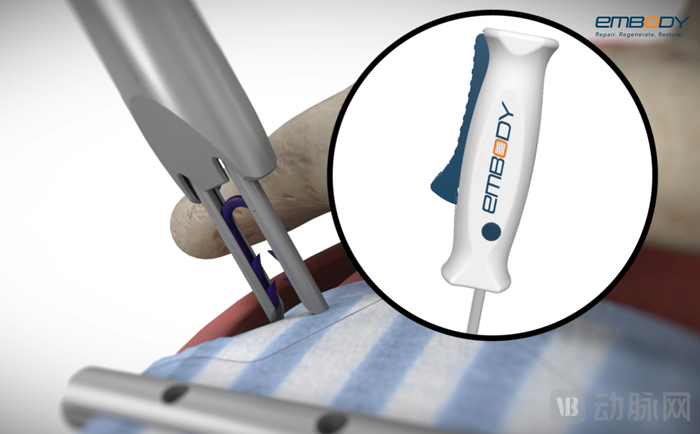
TAPESTRY RC Dual Anchor Inserter
Source: Embody Official Website
The inserter of TAPESTRY RC is suitable for forward and lateral TAPESTRY implants sized from 20x30mm to 40x30mm, meeting the required implant dimensions for different rotator cuff injury locations.
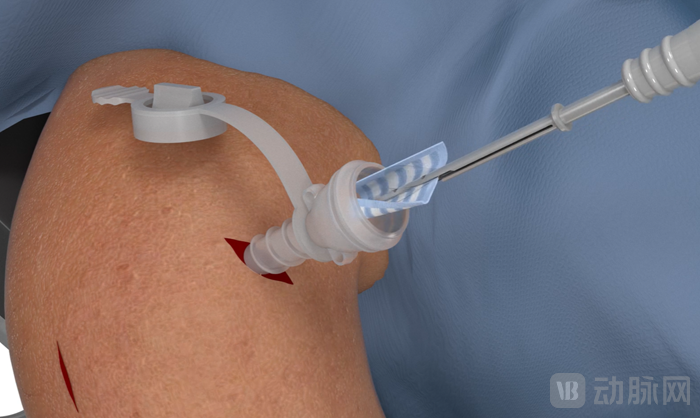
TAPESTRY RC Importer
Source: Embody Official Website
TAPESTRY RC Arthroscopic Delivery and Fixation System received FDA 510(k) clearance in 2022.
A clinical study on TAPESTRY RC published in the 2022 U.S. journal *Orthopedic Experience and Innovation*. The study evaluated the healing of the subscapularis tendon in five arthritis patients who used TAPESTRY RC within six months after surgery.During the 6-month dynamic ultrasound examination, all patients' tendons showed complete healing with no postoperative complications.
The COVID-19 pandemic has placed tremendous pressure on global supply chains and the macroeconomy, and Zimmer Biomet's sales performance in the past two years has not shown significant growth. According to the company’s 2022 annual report, Zimmer Biomet achieved revenue of $6.94 billion (approximately 49.18 billion RMB) in this fiscal year, a slight increase compared to $6.827 billion (approximately 48.38 billion RMB) in 2021.
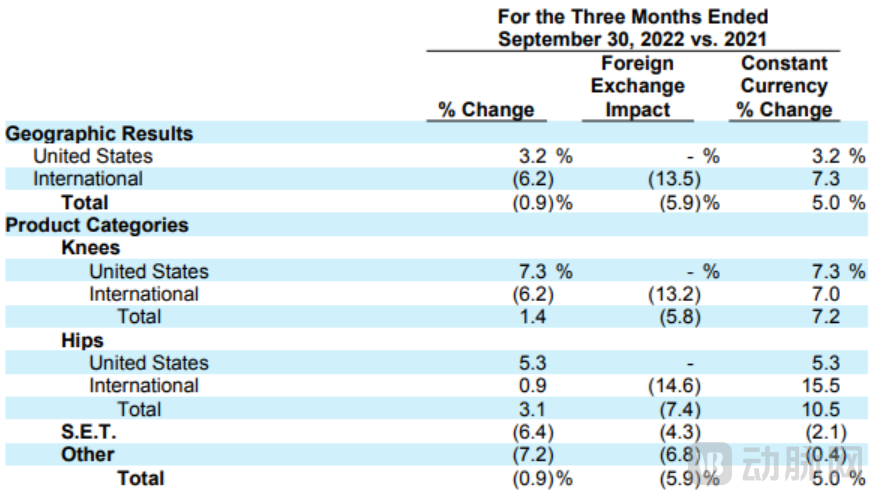
Zimmer Biomet 2022 Annual Report
Source: Zimmer Biomet official website
Among them, the sales revenue of the S.E.T. business (S.E.T. includes surgery, sports medicine, foot and ankle, trauma, etc.) increased by 13% in 2021 compared to 2020. However, the sales revenue of the S.E.T. business in 2022 was disappointing and showed a decline.
With the completion of the acquisition of Embody and the gradual subsiding of the pandemic wave, Zimmer Biomet released its Q1 2023 financial report on its official website.
The financial report shows that the company's net sales reached 1.831 billion US dollars (approximately 12.97 billion RMB), compared to 1.663 billion US dollars (approximately 11.785 billion RMB) in the same period last year, representing a year-on-year increase of 10.09%. Meanwhile, the net profit for the same period increased from 14.4 million US dollars (approximately 1.02 billion RMB) in 2022 to 232.5 million US dollars (approximately 1.648 billion RMB), reflecting a year-on-year growth of 1516.67%.
After acquiring Embody, Zimmer Biomet will further enhance the company's product line layout in the sports medicine field (S.E.T. business). However, whether this transaction can inject new vitality into Zimmer Biomet's S.E.T. business, which showed weak performance in the fiscal year 2022, will require time and market validation.
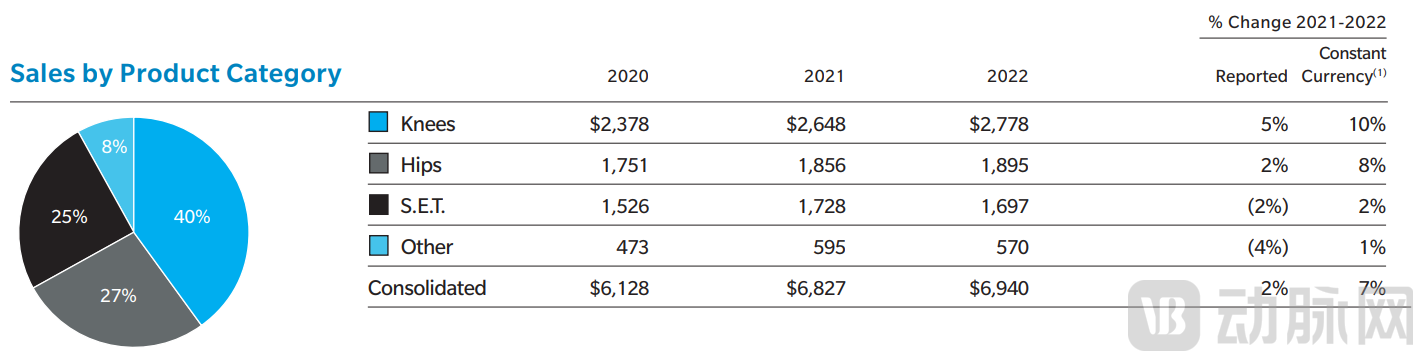
Zimmer Biomet's Annual Sales by Product Category
Source: Zimmer Biomet Official Website
As Embody emerges in the U.S. sports medicine market, Professor Chen Shi Yi and his research team from the Department of Sports Medicine at Huashan Hospital, Fudan University, have also brought innovative solutions from China to the sports medicine market.
On May 14, the first artificial ligament product independently developed by a Chinese team and approved by the National Medical Products Administration was officially launched, marking a breakthrough in the availability of domestically produced artificial ligaments in China.This product was led by Professor Chen Shiyi's team from the Department of Sports Medicine at Huashan Hospital, Fudan University, and jointly developed with Shanghai Ligent Biotechnology Group. It is a mechanical prosthesis used for reconstructing damaged ligaments.
Prior to this, Professor Peng Huisheng and his research team from Fudan University also made breakthroughs in the field of artificial ligaments.
On May 4, Nature Nanotechnology, a subsidiary of Nature, published the latest research results of Professor Huiying Peng and his team.This study introduces an innovative artificial ligament, which is assembled from aligned carbon nanotubes (CNTs) to form hierarchical helical fibers (HHF).
Compared to trauma, spine, and joint categories, sports medicine has always been the "lagging behind" area in the development of orthopedics in China. This is mainly because sports medicine was previously considered a kind of "specialized medicine" in China that only served elite athletes.
However, with the introduction of several policies and regulations such as the State Council's "National Fitness Plan (2021-2025)" and especially the successful hosting of the Beijing Winter Olympics last year, the number of participants in winter sports nationwide reached 346 million. Skiing, as one of the high-risk sports, has since earned the humorous nickname "the medical sports field along the ski slopes."
According to IQVIA research data, the market size of China's sports medicine was close to 3 billion RMB in 2019, with a growth rate of about 25%. It is the fastest-growing segment in the orthopedic market. The market size is expected to exceed 5 billion RMB by 2023.But for a long time, imported products have dominated the domestic sports medicine field. The market share of domestically produced products in China's sports medicine market is less than 10%, leaving enormous room for domestic substitution.
In March 2022, Zimmer Biomet spun off its spine and dental businesses, launching an independent publicly traded company named ZimVie. In September 2022, the national procurement program for spinal products, which had been piloted since 2021, was officially implemented. Affected by the volume-based procurement, ZimVie announced that its spinal business would fully withdraw from the Chinese market.
The National Procurement of High-Value Consumables in Sports Medicine is Approaching. Earlier this year, two leading companies in China's sports medicine sector, Beijing Tianxing Medical and Hangzhou Ruijian Medical, successively initiated IPO coaching, planning to make their initial public offerings and go public. As the acceleration of domestically produced alternatives approaches, what opportunities and challenges will emerge for China’s sports medicine sector? Let’s wait and see.