

Lyell Immunopharma acquires global rights to LYL273 from China's ICT in $860M+ deal
Lyell Immunopharma
Cell Therapy New Drug Developer

ICT
Oncology Drug Developer
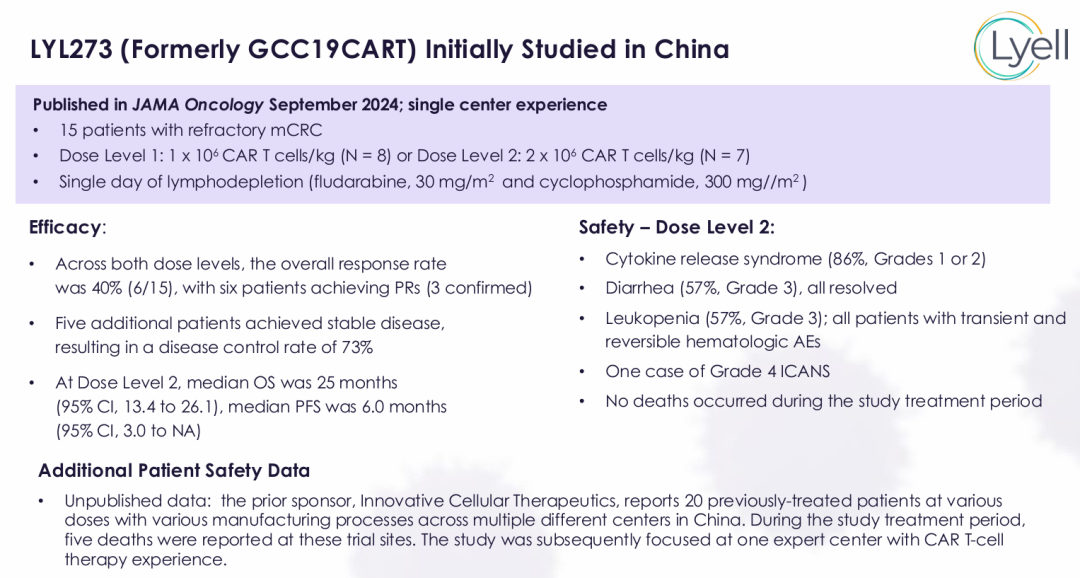
On November 10, Lyell Immunopharma (Nasdaq: LYEL), a late-stage clinical company advancing next-generation chimeric antigen receptor (CAR) T-cell therapies for cancer patients, announced that it has strengthened its solid tumor pipeline by acquiring the global rights to LYL273 (formerly known as GCC19CART) from Innovative Cellular Therapeutics (ICT).

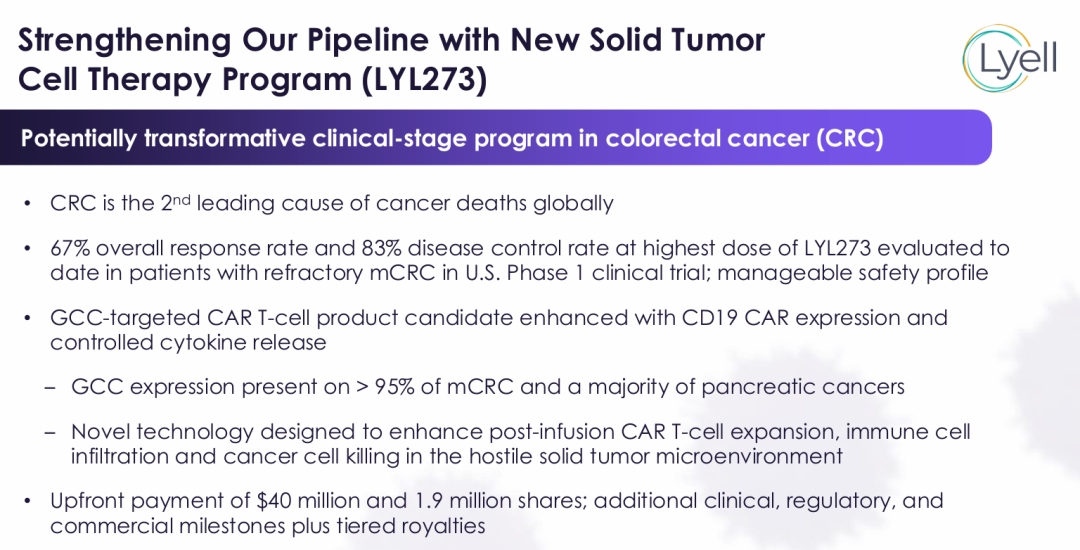
LYL273 is a novel, autologous guanylate cyclase-C (GCC)-targeted CAR-T cell therapy candidate for the treatment of metastatic colorectal cancer (mCRC) and other GCC-expressing cancers. In a Phase 1 clinical trial conducted in the United States, LYL273 treatment in patients with refractory mCRC resulted in an overall response rate (ORR) of 67% and a disease control rate (DCR) of 83% (complete and partial responses plus stable disease), as assessed by the Response Evaluation Criteria in Solid Tumors (RECIST) v1.1. The therapy demonstrated a manageable safety profile at the highest dose level studied to date. LYL273 is a GCC-targeted CAR-T cell candidate engineered with CD19 CAR expression and a controlled cytokine release mechanism. This design is intended to enhance CAR-T cell expansion, promote immune cell infiltration, and improve cancer cell killing within the challenging solid tumor microenvironment.
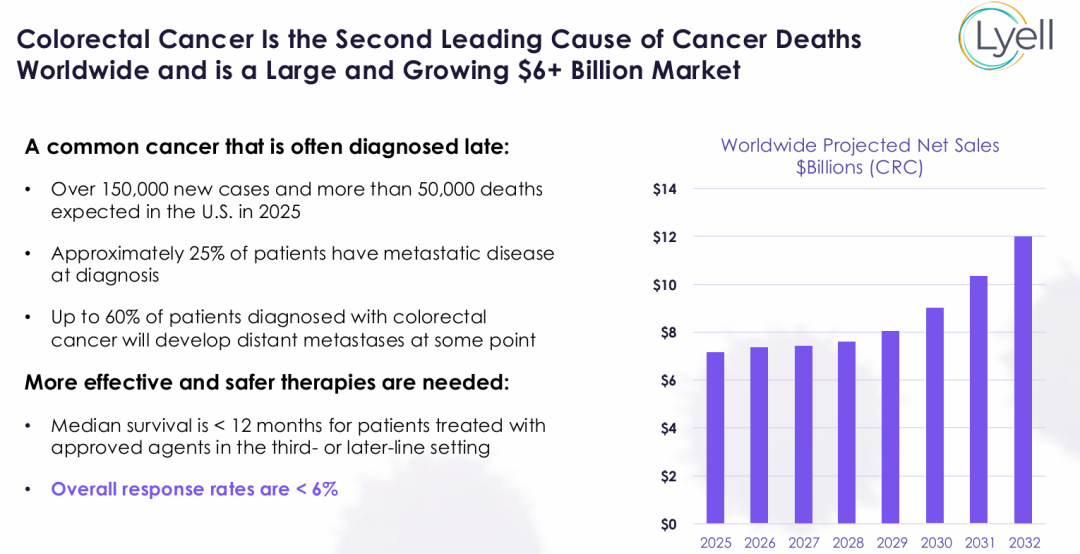
Colorectal cancer (CRC) is the second leading cause of cancer-related deaths worldwide, with its incidence rising among individuals under 55 years of age. It is projected that approximately 53,000 people in the United States will die from CRC in 2025. With currently approved therapies, only 6% of patients with metastatic CRC (mCRC) in the third-line setting or later achieve an objective response (partial or complete) to subsequent lines of treatment, and the median overall survival (OS) is typically less than 12 months. Guanylate cyclase C (GCC) is a receptor that plays a critical role in regulating intestinal electrolyte and fluid homeostasis. It is expressed in over 95% of colorectal tumors and the majority of pancreatic cancers. In healthy tissues, its expression is confined to the gastrointestinal tract, where it is isolated from the systemic circulation by tight junctions.
Transaction Details
Under the terms of the definitive license agreement, Lyell will receive global exclusive rights—excluding China's mainland, Hong Kong, Macau, and Taiwan—to research, develop, manufacture, and commercialize LYL273.
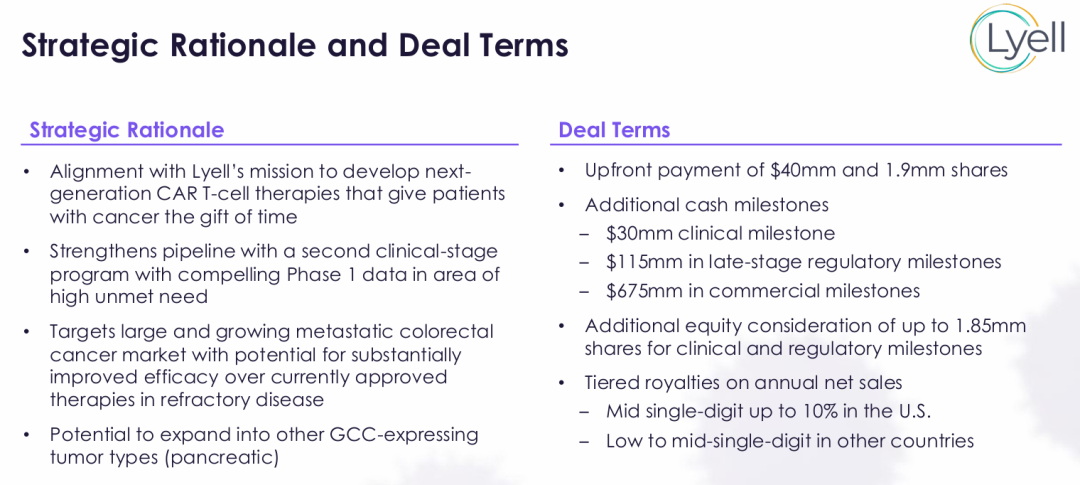
ICT will receive an upfront payment of $40 million and 1.9 million shares of Lyell common stock. ICT is also eligible for additional cash and equity considerations, as well as future royalties on net sales. The additional cash consideration includes potential clinical milestones of up to $30 million, later-stage regulatory milestones of up to $115 million, and commercial sales milestones of up to $675 million. Upon achieving certain clinical and late-stage regulatory milestones, additional equity consideration includes up to 1.85 million shares of Lyell common stock. Tiered royalties range from the low-single digits to 10% on annual net sales in the U.S., and from the low- to mid-single digits on annual net sales in other licensed territories.
Upon completion of the transaction, Lyell anticipates that its existing cash reserves will be sufficient to fund its operations into 2027. This financial runway is expected to support data readouts and progress updates from the rondecabtagene autoleucel (rondecel) clinical program in patients with large B-cell lymphoma, as well as additional clinical data from the Phase 1 trial of LYL273.
The transaction is expected to have a moderate impact on operating expenses in 2025. Due to continued prudent expenditure management, Lyell now forecasts its 2025 net cash usage—excluding the $40 million upfront payment for this transaction—to be between $155 million and $160 million, which is lower than its previous guidance of $175 million to $185 million.