

Ten Promising First-in-Class Therapeutics Highlighted at ASCO 2023

AbbVie
Innovative Drug Developer
The 2023 American Society of Clinical Oncology (ASCO) Annual Meeting was held from June 2 to June 7. The editor has compiled a brief summary of the clinical progress of some first-in-class new drugs reported in the meeting for readers' reference.
Drug: ORIN1001
Company: Fosun Honyar
ORIN1001 is a first-in-class, novel-structured, highly selective IRE1 (Inositol-requiring enzyme 1) inhibitor independently developed by Fosun Orinno, and is currently being developed for the treatment of advanced solid tumors and idiopathic pulmonary fibrosis.
The Phase I/II study (NCT03950570) published this time aims to evaluate the safety, preliminary efficacy, pharmacokinetic properties of ORIN1001 in patients with advanced solid tumors and determine the recommended Phase II dose (RP2D). As of January 2023, 30 patients with advanced solid tumors have received ORIN1001 monotherapy at a maximum dose of 650mg/day over a 21-day period, and 13 breast cancer patients have received combination therapy of 400mg/day ORIN1001 with Abraxane over a 28-day period.
Study data show that the most common adverse reactions were mainly nausea and/or vomiting (Grade 1-2). According to RECIST 1.1 criteria, 2 out of 30 patients treated with ORIN1001 monotherapy achieved partial response (PR). In patients treated with ORIN1001 in combination with Abraxane, PR was observed in one ER+/PR-/HER2- patient. Notably, two cases of PR were observed in another Phase I basket trial conducted in China.
Preliminary data support the selection of ORIN1001 monotherapy at 500mg and 300mg ORIN1001 in combination with Abraxane as the RP2D.
Drug: ALMB-0168
Company: CSPC Pharmaceutical Group
ALMB-0168 is a first-in-class antibody agonist targeting the novel drug target connexin 43 (Cx43) hemichannel. Preclinical studies have shown that it can inhibit osteosarcoma and breast cancer bone metastasis. ALMB-0168 has been granted orphan drug designation and rare pediatric disease designation by the FDA for the treatment of osteosarcoma.
The Phase I study (NCT04886765) published this time aims to evaluate the safety, tolerability, and preliminary efficacy of ALMB-0168 in treating bone cancer. The study enrolled patients aged 16 years or older with histologically confirmed bone cancer who had progressed after standard chemotherapy.
As of August 21, 2022, a total of 14 patients had completed enrollment. The ORR for the 13 evaluable patients was 15.4% (2/13), including 2 cases of partial response (PR). One patient, who had received three or more prior lines of therapy and had lung metastases, achieved 33 weeks of stable disease (SD) and over 8 weeks of PR, resulting in durable disease control. The disease control rate (DCR) was 53.8% (7/13), with 2 PRs and 5 SDs. No dose-limiting toxicities or Cx43-related cardiac or severe hepatic events were observed.
Existing studies show that, in Phase I dose-escalation trials, ALMB-0168 has demonstrated encouraging efficacy and tolerable safety in patients with metastatic or unresectable bone cancer following standard chemotherapy.
Drug: DSP107
Company: KAHR Medical
DSP107 is a bifunctional trimeric fusion protein, which is the extracellular domain of SIRPα fused to the extracellular domain of 4-1BBL and forms a 3+3 molecular structure through the trimerization of 4-1BBL. This molecule can effectively bind to the related target proteins CD47 and 4-1BBL in vitro. DSP107 can block CD47 to promote the phagocytosis of tumor cells by macrophages and PMNs (polymorphonuclear neutrophils); meanwhile, DSP107 can also activate the co-stimulatory signal of T cells through the co-stimulator 4-1BBL and promote the killing of tumor cells by T cells.
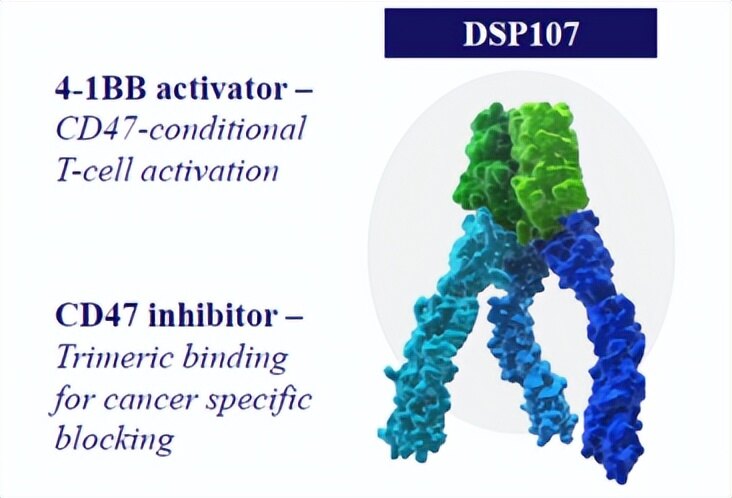
DSP107 Molecular Structure (Source: KAHR Medical Official Website)
The Phase I study (NCT04440735) published this time aims to evaluate the safety and tolerability of DSP107 in combination with the PD-L1 monoclonal antibody atezolizumab in patients with advanced solid tumors. The study results showed that among 19 patients, the combination of DSP107 and atezolizumab was well tolerated, with no dose-limiting toxicity (DLT) reported. Treatment-related adverse events (AEs) were observed in 68% of patients (13/19), with the most common AEs including diarrhea (21%), fatigue (21%), infusion-related reactions (16%), nausea (11%), anorexia (11%), arthralgia (11%), myalgia (11%), and grade 1 anemia (11%).
In terms of efficacy, at the treatment time of 10.5 months, SD was observed in 42% of patients (8/19). At the highest dose of DSP107 (10 mg/kg), SD was observed in three patients, including one patient with microsatellite-stable metastatic colorectal cancer (MSS-CRC) carrying a KRAS mutation, who showed a 16% reduction in lesion size and a progression-free period of 7 months; the other two patients with advanced MSS-CRC (carrying BRAF and KRAS mutations, respectively) demonstrated deep and durable responses (73% and 76% reduction in lesion size), with complete disappearance of lung and liver lesions in one of these patients.
Drug: BL-B01D1
Company: Baili Tianheng
BL-B01D1 is a first-in-class novel antibody-drug conjugate (ADC) composed of an EGFRxHER3 bispecific antibody linked to a novel TOP-I inhibitor payload through a cleavable linker.
The Phase I study (NCT05194982) published this time aims to evaluate the efficacy and safety of BL-B01D1 in patients with advanced solid tumors. As of December 31, 2022, a total of 150 patients who received at least one dose of treatment were enrolled (including 25 patients in D-ESC and 125 patients in D-EXP). Dose-limiting toxicities (DLTs) were neutropenia, febrile neutropenia, and thrombocytopenia at 3.0 mg/kg QW and 3.5 mg/kg D1D8 Q3W. The maximum tolerated doses (MTDs) were 3.0 mg/kg D1D8 Q3W and 6.0 mg/kg D1 Q3W. D-EXP was conducted at 2.5, 3.0 mg/kg D1D8 Q3W and 4.5, 5.0, 6.0 mg/kg D1 Q3W.
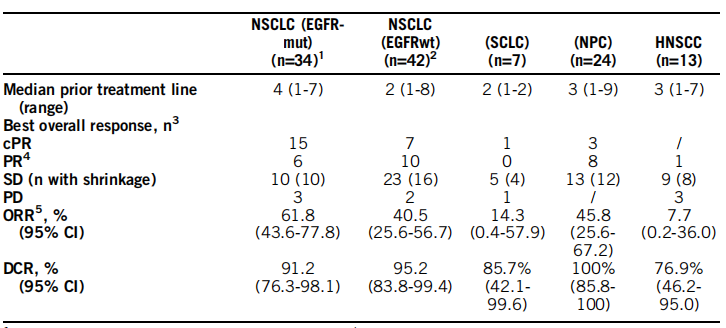 Efficacy Data of BL-B01D1 (Source: Baili Tianheng Official Website)
The study results showed that, in terms of safety, the most common TRAEs (>10%, all grades/≥G3) were leukopenia (60%/30%), neutropenia, anemia (45%/15%), thrombocytopenia (44%/19%), alopecia (30%/0%), nausea (29%/<1%), vomiting (28%/0%), fatigue (21%/<1%), and rash (13%/0%). No interstitial lung disease was observed.
Drug: SI-B001
Company: Baili Tianheng
SI-B001 (Izalontamab) is currently the world's only EGFR/HER3 bispecific antibody to have entered clinical trials.
The Phase II study announced this time aims to evaluate the efficacy and safety of SI-B001 in combination with docetaxel in patients with locally advanced or metastatic EGFR/ALK wild-type NSCLC. The study is divided into three cohorts, including: 1) Cohort A, receiving SI-B001 + PBC (platinum-based chemotherapy) as second-line treatment after failure of first-line anti-PD-1/L1 monotherapy; 2) Cohort B, receiving SI-B001 + docetaxel as second-line treatment after failure of first-line anti-PD-1/L1 + PBC; 3) Cohort C, receiving SI-B001 plus docetaxel as post third-line treatment after failure of first-line anti-PD-1/L1 + PBC. Three dosing regimens of SI-B001 were evaluated: Regimen 1 (QW, 16+9mg/kg), Regimen 2 (D1D8 Q3W, 14mg/kg), and Regimen 3 (QW, 21+12mg/kg). The primary endpoint of the study is ORR and determination of the optimal dose. Secondary endpoints include PFS, DCR, DOR, and safety.
As of November 11, 2022, the study had enrolled a total of 55 patients, including 1 patient in Cohort A, 45 patients in Cohort B, 8 patients in Cohort C, and 1 patient enrolled based on the investigator's judgment. Among the 55 patients, 48 were evaluable, with an ORR of 31.3% and a DCR of 77.1%. In Cohort B, 38 patients were evaluable for efficacy, among whom the ORR was 45.5% and the DCR was 68.2% in the 22 evaluable patients receiving Regimen 1. Of these 22 patients, 18 had no driver gene alterations (AGA), with an ORR of 50.0%, a DCR of 72.2%, and mPFS not yet reached. The most common ≥ Grade 3 TRAEs were myelosuppression (17%), decreased neutrophil count (15%), and decreased white blood cell count (12%). There were no drug-related deaths.
Drug: ABBV-155
Company: AbbVie
Mirzotamab clezutoclax (ABBV-155) is an ADC drug targeting B7H3, incorporating a BCL-XL inhibitor as its payload. B7H3 is an immunomodulatory transmembrane N-linked glycoprotein that is overexpressed in solid tumors such as small cell lung cancer, non-small cell lung cancer, and breast cancer. ABBV-155 can bind to B7H3 on the cell surface, leading to ADC internalization, linker cleavage, and intracellular payload release, thereby inducing apoptosis.
The Phase I study (NCT03595059) published this time aims to evaluate the efficacy and safety of ABBV-155 in combination with taxanes in patients with relapsed and/or refractory (R/R) solid tumors. As of November 18, 2022, a total of 78 patients were enrolled, including: 1) 14 patients with small cell lung cancer (SCLC) received ABBV-155 monotherapy; 2) 36 patients with non-small cell lung cancer (NSCLC) received ABBV-155 in combination with docetaxel; 3) 28 patients with ER+/HER2- breast cancer (BrCa) who had previously received CDK4/6 inhibitor treatment were administered ABBV-155 in combination with paclitaxel.
The median follow-up period for the SCLC cohort was 2.0 months (0.6~9.1), for the NSCLC cohort was 4.9 months (0.6~8.5), and for the BrCa cohort was 10.4 months (0.8~13.3). The most common adverse events (AEs) in the SCLC cohort were fatigue, increased aspartate aminotransferase, diarrhea, and headache (21%); the most common AE in the NSCLC and BrCa cohorts was fatigue, with incidence rates of 58% and 61%, respectively. Thrombocytopenia, a common side effect of BCL-XL inhibitors, was not observed in the ABBV-155 monotherapy group.
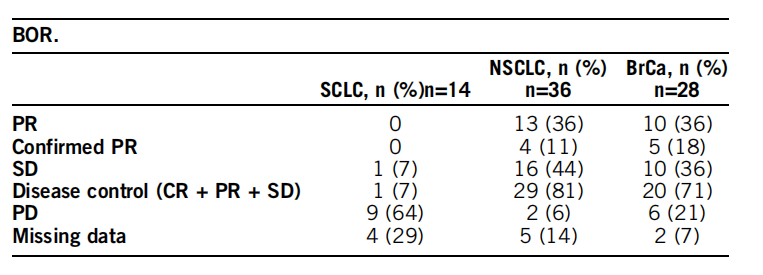
Efficacy Data of ABBV-155 (Source: AbbVie)
In terms of efficacy, the confirmed objective response rate (cORR) was 0% in the SCLC cohort, 11% in the NSCLC cohort, and 18% in the BrCa cohort. Overall, ABBV-155 as a monotherapy or in combination with paclitaxel was well-tolerated. In patients with NSCLC and BrCa who had received multiple treatment regimens, the best overall response (BOR) and disease control rate (DCR) of ABBV-155 combination therapy were relatively high; however, adverse reactions of grade 3-4 neutropenia were observed, and it remains unclear whether ABBV-155 exacerbated the risk of paclitaxel-related neutropenia.
Drug: TORL-1-23
Company: TORL Biotherapeutics
TORL-1-23 is an ADC generated by conjugating an anti-CLDN6 monoclonal antibody with the microtubule inhibitor MMAE via a cleavable linker. In in vitro experiments, TORL-1-23 demonstrated high specific binding ability to cell lines overexpressing CLDN6, but did not bind to cell lines overexpressing other CLDN proteins, such as CLDN3, CLDN4, and CLDN9.
The Phase I TORL123-001 study (NCT05103683) aims to evaluate the safety, preliminary efficacy of TORL-1-23 in patients with advanced solid tumors and to determine DLTs, MTD, and RP2D.
As of February 1, 2023, the study enrolled a total of 22 patients with solid tumors (18 with ovarian cancer, 3 with testicular cancer), receiving TORL-1-23 intravenous infusion every 3 weeks at doses ranging from 0.2 to 2.4 mg/kg. The most common AEs were fatigue (n=5), peripheral neuropathy (n=4), and nausea (n=3). No DLTs were reported, and no dose reductions were required. Preliminary PK data showed sustained exposure to TORL-1-23 over the 21-day dosing interval, with low serum MMAE levels, indicating minimal off-target MMAE exposure outside of tumors.
In terms of efficacy, PR was observed in 23.5% (4/17) of CLDN6+ patients. Preliminary conclusions indicate that TORL-1-23 demonstrates good tolerability and PK properties in CLDN6+ ovarian and testicular cancer patients who have undergone multiple treatment regimens.
Drug: CBP-1008
Company: Tongyi Pharmaceutical
CBP-1008 is a bispecific antibody-drug conjugate (ADC) that simultaneously targets folate receptor (FRα) and TRPV6 (a calcium channel protein), with MMAE as the toxin component.
The Phase I study (NCT04740398) published this time aims to evaluate the safety and efficacy of CBP-1008 in patients with advanced solid tumors. As of September 30, 2022, 178 patients who received at least one dose of CBP-1008 treatment have been enrolled; these patients had a median of 3 prior lines of therapy. Tumor types included in the study were ovarian cancer (n=101), triple-negative breast cancer (n=25), ER+/Her2+ breast cancer (n=17), colorectal cancer (n=6), pancreatic cancer (n=12), and other types of cancers (n=17).
The study results showed that a total of 82 patients with ovarian cancer received CBP-1008 treatment at a dose of 0.15 mg/kg or higher and were evaluable for efficacy. Among them, 21 patients achieved partial response (PR), and 30 patients achieved stable disease (SD). The objective response rate (ORR) and disease control rate (DCR) were 25.6% and 62.2%, respectively. The median progression-free survival (mPFS) was 3.7 months (95% CI: 2.7-5.1). In 34 patients with FRα expression ≥25% and prior treatment lines ≤3, the ORR was 32.4%, and the mPFS remained at 3.7 months (95% CI: 3.3-7.3).
Current research results show that CBP-1008 has controllable safety. Anti-tumor activity was observed in ovarian cancer patients receiving 0.15mg/kg or higher doses, particularly in ovarian cancer patients with FRα expression ≥25% and prior treatment lines ≤3.
Drug: BCA101
Company: Bicara Therapeutics
BCA101 is a bifunctional EGFR/TGF-β antibody designed to inhibit EGFR and directly neutralize TGF-β at the tumor site. This mechanism of action enables BCA101 to suppress tumor proliferation while restoring the cytotoxic activity of local immune cells.
The latest data from the dose-expansion cohort of the Phase I/Ib study (NCT04429542) was announced, encompassing a total of 31 evaluable patients with recurrent/metastatic squamous cell carcinoma of the head and neck (R/M HNSCC). All patients had not previously received systemic treatment and had PD-L1 CPS ≥1. Among them, 20 patients were HPV-negative and 11 patients were HPV-positive.
The study results showed that in the HPV-negative population, the ORR was 65%, including 12 confirmed partial responses (PR) and one confirmed complete response (CR). Disease relief was observed across patients with varying levels of PD-L1 expression and different disease subgroups, including distant metastasis cases (9/14, 64%) and local regional lesions (4/6, 67%). In HPV-negative patients, the preliminary median progression-free survival (mPFS) was at least 6.6 months. In the overall evaluable population, the response rate was 48%.
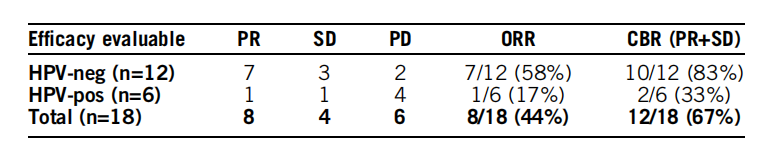 Efficacy Data of BCA101 (Source: Bicara Therapeutics)
In terms of safety, BCA101 is acceptably safe. The most common TRAEs include acne-like rash (73%), fatigue (36%), hypophosphatemia (36%), and anemia (30%).
Drug: Talquetamab
Company: Johnson & Johnson
Talquetamab is a first-in-class bispecific antibody that redirects T cells by simultaneously targeting GPRC5D and CD3.
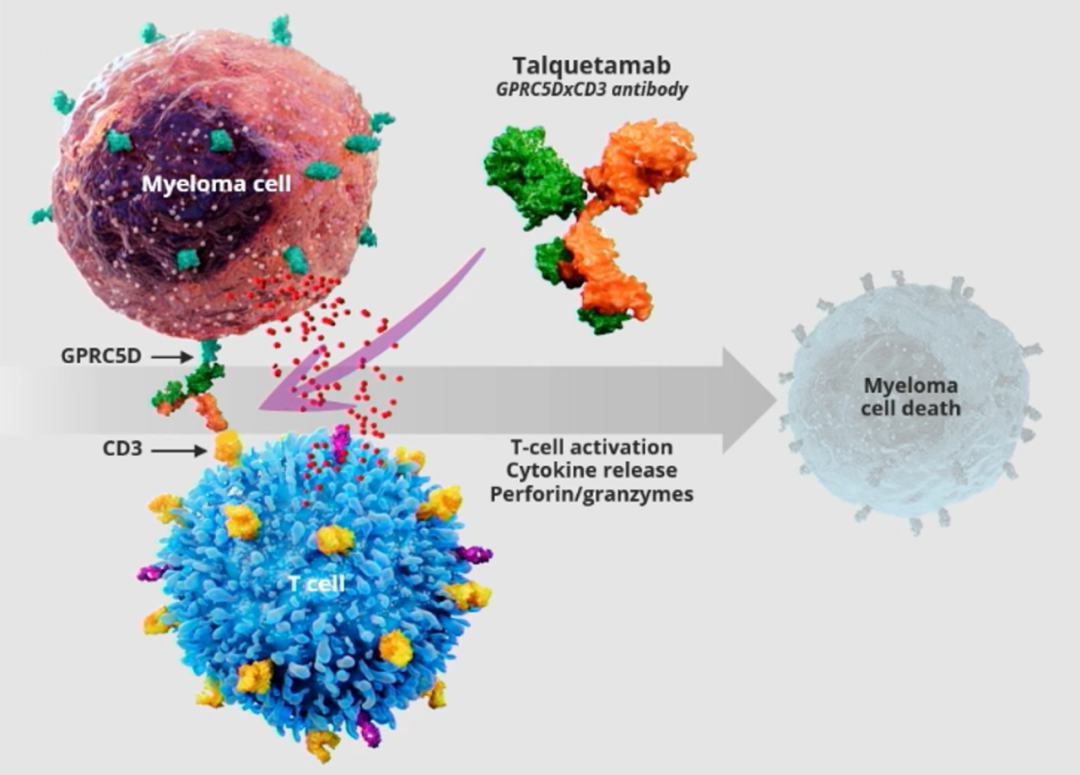
Mechanism of Action of Talquetamab (Source: Johnson & Johnson Official Website)
The Phase II MonumenTAL-1 study (NCT03399799/NCT04634552) released this time aims to evaluate the efficacy and safety of talquetamab in patients with relapsed/refractory multiple myeloma (R/R MM). The enrolled patients had all received ≥3 prior lines of therapy (LOT), including ≥1 proteasome inhibitor (PI), ≥1 immunomodulatory drug (IMiD), and ≥1 CD38 antibody. The key cohort announced this time included 288 patients, of whom 143 received Talquetamab 0.4mg/kg QW treatment, 145 received 0.8mg/kg Q2W treatment, and 51 patients with prior T-cell redirection therapy were randomized to receive one of the doses.
The results showed that in the key cohort, the ORR was 74% (QW) and 73% (Q2W), respectively, with 59% (QW) and 57% (Q2W) achieving very good partial response or better (≥VGPR); the ORR was consistent across different subgroups. In the prior T-cell redirection cohort, the ORR was 63% (53% ≥VGPR). The median PFS was 7.5 months for QW, 11.9 months for Q2W, and 5.1 months for the prior T-cell redirection cohort.
In terms of safety, talquetamab treatment was well-tolerated, with common AEs being grade 1-2, and no deaths related to talquetamab treatment occurred. The available data indicate that talquetamab achieved an ORR of over 70% in heavily pretreated RRMM patients, demonstrated high response rates in patients previously treated with T-cell redirection therapies, and exhibited manageable safety.