

China's Rising Stars at ASCO 2026: Innovators Reshaping Global Oncology

Gracell
Cell and Gene Therapy Developer

Alpha Biopharma
Innovative Drug Developer

Abbisko
Small Molecule Tumor Therapy Developer
Legend Biotech
Tumor Cell Immunotherapy Developer

DualityBio
Innovative Molecular Type Drug Developer
The annual ASCO, the world's highest-level academic conference in oncology, was held in Chicago from June 2 to June 6. Returning offline once again, the event was filled with a wealth of data and enthusiastic attendees, creating a vibrant atmosphere. Innovative drug companies, especially those with significant clinical data for key products, are expected to experience important catalysts for their stock prices, while also presenting an excellent opportunity to connect with potential collaborators.
In recent years, ASCO has witnessed the rise of China's Biotech industry and its rapid advancements in some fields. Last week, at the [ASCO2023 Recap] event organized by ISWT-C/BioSpark/SAPA-GP and supported by VCBeat,Multiple ExpertsAfter analyzing the data released by several representative Chinese Biotech companies, VCBeat has compiled these data and the fields influenced by these companies, including this year's absolute hot topics such as CAR-T and ADC.
The space for new anti-tumor drugs in China is extremely broad. The companies and research mentioned in the article represent only a corner of this vast forest. At future ASCO events, we will witness the rise of more Chinese winners.
Legend Biotech: Stunning Data Shapes the Competitive Landscape of MM Drugs
In 2019, Legend Biotech made its debut at ASCO as a dark horse. Four years later, the data from Legend Biotech's CAR-T therapy has become one of the most anticipated reports in Asia and even globally. During this year’s ASCO, the Phase III CARTITUDE-4 study data of its product Cilta-cel (Carvykti) for the treatment of relapsed and lenalidomide-refractory multiple myeloma patients was nothing short of stunning.
Multiple Myeloma – Significant unmet needs remain, especially in the frontline treatment setting. Results from the CARTITUDE-4 study suggest that cilta-cel has the potential to offer a new treatment option for patients with relapsed or refractory multiple myeloma who have received 1-3 prior lines of therapy.
Two months before ASCO, a prematurely leaked abstract from the EHA conference revealed that Legend Biotech's BCMA CAR-T therapy, Carvykti, reduced the risk of disease progression or death by 74%, surpassing the previously most optimistic market estimate of a 60%-70% decline. On the same day, Legend Biotech's stock price surged by 19.6%, setting a new high for its market value, which reached $10.3 billion.
During ASCO, Legend Biotech announced detailed data from the CARTITUDE-4 study, with the primary endpoint being PFS. Secondary endpoints include safety, overall survival (OS), minimal residual disease (MRD) negativity rate, and overall response rate (ORR).
The CARTITUDE-4 study enrolled patients who had previously received 1-3 lines of therapy (including proteasome inhibitors and immunomodulatory agents) and were lenalidomide-resistant. Among them, 419 patients were randomly assigned to the cilta-cel group (n=208) and the standard treatment group (n=211).
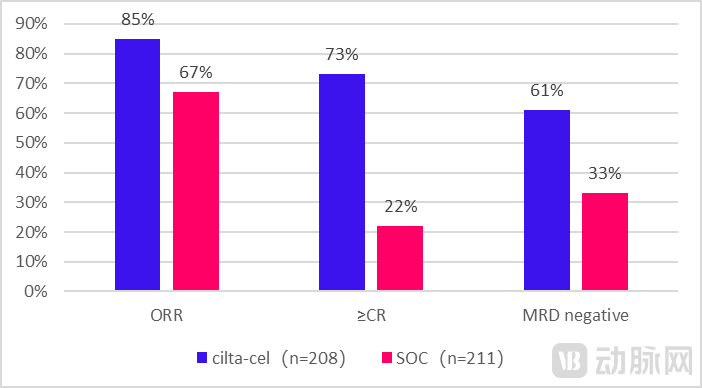
For the primary endpoint of PFS, with a median follow-up of 15.9 months, the 12-month progression-free survival rates were 76% in the cilta-cel group and 49% in the standard therapy group (HR 0.26; P < .0001). Regarding secondary endpoints, the ORR was 85% in the cilta-cel group, with 73% of patients achieving CR or better, and the overall minimal residual disease (MRD) negativity rate reached 61%. In the standard therapy group, the ORR was 67%, with 22% of patients achieving CR or better, and the MRD negativity rate was 33%.
There are still flaws in terms of safety, with 39 and 46 deaths reported in the cilta-cel group and the standard treatment group, respectively, including 10 and 5 treatment-related adverse events. However, among patients treated with cilta-cel (n=176), 76% experienced cytokine release syndrome (CRS) (1% grade 3, no grade 4 or 5), and 5% developed immune effector cell-associated neurotoxicity syndrome (ICANS) (all grade 1 or 2). CRS is the most common complication following CAR-T cell therapy, with an incidence rate of 30%-100% across all cases, and a severe CRS (≥grade 3) incidence rate of 10%-30%. ICANS is the second most common complication that may occur after CAR-T cell therapy, with an incidence rate of 20%-60%, and a severe ICANS (≥grade 3) incidence rate of 12%-30%. It can be seen that side effects have been significantly controlled.
Comparison of data between CARTITUDE-4 and CARTITUDE-1 shows that the former has a lower incidence and severity of CRS, ICANS, MNT, and cytopenia.
Legend Biotech's stock price continues to rise due to this influence, with its current market value exceeding $11.6 billion. HC Wainwright analysts raised Legend Biotech's price target from $77 to $82. As more doctors apply CAR-T in second-line treatment, analysts expect a significant increase in revenue.
Of course, an important cornerstone for the successful commercialization of CAR-T therapy is an efficient and stable manufacturing process, and production capacity is also a major limitation on sales. Johnson & Johnson has planned production capacity to support a $5 billion sales peak for Carvykti and reached a three-year CMO supply agreement with Novartis. If Legend Biotech can resolve supply issues and accumulate front-line treatment experience data, Carvykti's market position will be even more solid.
What is more anticipated in the future is Carvykti's first-line comparison with lenalidomide and daratumumab; currently, clinical enrollment is still ongoing.
Gracell: Persistence & Capacity, A CAR-T Breakthrough Path
Another key player in the CAR-T field is the highly competitive Gracell. During ASCO, Gracell announced long-term follow-up data from a multicenter clinical study evaluating its BCMA/CD19 dual-target autologous FasTCAR-T therapy, GC012F, for the treatment of relapsed/refractory multiple myeloma (RRMM), aiming to further demonstrate its deep and durable efficacy.
As of the data cutoff date, this trial enrolled and treated a total of 29 patients with RRMM, with a median of 5 prior lines of therapy. Ninety percent (26/29) of the patients were defined as high-risk according to the mSMART 3.0 criteria.
In such a highly challenging patient population, GC012F demonstrated excellent performance in both efficacy and safety. In terms of response depth: the ORR reached 93.1%, with 82.8% of patients achieving MRD-sCR; regarding durability of efficacy: the median duration of response (DOR) was 37.0 months, and the median progression-free survival (PFS) was 38.0 months; patients who maintained MRD-negative status for 12 months exhibited longer PFS in this clinical trial; 34% (10/29) of patients sustained MRD-sCR status for over 12 months, with an estimated 100% progression-free survival rate at 36 months for these patients.
No new safety events were observed during long-term follow-up, including no neurotoxicity events; no secondary primary malignancies were observed; only 2 patients (2/29, 7%) experienced Grade 3 CRS, with no Grade 4/5 CRS observed; no ICANS of any grade was observed.
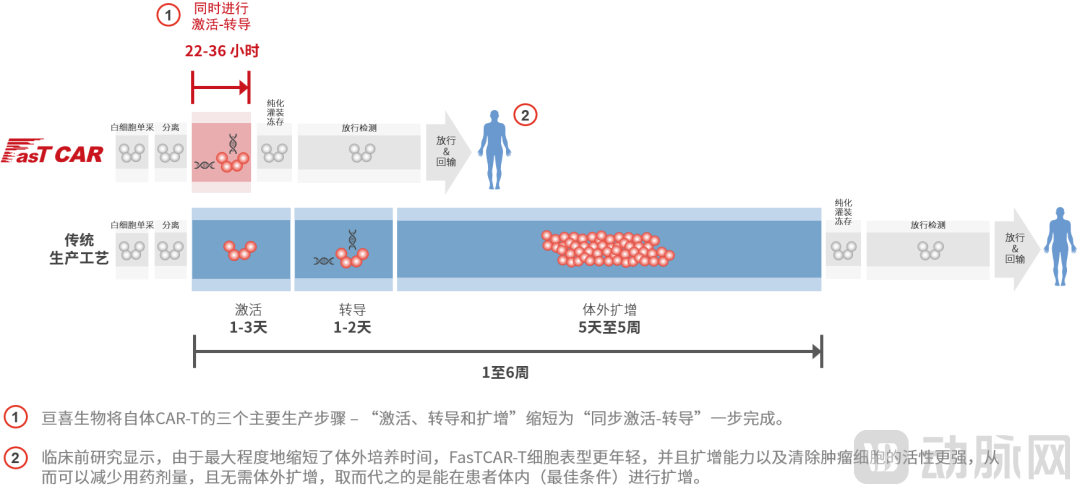
According to the recent data released by Gracell, the FasTCAR-T GC012F therapy has the potential to provide long-term clinical benefits for RRMM patients and even more patients with hematologic malignancies.More notably, the production efficiency and quality control consistency are Gracell’s outstanding advantages. Its FasTCAR next-day production autologous CAR-T platform can complete production in just 22-36 hours, while ensuring that efficacy and safety remain at a very high level. These factors provide a reference for the next breakthrough direction of global CAR-T therapies.In the second half of this year, the formal IND study of GC012F for RRMM is about to be launched in China and the United States. The subsequent broader and deeper clinical data are worth looking forward to.
The exquisite product concept and strong data support have enabled Gracell to rise rapidly on the path of value return, which stands in sharp contrast to the overall lackluster performance of U.S.-listed biotech stocks recently. We also look forward to the emergence of an increasing number of biopharmaceutical companies that possess both innovative thinking and execution capabilities.
DualityBio: DB-1303, The Story of China ADC is Just Beginning
ADCs are naturally the highlight of this year's ASCO, with foreign analysts pointing out: "Suddenly, there are a lot of great ADCs coming out of China."
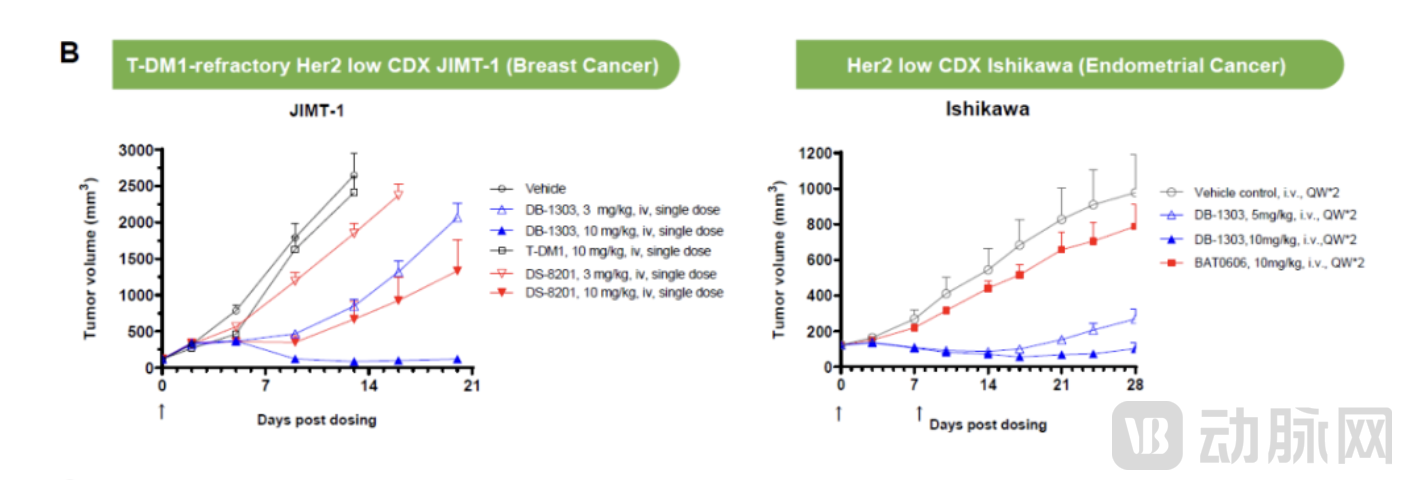
DualityBio Presents Phase I/II Data of its Novel HER2-ADC (DB-1303) on ASCO Website to Evaluate Safety and Efficacy in Patients with Advanced/Metastatic Solid Tumors. The exposure (Cmax and AUC) of DB-1303 ADC increased with dose escalation (2.2 to 10.0 mg/kg). The half-life of DB-1303 ADC in the 6.0-8.0 mg/kg dose groups was approximately 6-7 days. The payload exposure in serum was much lower than that of DB-1303 ADC, indicating the stability of the ADC in systemic circulation.
A total of 52 patients received at least one tumor scan after baseline. According to RECIST 1.1, 23 patients (44.2%, 23/52) achieved partial response; the DCR was 88.5% (46/52). For HER2+BC and HER2-low BC patients, the ORR was 50% (13/26) and 38.5% (5/13), respectively; the DCR was 96.2% (25/26) and 84.6% (11/13), respectively.
In terms of safety, treatment-emergent adverse events (TEAEs) occurred in 74 patients (87.1%), and TEAEs of grade ≥3 occurred in 18 patients (21.2%); no dose-limiting toxicities (DLTs) or TEAEs leading to death were observed. Interstitial lung disease occurred in 2 patients (2.4%, G1), with no cases of interstitial lung disease ≥G2 reported.
The production of ADC involves multiple steps, requiring pharmaceutical companies to have strong capabilities in process and quality control system development. Companies need sufficient experience in both large and small molecules, as well as deep technical expertise in linker technology. The principle of ADC is clear but subtle, requiring repeated testing to balance the antibody, payload, and linker components, tailored for different tumors and tissue combinations. The technological platforms, clinical data, and manufacturing experience and patience expected by large pharmaceutical companies are areas where Chinese enterprises excel.
BioNTech obtained the license for DB-1303 from DualityBio in April this year. DB-1303 has already received Fast Track designation from the FDA. It is widely believed in the industry that after PD-1, ADC assets will become a "standard offering" for large pharmaceutical companies. Currently, ADCs can be developed as standalone drugs, but the exploration of their applications is still in its early stages, with a relatively low ceiling for efficacy. To move towards becoming a first-line treatment, it may be necessary to enhance efficacy through combination therapies. This provides more opportunities for companies in China, allowing Chinese pharmaceutical firms and biotech companies to carve out a position in the global market by leveraging ADC exports.
DB-1303 Demonstrates Good Tolerability and Encouraging Preliminary Antitumor Activity in Heavily Pretreated Patients with Advanced/Metastatic Solid Tumors; DB-1303 is Currently Undergoing Expansion Studies at the RP2D Dose Level. The Story of China’s ADCs Is Just Beginning.
Abbisko: TGCT Potential BIC Favored
During ASCO, Abbisko announced the Phase Ib study results of Pimicotinib (ABSK021), a CSF-1R inhibitor for the treatment of advanced tenosynovial giant cell tumor (TGCT).
A total of 31 patients who received Pimicotinib at a dose of 50mg QD completed at least one post-treatment tumor response assessment. All patients experienced tumor shrinkage, and the median duration of response (DOR) has not been reached. The ORR was as high as 77.4% (24/31), including 2 patients with complete response (CR) and 22 patients with partial response (PR). Among the 24 patients achieving objective responses, 87.5% (21/24) demonstrated objective responses within 25 weeks of starting treatment.
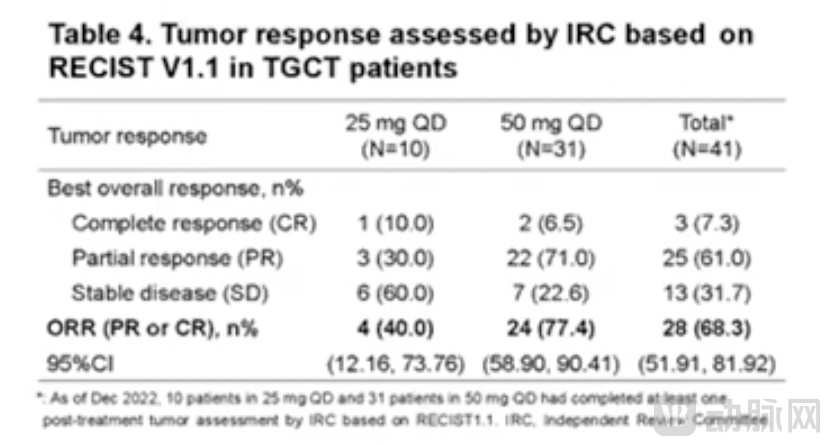
Previously, Abbisko announced that the ORR of Pimicotinib in treating TGCT was 68% (17/25), with 1 case of CR. The data released during this year's AACR was impressively above expectations. More notably, the safety data showed that 89.8% of patients were still under treatment, with the median treatment duration in the 50mg QD dose group reaching 9.3 months and the longest treatment duration extending to 12.5 months. The majority of TEAEs occurring during treatment were Grade 1 or 2.
Currently, the only drug approved globally for the treatment of TGCT is pexidartinib (Pexidartinib), developed by Daiichi Sankyo. However, due to the risk of potentially fatal liver injury, it has been given a "black box warning" by the FDA, and its objective response rate (ORR) is only 38%. Despite this, Daiichi Sankyo still achieved approximately $40 million in sales worldwide with pexidartinib.
TGCT Adds About 60,000-70,000 New Cases Annually in China, of Which 10,000-20,000 Are Accessible New Patients. Based on the Past Five Years, the Total Number of Existing Patients in the Chinese Market Is Approximately 300,000-400,000. Currently, There Are No Drugs Approved for Marketing in China for TGCT Patients Unsuitable for Surgery. After Abbisko's Pimicotinib Becomes Available, the Estimated Accessible Patient Population Will Be Around 150,000-200,000, with an Expected Peak Sales Estimate of 800 Million to 1 Billion Yuan in the Chinese Market. According to CICC, the Potential Market Value of TGCT in the U.S. Is Approximately $1 Billion. As a Potential Best-in-Class Product, Pimicotinib Is Conservatively Estimated to Capture a Market of $300-$400 Million in the U.S.
The innovative drug companies attending the conference are of great interest to investors, and it is also an excellent time for large pharmaceutical enterprises to seek high-quality assets or cooperation partners. With superior data and a vast market, it is believed that Abbisko has already received numerous offers of collaboration.
Alpha Biopharma: Professor Wu Yilong Oral Report, Another Strong Competitor for NSCLC
ASCO’s oral presentations on lung cancer are traditionally scheduled for the final day. In the concluding highlight, Professor Wu Yilong, the global principal investigator of the EVEREST study, delivered an oral report on Zorifertinib, a next-generation EGFR-TKI developed by Alpha Biopharma for the treatment of EGFR mutation-positive non-small cell lung cancer (NSCLC) with central nervous system (CNS) metastases.
Zorifertinib was developed by AstraZeneca and later introduced by Alpha Biopharma. The EVEREST study aims to evaluate the efficacy and safety of Zorifertinib compared with first-generation EGFR-TKIs as a first-line treatment for EGFR mutation-positive metastatic NSCLC patients with CNS involvement. A total of 439 EGFR mutation-positive advanced NSCLC patients were enrolled in the study, making it the world's first head-to-head study specifically targeting untreated CNS metastases in EGFR mutation-positive NSCLC patients.
At the data cutoff, the median follow-up time for both groups was 20.4 months. The primary endpoint of the study was progression-free survival (PFS) assessed by blinded independent central review (BICR): the median PFS was 9.6 months in the Zorifertinib group compared to 6.9 months in the control group, showing a clear advantage. For secondary efficacy endpoints, the median investigator-assessed (IC) PFS by BICR and investigator evaluation were 15.2 months vs. 8.3 months, and 17.9 months vs. 11.1 months, respectively.
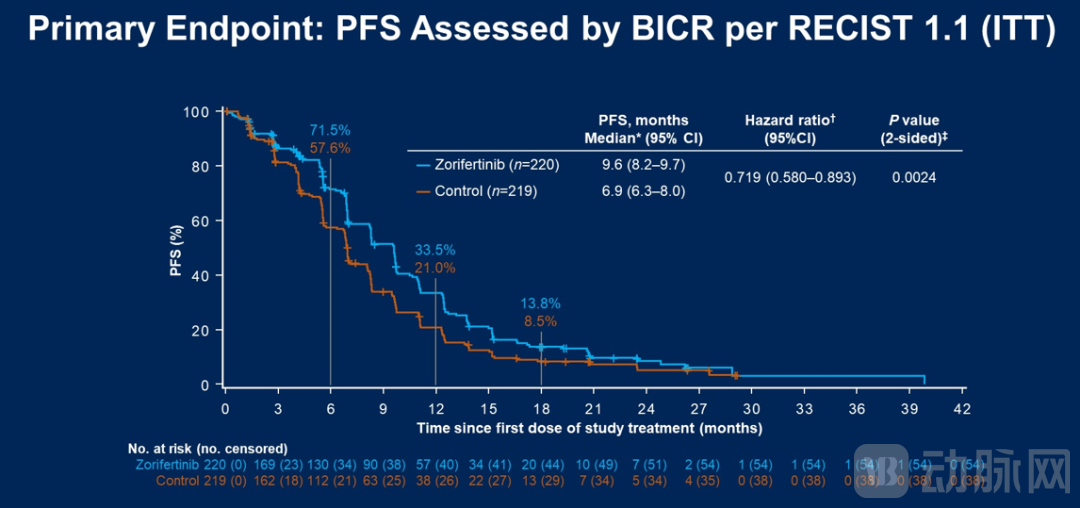
In terms of ORR, the BICR assessment for the two groups was 68.6% and 58.4%, while the investigator assessment was 71.4% and 64.8%; in terms of DOR, the BICR assessment for the two groups was 8.2 months and 6.8 months, while the investigator assessment was 9.7 months and 8.4 months.
In terms of safety data, the incidence rates of TRAEs in the Zorifertinib group and the control group were similar, at 97.7% and 94.0%, respectively.
Currently, Zorifertinib is in the New Drug Application (NDA) review stage. If approved, NSCLC patients will have another good option.However, in the development of new drugs for solid tumors, the NSCLC field has always been a battleground for new drug development, with intense competition. Although the EVEREST study data is excellent, Zorifertinib still has a long way to go in the future.