

Cardiac Dimensions' Carillon Mitral Contour System Receives EU MDR Certification for Functional Mitral Regurgitation Treatment

Cardiac Dimensions
Developer of Novel Interventional Tools for Mitral Regurgitation
Heart Failure (HF) is the end stage of cardiovascular diseases, with over tens of millions of patients. A study published in the European Journal of Preventive Cardiology shows that the number of heart failure patients worldwide increased from 33.5 million in 1990 to 64.3 million in 2017, nearly doubling.
Functional/Secondary Mitral Regurgitation (FMR/SMR) in Heart Failure Patients
According to statistics,Up to 74% of heart failure patients suffer from FMR.With the FDA approval of transcatheter mitral valve edge-to-edge repair (M-TEER) for the clinical treatment of primary MR and FMR in 2013 and 2019, respectively, FMR has become the focus of transcatheter mitral valve intervention.
Cardiac Dimensions (hereinafter referred to as Cardiac) is a company dedicated to developing novel interventional tools for the treatment of HF and FMR. Its lead product, the Carillon Mitral Contour System®, is a groundbreaking non-surgical device that can reshape the mitral valve and improve FMR symptoms.
VCBeat learned that on April 26, 2023, Cardiac Dimensions' Carillon system received EU MDR certification. Previously, the Carillon system had obtained the CE mark in 2011 and Australia's Therapeutic Goods Administration (TGA) approval in 2020.
To ensure the blood in the body circulates in a fixed direction, there are four one-way opening and closing valves in the heart: the aortic valve, mitral valve, tricuspid valve, and pulmonary valve. As the heart contracts and relaxes rhythmically, each valve opens or closes accordingly, ensuring the forward flow of blood and preventing backflow.
The mitral valve, also known as the left atrioventricular valve of the heart, opens during the diastole of the left ventricle, allowing blood to flow smoothly from the left atrium into the left ventricle; during the systole of the left ventricle, the valve closes, directing blood from the left ventricle to the aorta. The mitral valve is the most frequently affected among the four valves, and mitral regurgitation (MR) is the most common valvular disease.
Carillon Mitral Contour System is a minimally invasive treatment system designed for the treatment of FMR. The Carillon system can stabilize the mitral valve, restoring its normal shape, allowing it to close properly, reducing mitral regurgitation, and treating patients with mitral regurgitation grades of 2+, 3+, and 4+.
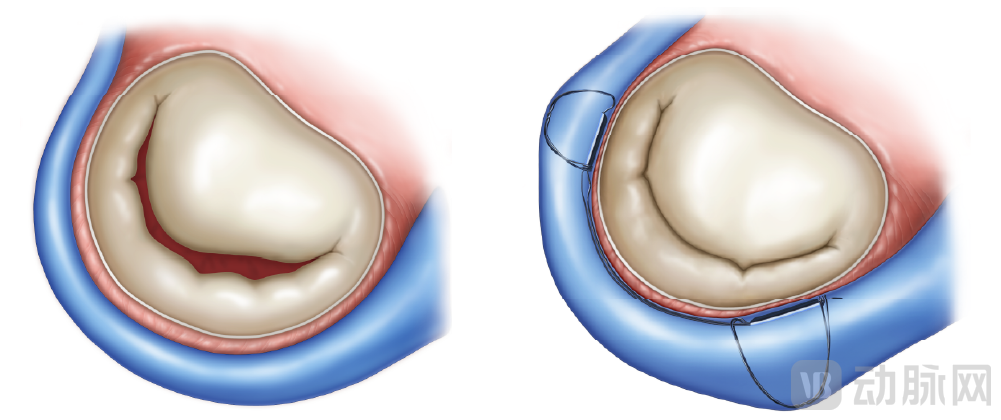
Comparison Before and After Carillon System Implantation Image Source: Cardiac Dimensions Official Website
The Carillon system restores the natural function of the mitral valve without damaging the mitral valve leaflets and consists of an implant and a delivery system. The implant is a "bridge-like" device that adopts a shape similar to the coronary sinus, connecting the proximal anchor and distal anchor with a band. This shaping band utilizes the venous anatomy of the heart to secure the mitral valve apparatus, and the implant can be delivered to the fixed position via right heart access through the delivery system.
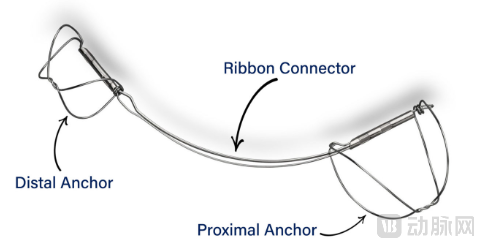
Carillon Mitral Contour System Image Source: Cardiac Dimensions, Inc. Official Website
The Carillon system can be implanted through a percutaneous catheter procedure without the need for general anesthesia. First, a small incision is made in the patient's neck, and the catheter insertion tool is placed into the jugular vein to reach the deployment position of the Carillon device. Then, the special catheter used to deploy the Carillon device is guided to the coronary sinus (a vein near the mitral valve). Finally, the Carillon device is implanted and secured in the optimal position within the coronary sinus.
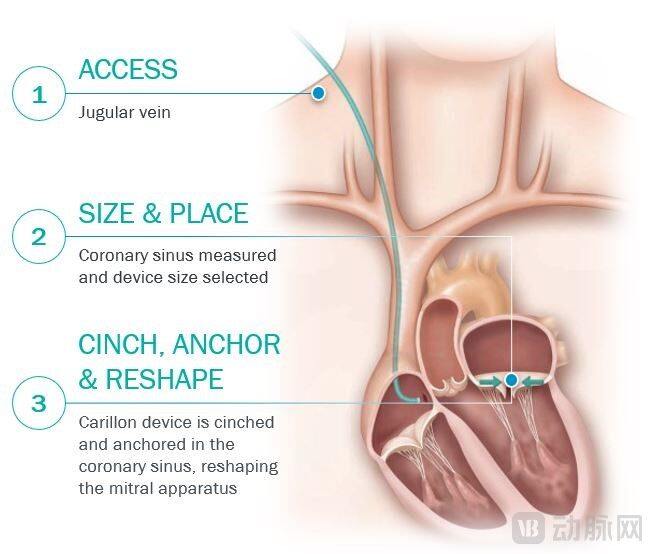
Carillon System Implantation Process Image Source: Cardiac Dimensions, Inc. Official Website
Compared with edge-to-edge and other arterial implant-based direct annuloplasty, the Carillon device has several advantages.
1. The Carillon device is accessed via the right heart system through the jugular vein.The path is shorter, and the implantation time is approximately one hour.;
2. For doctors, the technical difficulty of percutaneous catheter surgery implantation has been reduced.Easy to operate, shorter learning cycle;
3. Since Carillon is an indirect, non-contact mitral valve repair device, its implantation does not affect subsequent operations for other heart failure surgeries.Can be used in conjunction with other heart failure treatment options, and can also be removed when necessary.。
Currently, the market operations of the Carillon system have expanded to Australia and Europe, including locations such as Kirkland, Washington, Sydney, Australia, and Frankfurt, Germany. Several European countries already provide medical insurance reimbursement for the Carillon system, while in the United States, it is still in the research phase. To date, more than 1,500 patients worldwide have been treated using the Carillon system.
Cardiac Dimensions, Inc. was founded in 2001 and is headquartered in Kirkland, Washington, USA. Cardiac Dimensions has undergone 10 rounds of financing, with total funding exceeding 200 million US dollars. Driven by this funding, the company has conducted four independent trials: AMADEUS, TITAN, TITAN II, and REDUCE FMR.
The results showed that FMR patients treated with Carillon had an average acute regurgitation reduction of 8ml, along with a favorable long-term (3-year) survival rate. The majority of patients experienced significant relief from heart failure symptoms after 12 months of clinical treatment.
However, these four rounds of research were all aimed at verifying the safety and performance of the Carillon device in treating FMR, and there is still a lack of systematic research on the effectiveness of Carillon in treating FMR and heart failure patients. Therefore, in 2021, Cardiac Dimensions announced the launch of the EMPOWER clinical trial in the United States to evaluate the efficacy of Carillon in treating heart failure. Cardiac Dimensions completed its Series D financing earlier this year, securing $35 million to advance the EMPOWER clinical trial.
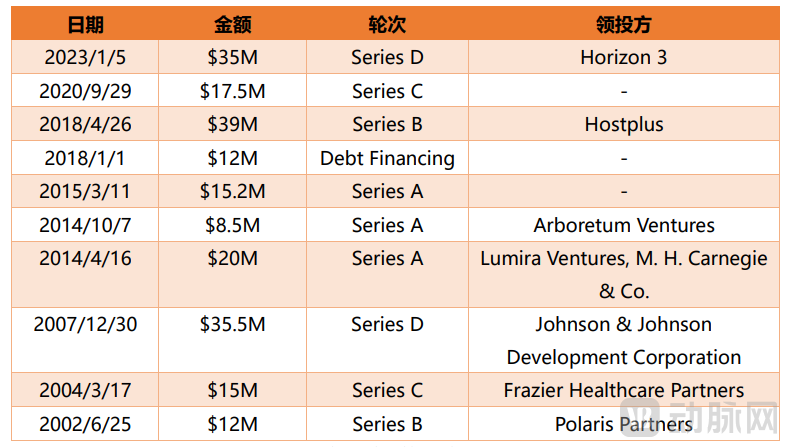
Cardiac Dimensions Financing History Data Source: crunchbase
Over the past two decades, with the support of investors, Cardiac has not only refined its technology but also established a professional management talent matrix.
The CEO and Chief Executive Officer of the company is Rick Wypych. Rick has nearly 30 years of experience in operations, finance, and strategic management in the financial, manufacturing, and life sciences industries. Rick joined the company in 2003, serving as Chief Operating Officer and Chief Financial Officer, and since 2020, he has been serving as the CEO and Chief Executive Officer of Cardiac Dimensions.
Bob Calcote joined Cardiac Dimensions in March 2014 as Vice President of Operations. He has previously served as Vice President of Operations at RS Medical, Senior Vice President of Operations at ConforMIS, Vice President of Operations at Archus, and Vice President of Operations at Spinal Dynamics. With over 30 years of experience in medical device operations, product development, regulatory affairs, and quality system management, he has accumulated 40 years of expertise in manufacturing and engineering.
Angie Swenson joined Cardiac Dimensions in 2023 as the Vice President of Clinical Affairs. Over the past 20-plus years, she has led global clinical trials across the United States, Europe, Japan, and Canada, managing worldwide studies on artificial heart valves, drug-coated balloons for peripheral vascular disease, renal denervation, and hypothermia treatment for acute myocardial infarction. She has over 15 years of experience in medical technology for medical devices and cardiovascular diseases.
Carmelo Mastrandrea, Vice President of Sales, Guenter Haines, Vice President of Therapy Development, and Steven Goldberg, Chief Medical Officer, have accumulated over 10 years of industry experience in sales, medical device R&D, and other fields. Under the leadership of such a management team with combined experience exceeding 100 years, Cardiac Dimensions may accelerate its path to business expansion.
According to a report by VCBeat, surgical intervention is currently the gold standard for treating mitral regurgitation. However, more than 50% of patients with moderate mitral regurgitation cannot undergo surgery due to age and comorbidities. The 1-year and 5-year overall mortality rates for untreated patients are 20% and 50%, respectively.
With the continuous development of minimally invasive technology, transcatheter mitral valve (TMV) intervention has become a major research hotspot as a potential alternative to surgical procedures.
All types of TMV procedures are derived from surgical operations. Based on technical characteristics, its interventional treatments can be divided into two categories: Transcatheter Mitral Valve Replacement (TMVR) and Transcatheter Mitral Valve Repair (TMVr). TMVR involves implanting an entire artificial valve into the original mitral valve, thereby replacing the physiological function of the original mitral valve. TMVr, on the other hand, focuses on locally repairing specific anatomical issues of the original mitral valve while retaining its original functionality.
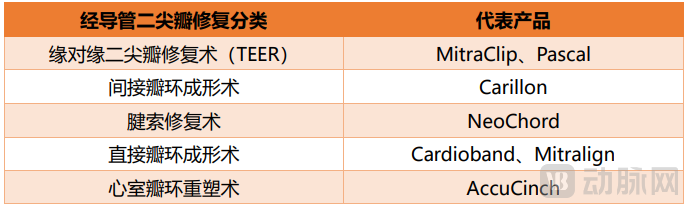
Transcatheter Mitral Valve Repair Classification
Although TMVR replacement operations are relatively easy, they face challenges related to safety, anchoring, sealing, delivery, and durability. Meanwhile, in the field of TMVr globally, there are commercially available products that have received CE certification for annuloplasty, chordae repair, and edge-to-edge leaflet repair (TEER).
The TMV market in China is also very hot, according to statistics from VCBeat,A total of 21 companies in China (including 2 foreign companies: Abbott and Edwards) have entered this field, with a total of 45 TMV products, of which 15 are TMVR and 30 are TMVr.. Among them, TEER in TMVr is currently the fastest-growing track, with as many as 20 products (18 made in China) on the TEER pathway in China.
The only transcatheter mitral valve product approved for marketing in China is Abbott's TEER product, MitraClip. Following Abbott's precedent, an increasing number of Chinese companies are entering the TMV field, such as Hanyu Medical, which developed ValveClamp, Dejin Medical, which developed DargonFly and MitralStich, and Nuvalve Medical, which developed Valveclip-M, all actively exploring this area.
Currently, the products with the fastest progress that are about to be commercialized are DragonFly by Dejin Medical and ValveClamp by Hanyu Medical. ValveClamp has already submitted a registration application to the National Medical Products Administration in July 2022, and is expected to become China's first commercially available domestically produced interventional device for treating mitral regurgitation.