



Interface News reporter |
Interface News Editor |Xie Xin
On July 4, Jacobio announced that AbbVie had issued a termination notice for their licensing and cooperation agreement based on portfolio and strategic decision-making reasons. After the termination of this agreement, Jacobio will regain global rights to the SHP2 inhibitor previously granted to AbbVie. Both parties will cooperate to orderly transfer responsibilities under this agreement within 180 days. During the transition period, AbbVie will continue to reimburse all expenses under the pre-approved development plan.
In other words,AbbVie Chooses to "Break Up," Returns Jacobio's SHP2 Inhibitor Product.
Jacobio stated that it is still advancing the global clinical development plan for its SHP2 inhibitor, including various combination therapies such as KRAS G12C inhibitors and targeted therapies with inhibitors of various tumor drivers. Clinical data for JAB-3312 in combination with Glecirasib (Jacobio's KRAS G12C inhibitor) is expected to be released in the second half of 2023.
Affected by this news, Jacobio's stock price plummeted on July 5. At the close of trading, Jacobio was at RMB 4.64 per share, with a drop of 24.52%. As of press time, Jacobio has not yet responded to this matter to The Paper.
The cooperation between the two parties lasted for three years. In June 2020, AbbVie and Jacobio signed a license out agreement worth up to 855 million US dollars, announcing a global strategic partnership to jointly develop and commercialize SHP2 inhibitors.
According to the agreement, AbbVie has obtained the exclusive license rights to the SHP2 portfolio, while Jacobio will continue to conduct early global clinical research on the oral small molecule drugs JAB-3068 and JAB-3312 that inhibit SHP2 activity. The relevant R&D costs will be borne by AbbVie. Approximately 80% of the sales revenue from SHP2 outside of China will belong to AbbVie.
Through this collaboration, Jacobio generated revenue of 486 million yuan in 2020, and its revenue for 2021 and 2022 reached 95.746 million yuan and 153 million yuan, respectively.
Jacobio mentioned in the prospectus that this collaboration helps mitigate the risks associated with candidate drugs and ensures their clinical and commercial value is maximized globally.
To date, AbbVie has paid Jacobio a total of $855 million in upfront payments, plus a $20 million first milestone payment made to Jacobio in 2021. Jacobio has benefited $875 million from this collaboration, equivalent to approximately RMB 6.329 billion.
Although Jacobio has made a substantial profit from a financial perspective, the overseas market outlook for its SHP2 product portfolio appears to be much dimmer.
Jacobio is a clinical-stage pharmaceutical company focused on the independent discovery and development of novel global cancer therapies. Dr. Wang Yinxiang, the founder of Jacobio, was one of the co-founders of Betta Pharmaceuticals. Currently, Jacobio has five pipelines (KRAS G12C, SHP2, BET, Aurora A, CD73) in the clinical stage.
SHP2 Inhibitors Belong to Jacobio's Core Products Currently. As a key signal transduction node in the RAS signaling pathway, SHP2 can promote cancer cell proliferation and plays an important role in the development of resistance to targeted therapies. SHP2 inhibition as a monotherapy may be effective for cancers with specific alterations, and when used in combination with inhibitors of various oncogenic drivers, it can play a significant role in circumventing drug resistance.
To date, there are no approved or marketed SHP2 inhibitors globally.According to PharmaDJ data, there are over 30 SHP2 inhibitors under research and development globally, with most in the preclinical stage, and the most advanced being in Phase 2 clinical trials. Currently, 15 SHP2 inhibitors have entered clinical trial stages, among which BBP-398, TNO-155, and four others have progressed to Phase 2 clinical trials.
A research report released by CICC at the end of 2022 stated that the combination potential of SHP2 inhibitors has attracted significant attention, and all major overseas SHP2 inhibitors under development have completed MNC authorization.
Based on the lead compound SHP-009 and the allosteric pocket (tunnel pocket), Novartis and four other pharmaceutical companies (Jacobio, Relay, Revolution, BridgeBio) have each developed their own SHP2 inhibitor candidate drugs. The SHP2 inhibitors from these four companies have all been licensed to MNCs, with upfront payments ranging between 45 and 90 million US dollars.。
However, similar to AbbVie's "breakup" with Jacobio, in December last year, Sanofi alsoRevolutionTermination of Cooperation.

In China, multiple pharmaceutical companies have also laid out plans for the SHP target, such as Jacobio, Shenghe Pharmaceutical, Beta Pharma, Lingji Biotech, and Yituo Pharmaceuticals.Ten SHP2 inhibitors are in clinical stages in China, with Jacobio's JAB-3312 and JAB-3068 being the most advanced.
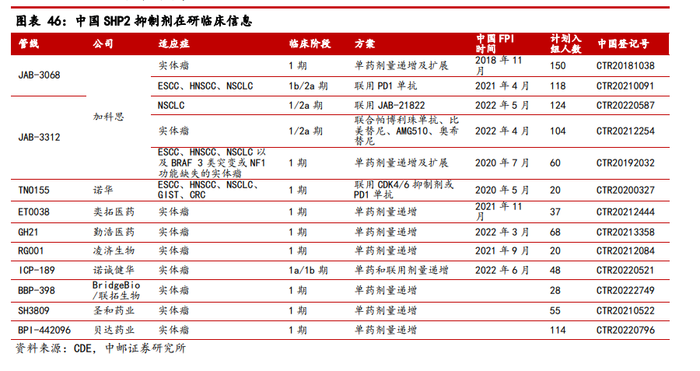 In addition, the research report released by China Postal Securities also mentioned that the potential market in China for the main indications of SHP2 inhibitors is 5.4 billion yuan. In the future, Jacobio, which regains global rights to SHP2, has significant commercial potential.PerhapsWill greatly increaseStrong。
Apart from SHP2, Jacobio's other product developments are proceeding smoothly. In China, the pivotal trial for NSCLC patients with KRAS G12C mutations was approved by the Center for Drug Evaluation (CDE) in September 2022. In December 2022, Glecirasib was granted Breakthrough Therapy Designation by the CDE for second-line and above treatment of patients with advanced or metastatic NSCLC carrying KRAS G12C mutations.
It is worth mentioning that Jacobio has invested heavily in R&D, with research costs increasing year by year. From 2018 to 2022, Jacobio's R&D investments were 84.887 million yuan, 139 million yuan, 186 million yuan, 281 million yuan, and 446 million yuan, respectively.However, the substantial R&D investment has also led to Jacobio's consecutive years of losses. From 2018 to 2022, Jacobio's net losses were RMB 156 million, RMB 426 million, RMB 1.514 billion, RMB 301 million, and RMB 371 million, respectively. Additionally, Jacobio mentioned in its annual report that reasons for the losses also included administrative expenses and fair value losses from financial instruments with priority rights.
Jacobio's revenue sources have been relatively单一 over the past three years, as mentioned in Jacobio's annual report.Main Revenue of the CompanyReimbursement of R&D costs arising from the SHP2 inhibitor collaboration agreement with AbbVie. Once the collaboration terminates, will Jacobio's substantial R&D expenses impact the company’s sustainable development?