

Lilly's Donanemab Phase 3 Data Shows 60% Slowing of Cognitive Decline in Early Alzheimer’s Patients, Awaiting FDA Decision by Year-End

Eli Lilly
Global Pharmaceutical R&D and Production Company
- Donanemab significantly slowed cognitive and functional decline in patients with early symptomatic Alzheimer's disease who were amyloid-positive, reducing the risk of disease progression; nearly half of the participants in the early stages of the disease who received donanemab treatment showed no clinical progression after one year of treatment.
- Subgroup analysis results simultaneously indicated that subjects in the early stages of the disease benefited more, with a 60% reduction in cognitive and functional decline among subjects receiving donanemab compared to those on placebo.
- Moreover, compared to placebo, the therapeutic effect of donanemab continued to increase throughout the trial, with many participants completing the course of treatment at 6 or 12 months, supporting a limited duration of treatment.
- Eli Lilly and Company completed the submission of its marketing application to the FDA in the second quarter, with feedback expected by the end of the year.
July 17, 2023Eli Lilly and Company (NYSE: LLY) announced the full results of the Phase III clinical study TRAILBLAZER-ALZ 2, which showed that donanemab significantly slowed cognitive and functional decline in patients with early symptomatic Alzheimer's disease.These data were presented at the 2023 Alzheimer's Association International Conference (AAIC) and simultaneously published in JAMA.
"The positive data presented by TRAILBLAZER-ALZ 2 bring hope to Alzheimer's patients who are in urgent need of new treatment options. This is the first Phase III study of a disease-modifying therapeutic drug that has successfully validated the positive clinical outcomes observed in previous studies," said Anne White, Executive Vice President of Eli Lilly and Company and President of Lilly Neuroscience. "We believe that if donanemab is approved, it will provide clinically meaningful benefits to people living with this disease, and there is potential for treatment to be completed as early as six months once amyloid plaques are cleared. Despite the complex healthcare ecosystem for Alzheimer's disease, we must continue to focus on helping patients overcome any barriers to accessing amyloid-targeted therapies and diagnostics."
Eli Lilly and Company previously announced that the Phase III clinical trial of donanemab met its primary endpoint as well as all cognitive and functional secondary endpoints.Eli Lilly completed its submission of the marketing application to the FDA last quarter and is expected to receive feedback by the end of this year.In addition, Eli Lilly and Company is currently submitting applications to other regulatory agencies worldwide, with most to be completed by the end of the year.
TRAILBLAZER-ALZ 2 Clinical Study Results Will Strongly Support Eli Lilly's Regulatory Submission for the Approval of Donanemab in Treating Amyloid-Positive Early Symptomatic Alzheimer’s Disease (Mild Cognitive Impairment or Mild Dementia) Patients, Regardless of Their Tau Baseline Levels. Compared to recent trials of other amyloid plaque-targeting therapies, the TRAILBLAZER-ALZ 2 study recruited participants with a broader range of cognitive scores and amyloid levels. Participants in the TRAILBLAZER-ALZ 2 study were divided into groups based on brain tau deposition levels (tau being a biomarker that predicts Alzheimer’s disease progression): moderate-to-low tau level group (sometimes referred to as the mid-range tau subgroup) or high tau level group (representing later pathological stages of the disease). All participants were then assessed over 18 months using scales measuring cognition and function, including the Integrated Alzheimer’s Disease Rating Scale (iADRS) and the Clinical Dementia Rating Scale–Sum of Boxes (CDR-SB).
As previously reported, in subjects (n=1182) with low levels of tau protein, treatment with donanemab significantly slowed the decline in iADRS by 35% and the decline in CDR-SB by 36%. In all amyloid-positive subjects (n=1736) with early symptomatic Alzheimer's disease, donanemab significantly slowed the decline in iADRS by 22% and the decline in CDR-SB by 29%. Additional data presented at AAIC also strongly demonstrated that, regardless of the baseline clinical or pathological stage of the subjects' disease, treatment with donanemab provided cognitive and functional benefits compared to placebo:
Based on the clinical stage, a pre-specified subgroup analysis of subjects with low to moderate levels of tau protein showed that donanemab provided greater benefit to patients in the early stages of the disease:
In subjects with mild cognitive impairment (n=214), donanemab slowed the decline in iADRS by 60% and the decline in CDR-SB by 46% (for patients with mild dementia due to Alzheimer's disease [n=534], donanemab delayed the decline in iADRS and CDR-SB by 30% and 38%, respectively).
Similarly, a post-hoc subgroup analysis based on age in subjects with low to moderate levels of tau protein showed that donanemab provided greater benefit for patients under 75 years old:
In subjects aged under 75 (n=542), donenamab slowed the decline in iADRS by 48% and the decline in CDR-SB by 45%.
In subjects aged 75 years or older (n=551), donanemab slowed the decline in iADRS by 25% and the decline in CDR-SB by 29%.
The results of other subgroup analyses were similar, including subjects with or without the ApoE4 allele.
Compared with placebo, the overall treatment effect of donanemab continued to increase throughout the trial, with the largest difference appearing at 18 months.
"These results suggest that early diagnosis and treatment of Alzheimer's disease may lead to greater clinical benefits," said Dr. Liana Apostolova, the Deputy Director of Alzheimer's Disease Research at Indiana University School of Medicine, Distinguished Professor, and Professor of Neurology, Radiology, Medicine, and Molecular Genetics: "The delay in disease progression during the TRAILBLAZER-ALZ 2 trial is significant, giving people more time to do what matters to them."
Donanemab specifically targets deposited amyloid plaques and has been shown to help patients achieve plaque clearance. Regardless of the baseline pathological stage of the disease, donanemab treatment significantly reduced amyloid plaque levels. In all subjects, after 18 months of donanemab treatment, amyloid plaques decreased by an average of 84%, compared to only a 1% reduction in the placebo group. Once the predefined amyloid plaque clearance criteria were met, participants were able to discontinue donanemab. Approximately half of the donanemab subjects reached this threshold at 12 months, and about 7 out of every 10 participants reached it at 18 months.
In the early pathological stage of the disease among subjects with low levels of tau protein, 47% of subjects treated with donanemab showed no progression in the CDR-SB assessment within one year, compared to 29% in the placebo group. In the 18-month trial, subjects receiving donanemab also had a 39% reduced risk of progressing to the next clinical stage of the disease. This delay in progression means that, compared to the placebo group, subjects treated with donanemab required an additional 7.5 months on average to reach the same level of cognitive and functional decline in the CDR-SB group.
"People with early symptomatic Alzheimer's disease are still working, enjoying travel, and sharing good times with their families, and they want to maintain their sense of self for as long as possible," said Dr. Mark Mintun, Vice President of Neurodegeneration Research and Development at Eli Lilly and Company, and President of Avid Radiopharmaceuticals: "The results of this study underscore the importance of early diagnosis and early treatment."
Incidence of Amyloid-Related Imaging Abnormalities (ARIA) and Infusion-Related Reactions in the Trial Consistent with Previous TRAILBLAZER-ALZ Study Results. ARIA has been observed across this class of amyloid plaque-clearing antibody drugs, with the most common manifestations being temporary swelling in one or more areas of the brain (ARIA-E) or microhemorrhages and superficial siderosis (ARIA-H), all detectable via MRI. In some cases, these may be severe or even life-threatening. Therefore, this risk should be managed through careful monitoring, MRI surveillance, and appropriate actions when ARIA is detected. Additionally, severe infusion-related reactions and hypersensitivity reactions were also observed in the study.
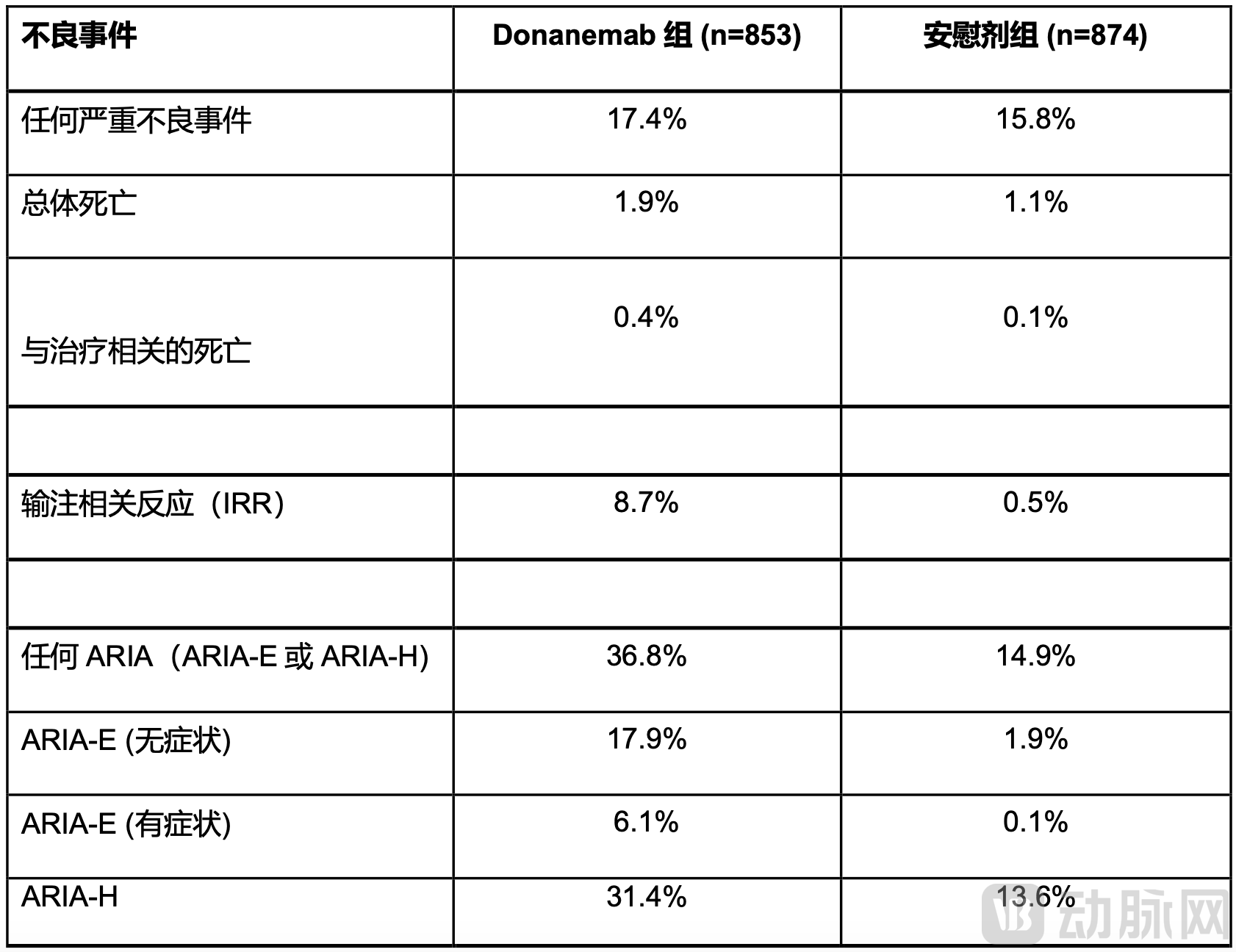
For the full results of TRAILBLAZER-ALZ 2, please refer to the JAMA journal.
About TRAILBLAZER-ALZ 2 Study and TRAILBLAZER-ALZ Study
TRAILBLAZER-ALZ 2 (NCT04437511) is a Phase 3, double-blind, placebo-controlled clinical study designed to evaluate the safety and efficacy of donanemab in patients aged 60-85 with early symptomatic Alzheimer's disease (mild cognitive impairment due to Alzheimer's disease and mild dementia) who exhibit Alzheimer's neuropathology. The trial enrolled 1,736 participants from 8 countries, selected based on cognitive assessments combined with PET imaging evaluations of amyloid plaque and tau staging.
Eli Lilly disclosed and published the results of the Phase 2 trial TRAILBLAZER-ALZ study of donanemab in the New England Journal of Medicine (NEJM) in 2021. In addition, Eli Lilly also disclosed the research data of TRAILBLAZER-ALZ 4, the first head-to-head study targeting early symptomatic Alzheimer's disease, at the 15th Clinical Trials on Alzheimer's Disease (CTAD) conference in 2022.
Eli Lilly will continue to study donanemab in multiple clinical trials, including TRAILBLAZER-ALZ 3 – a trial focused on preventing preclinical Alzheimer's disease subjects from progressing to symptomatic Alzheimer’s disease, TRAILBLAZER-ALZ 5 – a registration study currently being conducted in China targeting early symptomatic Alzheimer’s disease, and TRAILBLAZER-ALZ 6 – which aims to enhance our understanding of ARIA through new MRI sequences, blood biomarkers, and different dosing regimens of donanemab.
Statement:
1. Donanemab is an investigational drug and has not been approved in China.
2. Eli Lilly does not recommend the use of any unapproved drugs/indications.