

Da Vinci Surgical System Generates $3B in H1 Amid Intuitive Surgical's Surge; Domestic Leader MicroPort Robotics Pivots Strategy

MicroPort
High-end Medical Device R&D and Manufacturer
On July 20, 2023, Intuitive Surgical reported Q2 results that exceeded expectations, with revenue reaching $1.76 billion in the second quarter, a 15% increase from $1.52 billion in the second quarter of 2022. After continuous efforts to promote installations, the Da Vinci surgical robot has now been installed in 8,042 units globally, completing over 1.5 million surgeries annually.
After the pandemic, increased investment in global healthcare system construction has created a significant growth opportunity for the global surgical robotics market. While surgical robotics companies aim to expand their reach, the development paths of participants are not entirely aligned.
Unlike Intuitive Surgical's strong focus on developing new surgical robot innovation platforms, MicroPort Robot, a leading Chinese company, has made strategic adjustments by narrowing its focus. On June 30, MicroPort Robot announced a change in the use of its IPO proceeds, concentrating more resources on the already commercialized endoscopic and orthopedic joint surgical robots, while reducing investment in other product lines.
Coincidentally, Siemens previously announced that it would withdraw its vascular interventional surgical robot from the cardiology field and focus on the neurointerventional surgery field. Another company with a surgical robot pipeline highly overlapping with Intuitive Surgical, Johnson & Johnson, has seen no progress in its laparoscopic surgical robot beyond news of layoffs a few months ago; the much-anticipated clinical progress of its laparoscopic surgical robot was not mentioned in its financial report.
It is not difficult to see that, due to changes in the market environment and competitive landscape, global surgical robotics companies are currently in a period of rapid strategic adjustment. Surgical robotics companies in China are no exception. After the industry has experienced a wave of growth, where will it head next? VCBeat (WeChat ID: vcbeat) has provided an analysis.
The development status of Intuitive Surgical, the global leader in surgical robotics, is promising.
Benefiting from the rapid recovery of global surgical volumes, Intuitive Surgical delivered strong overall performance in 2023. Compared to the second quarter of 2022, the global surgical volume of da Vinci systems increased by approximately 22% in the second quarter of 2023. In terms of financial results, revenue for the second quarter of 2023 was $1.76 billion, representing a 15% increase from $1.52 billion in the second quarter of 2022.
Against the backdrop of the global recovery in surgical volumes, Intuitive Surgical reported revenue of $1.696 billion in the first quarter of 2023. By the first half of 2023, revenue reached $3.452 billion (equivalent to over 20 billion RMB), representing a 15% increase compared to $3.009 billion in 2022.
Intuitive Surgical's revenue consists of three parts: revenue from accessories and instruments for installed da Vinci surgical robot systems, revenue from sales of newly installed surgical robots, and service revenue.
In the second quarter of 2023, $1.08 billion of the revenue came from the sales of surgical robot accessories and instruments, accounting for 61%. The revenue from instruments and accessories increased by 20%. Throughout the first half of 2023, revenue from instruments and accessories accounted for 75%, compared to only 56% in the first half of 2022. This indicates that the main driver of Intuitive Surgical's performance growth is the increase in global surgical volumes.
In terms of the new installations of the da Vinci surgical robot, in the second quarter of 2023, 331 new da Vinci surgical systems were installed, compared to 279 in the second quarter of 2022, representing an 18% year-over-year increase. Considering that the global market was still affected by the pandemic in 2022, with previous demand being suppressed, the new installations of the da Vinci surgical robot have maintained steady growth.
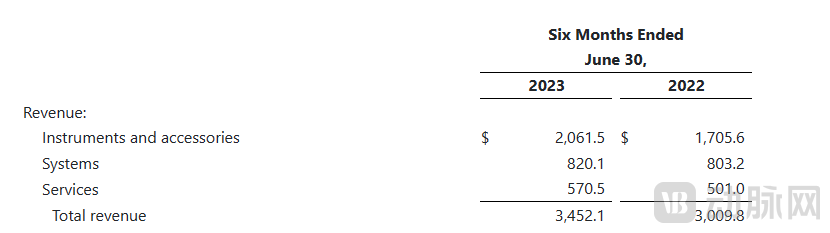
Figure: Revenue Changes in Newly Installed Parts of the Da Vinci Surgical Robot
How to maintain high growth will become the next new challenge for the Da Vinci surgical robot.
Therefore, Intuitive Surgical has four major strategies for 2023: First, increase the utilization of surgical robots in key procedures across different countries through efforts in market education, commercial activities, and market access; second, an innovation strategy to expand product indications and launch new platforms; third, ensure the reliability and continuity of the supply chain; and finally, improve productivity and scale up.
China is the second-largest market for the Da Vinci surgical robot and one of the fastest-growing surgical robot markets. To expand its penetration in key markets, Intuitive Surgical has strategically chosen to double down on the Chinese market.
In terms of indications penetration, regarding the number of surgeries performed, the Da Vinci surgical robot completed over 1.75 million surgeries in 2022, with more than a third of these being general surgeries. In China, the largest number of surgeries were contributed by the urology department. Therefore, there are still many departments in China yet to be developed.
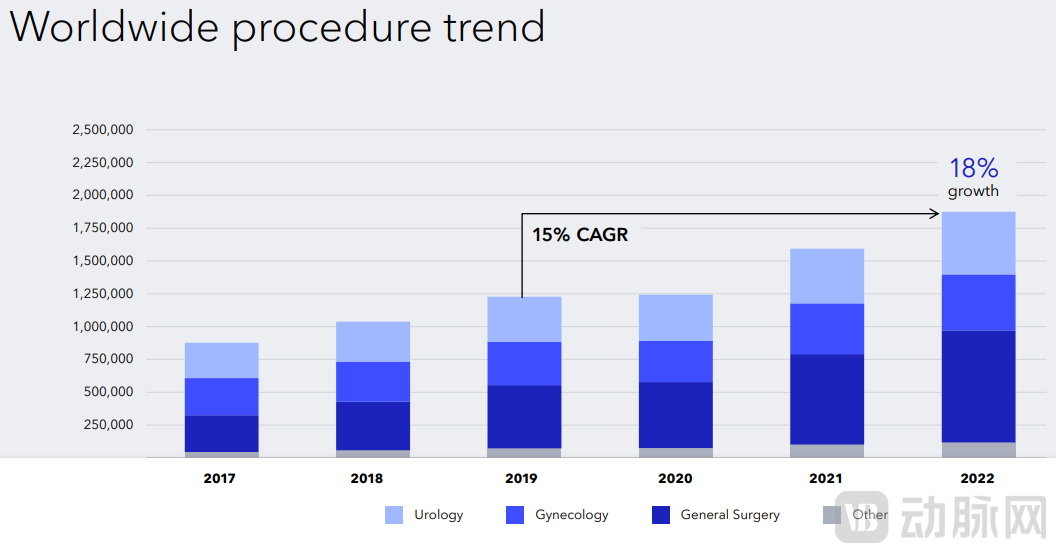
How Does Intuitive Surgical Understand the Chinese Market?
Previously, Glenn Vavoso, Senior Vice President of Intuitive Surgical and General Manager of the Asia-Pacific (APAC) region, revealed in an interview the secrets to maintaining growth in the Chinese market.
"First, you need to bring value to the entire healthcare ecosystem. The first step is to demonstrate the clinical value of the product, which is fundamental. Next, you need to bring value to the entire hospital and its administrators. Moreover, surgical robotic systems should provide economic and industrial value to the healthcare system or local government. Of course, this pathway is the same in other countries."
So this can also help better understand the strategic significance of Intuitive Surgical building a factory in China to localize the production of the da Vinci surgical robot. This move aims to provide more value dimensions to the domestic medical ecosystem, and also gives the da Vinci surgical robot an advantage in market access.
Overall, surgical robots have a high acceptance rate among both doctors and patients across Asia. The uniqueness of the Chinese market lies in the fact that there is a large-scale medical device allocation plan in China, which includes surgical robots. Companies must go through a process: first, they need to ensure a certain allocation from the provincial government, and then hospitals apply for installation quotas. We have a well-trained team to support hospitals in installing surgical robots."
Regarding centralized procurement, Glenn Vavoso stated that surgical robots are still in the early stages. Centralized procurement tends to occur more in highly competitive sectors, and currently, China's healthcare system will continue to strongly support surgical robot systems.
In strategy, Intuitive Surgical emphasizes the expansion of its innovation platform, while MicroPort Robot, the leading surgical robot company in China, has a different approach.
On June 30, MicroPort Robotics announced the first adjustment to the proceeds from its public offering. This includes reducing the development of spinal robots, introducing surgical robots through cooperation with international companies, and acquiring innovative robotic technologies and products in three major categories. The R&D investments in these three categories will be reallocated to the ongoing iterative development of the laparoscopic surgical robot Toumai and the joint surgery robot Honghu.
Previously, the prospectus of MicroPort Robotics showcased a pipeline of eight surgical robots, covering laparoscopic surgical robots, joint surgical robots, spinal surgical robots, bronchoscopic surgical robots, TAVR surgical robots, vascular interventional surgical robots, automated needle targeting robotic systems, and the Mona Lisa robotic prostate biopsy system.
More than a year after its listing, MicroPort Robot began to streamline its strategy, focusing on commercialization and cutting back on its R&D pipeline. MicroPort Robot has slowed down the development of multiple pipelines, concentrating instead on laparoscopic surgical robots and joint replacement surgical robots, which already have larger existing market sizes and commercially available products.
The research and development of surgical robots is notoriously known for its long cycle, high barriers, and substantial investment. The simultaneous expansion of multiple pipelines has undoubtedly brought considerable pressure to MicroPort Robot. From the annual losses and R&D investments of MicroPort Robot, it can be seen that the net loss in 2022 was 1.146 billion yuan, nearly doubling from 585 million yuan in 2021. Notably, the R&D investment alone was 390 million yuan in 2021 and surged to 750 million yuan in 2022.
After the listing of MicroPort Robotics, the capital market's expectations for MicroPort Robotics are more focused on commercial performance. Currently, the two products with the best commercial prospects are TuMi and HongHu.
Toumai Endoscopic Surgical Robot Approved for Urological Surgery in 2022. Toumai has also completed registration clinical trials for use in general surgery, thoracic surgery, and gynecological endoscopic procedures, and has submitted an NMPA registration application for its expanded multi-departmental applications. As of the first half of this year, Toumai has cumulatively performed over a thousand clinical surgeries across more than 40 hospitals in 20 provinces in China, including departments of urology, hepatobiliary surgery, gastrointestinal surgery, thoracic surgery, and gynecology.
Commercially, MicroPort Robot's revenue in 2022 reached 21.6 million yuan. The income mainly came from the contribution of the three-dimensional electronic laparoscope and the sales breakthrough of the Toumai surgical robot. Notably, the Toumai surgical robot, developed by MicroPort Robot, successfully won bids for five units in 2022. The first commercially installed Toumai surgical robot was deployed at Wuwei Cancer Hospital in Gansu Province.
MicroPort's another Honghong orthopedic surgical robot, applied in total knee arthroplasty, has received NMPA and FDA approval for market launch, but commercial data has not been disclosed yet.
As MicroPort gradually focuses its battlefield on the fields of endoscopic surgical robots and orthopedic surgical robots, there are also domestic companies that continue to expand. In July this year, Tinavi's joint surgical robot was approved. Previously, the TiRobot series sold by Tinavi were more used in spinal surgery and orthopedic trauma surgery. The approval of this important product, the joint surgical robot, will become an important participant in the orthopedic joint surgical robot market.
In China, more companies are joining the field of laparoscopic surgery. Currently, companies with approved products include Weigao, Jinfeng Medical, Sizhe Rui, and Shurui. Among them, Shurui's approved product is the only single-port surgical robot approved in China.
There is no doubt that the laparoscopic surgical robot market and the joint surgical robot market will become the main areas of coverage, but they will also be the most competitive markets.
From the strategies of Intuitive Surgical and MicroPort in the Chinese market, it is not difficult to see that both parties have long regarded the Chinese market as a core battleground.
And in the first half of this year, policies favorable to the surgical robot market have been continuously introduced in China.
On March 21, the National Health Commission released the "Directory of Licensing Management for the Configuration of Large Medical Equipment (2023 Edition)". Compared with the 2018 edition, the number of managed items in the 2023 edition has been adjusted from 10 to 6. Among them, Class A items have been reduced from 4 to 2, and Class B items have been reduced from 6 to 4. The price limit for a single unit (set) in the general provisions for Class A large medical equipment has been increased from 30 million yuan to 50 million yuan, and for Class B, it has been increased from 10-30 million yuan to 30-50 million yuan. This will further stimulate the demand for routine medical equipment procurement at the hospital level.
On April 13, the National Health Commission announced a new version of the draft standard for the allocation of large medical equipment for public comment. The requirements for hospitals to allocate laparoscopic surgical robots have been relaxed from being leading hospitals at the provincial level to those with relatively strong comprehensive surgical capabilities, significantly lowering the threshold for allocation. Hospitals that "have been conducting endoscopic surgeries for more than five years in related specialties, with endoscopic surgery accounting for more than one-third of total surgeries" can now qualify as "having strong comprehensive surgical capabilities, with related specialties conducting endoscopic surgeries for no less than three years and endoscopic surgeries accounting for more than one-third of total surgeries."
On June 29, the National Health Commission released the "14th Five-Year Plan for the Allocation of Large Medical Equipment." During the "14th Five-Year Plan" period, China plans to allocate 3,645 large medical devices, including 117 Class A devices (previously 68 units, increased by 172%) and 3,528 Class B devices (previously 4,501 units, increased by 78%). Among them, 559 new laparoscopic surgical systems will be added (previously 260 units, increased by 215%).
Even though the Da Vinci surgical robot has been in the Chinese market for many years, by 2022, the number of installations in China was only over 330. The market space released by the 14th Five-Year Plan can be said to be unprecedented.
The continuous introduction of policies will, on the one hand, directly expand the market scale and further stimulate the procurement demand of surgical robots in Chinese hospitals. On the other hand, it will also bring more opportunities to domestically produced robot companies, with procurement expected to favor Chinese-produced options.
The Da Vinci surgical robot has been localized in China. The domestically produced version of the Da Vinci surgical robot, manufactured by Intuitive Surgical and Fosun Pharma's joint venture Intuitive Fosun, has been approved for marketing by the National Medical Products Administration. It can be foreseen that the domestic surgical robot market in China will usher in a round of fierce competition.
In the secondary market, many companies have started to focus on the commercialization of laparoscopic surgical robots and orthopedic surgical robots, but in the primary market, surgical robot products are developing in a diversified direction.
In the first half of 2023, more than 20 surgical robot companies in China received financing, and the track remained highly popular.
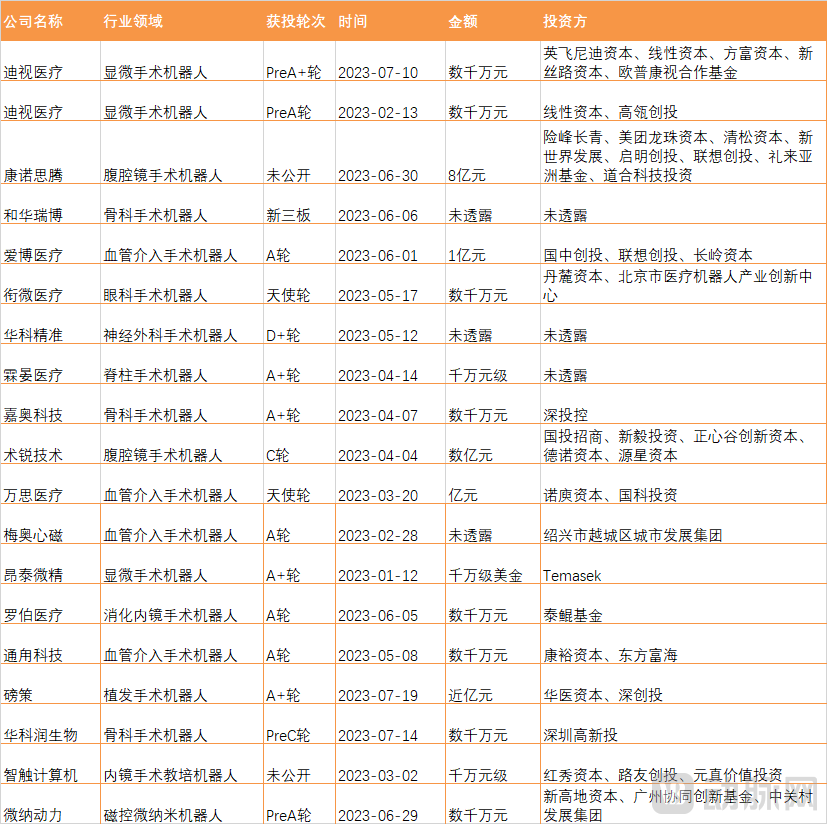
Surgical Robot Financing Events in the First Half of 2023 Data from VCBeat
From the perspective of track distribution, the direction of surgical robot products in China's primary market is no longer dominated by laparoscopic surgical robots and orthopedic surgical robots. Innovative tracks such as microscopic surgical robots, digestive endoscopy-assisted robotic systems, vascular interventional ablation surgical robots, and hair transplantation surgical robots have emerged.
Compared with laparoscopic surgical robot products, the operating range of microsurgical robots and endoscopic surgical robots is narrower, which places higher demands on the precision, anti-vibration capability, and transmission capability of the robots. This also indicates that the domestic surgical robot sector is moving towards a more precise direction, imposing higher capability requirements on surgical robots, and the market also needs more patience.
Intuitive Surgical's strong performance demonstrates the great potential in the surgical robotics field. The domestic market in China is rapidly expanding under favorable policies, and it is expected that domestically produced enterprises will seize the window of opportunity to gain a foothold in the market.