

Boston Scientific Strikes $750M Deal with Chinese Medtech Innovator Xien Medical to Accelerate Global Expansion

Boston Scientific
Medical Device Manufacturer

Acotec
Manufacturer of Endovascular Interventional Products
The global medical device industry chain is ushering in a moment of reconstruction.
In the first half of 2023, senior executives from more than 20 multinational medical giants visited China intensively. Subsequently, multiple companies announced increased investments in the Chinese market, including building factories in China and deepening cooperation with domestic enterprises.
It is not difficult to see that the Chinese market is being placed in a more important position in the entire global supply chain. The influence of Chinese medical enterprises in the global market is also gradually increasing.
Recently, China's medical device industry has reached a milestone moment against this era’s backdrop: acotec, a Hong Kong-listed company, and Boston Scientific Corporation, a global medical device giant, have signed a cooperation agreement. Over the next three years, the two parties will collaborate in areas such as global commercialization of products, product manufacturing services, and product research and development. Based on the maximum procurement amount over the next three years, this cooperation involves an amount equivalent to more than 5.5 billion RMB.
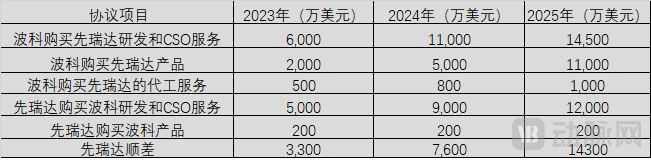
The Upper Limit Amount of Relevant Procurement in This Cooperation
This collaboration is expected to potentially bring in billions of dollars’ worth of orders for Acotec over the next three years. Beyond the significant commercial value, it also indicates that the export of domestically produced medical devices holds great promise. The role of Chinese innovative companies within the industry ecosystem has transformed, shifting from imitation-focused to gaining global market recognition through innovative technologies, injecting new momentum into the industry’s development.
According to the disclosure, the most impressive part of this cooperation is the overseas market sales agreement reached between Acotec and Boston Scientific. Previously, no vascular intervention company had obtained an exclusive overseas distribution agreement from a global giant.
In the signed agreement, it was stated that Boston Scientific Corporation has exclusive distribution rights for selected Acotec products in "specific overseas markets." Separate distribution agreements will be signed between Acotec and Boston Scientific for different products, with Boston Scientific specifying a minimum purchase amount for individual products in the distribution agreements. The first batch of products covers multiple disease areas including vascular surgery, nephrology, neurovascular, and cardiovascular.
According to the disclosed agreement, in 2023, Boston Scientific's purchase amount cap for Acotec products is $20 million, with a $50 million cap in 2024; the purchase amount cap will reach $110 million in 2025.
In other words, within the next three years, the sales of Acotec products by Boston Scientific in overseas markets are expected to bring Acotec an income of approximately over 1.2 billion RMB. It is reported that if the procurement ceiling is reached, both parties are expected to further expand the agreement, bringing greater benefits to Acotec.
This cooperative model has set a precedent for Chinese-produced high-value consumable enterprises to expand overseas by leveraging external resources, and has also opened up imaginative space for the export of vascular interventional products.
The difficulty of exporting high-value consumables for vascular intervention has always been enormous. In the past, the export of high-value consumables has been a persistent challenge and weakness for China's medical device industry.
It's difficult to go overseas, primarily because the products lack competitiveness.Taking balloon catheters as an example, most domestically produced balloons perform almost as well as imported ones in treating ordinary lesions. However, there remains a significant gap in the treatment of complex lesions, product diversity, and production scale when compared to leading companies. Domestic enterprises often select simple cases to complete registration, but clinical practice typically tests the ability to address complex lesions.
The second major difficulty in the overseas expansion of high-value consumables is market access barriers.High-value consumables for vascular intervention require doctors to operate, and are greatly influenced by doctors' choices. Doctors’ preferences raise the entry barrier, and with brands like Boston Scientific and Medtronic dominating the market, it is difficult for domestically produced brands to quickly enter overseas markets.
The overseas market is highly competitive and volatile, and domestic companies have also attempted to expand their overseas operations through acquisitions. While acquisitions can lead to rapid implementation, the associated costs are relatively higher.
Acotec's ability to solve the overseas market challenges and secure a large order from Boston Scientific Corporation is inseparable from its exclusive advantageous products.Acotec has an absolute advantage in the field of peripheral interventional drug-coated balloons. The below-the-knee drug-coated balloon broke the taboo that below-the-knee lesions were a no-go zone for endovascular treatment, being the first product worldwide to achieve superior clinical outcomes in this area, and as a result, it received the "Breakthrough Device Designation" from the U.S. FDA.
Collaborating with Boston Scientific, the "borrowing a boat to go global" strategy effectively lowers the threshold for entering hospitals. According to the disclosed details of the cooperation, Boston Scientific is responsible for sales in overseas markets, while acotec handles R&D, production, and after-sales services. For acotec, this not only brings opportunities to expand into the global market but also allows its product system to quickly integrate into overseas markets, transforming it into a truly international company.
The "borrowing a boat to go global" model also brings new insights to China's medical device companies, and flexible and efficient cooperation methods can help domestic companies accelerate their global layout.
At the beginning of this year, Boston Scientific completed its investment in and gained controlling interest of Acotec, progressing from control to signing multi-faceted cooperation agreements.A major driver of Boston Scientific's series of initiatives is its optimism about the peripheral intervention market.。
The global peripheral intervention market size reaches 8 billion USD, with an average market growth rate of approximately 7%.
Boston Scientific is one of the leading players in the global peripheral market. In the field of peripheral interventions, Boston Scientific focuses on four major areas: peripheral arterial disease, including peripheral vascular disease and critical limb ischemia; peripheral venous disease, including DVT and pulmonary embolism; and the field of oncology. In these major areas, Boston Scientific is a leader.
In 2022, Boston Scientific's revenue included $1.899 billion from peripheral intervention products; in the first quarter of 2023, revenue from the peripheral field was $503 million, a year-on-year increase of 8.2%.
In recent years, peripheral intervention has been the field with the most acquisitions by Boston Scientific. The company has continuously acquired enterprises such as Obsidio, Devoro Medical, and BTG, along with an investment in Acotec. In the vast and diverse peripheral intervention market, Boston Scientific has strengthened its pipeline and consolidated its leading position through ongoing acquisitions and investments in top global companies in the peripheral intervention sector.
In addition to the overseas markets, the cooperation also specifies the sale of each other's products in the Greater China region, with Acotec and Boston Scientific acting as distributors for one another. The upper limit for Boston Scientific’s procurement of Acotec products is $20 million in 2023, $50 million in 2024, and $110 million in 2025.
Boston Scientific has also signed a major order in the Chinese market, primarily driven by the aim to expand its own product portfolio through Acotec’s product pipeline reserves and increase its market share in China.
China is the largest and fastest-growing medical device market, and it is expected to account for more than 25% of the global medical device market by 2030. The growth rate of China's peripheral intervention market is much higher than the global average, with a growth rate of around 15% to 20% in recent years. Strategic investment in acotec, the leader in the Chinese market, will bring better patient services and clinical outcomes to the China market.
Boston Scientific Signs Further Cooperation Agreement, Reflecting Continued Optimism in China's Peripheral Intervention Market and Ongoing Recognition of Acotec's Global Market Potential. This Strong Alliance Will Further Solidify the Leadership Positions of the Two Powerhouses in the Peripheral Intervention Field.
Boston Scientific is eyeing Acotec for its complementary products and robust pipeline. According to IQVIA research, the size of China's peripheral intervention market reached 12 billion RMB in 2022.
Boston Scientific will leverage acotec's pipeline and R&D capabilities to strengthen its own pipeline.Taking the core large single product, drug-coated balloons, as an example. According to Frost & Sullivan data, the market size for drug-coated balloons applied to lower extremity arterial disease (LEAD) in China is expected to reach 957 million yuan in 2023.
Acotec's above-the-knee and below-the-knee drug-coated balloons were approved as the first domestic products to be launched in 2016 and 2020, respectively, and they currently hold the largest market share. Boston Scientific's drug-coated balloon, Ranger, was launched in China in December 2022. Although there is some overlap in their product offerings, the Ranger drug-coated balloon was approved for the 18 system, while Acotec’s drug-coated balloons received approval for the 14, 18, and 35 systems. After integrating their products, they will possess a diverse and highly competitive product portfolio. Both companies will strengthen their respective moats in the peripheral field and capture a larger market share.
This complementarity is also reflected in the domestic market channels. Both Boston Scientific and acotec have strong competitiveness in the domestic peripheral intervention market. acotec has a higher penetration rate in certain mid-to-high-end regional markets, while in some other regions, it excels in reaching lower-tier markets. Therefore, in the domestic market, selling each other's products can better leverage synergies and bring the best solutions to clinical patients.
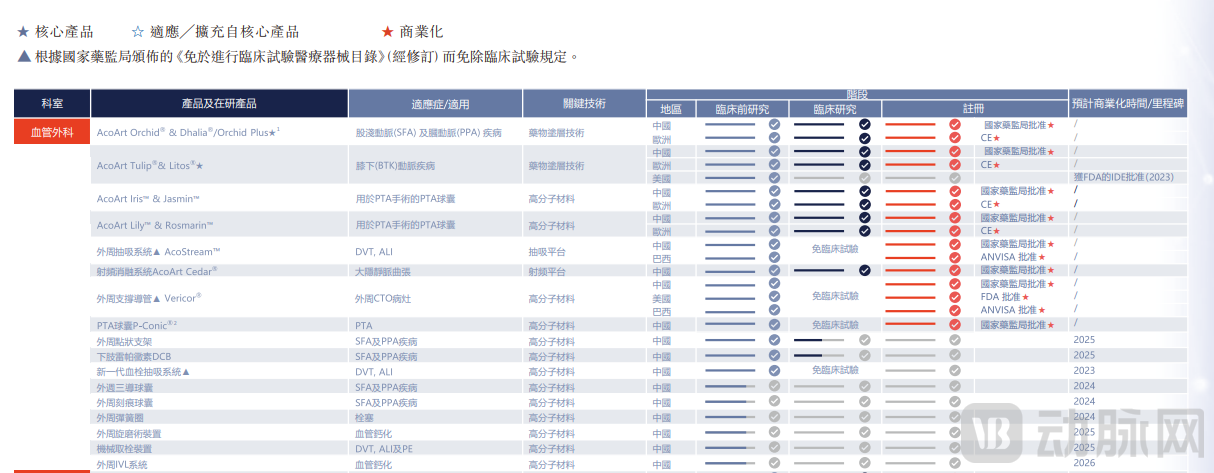
Acotec Vascular Surgery Pipeline (Source: Acotec 2022 Annual Report)
The key points of the agreement signed between Boston Scientific and acotec also include product manufacturing services. According to the cooperation agreement, acotec provides product manufacturing (OEM) services to Boston Scientific. The upper limits of the OEM service amounts provided by acotec to Boston Scientific from 2023 to 2025 are $5 million, $8 million, and $10 million, respectively.
This collaboration values Acotec's manufacturing capabilities, with the latter's plant areas in Beijing and Shenzhen totaling approximately 18,000 square meters. In Beijing's Yizhuang district, Acotec is also constructing a plant with an area of 24,000 square meters. Boston Scientific will leverage Acotec to reduce costs and improve efficiency in the supply chain, as well as expand its local research and development and manufacturing capabilities in China.
The OEM cooperation with Acotec this time is in the field of high-value consumable interventions. Boston Scientific, known as the balloon expert, is willing to sign an OEM cooperation in its core business area with a domestically produced enterprise. What Boston Scientific values about Acotec is not only its production capacity but also its ability to produce upstream precision tubing and raw materials, which is also a core value of Acotec.
The technology and quality of the polymer materials industry directly determine the R&D progress and product performance of downstream enterprises. However, most of China's high-value consumables companies rely on overseas suppliers for raw materials and lack independent production capabilities.
Acotec Breaks Dependence on Original Single "Imported Raw Materials + Domestic Production" R&D and Manufacturing Model by Building Its Own Polymer Material Research and Development Center. By establishing its own customized raw material production line, Acotec leverages material modification and precision micro-extrusion molding technology to manufacture high-end microcatheters and balloons, significantly reducing product iteration time and production costs.
Relying on advanced manufacturing capabilities, Acotec has maintained a high gross profit margin, with its gross margin reaching 84.4%, 87.5%, and 85% in 2020, 2021, and 2022, respectively.
This collaboration, where Acotec provides CDMO services to Boston Scientific, also indirectly confirms that Acotec's production capabilities have reached a globally top-tier level.
In recent years, with the continuous strengthening of medical insurance cost control and the government's support for original innovation, an increasing number of foreign-funded enterprises are actively embracing local companies to build strategic partnerships to accelerate their cutting-edge investments and market access in China.
Taking Medtronic as an example, in recent years, Medtronic has reached cooperation with multiple domestically produced enterprises in China, including product development and sales agency partnerships with companies such as Run Tech, Dingkang, Waterwood Tianpeng, Vathin, and Yee Medical Imaging.
Boston Scientific is no exception. In recent years, several of its products have been localized in China, further strengthening China's position in the supply chain and allowing for deeper participation in the Chinese market.
With the help of the Medical Device Registration Holder System, Boston Scientific's intravascular ultrasound Polaris has already been manufactured by contract manufacturer Jabil for the Chinese market. Boston Scientific also entered into a comprehensive strategic cooperation agreement with Suzhou Frankenman regarding strategic investment, technology transfer, and localized production, transferring ablation technology for thyroid diseases to Frankenman.
The collaboration between Boston Scientific and Acotec reflects the evolving trend of partnerships between multinational medical device companies and local enterprises. Previously, such collaborations were often limited to domestic market product agency agreements.
At present, the depth of cooperation between multinational and local enterprises has increased, and their collaboration has been upgraded to the supply chain level.
At the same time, investment and mergers and acquisitions have shifted from scale expansion to technological innovation. In the past, multinational companies used to acquire domestic enterprises mainly for obtaining local sales networks and resource channels, while in terms of products, they primarily supplemented the mid-to-low-end market.
Due to the rapid technological iteration in the medical device industry, overseas giants often need to maintain their leading advantage through continuous mergers and acquisitions. However, such investment and mergers rarely occur in the domestic market. The cooperation between Boston Scientific and acotec represents a case of Chinese companies exchanging technology for market access, with domestically produced enterprises beginning to win the favor of overseas companies through innovative, differentiated products.
Overall, by signing the cooperation framework agreement and service framework agreement this time, Boston Scientific can strengthen its leading position in niche markets, expand market share, and bring financial benefits. Acotec, on the other hand, can explore overseas markets through the collaboration, enrich its product portfolio, and also create opportunities for value restructuring.
This collaboration marks a new step for China-produced devices entering the global market, providing a strong boost to investors who focus on the innovative medical device market. We look forward to seeing more similar partnerships in the Chinese market, accelerating the globalization of China's innovative medical device enterprises.