

Merck Reports Strong Q2 2023 HPV Vaccine Sales Surge and Raises Full-Year Revenue Guidance

MSD
Pharmaceutical R&D and Manufacturer
Intelligent Finance APP learned on August 1 that before the US stock market opened, Merck (MRK.US) announced its Q2 2023 earnings. The earnings data showed that the quarterly sales of its best-selling anti-cancer drug Keytruda and Gardasil HPV vaccine far exceeded analysts' consensus expectations. This drove the global pharmaceutical giant to raise its annual total sales forecast. However, the cost of acquiring Prometheus Biosciences led the company to lower its profit forecast.
In the second quarter, Merck & Co., Inc.'s best-selling cancer drug Keytruda reported a 19% year-over-year increase in sales, reaching $6.27 billion, surpassing the analysts' consensus estimate of $5.8 billion. Regarding sales expectations, Merck raised its full-year sales forecast from a previous upper limit of $58.9 billion to a range of $58.6 billion to $59.6 billion.
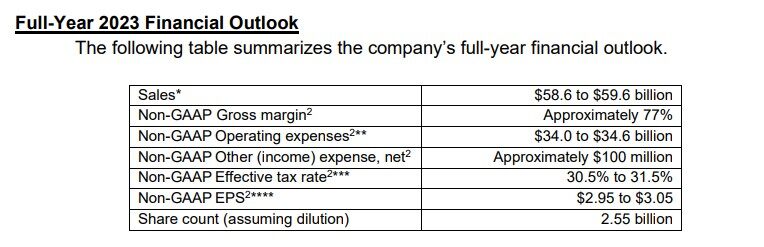
MSD's data also showed that the company's total sales in the second quarter reached 15 billion U.S. dollars, surpassing analysts' average expectation of 14.5 billion U.S. dollars. The company reported a quarterly loss of 2.06 U.S. dollars per share excluding certain items, mainly due to the cost of the Prometheus acquisition project, but this figure was smaller than Wall Street's expected loss of 2.20 U.S. dollars.
Moreover, the second-quarter sales of GARDASIL/GARDASIL 9, an HPV vaccine developed by Merck & Co., Inc. (MSD), reached approximately $2.46 billion, marking a 47% increase year-over-year and surpassing the analysts' expectation of $1.98 billion. The company attributed this growth primarily to the rising demand in the Chinese market. Before the U.S. stock market opened, MSD's shares rose over 2.5%. However, as of Monday’s closing, the stock had fallen about 4% year-to-date.
In other pharmaceuticals, the sales of Merck & Co., Inc.'s diabetes drug JANUVIA/JANUMET reached $864 million, a year-on-year decrease of 30%; the sales of the COVID-19 oral drug Molnupiravir (brand name: LAGEVRIO) plummeted to merely $203 million, marking an 83% year-on-year decline as the global pandemic winds down.
MSD's overall sales are benefiting from the global widespread use of Keytruda. Since entering the U.S. market nine years ago, the treatment applications of Keytruda across various cancers have been continuously increasing. Meanwhile, the company’s scientists have been working to develop a self-administered version of the drug, making it more convenient for patients while potentially extending its patent life.
MSD previously completed the acquisition of Prometheus, a developer of autoimmune disease drugs, as part of its effort to bolster its new drug pipeline before Keytruda loses market exclusivity. A spokesperson for MSD stated in an earlier interview that Prometheus’ leading clinical candidate drug for ulcerative colitis treatment will enter the late-stage trial phase in the fourth quarter. This study was originally scheduled to begin by the end of this year or early next year.
The statement said that Merck also applied to the U.S. government for approval of sotatercept, a treatment for pulmonary arterial hypertension, which is expected to eventually help offset the patent cliff of Keytruda.
Merck said in June that it would account for the acquisition of Prometheus at $4 per share and write off the acquired R&D expenses according to accounting standards. On Tuesday, due to the hefty cost of the acquisition, the company cut its annual earnings per share guidance, excluding certain items, to a range of $2.95 to $3.05, which is less than half of its previous forecast of $6.88 to $7.