Why Are Local State-Owned Capital Firms Aggressively Entering VC and Investing in Over 100 Healthcare Companies in Just Six Months?

Ucello
Developer and Manufacturer of Universal CAR-T Cell Therapy Drugs
Oriza Holdings
Equity Investment and Debt Financing Institutions

SCGC
Investment Institutions in Innovative Fields

HTI
Financial Services Institution
I recently came across an interesting investor story that I'd like to share with everyone:
Xiao Wang is the Investment Director of a leading RMB fund in China, but now at the age of 35, he can't help but feel a sense of crisis: on one hand, the market conditions are not good, and some projects even fail to convince himself; on the other hand, the company has brought in a group of doctoral graduates from prestigious universities like Tsinghua, Peking, Fudan, and Shanghai Jiaotong University in recent years. These young talents are not only energetic but also write reports that are both fast and excellent.
Therefore, Xiao Wang had to go on business trips non-stop, review projects like crazy, and fill his weekly work reports to the brim, all for fear that his boss might think he was "occupying a position without doing any work." However, after half a year passed, Xiao Wang still hadn’t invested in a single project. Recently, though, Xiao Wang finally made up his mind and pushed a project to the investment decision committee. After staring at the valuation for a long time and gritting his teeth, he flipped to the chapter on investment highlights and wrote down five big words:"Available for implementation across China". In the current context,This means that the project has the possibility to receive funding from local state-owned assets across various regions.。
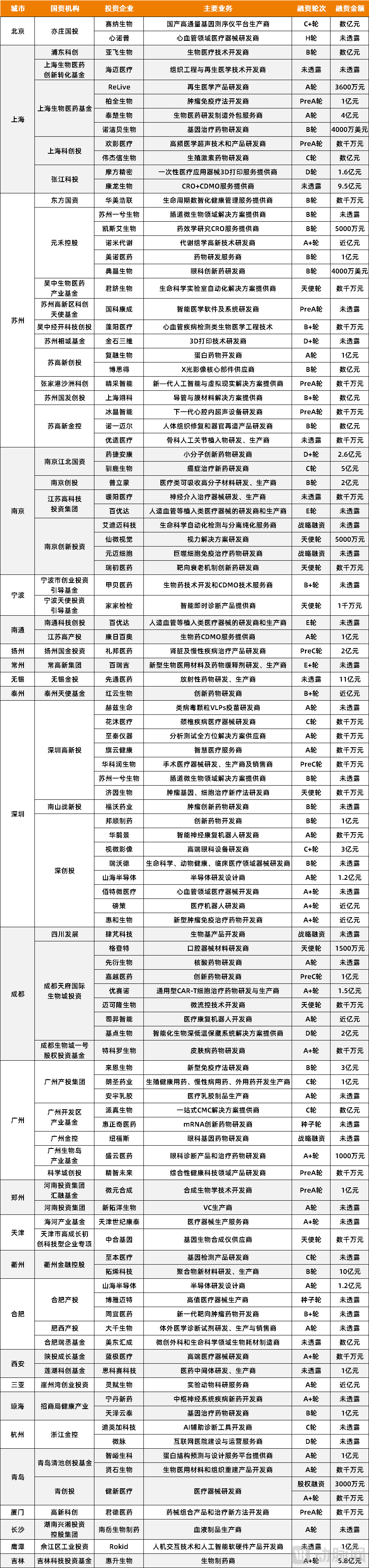
Indeed, this is the case. According to incomplete statistics from the VCBeat database, as of July 2023,This year, there have been hundreds of projects in China's medical field directly invested in by local state-owned capital, with the total financing amount already exceeding tens of billions of yuan., whose scale and frequency of investment are unprecedented in the past few years.
To understand, in the past few years, even in 2021, the entire medical market still held a kind of "prejudice" against local state-owned capital.Some startups and social capital will be very resistant to taking money from local state-owned capital., which is mainly because its investment conditions are generally quite harsh, especially when making some market-oriented moves, it will be very restricted.
So why has the attitude changed now?
Local State-Owned Assets Forced to "Unfold"
In this research, VCBeat successively interviewed five professionals from local state-owned enterprises. They came from Beijing, Suzhou, Shenzhen, Chengdu, and Chongqing, respectively. During the conversations with them, two very distinct common characteristics could be observed:First, they are very busy, constantly traveling and reviewing projects; second, they are under immense pressure, as the strategic layout of the industry, the advancement of projects, and profitability targets all weigh heavily on their shoulders.。
Perhaps precisely because of this, the trend of state-owned capital in the entire capital market has become increasingly evident. In the article "VCBeat: The Great Transformation of VC, the Starting Point of a 10-Year New Cycle," this industry change is also explained, stating that,State-owned capital will become one of the most important participants in the VC market in the next 5-10 years, which will completely change the market's weight and strategies.”。
Where do I begin?
First, we observe the cyclical changes in the healthcare industry.In the next 20 years, scientific and technological innovation will be the core theme of China's venture capital, and this trend is even more pronounced in the medical field.
In recent years, as the medical industry has gradually advanced in depth and breadth, the entire sector has paid increasing attention to original innovative technologies and the transformation of achievements. However, the essential nature of research and development innovation requires substantial and long-term financial investment, along with a certain level of risk. This inevitably means that such endeavors will be driven by national teams or the overflow of national resources into the market, with local state-owned assets inevitably playing a significant role.
Moreover, the inherent characteristics of local state-owned assets also make them more steadfast at present. According to Jiang Bowen, Executive Director of Sichuan Development Hongke Fund, there are not many opportunities left in the current medical industry for quick profits, so social capital solely aiming for fast money will inevitably reduce their holdings, butLocal state-owned capital not only focuses on whether a company is profitable, but also largely considers strategic factors. Therefore, its evaluation dimensions are diverse, and the return cycle is longer, making it more open.。
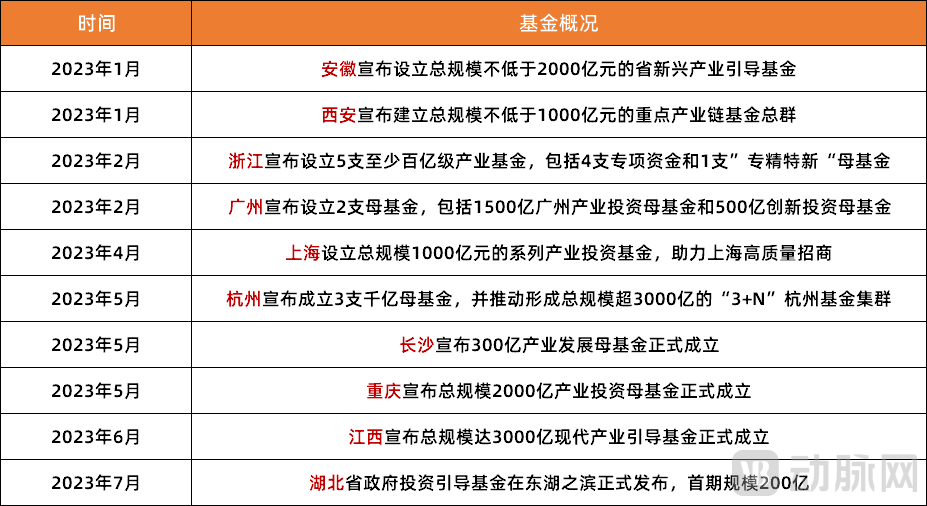
Figure 1. Establishment of Guiding Funds in Various Regions from January to July 2023 (Source: Public Data Compilation)
Secondly, after the epidemic, the demand for economic growth in various regions is extremely strong, but the difficulty of attracting investment is gradually increasing.The traditional investment promotion model can hardly attract high-quality medical enterprises at the present stage, so many local state-owned capitals have begun to try a new model of "replacing investment promotion with investment.", and the investment efforts are unprecedented, with hundreds of billions of yuan in regional government guidance funds emerging one after another. Moreover, against the backdrop of extremely fierce competition in investment attraction, local governments have also relaxed the requirements for project implementation and granted companies sufficient growth time.
In terms of the enterprise's own development, if it is a start-up, the current capital market is in a downturn. Compared with social capital, local state-owned capital tends to be more "generous." Besides providing funds, local state-owned capital can also offer early incubation services for start-ups, including settling in, policy support, talent introduction, and more. Additionally, from a long-term perspective, as start-ups gradually grow, from incubators to industrial parks, they are basically connected with local state-owned capital to a certain extent. Therefore, introducing them in advance will make future cooperation easier.
AndFor mid-to-late stage medical enterprises, their core demands are expanding production capacity or product launch, which also falls within the scope of benefits provided by local state-owned capital, such as land provision for factory construction and expediting the approval process.. This is especially evident in local state-owned enterprises outside first-tier cities. On one hand, these regions can provide venues with generally lower labor costs; on the other hand, their medical industry foundation is relatively weak, so the product approval process can also be directionally optimized.
Finally, focus on social capital. With the exit of a group of dollar funds and the reduction of holdings by many listed companies, a portion of social capital will primarily raise funds from local governments in the future. Meanwhile, for another part of mature social capital, as the medical industry increasingly focuses on original innovative technologies, there will inevitably be significant overlap between them and local state-owned capital within the medical ecosystem. This will lead to closer cooperation, either through establishing specialized sub-funds or jointly incubating projects.
When discussing with local state-owned enterprises across China about why the trend of state-owned enterprises in the medical field is becoming increasingly obvious, there is basically a common view that when the development of the medical industry tends to be stable and is waiting for the outbreak of the next stage,Compared with social capital pursuing quick profits, local state-owned capital will be more patient., which is exactly what the current market environment needs.
What Kind of Medical Projects Are Local State-Owned Assets Investing In?
As previously mentioned,The biggest characteristic of local state-owned assets is the parallel pursuit of profitability and strategy., which means that local state-owned capital not only values the profitability of the enterprises when selecting investment projects, but also considers the situation after the enterprises are established.Whether it can drive local tax revenue and whether it can boost employment, etc., and specifically which aspect to focus on will vary based on the differences in development stages and industrial resources across regions.
For example, the early-type local state-owned assets represented by Chongqing entered the medical field relatively late. In addition, there are not enough rich industrial resources locally, soAt this stage, it is still mainly focused on following, that is, co-investing in some mid-to-late stage medical enterprises.,Because at this stage, the revenue scale and volume of enterprises are relatively high, and they basically have mature market-oriented paths, and the industrial certainty is also stronger.
A professional from a Chongqing state-owned enterprise told VCBeat, "At this stage,We are still unlikely to invest in very early-stage medical projects because we can't offer them much, and likewise, they can't provide what we're looking for., such as expanding production capacity, increasing tax revenue and employment, etc. We are looking for medical projects in the mid-to-late stages because they have stronger certainty. At the same time, we will also pay attention to 'License-in' projects, partly because they can scale up quickly at a lower cost, and partly because they have a market foundation and are not starting completely from scratch (0 to 1)."
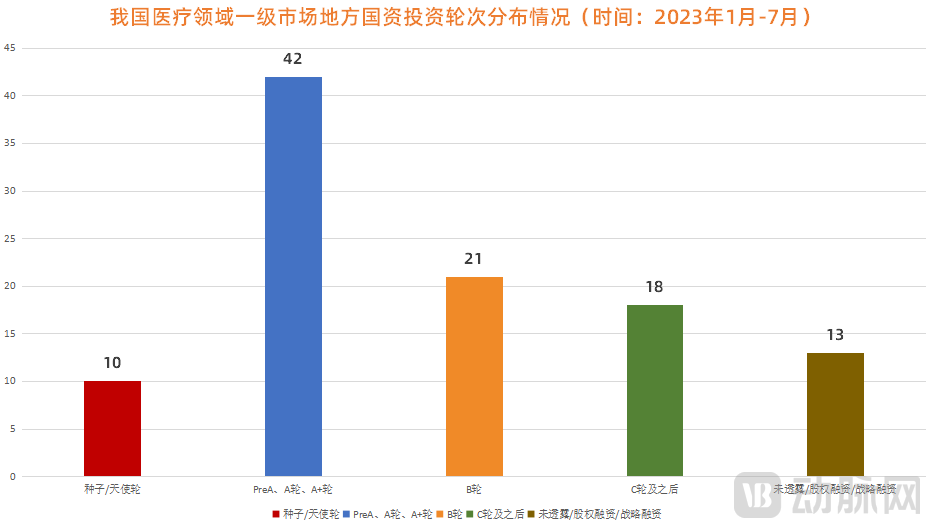
Figure 2. Distribution of Local State-Owned Capital Investment Rounds in China's Medical Field from January to July 2023 (Data Source: VCBeat)
Different from Chongqing,Local state-owned enterprises in Suzhou and Shenzhen have entered a relatively mature stage.,In addition to having a number of local state-owned capital institutions, the overall level of marketization is also very high. When selecting investment projects,These regions mainly focus on early-stage medical projects, and the investments are generally scattered rather than concentrated in a specific track.。
Oriza Holdings is one of the earliest state-owned investment platforms established in Suzhou. Since its inception, it has consistently acted as the largest supporter for leading medical talents to settle in Suzhou. Particularly for early-stage medical enterprises that moved into BioBAY, Oriza Holdings' investment proportion reached as high as 70% at one point, with a focus on long-term investment. According to statistics, Oriza Holdings has currently invested in nearly 60 medical enterprises, with 50% of investments made prior to the Series A round."Invest early, invest small, invest long-term, invest in technology"The logic has continued to this day.
Shenzhen also has an almost identical investment model, with Shenzhen Capital Group and Shenzhen HTI Group Co., Ltd. as its typical representatives. Taking Shenzhen HTI Group Co., Ltd., which has rapidly expanded into the healthcare industry in recent years, as an example, incomplete statistics show that it invested in seven medical companies in 2023. Five of these companies were at stages prior to Series A, accounting for 71%. In terms of specific sectors, among the invested companies are innovative drug enterprises such as Hertz Life and Jiying Biotech, as well as medical device developers like Huamu Medical, Zhiqin Instruments, and Huakerun Biotech.
According to insiders, "We have always adhered to investing early and small, and tend to invest more diversely."On the one hand, although early-stage projects carry risks, as long as one or two projects succeed, the overall return on investment for the fund will be secured. On the other hand, investing in late-stage projects at this stage leads to a decrease in overall returns. Moreover, for Shenzhen, investing in very late-stage projects does not offer significant advantages because it cannot provide sufficient space, and both labor and operational costs are high, making it difficult for companies to expand production capacity."
Besides the differences, there are certainly some similarities among different local state-owned capitals in terms of investment direction choices, such as in specific fields. Judging from the hundreds of medical enterprises invested in by local state-owned capitals this year,They are basically concentrated in technology-oriented fields such as pharmaceuticals and medical devices., investing in a total of 97 medical enterprises, accounting for a high proportion of 94%.
The reason behind this is, of course, related to the positioning of local state-owned assets, which is to invest in cutting-edge technologies in the medical field. Moreover, compared with digital healthcare, Internet healthcare, and consumer healthcare,Both pharmaceuticals and medical devices belong to relatively "tangible" sub-industries, where the government can more easily recognize their specific value, aligning with the broader goal of current industrial transformation.Moreover, investing in cutting-edge technology, even if the investment fails, will still contribute to industrial accumulation in the local area, which can be helpful for local governments in formulating relevant industrial policies later on.
Moreover, based on the investment in cutting-edge technologies,Local state-owned assets will also be more inclined to layout upstream and downstream in the existing industrial sector, building a complete industrial chain.。Jiang Bowen, Executive Director of Hongke Fund under Sichuan Development, mentioned, "For state-owned industrial groups like us, there is an important investment logic, which isRegardless of the field in which industrial carriers are deployed, our capital tools will definitely follow up, linking upstream and downstream players as well as the varieties that need to be introduced, forming an industrial closed loop.。”
In fact, to depict the profile of local state-owned medical enterprises, it is necessary to return to the two fundamental characteristics of local state-owned capital, namelyStrategyAndProfit. From a strategic perspective, it has been determined that local state-owned capital will invest in cutting-edge technologies within the medical field, and investment targets are relatively dispersed. As long as they are promising medical projects, investments will be made across the board. Regarding "profitability," local state-owned capital at different stages holds varying interpretations of "profitability." For those in the early development phase, they tend to be more conservative, thus preferring to follow up on investments in targets with high certainty. On the other hand, more mature local state-owned capital entities operate in a more market-oriented manner, possess stronger risk-bearing capabilities, and generally participate in early-stage medical projects with good profit potential and high growth prospects.
Where Should Local State-Owned Assets Be?
According to VCBeat, currently, many local state-owned capital platforms are learning from the Shenzhen Capital Group model. In the view of professionals, the reasons why Shenzhen Capital Group has been able to take the lead boil down to two points:One is that it fully respects market principles, has decision-making autonomy, and can generate long-term returns; the other is that while retaining its capital attributes, it also serves as a hub between the government and the capital market, better linking the two and forming synergies to serve the invested projects.
So, how is it specifically reflected?
First, let's talk about marketization,On the one hand, it has a market-based mechanism for fundraising, investment, management, and exit."One senior insider commented, 'If a local state-owned enterprise lacks a mature mechanism and every project has to go through a lengthy approval process, then no matter how many resources or how much funding it has, it will be very difficult to move on to the next stage.'"
On the other hand, it refers to the need for local state-owned assets to have a professional medical investment team.In fact, the medical industry itself is highly professional. Coupled with the industry's continuous advancement towards cutting-edge technologies in recent years, the requirements for investors have also become increasingly demanding. As a result, many local state-owned enterprises have introduced a group of investors with biotechnology backgrounds in recent years.
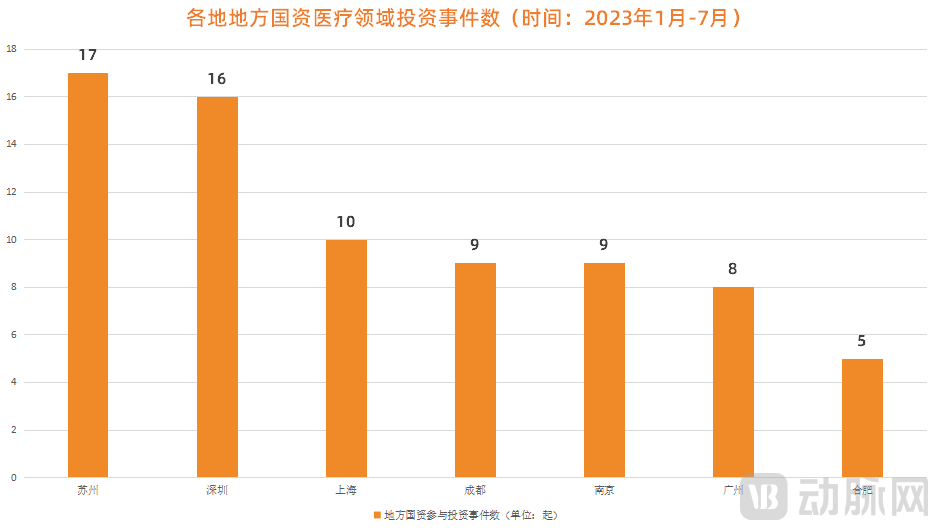 Figure 3. Number of Local State-Owned Medical Investment Events in Various Regions from January to July 2023 (Data Source: VCBeat)
Take Shenzhen HTI Group Co., Ltd. as an example. According to insiders, the institution has currently recruited several Ph.D.s from specialized fields such as image processing, medical software and hardware, and biomedicine. At the same time, it has established extensive connections with a group of clinical doctors who have long been working on the front lines. The team members are now more diversified. With such a professional team, Shenzhen HTI Group Co., Ltd. has gained market-oriented capabilities, allowing it to make early investments in some cutting-edge sectors and focus on early-stage medical projects with high market potential. Additionally, its services have become more flexible and professional, enabling a deeper understanding of the true needs of both projects and the market.
Beyond marketization,Local state-owned assets also need to become the "intermediate layer" between local governments and the capital market.In recent years, cooperation between local state-owned capital and social capital has become more frequent. This trend is also evident in the primary market of the medical field this year, with both parties jointly investing up to 85% of the time. So, how can two different systems of capital work together?
Through research, everyone unanimously believes that in the process of cooperation, both parties should focus on what they are good at. Social capital is proficient in technological innovation and market expansion, so it should concentrate on business operations; local state-owned capital is more adept at creating industrial parks and formulating talent policies, that is, by integrating local government resources to provide services for enterprises and resolve their concerns.
A local state-owned assets manager mentioned, "At this stage, we are not willing to act alone. Instead, we hope to collaborate with social capital to work together.Because it is difficult to align with the overall communication strategy and profitability of enterprises, as these two aspects can conflict. As a local state-owned capital, we are more adept at discussing strategies and implementing policies with enterprises, while social capital can focus more on discussing valuations and negotiating terms like performance-based agreements. Everyone has their respective roles.”
In conclusion
About 15 years ago, on the map of China's medical industry, Suzhou was still a relatively unfamiliar name. This was because it could neither attract "big trees" nor did it have representative local medical enterprises. Moreover, at that time, the hot money in China's capital market was mainly concentrated in the IT and internet industries, and few people were willing to invest in healthcare.
Against this backdrop, Suzhou has established a group of local state-owned enterprises represented by Oriza Holdings. Starting from scratch, they first recruited talent and then provided long-term support to these individuals by setting up various types of funds, sharing the risks of the entrepreneurial process with them. Thanks to this mechanism, Suzhou's medical industry has rapidly risen, with an output value exceeding 200 billion yuan, giving birth to world-class biopharmaceutical industrial parks such as BioBAY.
Looking at the present, fundamental changes have occurred in the medical industry and the capital market, and Hefei's "industry-driven investment" model has also begun to become a new source of vitality for local investment attraction. The "Hefei Model" aims to seek projects with real technological and market potential, invest heavily in their support, and, in this process, respect industrial laws while actively leveraging the roles of both the government and the market."Government provides timely assistance, while the market fosters projects.", reduce intervention, and promote the linkage between an efficient market and a capable government.
Therefore, fundamentally,Being adept at using market logic to plan and leveraging the power of capital to act will be the key for local state-owned assets to succeed in the medical field.。
1. "VC Big Change, the Starting Point of a 10-Year New Cycle" —— HaoHao Learning;
2. "From 'Hefei Model' to 'Anhui Phenomenon', State-owned Capital Leads as LP, How Did Hefei Grow from 'Obscure' to 20-fold GDP Increase in 20 Years?" — New Fortune Magazine;
3. "On the Road to Chasing the Dream of a 100-Billion-Yuan Pharmaceutical Industry, Moving Forward with Unstoppable Momentum" — Suzhou Industrial Park Management Committee.