Dry AMD Breakthrough: FDA Approves Two Complement Inhibitors for Geographic Atrophy
IVERIC bio
Ophthalmic Disease Therapeutics Developer

Astellas
Pharmaceutical R&D Manufacturer
Age-related Macular Degeneration (AMD) is a fundus disease characterized by degenerative changes in the macular retina and choroid, closely associated with aging. It commonly occurs in people over 50 years old and is one of the leading causes of irreversible blindness among the elderly worldwide.
Clinically, AMD is divided into two types based on the nature of the lesion: atrophic (dry) and exudative (wet). Dry AMD accounts for 85% to 90%, with early and progressive stages mainly characterized by drusen in the macular area, retinal pigment epithelium (RPE) abnormalities, and thickening of Bruch's membrane. In the late stage, focal degeneration of RPE and photoreceptor loss occur, also known as "geographic atrophy (GA)," which may even progress to choroidal neovascularization (CNV), ultimately leading to the loss of central vision.
According to a Frost & Sullivan report, the number of patients with dry age-related macular degeneration worldwide has surged year by year, increasing from 177.8 million in 2017 to 188.3 million in 2021. The number of patients is expected to reach 197.7 million by 2025 and 209.6 million by 2030.
For wet AMD, the current main treatment is anti-vascular endothelial growth factor (VEGF) therapy. Anti-VEGF drugs, such as ranibizumab, conbercept, and aflibercept, have achieved good clinical efficacy by binding to or antagonizing VEGF. In contrast, the treatment options for dry AMD are currently limited.
Fortunately, this year, the U.S. Food and Drug Administration (FDA) has successively approved two complement drugs for the treatment of dry AMD.
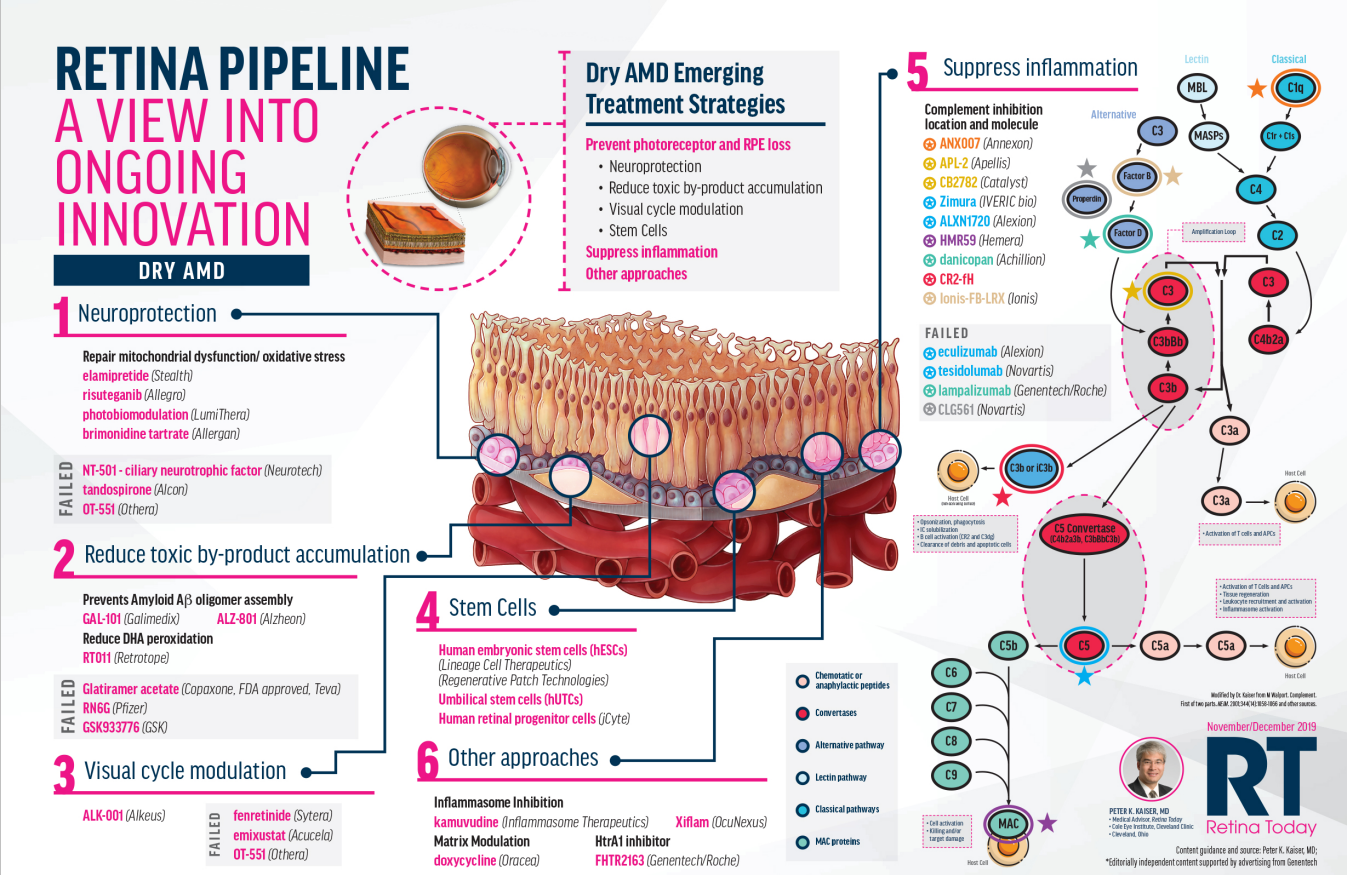
Figure 1 Overview of Dry Age-Related Macular Degeneration Drug Development Directions.
Image Source: Retina Today Magazine
Two New Drugs Approved in Succession, Breaking the Dilemma of No Available Treatment for GA
Recently, IVERIC bio, a subsidiary of Astellas, announced that the U.S. FDA approved IZERVAY™ (Avacincaptad Pegol Intravitreal Injection, hereinafter referred to as “ACP”) on August 4, 2023, for the treatment of geographic atrophy (GA) secondary to age-related macular degeneration (AMD).
ACP is a PEGylated anti-C5 oligonucleotide drug that inhibits the cleavage of C5 into C5a and C5b. Overactivation of the complement C5 protein is suspected to play a critical role in the development and progression of scarring and vision loss associated with geographic atrophy (GA) secondary to age-related macular degeneration (AMD). By targeting C5, ACP has the potential to reduce the activity of the complement system, which leads to retinal cell degeneration, and may slow the progression of GA.
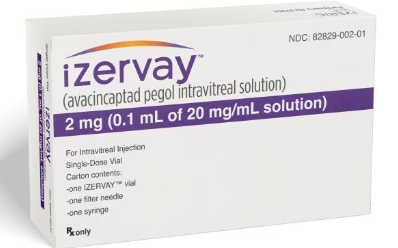
Figure 2 Drug Name: IZERVAY
Image Source: IVERIC bio Official Website
The FDA approval this time is based on the GATHER1 and GATHER2 Phase 3 clinical trials, which evaluated the safety and efficacy of 2 mg IZERVAY administered via intravitreal injection once a month in patients with AMD-related GA. The results showed that the IZERVAY treatment group demonstrated a statistically significant slowing of GA disease progression.
In the first year of treatment, the slowing of disease progression can reach up to 35%. The most common adverse reactions reported in ≥5% of patients receiving 2 mg IZERVAY include subconjunctival hemorrhage (bleeding beneath the clear membrane of the eye: 13%), increased intraocular pressure (elevated fluid pressure within the eye: 9%), and blurred vision (8%).
In February this year, Apellis announced that the complement C3 cyclic peptide inhibitor Pegcetacoplan, trade name Syfovre, was approved by the FDA for the treatment of dry age-related macular degeneration (AMD), becoming the first geographic atrophy (GA) drug to receive approval. Prior to this, dry AMD had been in a "no available treatment" state. The drug was initially approved in 2021 for the treatment of the rare disease paroxysmal nocturnal hemoglobinuria (PNH).
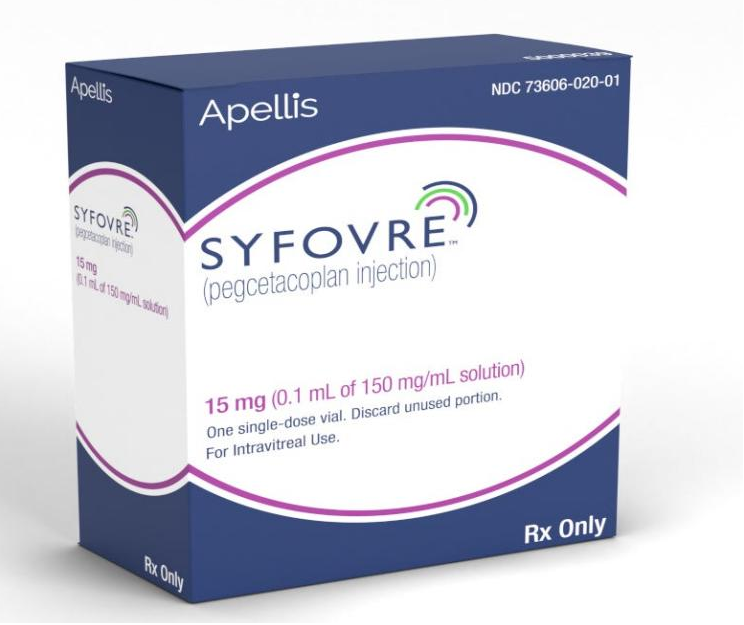
Figure 3 Drug Name: SYFOVRE
Image Source: Apellis Official Website
Complement drugs show potential to slow GA progression
The complement system is an innate immune system responsible for eliminating invaders. C3 is an important protein in the complement system and plays a significant role in the pathogenesis of GA. In GA, C3 accumulates in the retina, leading to retinal cell death.
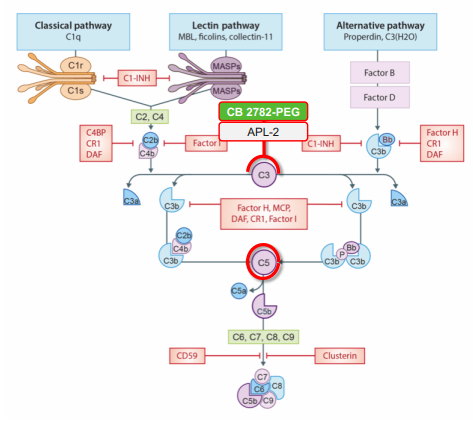
Figure 4: Complement C3 is the best-validated target in dry age-related macular degeneration (AMD).
Image source: Reference 1
Studies show that targeting C3 can effectively slow the progression of GA.
Pegcetacoplan (code name APL-2), developed by Apellis, is a PEGylated peptide that targets and inhibits complement C3. It was approved by the FDA in February this year for the treatment of GA.
Avacincaptad pegol (also known as Zimura), developed by IVERIC bio, Inc., is a nucleic acid aptamer targeting the complement C5 protein, which was recently approved by the FDA for the treatment of GA.
Both of these drugs are complement inhibitors that modulate the overactivation of the complement system by specifically binding to C3 or C5 to inhibit the complement activation pathway.
Pegcetacoplan was the first to gain approval for treating GA, achieving impressive sales of $67.3 million in the first half of Q2 2023. The recent approval of Avacincaptad pegol signifies a new potential blockbuster innovation in the AMD field.
Currently, an increasing number of pharmaceutical companies are entering the ophthalmology field, and there are more and more innovative therapies for dry age-related macular degeneration, which are expected to bring more treatment options to patients.
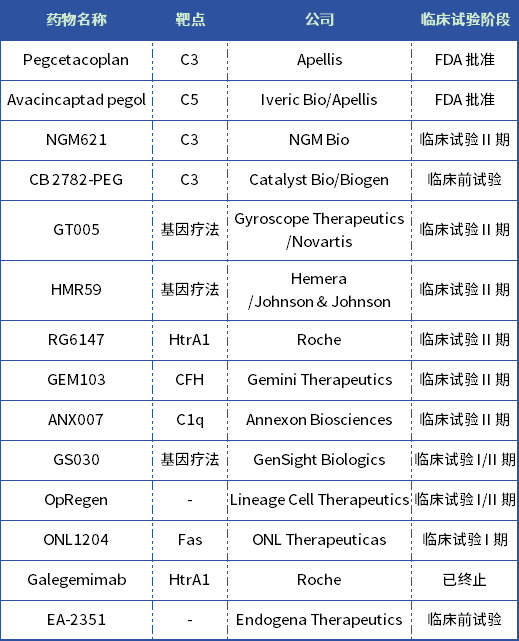
Data Source: Collated from public information
Summary
In recent years, significant progress has been made in the discovery of complement drugs. Currently, more than 20 therapeutic agents targeting different components and effector pathways of the complement cascade are under clinical development for various indications.
In addition to Apellis's pegcetacoplan, other pharmaceutical companies are also making continuous efforts in this field. Amyndas Pharmaceuticals, founded by Lambris, is developing next-generation C3 inhibitors for periodontitis, eye diseases, and other conditions. Novartis and Roche/Ionis are conducting Phase II trials of drugs targeting complement factor B, a component of the alternative complement pathway. Sanofi will resubmit its anti-C1s antibody sutimlimab.
These drugs target different targets and effector pathways of the complement protein signaling pathway. The complement cascade has multiple therapeutic intervention points, each with its own advantages or limitations, depending on the clinical indications and underlying pathophysiology.
The field of complement drugs is experiencing rapid growth, offering numerous therapeutic opportunities not only in the rare disease sector but also in broader markets such as age-related macular degeneration, providing new hope for the treatment of various diseases.
References:
1. Catalyst Bio company official website information https://www.catalystbiosciences.com/wp-content/uploads/2021/05/Blouse_CBDD_20191115_vF.pdf
2. NGM Bio Company Official Website News https://ir.ngmbio.com/news-releases/news-release-details/ngm-bio-provides-business-highlights-and-reports-fourth-1
3. https://news.bioon.com/article/69236e849786.html
4. https://www.novartis.com/clinicaltrials/study/NCT04437368
5. https://www.sohu.com/a/521260177_282570
6. https://www.evaluate.com/vantage/articles/analysis/spotlight/looking-winners-geographic-atrophy
7. First approval of complement C3 inhibitor opens autoimmune and inflammatory opportunities (nature.com)
8. Clinical prospects of next-generation complement therapies | Nature Reviews Drug Discovery (nature.com)
9. Which New Drug is Better ASRS 2023: Pegcetacoplan vs Avacincaptad Pegol in Patients with Geographic Atrophy (ophthalmologytimes.com)

Editor: Liuli
Disclaimer: The views expressed in this article are solely those of the author and do not represent the position of Yaozhi Network. We welcome discussions and additional insights in the comment section; for reprints, please be sure to credit the author and source. If there are any issues regarding the content, copyright, or other aspects of the work, please leave a message on this platform, and we will address it promptly.