

Servier's First Pancreatic Cancer Drug Onivyde® Receives Initial Prescriptions Across Multiple Regions in China

Servier
International Pharmaceutical Manufacturers
BeijingAugust 30, 2023PR Newswire -- Servier's first pancreatic cancer treatment drug, Yianda®(Chemical name: Irinotecan Hydrochloride Liposome Injection) has been prescribed for the first time in 10 hospitals across six provinces and municipalities, including Tianjin, Beijing, Shanghai, Nanjing, Fuzhou, and Guangzhou. Combined with 5-fluorouracil (hereinafter referred to as 5-FU) and leucovorin (hereinafter referred to as LV), it offers a treatment option for patients with metastatic pancreatic cancer who have progressed after gemcitabine treatment. At the same time, as the first significant new drug in the field of pancreatic cancer in China in nearly 24 years, Yianda.®Synchronously launched in over 50 DTP pharmacies across China, with the support of professional medication services and guarantees, to improve treatment outcomes and enhance the quality of life for more pancreatic cancer patients.
General Manager of Servier ChinaManuel RUIZ Mr.Representation: "Easenda"®The first prescription in mainland China marks the official launch of this unique treatment solution in China, serving pancreatic cancer patients in urgent need of corresponding treatment. Servier always places patients at the core of decision-making, collaborating with professional forces in China's cancer treatment field to conduct clinical research and innovative exploration. While integrating global treatment experience with the characteristics of the Chinese pancreatic cancer patient population, it is committed to advancing China's pancreatic cancer treatment to a new level, with the expectation of contributing to overcoming difficult-to-treat cancers represented by pancreatic cancer.
Pancreatic cancer is often referred to as the "king of cancers" due to its hidden symptoms, high malignancy, and high mortality rate. Over the past 25 years, the global disease burden of pancreatic cancer has doubled, and it is now among the top 10 causes of cancer-related deaths in more than 130 countries.[1]Survey data shows that the incidence of pancreatic cancer in China is increasing year by year and is underdiagnosed, with an early diagnosis rate of less than 5%.[2], the majority of patients have already developed metastases or local progression at the time of their first diagnosis. Currently, the five-year survival rate for pancreatic cancer is less than 8%, significantly lower than the overall cancer survival rate in China of 40.5%.[2], the median survival time of patients after surgical treatment is only 13.3 months.[3]About 60% of patients have already metastasized at the time of initial diagnosis, losing the opportunity for surgical cure, and the options for second-line and subsequent treatments are very limited.
According to the NAPOLI-1 study[4]Patients with metastatic pancreatic cancer who progressed after gemcitabine treatment were treated with irinotecan hydrochloride liposome injection + 5-FU/LV. Both median overall survival (OS) and median progression-free survival (PFS) were significantly improved, with one-year OS extended by up to 26%. Moreover, the survival benefit was more pronounced in the Asian population, with an average OS extension of 5.2 months, and adverse reactions were manageable.
Easenda®It is a landmark treatment in the field of pancreatic cancer and is currently the only approved treatment regimen in China for patients with metastatic pancreatic cancer who have progressed after receiving gemcitabine. It has been launched in multiple regions, including the United States, Taiwan, Europe, South Korea, and Japan. Its therapeutic effects are widely recognized and it has gained consistent recommendations from major clinical guidelines both domestically and internationally. These include the National Health Commission of China's "Pancreatic Cancer Diagnosis and Treatment Standards (2018 Edition)," the Chinese Society of Clinical Oncology (CSCO) "Pancreatic Cancer Diagnosis and Treatment Guidelines 2022," the Chinese Anti-Cancer Association Pancreatic Cancer Professional Committee's "Comprehensive Diagnosis and Treatment Guidelines for Pancreatic Cancer in China (2020 Edition)," and the Pancreatic Surgery Group of the Surgery Branch of the Chinese Medical Association's "Guidelines for Diagnosis and Treatment of Pancreatic Cancer in China (2021)." All of these guidelines list this regimen as a recommended second-line treatment option for pancreatic cancer.
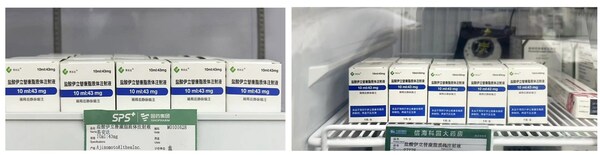
Easida® has been launched in DTP pharmacies across China
EasenAchieve®It will be gradually launched in cities across China in the coming weeks. The first batch of the drug will cover more than 100 pharmacies across 17 provinces, autonomous regions, and municipalities in mainland China, and will also begin to be supplied in various hospitals. Through multi-channel coverage, the accessibility of the drug will be improved to accelerate meeting the urgent treatment needs of pancreatic cancer patients across China.
[1] Committee of Tumor Markers, Chinese Anti-Cancer Association. Development Report of Oncology in China (2021)
[2] "Expert Consensus of the Chinese Medical Association's Oncology Branch on Early Diagnosis and Treatment of Pancreatic Cancer" (2020)
[3] Bi Xiaofeng. Why is it so difficult to detect pancreatic cancer, the "king of cancers," in its early stages?[J]. Anti-Cancer Window, 2018(6):2.DOI:CNKI:SUN:KAZC.0.2018-06-016.
[4] A W G , B C P L , C P G B , et al. Nanoliposomal irinotecan with fluorouracil and folinic acid in metastatic pancreatic cancer after previous gemcitabine-based therapy (NAPOLI-1): a global, randomised, open-label, phase 3 trial.[J]. Lancet, 2016, 387(10018):545-557.