

Jellyfish Planet CEO: Commercialization Is Key to Unlocking the Value of Brain-Computer Interface Research

BrainPro
Developer of Brain-Computer Interface Smart Terminal Products and Application Data Platforms
The strategic importance of brain science research and the development of brain-computer interfaces is undeniable.
Since the late 1980s, countries around the world have successively announced their brain science initiatives. In the past decade, these countries and regions have continuously updated their brain science research programs. In 2013, the United States launched the "BRAIN Initiative"; the European Union also established a dedicated research and development program, the "Human Brain Project (HBP)," in the same year; Japan followed suit by launching its own "Brain/MINDS Project" in 2014; South Korea released the "Brain Science Development Strategy" in 2016, aiming to build itself into a hub for brain science research; Canada, not willing to be left behind, initiated its Brain Research Strategy in 2017 to construct a neuroscience research platform.
Following the rising tide of brain science research, China has successively introduced various policies to keep up with cutting-edge research. In 2016, China designated "brain science and brain-inspired research" as a major scientific and technological innovation project, and in 2021, further elevated "brain science research" to a key national science and technology strategy.
It somewhat heralds the arrival of the era of industrial application in brain science research.
Against this backdrop, a group of innovative enterprises in the field of brain science research has also come into the public view.BrainPro (hereinafter referred to as "BrainPro")Is one of them.
Unlike some startups that "have a hammer and are looking for nails," the birth of BrainPro was more like having a scenario where "nails need to be hammered into wooden stakes" first, and then seeking the "hammer."
This demand comes from BrainPro CEO Huang Shaojia.
According to Huang Shaojia, when her child entered the transition stage from kindergarten to primary school, she began to face the "chaotic" situation that most parents encounter: Due to the inability to focus on studying, it usually took the child half an hour to write 10 characters, which also led to crying during homework time.
He keenly realized that the child was not unintelligent but had issues with attention. His past professional career and experiences also led Huang Shaojia to attempt to address this problem through scientific means.
In fact, Huang Shaojia himself has a background in science and engineering. After graduating from the Department of Mechanical and Electrical Engineering at South China University of Technology, he worked in research and development in the consumer electronics industry for a long time and is very familiar with the Internet of Things, smart terminals, chip embedded systems, and artificial intelligence. For him, the child's issue was simplified to "how to measure concentration."
Compared to relatively concrete objects, in the past, there was no measurable standard for the general public to determine whether focus was concentrated. Most parents/teachers often judged based on whether a child’s sitting posture was correct or whether their gaze was fixed on the teacher, and so on. The lack of criteria for assessing concentration also means that it is impossible to truly enhance children's ability to focus.
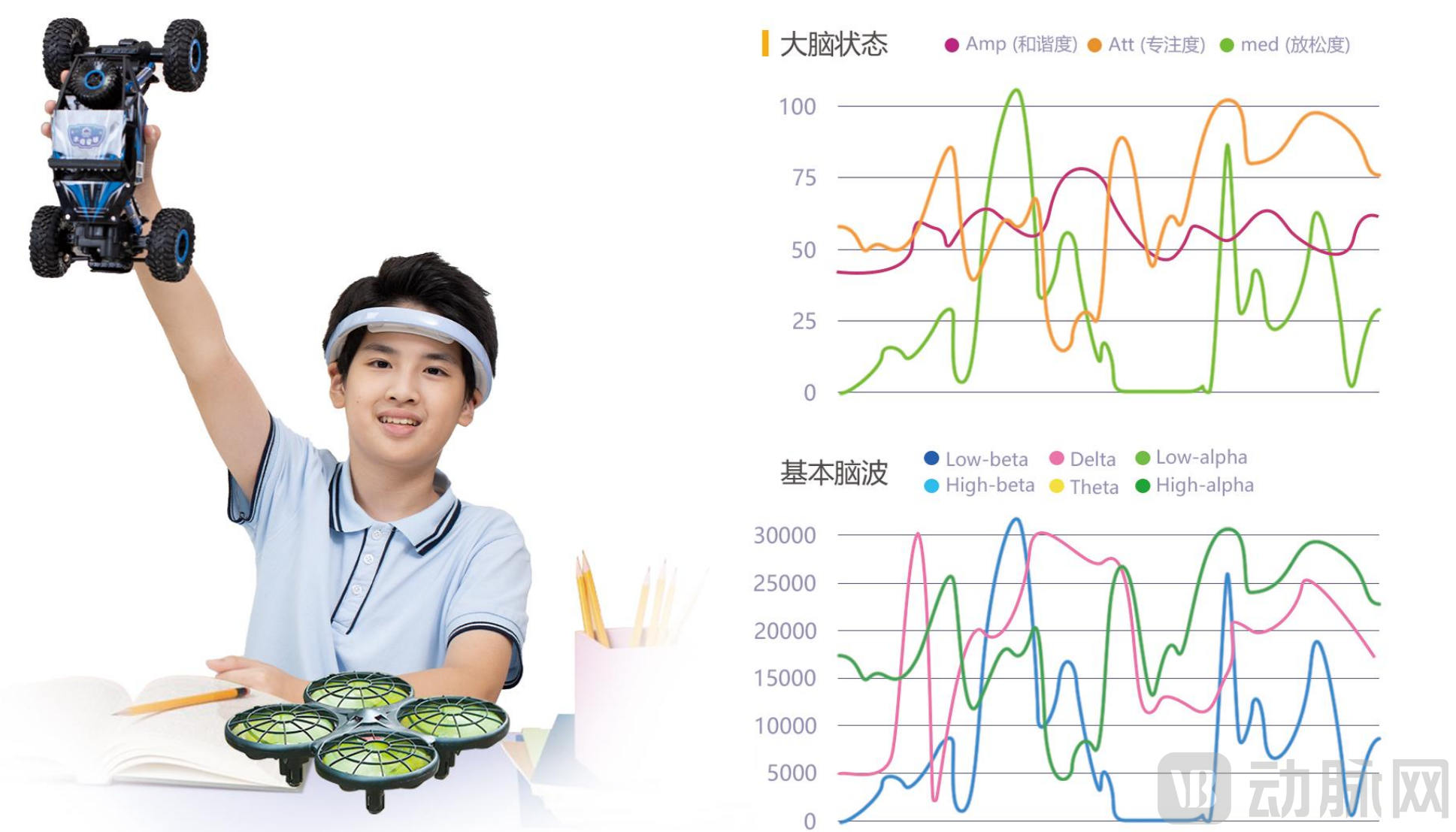
Based on past experience,Huang Shaojia attempted to achieve brain intelligence growth assessment and improvement centered on concentration through the combination of Brain-Computer Interface (BCI) + AI. On one hand, data is collected via BCI intelligent terminals to visually present whether children are focused. On the other hand, EEG biofeedback training is used to further assist children in brain intelligence growth training, enhancing concentration, cognitive ability, observation skills, and more.
In the process of solving problems for his own child, Huang Shaojia also discovered that this is not just an issue faced by one child, but rather a challenge that all school-age children may encounter. Gradually, he shifted his focus to a broader market—the resolution of brain development issues in adolescents and children. Consequently, BrainPro was born.
In order to address the issue of brain development in children and adolescents, BrainPro has built and gradually improved its team, with members covering software and hardware development, production manufacturing, market promotion, and more. The current expert team includes Dr. Wei Zhong Cai, an early childhood education doctor from the United States; Dr. Jin Yong Zhang, a doctoral graduate from the Department of Electrical and Electronic Engineering at the University of Hong Kong (and the designer of BrainPro's 8-channel programmable EEG sensor chip); Dr. Chuanliang Han, a neuroscience Ph.D. from Beijing Normal University; Dr. Yuchen Lin, a biology Ph.D. from the Shenzhen Institutes of Advanced Technology, Chinese Academy of Sciences, and others.

In order to maintain its technological edge and help more families,BrainPro has also chosen to collaborate with the Shenzhen Institutes of Advanced Technology, Chinese Academy of Sciences, to jointly establish a Joint Laboratory for Intelligent EEG Signal Precision Analysis.In terms of the comfort of wearing brain-computer interfaces, the accuracy of data collection, and the portability of the product, BrainPro has spent three years upgrading and iterating its products. According to Huang Shaojia, after continuous optimization, the accuracy of EEG signal acquisition and analysis has reached a leading level in the industry.
Currently, Huang Shaojia serves as the CEO of BrainPro, as well as the Chairman of the Joint Laboratory for Intelligent EEG Signal Precision Analysis of BrainPro at the Shenzhen Institutes of Advanced Technology, Chinese Academy of Sciences, and an AI Brain-Computer Interface Expert in the Special Committee of the Shenzhen Artificial Intelligence Industry Association.
"My child is the starting point of my entrepreneurship and also the first user of our brain-computer product. I will never forget the excitement on my child’s face when they first saw the 'Brain-Controlled Dinosaur' product. My child has given me even more motivation to move forward. When more children start smiling, I feel even more driven." Huang Shaojia said with deep emotion.
Brain-computer interface products have a wide range of application scenarios. However, among the complex and diverse application scenarios, BrainPro has taken the lead in focusing on the smart education scenario.
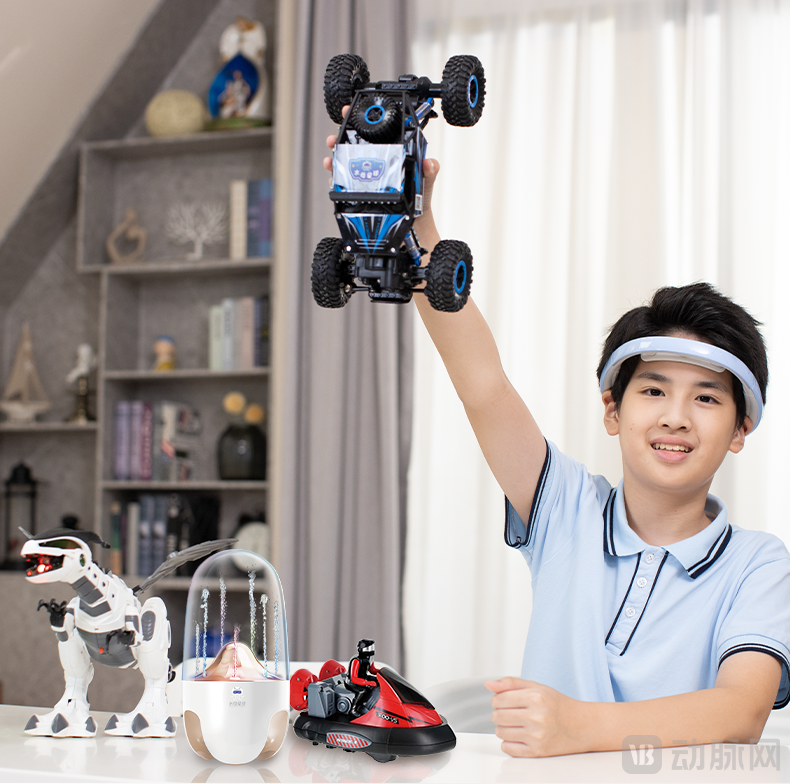
Currently, BrainPro's brain-computer intelligent terminal is being promoted across China, and the corresponding courses have fully entered campuses.It is reported that BrainPro has been rolled out in the Chinese market, and currently, the number of kindergartens and primary schools it has entered has reached more than a thousand.
In addition, in order to better empower the digital transformation of education, BrainPro continues to explore and has launched the 5D Focus Assessment System. This system completes children's brain development assessments through innovative methods such as brain-computer interface products, visually presenting assessment data. It also incorporates training courses using brain-computer intelligent terminals to more effectively enhance children’s focus.
At the same timeBrainPro continues to explore the application of brain-computer products in fields such as sleep and mental health.Currently, an increasing number of teenagers and children are experiencing mental health issues, while more and more adults are suffering from insomnia and even sleep disorders. The related market has broad development potential.
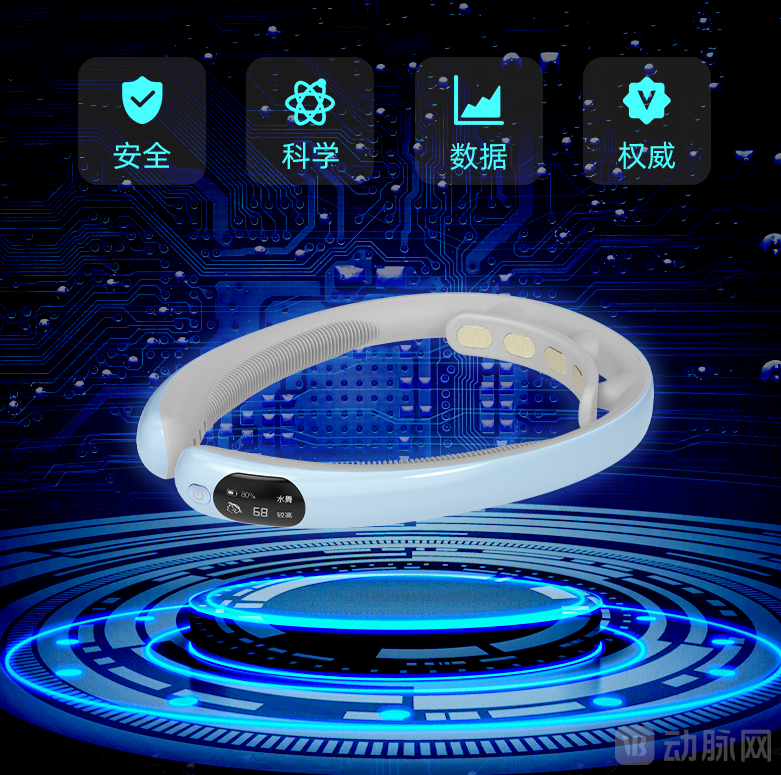
According to Huang Shaojia, the "Mindful Goddess Set" by BrainPro, which is about to be launched, will be applied in the field of mindfulness meditation. He introduced that its meditation content library has accumulated tens of thousands of classic meditation music tracks, and BrainPro is expected to further promote the product through a nationwide franchise sales channel in China, helping brain-computer intelligent terminals enter households and assisting mothers in soothing their emotions through mindfulness meditation.
In addition, BrainPro is developing the BrainPro Sleep Monitoring Brain-Computer Interface, mainly used for sleep monitoring, etc. He said that it is also possible to develop it into a medical-grade product in the later stage. Huang Shaojia pointed out that the BrainPro Sleep Monitoring Brain-Computer Interface can analyze sleep conditions based on EEG signals and apply them to sleep aid; secondly, it can achieve emotional intelligent detection and recognition based on EEG; judge the fatigue status of the wearer through forehead EEG monitoring and analysis, and so on.
For BrainPro CEO Huang Shaojia,To take the lead in focusing on consumer-level application scenarios such as smart education, mainly hoping to bring cutting-edge technology products closer to everyday life, making technology visible, tangible, and usable, better practicing the corporate philosophy of "Technology for Good.";
Secondly, solving commercial payment issues must involve choosing scenarios based on rigid demand and high-frequency use.Application scenarios such as smart education undoubtedly have broad demand. Providing high-quality solutions to these needs can address user pain points while meeting user demands to improve learning efficiency, quality of life, and more.
Again, the commercial application of the product can create greater market value.Currently, many brain science research projects and brain-computer products remain in the laboratory stage, lacking commercial applications. This has led to insufficient external attention. While commercial applications bring more attention and create greater market value, they will also help institutions gather more resources to develop more advanced technologies and products.
At the same time, BrainPro has accumulated a large amount of EEG signal data and user feedback data in the commercialization process. Based on its accumulated AI algorithms and production techniques, it is creating more brain-computer interface products and accelerating their deployment in the consumer market.
BrainPro has currently initiated its Series A financing round, planning to accelerate technology research and development as well as product iteration through this funding. The aim is to optimize multi-scenario applications based on the brain-computer application data platform and expedite market expansion., and ultimately build up the application ecosystem of brain-computer intelligent terminals in multiple fields such as gaming and entertainment, medical rehabilitation, and the metaverse.
In "Gamers and the Chip War," it was pointed out that Jensen Huang summarized the gaming business as follows: "We also observed that video games were simultaneously one of the most computationally challenging problems and would have incredibly high sales volume. Those two conditions don’t happen very often. Video games was our killer app—a flywheel to reach large markets funding huge R&D to solve massive computational problems."
Video games, as killer applications, have funded chip development to some extent.
Before the full implementation of cutting-edge technologies such as VR/AR, brain-computer interfaces, and AI, there will undoubtedly be a long period. The public is eagerly anticipating the arrival of the "killer application." For the brain-computer interface industry, the same holds true.
If the exploration of cutting-edge technology is merely confined to the laboratory, while commercialization attempts outside the lab are neglected, the comprehensive application of brain-computer products might be further delayed.Continuously explore commercialization and implementation, and feedback to the laboratory's R&D. Perhaps only in this way can we accelerate the comprehensive application of brain-computer products and truly integrate them into our lives.
And startups like BrainPro are making corresponding attempts, and we also look forward to the commercialization of more brain-computer products.