

GLP-1 Disrupts Medtech: Surgical Robotics and Bariatric Device Markets Face Existential Threat

Intuitive
Surgical Robot Developer

Medtronic
Chronic Disease Medical Device and Therapy Developer
The globally popular GLP-1 receptor agonist weight-loss drugs have transformed the weight management market landscape, threatening the survival of several sectors.
GLP-1 Weight Loss Drugs Are Revolutionary Products in the History of Pharmaceutical Development. This year, Novo Nordisk's semaglutide sales are expected to exceed $20 billion, becoming the new "blockbuster drug." Meanwhile, Novo Nordisk's rival in the GLP-1 drug field, Eli Lilly, leveraging the weight loss efficacy of GLP-1 and expectations for a new Alzheimer's disease drug, has become the first company to surpass a market value of $500 billion.
Under the Super Halo of GLP-1, Some Tracks Begin to Fall, and Investors' Hundreds of Millions of Dollars May Go Down the Drain.
The Da Vinci surgical robot, surprisingly, faced the brunt of the impact. Intuitive Surgical reported a 22% surge in total surgeries for Q2 this year; however, the volume of bariatric surgeries declined. Analysts predict that bariatric surgeries generate over $200 million in annual revenue for Intuitive Surgical. Following this announcement, Intuitive Surgical's stock price experienced a decline.
Along with Intuitive Surgical, Medtronic has also felt the chill brought by GLP-1 weight-loss drugs. Medtronic previously invested in Allurion, a company specializing in intragastric weight-loss balloons, and distributed its products. Allurion went public in August this year, experiencing a drop in its stock price on the first day of trading, and its market value has since fallen by 60%.
Which tracks have been quietly "killed" by GLP-1? VCBeat (WeChat ID: vcbeat) has conducted a review.
The decrease in the number of bariatric surgeries in the United States leads to a decline in related surgeries by Intuitive Surgical, Inc.
Intuitive Surgical CFO admitted at the earnings conference that an increasing number of customers are indicating patients prefer GLP-1 weight-loss drugs, such as Novo Nordisk's Wegovy.
GLP-1 Inhibitors as an Alternative Treatment Directly Threaten the Market Size of Bariatric Surgery. After all, Eli Lilly's GLP-1RA drug tirzepatide achieved a weight loss of 20.9% in a 72-week Phase III clinical trial for obesity, which is comparable to the effects of gastric sleeve surgery.
Morgan Stanley analysts estimate that bariatric surgeries contribute approximately $245 million in revenue annually to Intuitive Surgical, accounting for about 4% of the company's revenue in 2022. Following the announcement of its second-quarter earnings, which showed sluggish performance in bariatric surgeries, Intuitive Surgical's stock price dropped from $353 to below $327.
In the global market, bariatric surgery is an important细分 market.
Bariatric surgery achieves its therapeutic purpose through methods such as stomach reduction and gastrointestinal bypass. To date, there are four main types of bariatric metabolic surgeries: sleeve gastrectomy, Roux-en-Y gastric bypass, biliopancreatic diversion, and adjustable gastric banding. Sleeve gastrectomy, with its high safety and efficacy and abundant clinical evidence, has become the most mainstream bariatric surgery globally.
According to statistics from The International Federation for the Surgery of Obesity and Metabolic Disorders (IFSO), data from 61 countries and regions worldwide in 2019 showed that the total number of annual bariatric and metabolic surgeries globally exceeded 830,000 cases, of which the United States reported 335,124 cases.
The number of surgeries in the United States exceeds 300,000 per year., this number is not small. For comparison, according to the STS/ACC TVT Registry, from 2011 to 2019, the United States conducted more than 276,000 TAVR procedures.
The cost of a weight loss surgery is also not low.The cost of a weight loss surgery in the United States averages between $7,400 and $33,000. This cost varies depending on the type of surgery, insurance coverage, and the hospital. For example, the cost of gastric bypass surgery is approximately $15,000, the cost of gastric banding surgery is approximately $12,000, and the cost of sleeve gastrectomy is approximately $9,500.
According to data from Emergent Research, the global bariatric surgery market size was $2.41 billion in 2020.
A certain volume of surgeries, combined with high costs, has propped up the overseas bariatric surgery market, and several companies rely on this market for survival. However, GLP-1 will change all of this.
GLP-1 Takes Over the Bariatric Surgery Market: Intuitive Surgical Hit, Stapler Industry Expected to Be Impacted
Bariatric surgery is usually performed through laparoscopic surgery, in which the indispensable instrument is the stapler. Bariatric surgery is an important procedure for the clinical application of staplers. The three typical procedures for staplers in clinical practice include: Thoracic Surgery: Lobectomy and Wedge Resection, General Surgery/Endocrinology: Bariatric Surgery - Sleeve Gastrectomy, General Surgery: Colorectal Cancer Resection. Multiple companies have developed dedicated staplers based on bariatric surgical procedures.
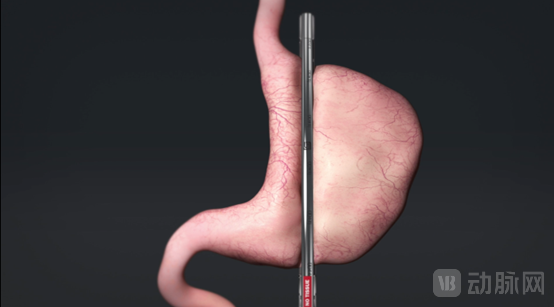
Application of Staplers in Gastrectomy Surgery Image Source:Standard Bariatrics
Weight-loss staplers have previously received backing from major companies.

In 2022, Teleflex, one of the top 10 global medical device companies, acquired Standard Bariatrics for $170 million. The latter's most important product is powered stapling technology and tools for bariatric surgery. Teleflex will acquire the company for $170 million in cash upfront and pay up to an additional $130 million upon achieving certain commercial milestones.
Boston Scientific Acquires Apollo Endosurgery for $615 Million: Apollo Endosurgery's Product Portfolio Includes Intragastric Balloons and Endoscopic Luminal Devices. Apollo Endosurgery’s Endoscopic Sleeve Gastroplasty (ESG) product can suture the stomach endoscopically, reducing its volume to achieve weight loss. Compared to gastric bypass surgery, ESG is reversible and, as an endoluminal procedure, less invasive, helping to avoid certain surgical complications and reduce associated risks. According to Apollo Endosurgery, patients experienced a 49% weight reduction 12 months post-surgery, although dietary and exercise compliance is also required.
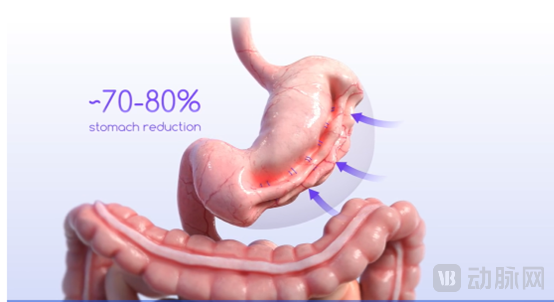
Apollo Endosurgery ESG Procedure Diagram
It can be foreseen that after the launch of GLP-1, the market share of various bariatric surgeries will shrink, and the corresponding usage of staplers will also decrease.
The performance of China's stapler companies may also be affected by GLP-1. Since staplers are one of the more successful single products exported from China, for many domestic stapler companies, overseas revenue accounts for over 30% of their total revenue. Weight loss surgery is the main battleground for Chinese-produced staplers in international markets.
According to the data in "2019 Market Share of Chinese Brand Stapler Exporting Companies," the top five Chinese brand stapler exporters by market share are Piert (15.82%), Tianchen (14.75%), Riqi (9.81%), Frankman (8.26%), and Borangsensi (3.12%).
According to the financial data disclosed by listed companies, in 2022, Tianchen Medical achieved a revenue of 230 million yuan, of which overseas revenue was 74.69 million yuan, accounting for 48.92%.
Another stapler company, Fenghe Medical, which is applying for listing on the STAR Market, reported overseas revenues of 48.6194 million yuan, 109.7151 million yuan, and 93.7718 million yuan for the years 2020 to 2022, respectively, accounting for 33.08%, 41.32%, and 30.15% of each period's main business revenue.
An industry insider stated: In Western countries, there are more patients with severe obesity and a high incidence of metabolic diseases, making bariatric surgery an important market for Chinese-produced staplers. For example, Brazil, which is the largest market for weight loss surgery globally. Multiple Chinese enterprises have obtained certification for their staplers in Brazil.
The global popularity of GLP-1 has led to a decline in the number of bariatric surgeries worldwide, also posing challenges for Chinese stapler companies going overseas. According to data from the prospectus of Fenghe Medical's application for listing on the STAR Market, Fenghe Medical's overseas revenue declined in 2022. The main reasons were the weakening consumer demand in some overseas sales markets and intensified competition in the overseas market.
In the future, with the continuous development of GLP-1, will the space for bariatric surgery be completely compressed?
Intuitive Surgical stated that it is still difficult to determine whether the stagnation in the growth of bariatric surgeries is a short-term phenomenon or a long-term trend. It is believed that many patients will eventually become disappointed with weight-loss medications, and surgery remains an important method for treating obesity.
Of course, with 4% of revenue impacted annually, whether for Intuitive Surgical or stapler companies, there are still other surgical procedures to explore. The impact brought by GLP-1 remains within a manageable range.
But for companies that have fully bet on weight-loss surgery as their main business, the impact brought by GLP-1 is at a nuclear explosion level.
Weight loss can be achieved through surgery, including not only laparoscopic procedures but also interventional surgeries where a weight-loss balloon is injected into the stomach. The principle behind gastric balloon products involves implanting a balloon into the stomach, which then expands to occupy space and reduce food intake, thereby achieving weight loss.
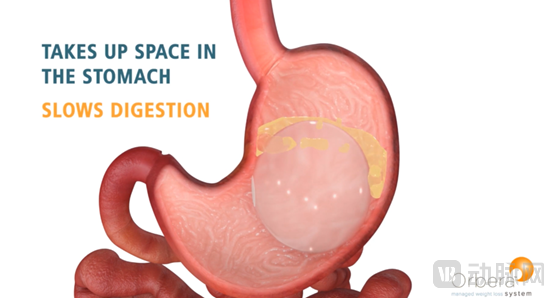
Illustration of Apollo Endosurgery Intragastric Balloon Image source: Apollo Endosurgery official website
In 2015, the U.S. Food and Drug Administration (FDA) approved three revolutionary intragastric balloon products: Orbera (manufactured by Apollo Endosurgery), Obalon (manufactured by Obalon Therapeutics), and the ReShape balloon. These products all require endoscopic intervention for implantation, with anesthesia administered during the procedure, and are later removed via endoscopy after treatment completion.
Notably, in 2021, two leading intragastric balloon product manufacturers, ReShape Lifesciences and Obalon Therapeutics, announced a merger. Additionally, Apollo Endosurgery was acquired by Boston Scientific, further driving industry consolidation.
According to statistics from VCBeat, this track has previously gained recognition and optimism from multiple investment institutions and enterprises. Boston Scientific acquired Apollo Endosurgery for $615 million, and Medtronic invested in Allurion. In the Chinese market, two companies have also received backing from multiple investment institutions.
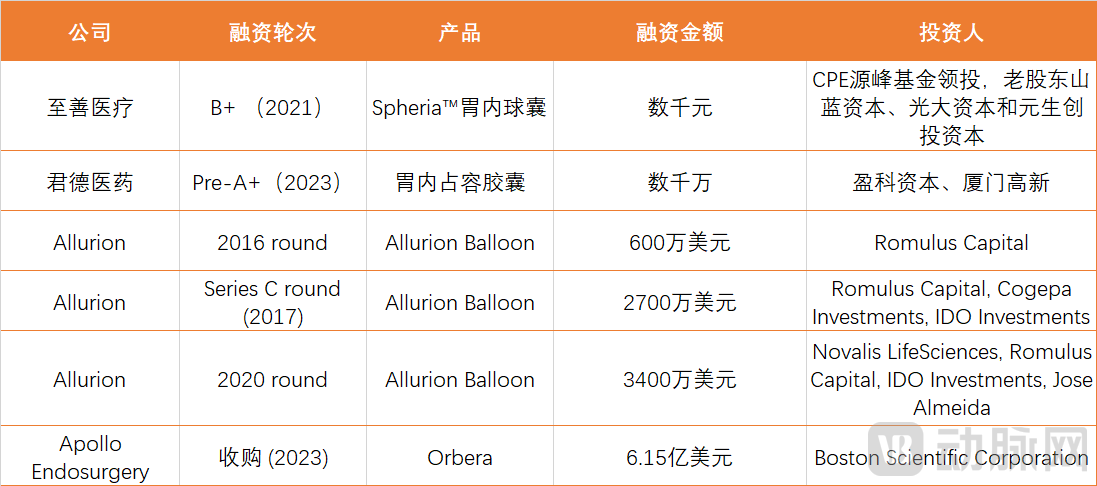
Global Gastric Balloon Financing Situation
Before the advent of GLP-1 weight loss drugs, there were several factors that made the gastric balloon sector attractive to global capital.
Firstly, the potential of the weight-loss market is看好, and there is an unmet need for more effective and safer weight-loss therapies.The 2023 edition of the "World Obesity Map" published on the World Obesity Federation's official website predicts that by 2035, more than 4 billion people worldwide will be obese or overweight, accounting for 51% of the global population. Finding an efficient and painless weight loss method has always been a global challenge.
Secondly, the intragastric balloon also has a certain degree of innovation, with less invasiveness compared to bariatric surgery.Medtronic's Bet: The Allurion Balloon is the world's first swallowable gastric balloon for weight loss that does not require surgical placement or removal. Patients can swallow a capsule, which breaks open under the action of gastric juices. Then, 550 milliliters of sterile filling fluid is injected through a catheter to inflate the balloon. X-rays are used again to confirm the balloon’s position in the stomach. The entire placement process takes only 15 minutes. This inflated balloon can remain in the stomach for up to four months. After four months, the self-absorbing valve inside the balloon opens, releasing the internal liquid, and the balloon membrane is excreted with feces. Clinical trials of the Allurion intragastric balloon have shown that patients lose an average of 10-15% of their weight during the approximately 16-week Allurion program.
Before the popularity of GLP-1 weight loss drugs, intragastric balloons were just beginning to see commercial success.
Previously FDA-approved intragastric balloons required anesthesia and endoscopic procedures for implantation, and were removed via endoscopy after several months. As a result, the commercial performance of the first batch of intragastric balloon products was not impressive. ReShape Lifesciences, the earliest company to receive FDA approval for its intragastric balloon, reported total revenue of $11 million in 2022, compared to $13.6 million in 2021, with a staggering loss of $46.21 million.
Medtronic Invests in Allurion’s Intragastric Balloon Product: Direct Swallow Placement, No Surgical Removal Required. The simplified application process, combined with Medtronic’s distribution support, has allowed the Allurion balloon to achieve significant growth even before receiving FDA approval. Revenues for 2020, 2021, and 2022 were $20 million, $38 million, and $64 million, respectively.
The commercial performance of GLP-1 weight loss drugs can be said to surpass intragastric balloons. The development of GLP-1 may make the commercialization of intragastric balloons more challenging.
During Allurion's IPO roadshow, the company was also asked about the threat of GLP-1 inhibitors to its business. Allurion believes that GLP-1 inhibitors have a poor user experience, requiring weekly injections and showing low compliance. Additionally, long-term use may be associated with thyroid cancer and carries a risk of rebound.
However, after the listing, investors still voted with their feet. Allurion's stock price fell below the issue price on the first day, and the company's market value was only $500 million. As of now, its market value is approximately $180 million.
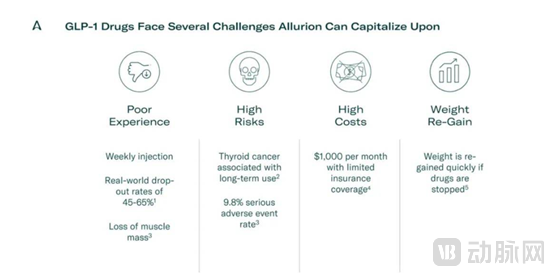
Allurion's View on the Disadvantages of GLP-1
GLP-1 Weight Loss Drugs: The Future Will See the Launch of Oral Medications, Leaving an Increasingly Smaller Market Space for Surgical Weight Loss Products. Single gastric balloon products have low risk resistance and need to explore more diverse product options or achieve greater breakthroughs in product safety and efficacy.
Of course, there are also fields that will benefit from the widespread promotion of GLP-1.
There is no doubt that the entire GLP-1 industry chain is expected to benefit from the explosive popularity of GLP-1. This includes companies with strong layouts in GLP-1 peptide API research and development as well as CDMO, such as WuXi AppTec, Catalent (Kaleidoscope), Jiuzhou Pharmaceutical, Notech Bio, Sinobioway Biotech, and Hanmi Pharmaceuticals.
In the future, with more domestically produced GLP-1 weight-loss drugs entering the market, core components such as injection pens will also see expanded market opportunities. The design of the injection pen is a key factor in market competition. In the 1980s, during the competition in the insulin market, Eli Lilly achieved 100% insulin purity but did not gain widespread market recognition. On the other hand, Novo Nordisk developed an insulin injection pen, with each cartridge containing several weeks' worth of insulin, eliminating the need for users to perform the complex operation of inserting a syringe into a glass vial. Thanks to the insulin injection pen, Novo Nordisk significantly increased its global insulin market share.
In China, the high concentration of injection pen patents is evident, with three companies—Lilly, Novo Nordisk, and Sanofi—almost occupying nearly 80% of the injection pen market share. Currently, YPS (a contract manufacturer for injection pens used by international pharmaceutical giants such as Lilly and Sanofi) has products that are highly tied to those of Lilly and Sanofi. The import dominance and competitive significance of injection pens leave substantial room for development for Chinese companies that hold independent intellectual property rights.
Another direction is to help improve the clinical application of GLP-1 through better technology. Take digital health technology as an example: treating obesity cannot be separated from long-term lifestyle changes, which require sustained tracking. Digital health technology can optimize the clinical benefits of GLP-1 by monitoring drug adherence and side effects.
From the current clinical feedback, some patients have shown good efficacy with GLP-1 weight loss drugs, while others have experienced severe side effects such as nausea, stomach pain, hair loss, and decreased muscle mass. In terms of adherence, although GLP-1 has demonstrated outstanding results, evidence also suggests that after one year of use, patient adherence tends to decline, leading to weight regain. Digital health technologies can help pharmaceutical companies identify more suitable patient populations by tracking patients and accumulating real-world data.
The global popularity of GLP-1 has squeezed the market space for other weight-loss methods. It's hard to say that these companies did anything wrong, as they have excelled in their respective fields. However, the development of weight-loss solutions reveals a truth: innovative approaches that address problems at their root are more likely to secure long-term success. As for how to guard against the risks of innovation failure, diversification seems to be the only path.
References:
What’s the Average Cost of Bariatric Surgery? - GoodRx. https://www.goodrx.com/conditions/weight-loss/bariatric-surgery-costs.
The Book Of GLP-1s: For Medtech They Giveth, As Well As Taketh Away——medtech insight