

Chengdu's Biopharma Sector Awakens: 13 IPOs in Two Years Signal Regional Breakthrough
BIO-TOWN CAPITAL
Integrated Financial Services Institution

Ucello
Developer and Manufacturer of Universal CAR-T Cell Therapy Drugs
Before discussing Chengdu's pharmaceutical industry, let's first share a "major event" related to Chengdu:
At the beginning of the millennium, there was an urgent need to seek overseas market expansionIntel Signals Plan to Build Fifth Global Manufacturing Base, and as a "gold招牌" of the Fortune Global 500, this signal was quickly responded to, with Intel subsequently receiving offers from hundreds of cities, including Chengdu.
But at this point, Chengdu does not have much chance of winning in this competition, because before this,None of the Fortune 500 companies are willing to invest in Chengdu.Moreover, in the IT industry landscape, Chengdu did not have much accumulation. At that time, searching throughout Sichuan Province, we could only find a $30 million Sino-foreign joint venture in Leshan producing chips. Coupled with the SARS outbreak that year, it was extremely challenging for Chengdu to "win the bid."
However, despite such a combination of adverse circumstances, Chengdu ultimately made a comeback. In 2003,Craig Barrett, then Chairman of Intel, officially announced an investment of 500 million US dollars to build a factory in Chengdu., and one year later, the factory construction has proceeded smoothly.
As the world's largest chip producer, Intel's settlement in Chengdu quickly generated a "butterfly effect," attracting a group of IT giants represented by Motorola, Ericsson, Microsoft, and Nokia. Chengdu has gradually formed a complete industrial chain including integrated circuit design, R&D, and chip packaging and testing, thereby becoming the fourth pole of China's IT industry and the leader in the western region.
Years after the matter was settled, when Sun Yanbin, Director of Intel's Market Operations Department in China, was asked again about why he chose to "parachute" into Chengdu at that time, he said, "In fact, in terms of construction costs, Chengdu did not have an advantage.But during the long process of site selection, investigation, and negotiation, we have consistently felt the utmost sincerity from Chengdu.At every negotiation, all the functional departments of the Chengdu government would be present. Everyone hopes to facilitate this project; they are flexible in their thinking and can even consider issues entirely from the other party's perspective.For example, during a communication meeting, a foreign colleague casually remarked, "It would be great if there was a Starbucks here," and as a result, the first Starbucks appeared on the streets of Chengdu.。”
The reason for recounting this story about Chengdu and Intel is that in recent years, in the pharmaceuticals industry, we have also felt the immense sincerity from Chengdu. So this time, what will happen?
The Stronger the Wind, the More "Furious" Chengdu Becomes
Entering 2023, although the pandemic has ended and the market has opened up, butHealthcare professionals still have a tough time. Startups struggle to secure financing, while companies in the middle-to-late stages face numerous obstacles on the path to going public. Recently, several pharmaceutical companies have announced the termination of their IPOs. Of course, life for healthcare investors isn't much better—fundraising difficulties have intensified, good projects are scarce and highly competitive, and it has become common not to attend an investment decision committee meeting for half a year.
In contrast to the overall downturn and confusion in the pharmaceuticals market,Chengdu, more of an "outsider," has been on a roll this year, especially in the pharmaceuticals sector where it has been particularly "high-profile."。
At the beginning of this year, Chengdu announced that its GDP for 2022 officially surpassed the 2 trillion yuan mark, with the tertiary industry, mainly pharmaceuticals, accounting for 66.4% of GDP, showing a significant upward trend. Recently, according to a set of data released by the Chengdu Municipal Bureau of Statistics,2From January to April 2023, the growth rate of industrial added value for Chengdu's pharmaceutical and health industry was 8.1%., ranking first among Chengdu's five major advanced manufacturing industries, nearly 2 percentage points higher than the second-ranked electronic information industry.
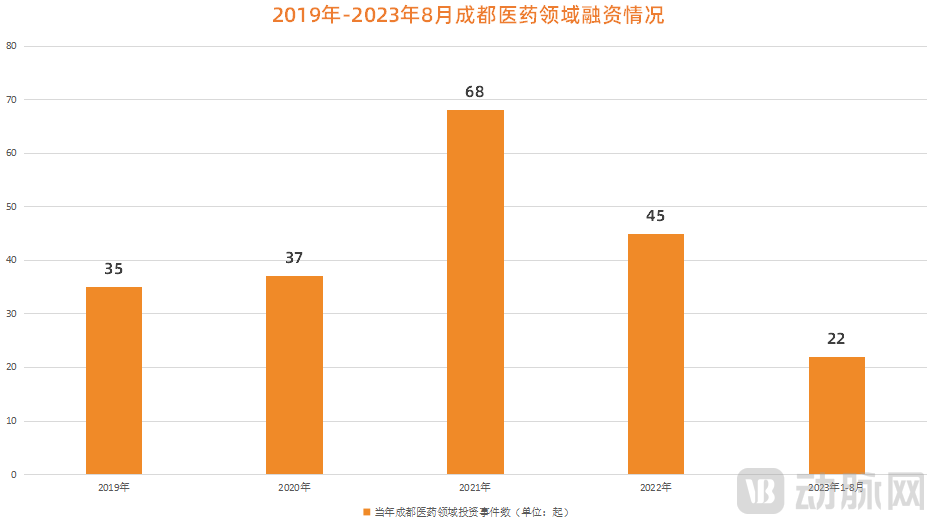
Figure 1. Financing Situation in Chengdu's Pharmaceutical Sector from 2019 to August 2023 (Data Source: VCBeat)
In addition to the significant increase in output and growth rate, Chengdu's pharmaceutical industry has also shown outstanding performance in the capital market. Taking the primary market as an example, according to incomplete statistics from the VCBeat database,From January to August 2023, Chengdu's pharmaceuticals sector completed 22 financing deals, with a total financing amount exceeding 5 billion yuan.Although its size is not as large as Beijing, Shanghai, Guangzhou, Shenzhen, or Suzhou, Chengdu still ranks among the top in a group of new first-tier cities.
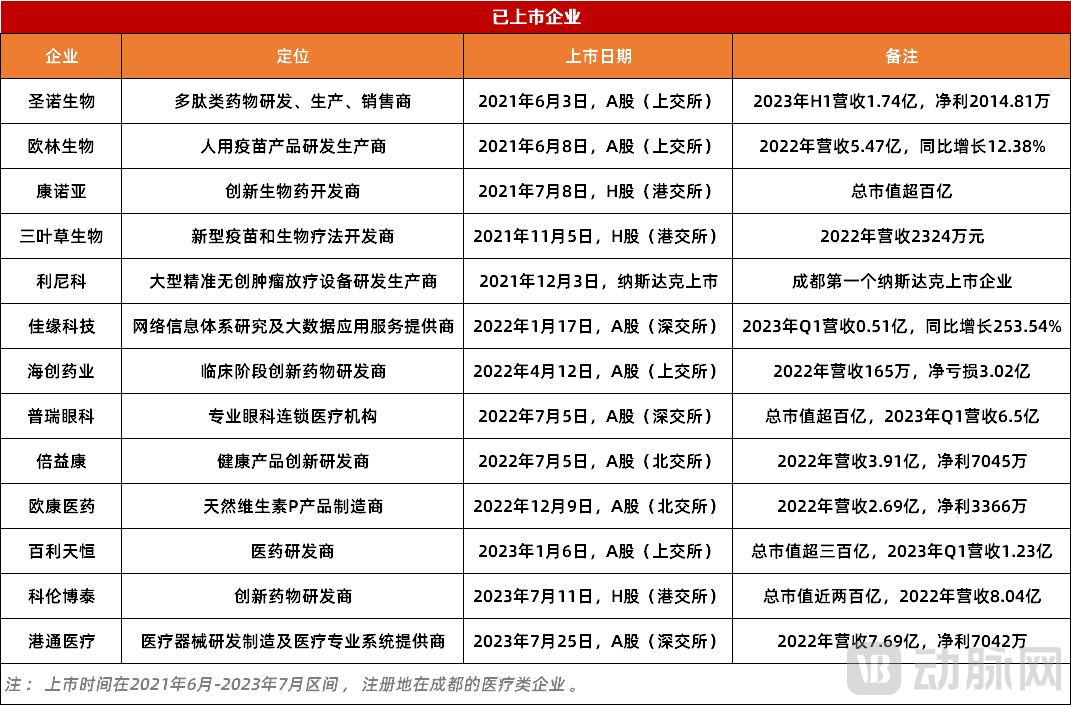 Figure 2. Status of Listed Enterprises in Chengdu's Pharmaceutical Sector from June 2021 to July 2023 (Data Source: VCBeat)
In addition, in the secondary market, Chengdu's development momentum is also quite rapid. According to publicly available data, three pharmaceutical companies in Chengdu have successfully gone public this year, respectively.Baili Tianheng、Kelun BiotechAndGangtong MedicalIf we extend the timeline, Chengdu has gained 13 listed pharmaceutical companies in the past two years, with a total market value exceeding 200 billion.
This is not easy. On the one hand, the capital market has been in a winter period recently, and the investment pace of many institutions has obviously slowed down; on the other hand, compared with Beijing, Shanghai, Guangzhou, Shenzhen, and Suzhou, the capital resources in Chengdu are not abundant. Therefore, the rapid development against the trend in a short period of time naturally cannot be separated from Chengdu's significant investment in the capital market in recent years.
In March 2022, Chengdu High-tech Zone's 10 billion yuan Angel Mother Fund began recruiting GPs, and immediately attracted a large number of top-tier institutions to come to Chengdu for exchanges after the application was launched. Eventually, Chengdu High-tech Zone and...Innovation Works, Legend Capital, Plum Ventures, K2 Capital, Pine Capital, Amiba Capital, CITIC Trust, Daoyuan Capital, Yuan BioVenturesNine partner institutions have signed agreements collectively. The initial fund size is approximately 4 billion yuan and will focus on investing in the three leading industries, mainly pharmaceuticals. In addition, Chengdu High-Tech Zone will also leverage social capital through government investment over the next five years.Launch a total of 300 billion yuan in industrial funds, of which at least 20% will focus on the biopharmaceutical field.。
In addition to attracting more first-tier capital to invest in Chengdu, the city has been vigorously promoting the guiding role of local state-owned capital in the pharmaceutical industry in recent years. According to statistics, among the 22 financings completed in the pharmaceutical field this year, Chengdu's local state-owned capital directly participated in as many as 11 cases. Among these, one was established in 2019.Chengdu Biological City Equity Investment FundThe most impressive performance has been seen this year alone, with successful investments in eight pharmaceutical companies, and a large number of potential targets are still being approached recently.
Chengdu Gedengte Technology Co., Ltd., a developer of dental instruments, is one of the invested companies in BioCity. According to the founding team, the company's acquisition of BioCity's investment was somewhat accidental. Initially, they sought space in BioCity to meet the needs of production expansion. During the project presentation process, they came into contact with BioCity’s investment team. After several rounds of intensive development discussions, both parties successfully reached an agreement. The efficiency and professionalism demonstrated throughout the process left a deep impression on the founding team of Gedengte.
After Missing 15 Years, Can Chengdu "Rise Up" This Time?
The development of Chengdu's pharmaceutical industry in the past two years has been evident to all and well-documented, but Chengdu's layout in the pharmaceutical industry is not just a recent two-year effort.As early as the beginning of the 21st century, Chengdu had already taken the lead, and for a long time, the development speed of Chengdu's pharmaceutical industry was significantly faster than that of Suzhou.。
Jiang Bowen, Executive Director of Hongke Fund under Sichuan Development, also confirmed this point to VCBeat. He commented, "Although Chengdu is now benchmarking against Suzhou, at least before 2010, Chengdu was ahead of Suzhou in the development of the pharmaceuticals industry. A major reason why Suzhou was able to rise rapidly afterward is due to the boost from state-owned capital represented by Oriza Holdings." On the other hand, in Chengdu, since the IT industry was flourishing at that time and pharmaceuticals were not receiving much attention from the capital market, state-owned capital in Chengdu focused more on the IT sector, which consequently slowed down the development of the pharmaceuticals industry.
But Chengdu does not need to feel regretful for this, as this marks a new departure in the pharmaceuticals industry.Chengdu Still Has a Lot of Confidence。
For example, in the capital market,Chengdu is now mainly promoting the parallel development of local state-owned capital and industrial capital.Specifically, on the local state-owned assets front, Chengdu has rapidly established a number of pharmaceutical industry special funds in recent years, increasing both focus and investment. For example, according to its head, Sichuan Development officially established the Sichuan Biomedical Industry Group at the end of 2021, with the aim of focusing on investment in the pharmaceutical field.
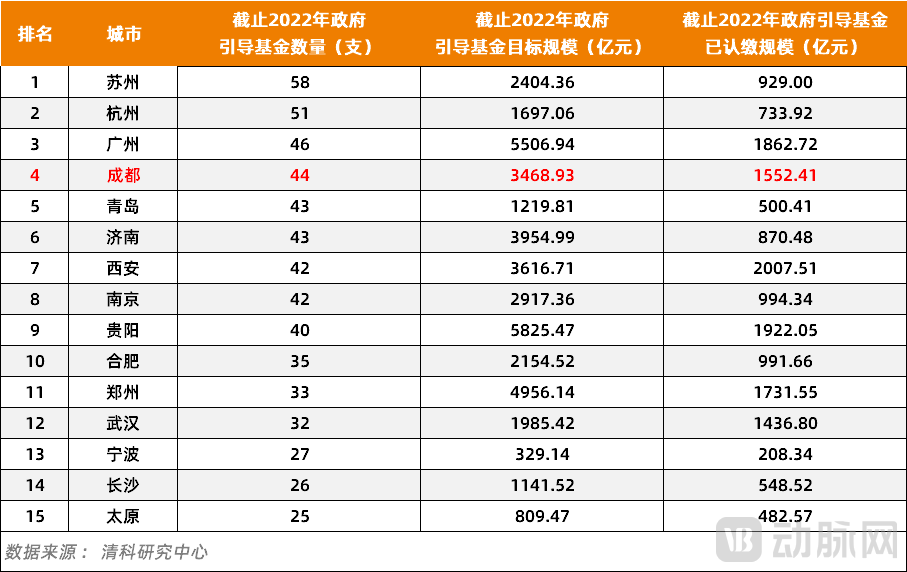
Figure 3. Top 15 Government-Guided Funds by Quantity in 2022 (Data Source: Zero2IPO Research)
But state-owned capital alone is not enough; the gathering of a group of industrial capital is equally crucial. Earlier this year, at the "2023 China Industrial Fund Ecosystem Conference" held in Chengdu,As the key industrial investment platform built by Chengdu High-tech Zone, Ceyuan Capital held a centralized signing ceremony with 20 partner institutions.. In addition, in terms of "performance," according to incomplete statistics from the VCBeat database,In the past two years, more than 50 top-tier capital firms have directly participated in the investment of pharmaceutical projects in Chengdu.Among them, Hillhouse, Sequoia, Matrix, Legend Capital, Northern Light, Boyuan, and IDG are relatively active, each participating in at least three or more investments.
Chengdu Gedengte Technology Co., Ltd. founder Qiao Xiangchen has deep feelings about this. He stated that although they have not been in Chengdu Biological City Equity Investment Fund for long, at various roadshows or related investment and financing conferences, he always sees the presence of many top-tier investment institutions. Moreover, a large number of leading capital firms are currently relocating their headquarters to Chengdu or establishing subsidiaries in the city.
Outside the active capital market,Chengdu's second-largest confidence comes from its accumulated R&D resources in the pharmaceutical field.It is reported that there are many universities and scientific research institutes related to the pharmaceutical field in Chengdu. Among them, Sichuan University, Chengdu University of Traditional Chinese Medicine, Southwest Jiaotong University, and University of Electronic Science and Technology of China all have disciplines related to biomedicine. In addition, Chengdu also has 64 biomedical research institutions, more than 20 national key laboratories, engineering research centers, and enterprise technology centers for biomedicine. Of course, there are also a group of top-tier hospitals led by West China Hospital.
The rich resources in biological scientific research not only provide technological and talent support for Chengdu's pharmaceutical industry but also establish itsPrioritize the development direction mainly focused on "medicine"According to statistics from VCBeat, among Chengdu-based pharmaceutical companies that have completed financing this year, pharmaceutical enterprises account for 93%. Additionally, the secondary market shows a similar trend, with 9 out of 13 pharmaceutical companies that have gone public in the past two years being pharmaceutical enterprises.
In this regard, a professional from a state-owned enterprise in Chengdu explained to VCBeat, "The reason Chengdu prioritizes the pharmaceutical sector is partly due to its long-term vision for industrial development. After all, pharmaceuticals have higher technological barriers and correspondingly greater industrial value. Additionally, Chengdu aims to build a complete industrial chain by investing in cutting-edge technologies while simultaneously establishing upstream and downstream operations within the existing industry. Therefore, from the current perspective...Chengdu has several listed companies in the biopharmaceutical field as support, making it easier to form an industrial closed loop.。”
But this does not mean that Chengdu only focuses on pharmaceuticals. In fact, Chengdu currently has significant investments in areas such as medical devices, Internet healthcare, consumer healthcare, and digital therapeutics. However, due to the relatively small scale of relevant talent and the limited number of local listed companies and leading enterprises, the upstream and downstream industrial chain support is still in the development stage.
The last advantage of Chengdu's pharmaceutical industry is the full support of the Chengdu government.In April 2022, Chengdu released its first special development plan for the bioeconomy ——"The 14th Five-Year Plan for Bioeconomic Development in Chengdu",明确提出要着力打造生物医药千亿级产业集群。而沿着这一目标,与之相关的产业扶持政策也都在近一两年相继发布。
But this is only one of the government's efforts. In terms of the cultivation and introduction of pharmaceutical talents, the Chengdu government has also made significant moves. Specifically, in the aspect of talent cultivation, Chengdu currently has 64 higher education institutions, and the retention rate of local students has significantly increased in recent years. In terms of talent introduction, Chengdu, through the "Ming Mountain Action" plan, has attracted a group of top biopharmaceutical talents from around the world to develop in Chengdu. It is reported that the third batch of requirements for this talent plan has been released, and an additional 30 billion yuan will be invested in the next five years.
Besides,The targeted and flexible changes by the Chengdu government have also provided more support for the development of the pharmaceutical industry.According to insiders, on the basis of substantial investment, the Chengdu government has added many "value-added factors," such as a more professional team, more open policies, more efficient execution, and a more market-oriented industrial layout. These are all essential elements for the rapid development of the pharmaceuticals industry.
Currently, Chengdu's biopharmaceutical industry is mainly distributed inChengdu Tianfu International Bio City、Chengdu Medical CityandTianfu Traditional Chinese Medicine CityThree places, among which BioCity is the most active carrier recently,However, two years ago, there were hardly any people in the biocity, a stark contrast to the current bustling scene.. But now, a large number of pharmaceutical companies have settled in BioCity, and its recognition in the industry is also increasing. According to the founding team of Gedengte,It is not easy to acquire land in BioCity nowadays, with competition being almost as fierce as vying for a position.From this, we also see more possibilities for Chengdu's pharmaceutical industry.
"How does the 'Chengdu Model' radiate across China?"
In recent years, regions across China have been vying to establish themselves in the pharmaceuticals industry, especially those focused onChengdu, Wuhan, Hefei, Changsha, ChongqingIn a group of new first-tier cities represented by [City], the trend is more pronounced, with investment efforts and development speeds rarely seen in the past few years.
Of course, there are reasons for this. From the perspective of local regions themselves, the three years of the pandemic have placed enormous economic pressure on all areas.Therefore, at present, the demand for economic growth is particularly strong in China, and there is an urgent need to find a new breakthrough. The pharmaceutical industry happens to possess such characteristics.On the one hand, after 2020, China's pharmaceutical industry has entered a new growth cycle, with huge market potential; on the other hand, first-tier cities represented by Beijing, Shanghai, Guangzhou, Shenzhen, and Suzhou have reached a certain height, and at this stage, the pharmaceutical market is gradually becoming saturated. The industry as a whole is rapidly shifting towards inland cities.
Therefore,For this batch of new first-tier cities, the next decade will undoubtedly be the golden age for the vigorous development of the pharmaceuticals industry.. But how to develop has become a pressing issue for regions across China, as these areas generally lack sufficient medical resources. They neither have a batch of listed companies nor a mature capital market for support. Additionally, there is a significant difference in the understanding of the pharmaceuticals industry.
As a new first-tier city that has developed relatively quickly in the pharmaceuticals industry, Chengdu may offer some insights for "latecomers."
First, it is necessary to rely on advantageous industrial chains, invest in, and cultivate "chain leader" enterprises.A relevant official from the Medical and Health Industry Department of Chengdu Municipal Bureau of Economy and Information Technology and the New Economy Commission stated that in the biopharmaceutical field, Chengdu's promotion of industrial development does not involve doing everything. Instead, it adheres to a principle of focusing on local advantageous industries while identifying and prioritizing key industrial tracks that align with the evolution trends of cutting-edge technologies.
The advantage of doing so is that it does not require starting from scratch, and it can also reduce industrial risks to a certain extent. Additionally, it allows for the integration of resources to maximize regional benefits.
Secondly, it is essential to leverage the industrial guidance role of local state-owned assets, adhering to the strategy of "investing early, investing small, investing long-term, and investing in technology."The role of local state-owned capital in the development of local industries goes without saying. Taking Chengdu as an example, the past development of the IT industry was inseparable from the strong support of local state-owned capital in Chengdu. Returning to the pharmaceutical field, the most typical case is Suzhou. It is precisely because of a group of local state-owned enterprises represented by Yuanhe Holdings that the pharmaceutical industry in Suzhou has been able to rise rapidly, giving birth to world-class biopharmaceutical industrial parks such as BioBAY.
But how should local state-owned assets play an industrial guiding role?
In the past, regions preferred mid-to-late stage projects with higher certainty. However, at this stage, not only are such projects more difficult to attract, but their overall rate of return is also gradually decreasing. Therefore,Focusing on early-stage pharmaceutical projects is becoming a major trend. Although it may face certain growth risks, it has a stronger role in promoting local industrial development.,After all, from the perspective of enterprises, their loyalty tends to be higher. On the other hand, for investors, as long as one or two early projects succeed, the overall return on investment of the fund will be secured.
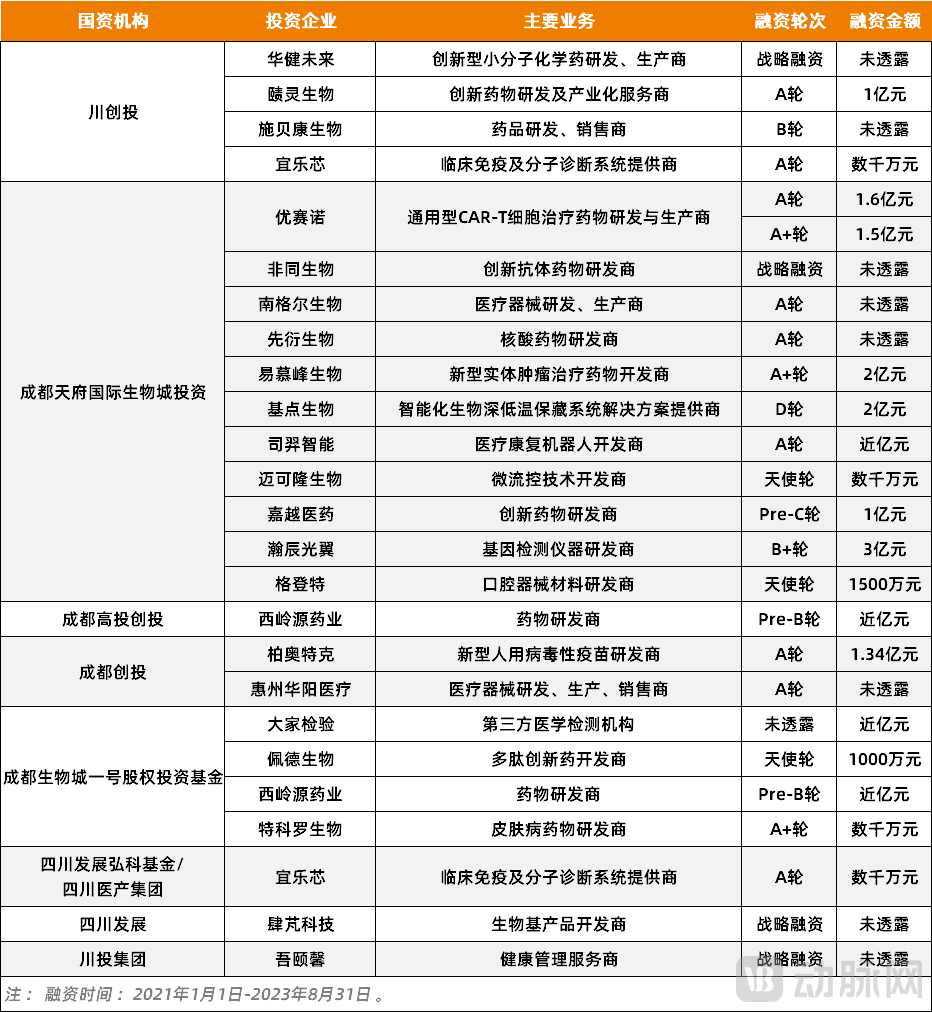
Figure 4. Investment Situation of Local State-owned Capital in Chengdu from 2021 to August 2023 (Data Source: VCBeat)
According to incomplete statistics from the VCBeat database, in the nearly one-year investment cases of Chengdu Biological City, there were 9 financings before Series A, accounting for 75%. Additionally,Chuan Venture Capital, Sichuan Development, Chengdu Biological City Equity Investment Fund, Chengdu High-Tech Venture CapitalA group of state-owned capital institutions have also recently focused more attention on early-stage pharmaceutical projects.
Finally, it is important to respect market rules and maintain sufficient market openness.Specifically, handing over the choice to the market not only maximizes the innovation potential of the local pharmaceutical industry but also tests the real value of projects in the market, which is beneficial for their subsequent industrial progress.
Taking specific cases as examples, in order to further attract well-known investment institutions and give full play to their market effects, Chengdu High-tech Zone proposed to increase the incentive for cooperation partners.Up to 80% of the proceeds can be transferred to the cooperative fund management institution and other investors.In addition, the Angel Mother Fund implements a concessionary approach for the management institutions of its sub-funds or other investors by adopting an overall "return of principal first, then share profits" and a project-based "distribute upon exit" model. This means that both enterprises and investors have more autonomy in moving forward.
Currently, on the development map of China's local pharmaceuticals industry, there are already the "Shenzhen Model" and the "Suzhou Model," and in recent years, the "Hefei Model," which has emerged as highly competitive. Therefore, for Chengdu, the question that needs to be answered now is already very clear, namely:Can Chengdu blaze a "Chengdu Model" trail in the pharmaceuticals industry??
1. "Chengdu, the Internet Giants' Target" — Ginkgo Technology;
2. "Chengdu Bids Farewell to Comfort" —— China Business Strategy;
3. "Chengdu Has Changed: Once Popular Games Are Now Ignored, Hard Tech and Healthcare Investments Are in Vogue" — IT Juzi.