Disclaimer: Due to limited proficiency, errors are inevitable, and some information may not be the latest. Feel free to point them out in the comments. This article is only for the introduction of drugs related to healthcare and is not a recommendation of treatment plans (if involved); it does not constitute any investment advice.
On September 8, Alexion, AstraZeneca Rare DiseaseAlexion and aVerge Genomics, a biotechnology company that leverages artificial intelligence to develop therapies for neurological disorders, has reached a four-year collaboration to jointly research and develop treatments targeting neurodegenerative and neuromuscular diseases.Novel Drug Targets。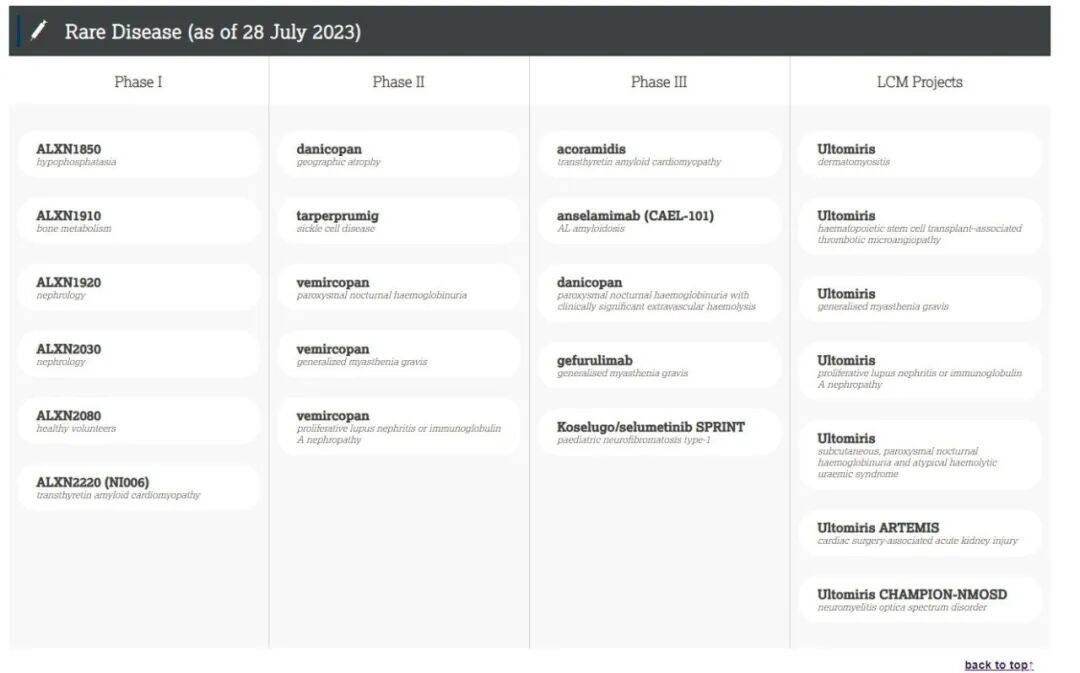
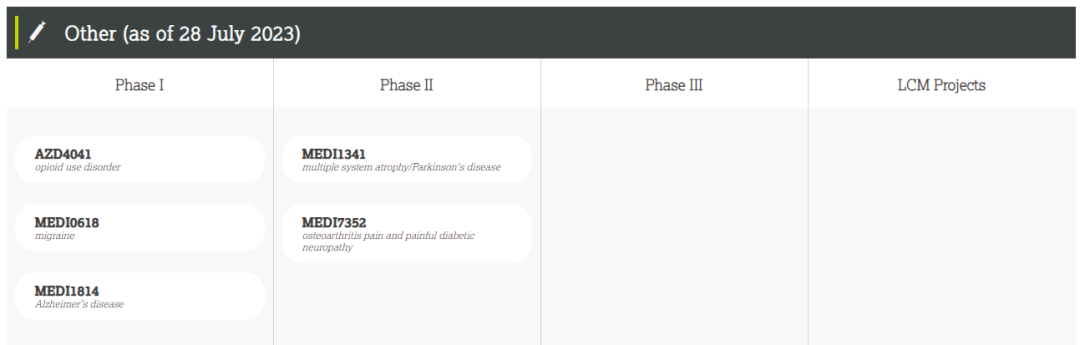
AstraZeneca Partial R&D Pipeline
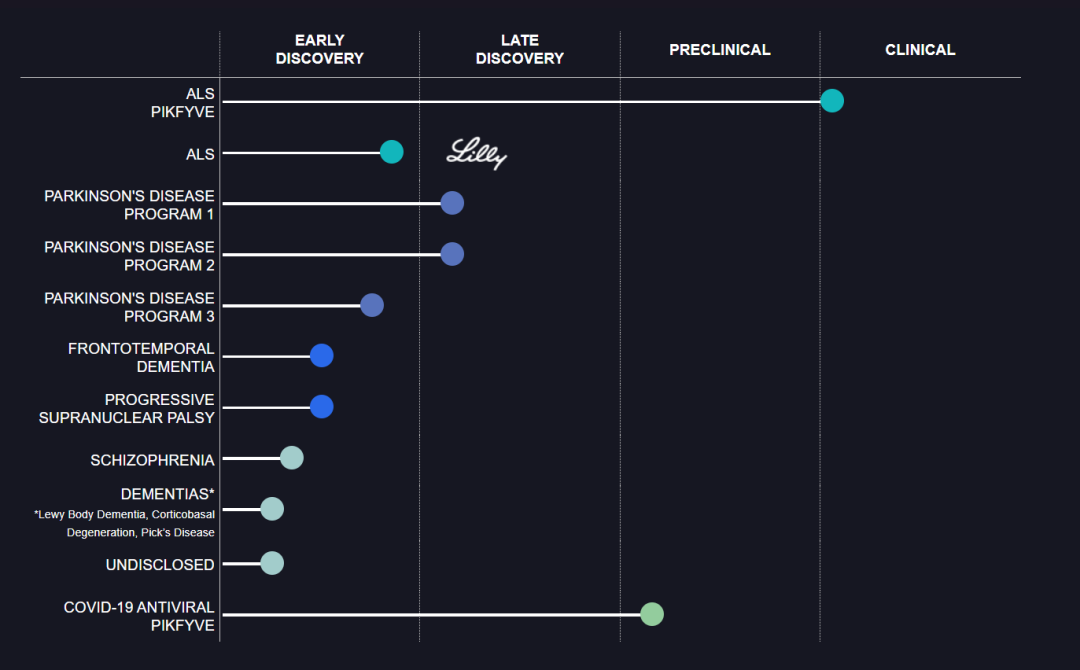
As part of the agreement,Verge Genomics to Receive Up to $42 Million in Prepayments, Equity, and Potential Milestone Payments of Up to $840 Million, as well as global sales royalties for any products arising from the collaboration. AndAstraZeneca will holdVerge Genomics' equity.This collaboration will be achieved through the use of Verge Genomics' AI Technology PlatformThe ConVERGE™ platform is used to achieve the goal. This technology leverages artificial intelligence and genomic data from human tissue samples to predict which drug targets are most likely to succeed in clinical trials. The ConVERGE™ platform, as an end-to-end system, integrates technological innovations from discovery to translation to streamline the drug development process. By utilizing AI "unbiased" algorithms, therapeutic targets for complex diseases can be identified. The platform is a closed-loop learning system that combines industry-leading human genomics with advanced computational tools to predict new drugs with higher clinical success rates. The ConVERGE™ platform creates a virtuous cycle of learning and a novel, proprietary pipeline of compounds for clinical development by integrating human-centered biology and chemistry.Verge Genomics R&D PipelineArtificial intelligence has already attracted the interest of many pharmaceutical manufacturers, who hope to use it to discover new drug targets. Instead of following the traditional new drug development approach—using animal or cell models—Verge Genomics employs AI methods to analyze genomic data in human tissue samples. This technology has previously attracted collaborations with large pharmaceutical companies; in 2021, Eli Lilly partnered with them.VergeCollaborate to find and develop treatments for Amyotrophic Lateral Sclerosis (ALS).Verge GenomicsA drug for treating ALS called "VRG50635" is currently under development.VRG50635 is aTargeting PIKfyveA small molecule inhibitor that restores degenerated neurons by inhibiting PIKfyve.PIKfyve isVerge Genomics AI Technology PlatformConVERGE™Novel Therapeutic Targets for Amyotrophic Lateral Sclerosis Discovered.In 2022,VRG50635Entering the human trial phase,Phase 1 TrialReleased in June this year, showing positive results in terms of safety and tolerability.Verge Genomics(Verge Genomics) was established in 2015,A clinical-stage, technology-driven biotechnology company that is pioneering the use of AI and human data to transform the current state of drug discovery. Verge Genomics has establishedConVERGE™Platform, its proprietary end-to-end, AI-driven technology platform, can effectively accelerate drug discovery and development with a higher probability of success.The company has taken the lead in developing cutting-edge treatment programs for amyotrophic lateral sclerosis (ALS) and Parkinson's disease, and has established partnerships with two pharmaceutical companies. Meanwhile,Verge Genomics Has invested a significant amount of effort into creating its proprietary dataset. By establishing partnerships with more than a dozen top academic organizations and government agencies, the company has built the largest and most comprehensiveALS and Parkinson's DiseasePatient Genome Database。https://www.vergegenomics.com/news-blog/verge-genomics-announces-artificial-intelligence-enabled-drug-discovery-collaboration-with-alexion-for-rare-neurodegenerative-and-neuromuscular-diseases