

BMS and Seagen Enter the Race: Can Antibody-Conjugated Degraders Become the Next Frontier in Targeted Therapies?

Madrigal Pharmaceuticals
Developer of Fatty Liver Disease Treatment Drugs

Dizal
Innovative Biopharmaceutical R&D Developer
Kelun-Biotech
Innovative Drug Developer

Haisco
New Drug Research and Development, Production, and Sales

AbbVie
Innovative Drug Developer

MSD
Pharmaceutical R&D and Manufacturer
Welcome to follow Asymchem Pharma News
On September 14, 2023, Bristol-Myers Squibb ("BMS") held its 2023 R&D Day event, systematically introducing the progress of its R&D pipeline and the layout of its technology platforms. The company terminated several new drug programs, including TIGIT antibody, CD20/CD47 bispecific antibody, RIPK1 inhibitor, GSPT1 molecular glue, etc., while announcing plans to establish a technology platform covering various drug modalities, including allosteric inhibitors, pro-antibodies, immune cell-recruiting bispecific antibodies, bispecific antibodies, ADCs, AAV and lentiviral gene therapies, molecular glue, LDD, antibody-conjugated molecular glue, and cell therapies. Notably, the company will develop a novel drug called antibody-conjugated molecular glue by combining its existing CELMoD molecular glue with ADC drugs, aiming to improve efficacy and safety in hematological and solid tumors.
Coincidentally, last week Seagen entered into a multi-year, multi-target strategic collaboration agreement with Nurix to jointly develop Degrader-Antibody Conjugates (DAC) for cancer treatment. The two companies are combining two powerful cancer-targeting technologies: Antibody-Drug Conjugates (ADC) and Targeted Protein Degradation (TPD), aiming to create drugs with novel mechanisms of action to enhance product specificity and anticancer activity. Under the terms of the agreement, Nurix will receive a $60 million upfront payment and is eligible for up to approximately $3.4 billion in research, development, regulatory, and commercial milestone payments across multiple programs. Additionally, Nurix will be entitled to tiered royalties ranging from mid-single-digit to low-double-digit percentages on future sales and retains the option for profit-sharing and co-promotion rights in the U.S. for two collaboration products.
One
About CELMoD Molecular Glue
Cereblon (CRBN) is a ubiquitin ligase E3 substrate receptor and the target of immunomodulatory drugs such as thalidomide, pomalidomide, and lenalidomide. It is a key molecule in protein degradation research. CELMoD compounds are modulators of cereblon conformation that can attack cancer in a novel way by binding to cereblon regulatory proteins, thereby triggering the degradation of critical cancer-driving proteins.
BMS has developed multiple CELMoD molecular glue compounds based on the Protein Homeostasis technology platform, including CC-220 (iberdomide), CC-90009 (eragidomide), CC-92480 (mezigdomide), etc., for the treatment of multiple myeloma, acute myeloid leukemia, and more.
BMS's Layout in the Cereblon Target
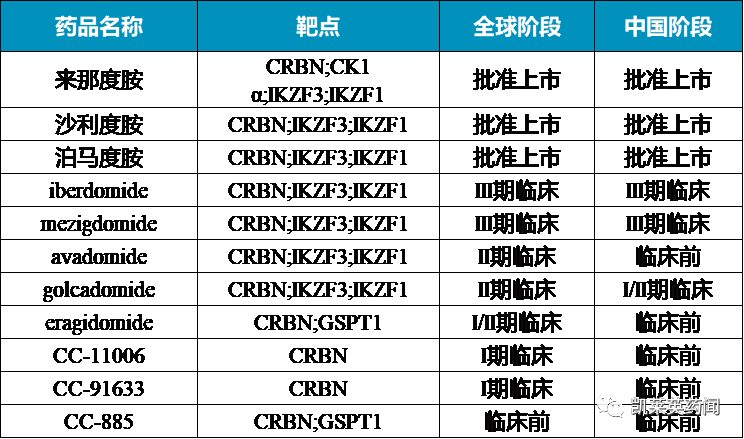
Iberdomide:It is a protein degradation therapy targeting Ikaros/Aiolos (IKZF1/3), belonging to molecular glue further optimized from thalidomide-based molecules; the drug promotes the degradation of IKZF1/3 proteins, not only enhancing tumor "suicide" activity but also stimulating the proliferation of effector immune cells. In clinical trials treating multiple myeloma patients who have undergone various prior treatments, iberdomide, in combination with other standard multiple myeloma treatment drugs, has already demonstrated favorable anticancer activity.
According to data from a phase 1/2 clinical study presented at the 2023 ASCO, the trial evaluated the safety and efficacy of iberdomide in combination with the second-generation proteasome inhibitor carfilzomib and dexamethasone for the treatment of newly diagnosed transplant-eligible MM patients. Preliminary results showed that the combination regimen was relatively safe, with the only reported grade 3 treatment-related adverse events (TEAEs) being neutropenia.
Eragidomide :Optimized from CC-885, it is also the first clinical molecular glue candidate drug obtained through rational design, which can maximize the degradation of the G1 to S phase transition 1 gene (GSPT1) and minimize the degradation of Ikaros, Aiolos, and other new substrates related to toxicity. In April 2021, the journal *Blood* reported that CC-90009 can also kill acute myeloid leukemia (AML) blasts and leukemia stem cells.
Mezigdomide :It is a novel CELMoD designed to rapidly and maximally degrade Ikaros and Aiolos. In vitro studies have shown that CC-92480 exhibits enhanced anti-proliferative and tumoricidal activity in multiple myeloma (MM) cell lines, including cells resistant to lenalidomide and pomalidomide, while also demonstrating robust immune-stimulatory activity.
Two
About Antibody-Conjugated Degraders
Building on the continuous clinical and commercial success of ADCs with cytotoxicity and payloads, efforts are being explored to conjugate them with targeted protein degraders to improve their DMPK properties.
In targeted protein degraders, PROTACs are composed of an E3 ligase ligand and a target protein ligand, connected via a chemical linker, which then induces the proximity of the two proteins in the form of a ternary complex; molecular glues lack a linker and can bind to one of the two proteins but not the other. In terms of TPD, molecular glues have significant advantages over PROTACs because they adhere more closely to conventional small molecule design principles: compared to PROTACs, molecular glues are much smaller and more likely to comply with Lipinski’s Rule of Five. Additionally, molecular glues may also exhibit simpler structure-activity relationships (SAR) than PROTACs, making them easier to synthesize.
The structures of ADC and DAC are similar, mainly composed of monoclonal antibodies, attachment sites, linkers, and drugs. However, ADCs typically use monofunctional small molecules as payloads, while DACs use PROTACs.
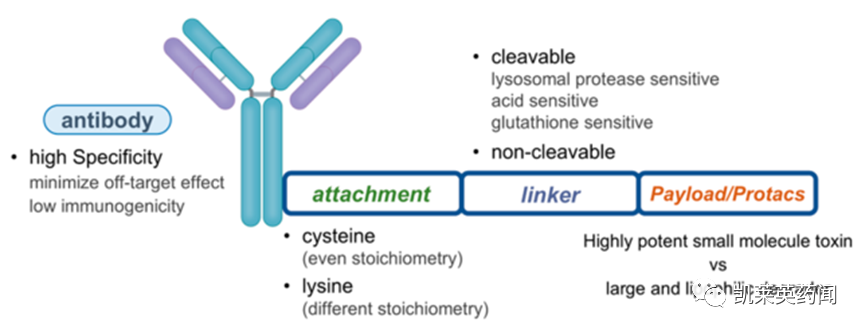
Although some strategies used in ADCs can be applied to prepare biologically active DACs, the construction of DACs sometimes must overcome additional challenges. Unlike the broad cytotoxicity of ADC payloads, the degrader payloads in DACs typically exhibit more targeted biological activity specific to certain cancers. Therefore, the antigens selected for DACs must not only meet the internalization and trafficking criteria required for ADCs but should also be highly expressed on tumors, tissues, or cells sensitive to the biological pathways targeted by the degrader. Since degrader payloads are generally less toxic than ADC payloads, a higher drug load may be required to generate functional antibody conjugates, often with a DAR value greater than 4.
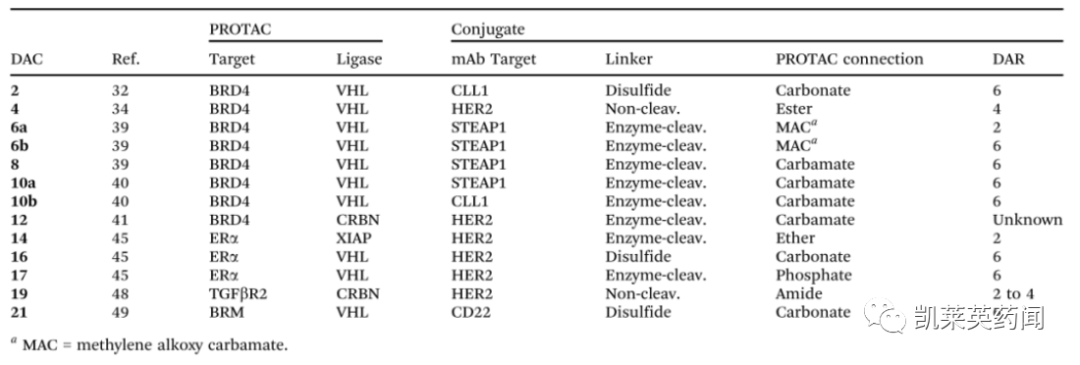
An example of a DAC published in a peer-reviewed article in early 2020 demonstrated that a highly potent VHL-based degrader targeting bromodomain protein 4 (BRD4) (GNE-987) was linked to an anti-CLL1 antibody via a novel cleavable disulfide-containing linker, with a DAR value of 6. In single-dose intravenous administration in HL-60 and EOL-1 acute myeloid leukemia (AML) xenograft models, the DAC exhibited robust, dose-dependent in vivo antitumor effects. These results indicate that DACs can overcome the undesirable PK properties of PROTACs, achieving acceptable PROTAC lysosomal stability and appropriate antigen-targeting capability.
1、DAC PROTAC
According to existing data, DAC has several potential advantages over PROTAC molecules: (1) It can deliver degraders with poor physicochemical properties or DMPK characteristics in vivo; (2) It avoids complex formulations that are usually necessary for PROTACs to achieve activity in vivo exposure; (3) It targets the PROTAC molecule of interest to specific tumors or tissues.
Secondly, since DAC PROTACs typically have larger or more lipophilic payloads than ADCs, it is necessary to consider whether structural modifications to PROTAC are required to introduce reactive sites (which might alter the physiological activity of PROTAC) or to utilize existing functional groups in PROTAC (such as hydroxyl or phenolic hydroxyl groups) while developing new conjugation techniques. The same considerations apply to the development of non-cleavable linkers, and the linker remaining attached to the PROTAC molecule after lysosomal degradation must not interfere with its biological activity.
In addition, other issues that need to be addressed in DAC development include: (1) PROTAC stability in lysosomes; (2) PROTAC lysosomal escape function; (3) PROTAC bystander effect.
2. DAC Molecular Glue
Orum Therapeutics is a company focused on small-molecule degraders, defining antibody-degrader conjugates as AnDC (Antibody neoDegrader Conjugate). The AnDC platform is built on novel targeted protein degraders (TPD), incorporating the precise tumor cell delivery mechanism of antibodies to generate innovative, first-in-class (FIC) cell-specific TPDs for cancer treatment. The company has developed new molecular glue degrader payloads that specifically degrade intracellular target proteins within cancer cells through the E3 ubiquitin ligase pathway. NeoDegrader is conjugated with antibodies, aiming for specific delivery to cancer cells to degrade intracellular target proteins, leading to tumor cell death.
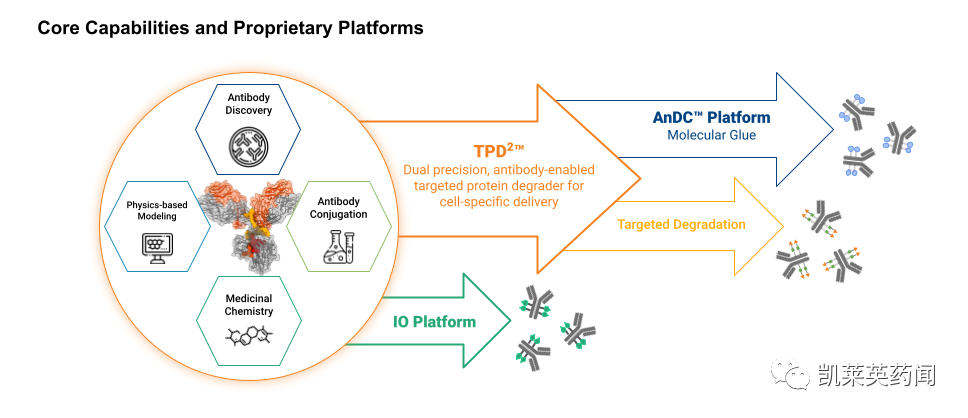
Orum Builds TPD² Platform Based on Core Technologies such as Antibody Discovery, Antibody Bioconjugation, Medicinal Chemistry, and Physics-Based Modeling. The company claims that TPD² offers a unique and differentiated mechanism of action (MOA) for payloads, which can overcome the limitations of existing ADCs. For example, ADCs need to be internalized by cell surface receptors, thus being restricted by cell surface targets and their expression levels, thereby limiting certain indications. TPD² drugs are not constrained by target expression levels because the protein degrader payloads have a catalytic MOA and can be reused within cells.
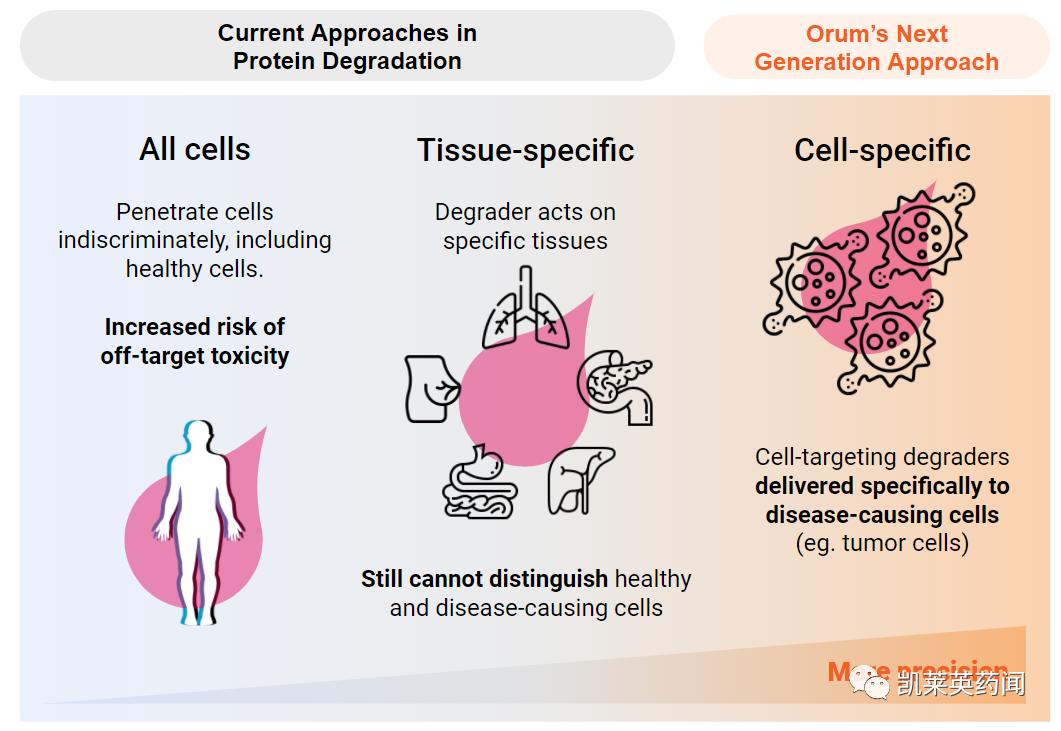
AnDC products are expected to overcome the poor cell membrane penetration issues of certain PROTAC molecules. After all, molecular glues are more likely than PROTACs to possess the ability to penetrate cell membranes.
Three
Partial Layout of Antibody-Conjugated Degraders in China and Overseas
The aforementioned Orum has developed an HER2/HER3-specific dual-targeting AnDC using a GSPT1 degrader on the TPD2 platform, intended for the treatment of breast cancer with HER2 expression. At the 2022 AACR, the company presented preclinical data for ORM-5029, which may also be the first preclinical data in the field of Antibody Degrader Conjugates (AnDC).Results:
1) In HER2+ cell lines, ORM-5029 demonstrated a 10- to 1000-fold potency advantage;
2) ORM-5029 demonstrated robust efficacy at doses as low as 3 mg/kg in several in vivo xenograft models;
3) In the BT474 xenograft model, after a single dose treatment, the activity of ORM-5029 was superior to T-DM1 and comparable to T-dxd.
4) In the in vitro activity test of HER2 cells with different expression levels, ORM-5029 also demonstrated potent cytotoxic activity, showing superior IC50 values compared to CC-885 (a GSPT1 degrader) and especially T-Dxd.
5) In the HER2-low-expressing human breast cancer cell model (MDA-MB-453), a single dose of ORM-5029 demonstrated tumor suppressive activity comparable to that of T-Dxd.
6) In the HCC1569 breast cancer model, a single dose of ORM-5029 at 3mg/kg also demonstrated potent and sustained potential in inhibiting tumor growth, with GSPT1 showing a significant dose-dependent reduction.
Currently, there are many other reported cases of using novel linkers, connection methods, and mAbs targeting other antigens to construct the DAC. Compared with most known cytotoxic ADCs (DAR=2 to 4), these DACs mostly utilize higher payloads (DAR value of 6).
References
1. Company Official Website
2. Official Accounts: Six-Day Research, PharmaCube, PharmSnap, BiG Biotech Innovation Community
3、Dragovich P S. Degrader-antibody conjugates[J]. Chemical Society Reviews, 2022, 51(10): 3886-3897.





"Under Observation"Click once