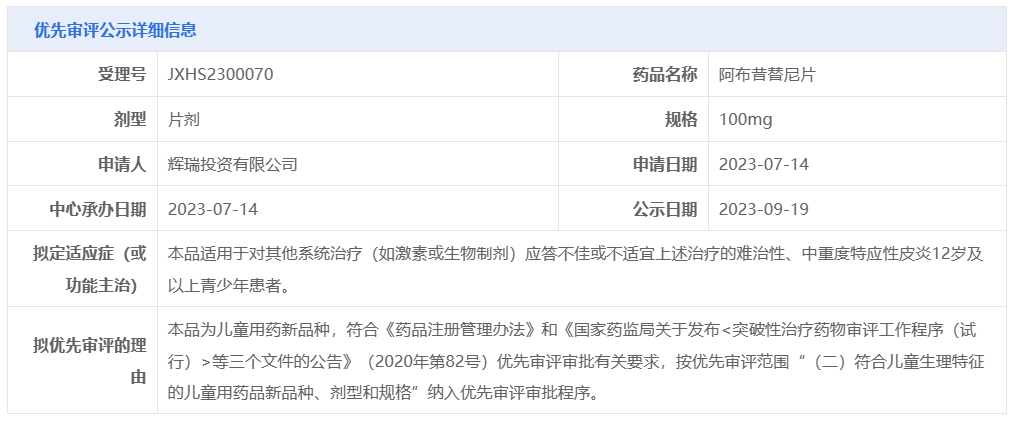
On September 19, the CDE website showed that a new indication for Pfizer's JAK1 inhibitor abrocitinib is proposed to be included in the priority review, applicable to refractory, moderate-to-severe atopic dermatitis patients aged 12 years and above who have had an inadequate response or are unsuitable for other systemic treatments (such as hormones or biologics).
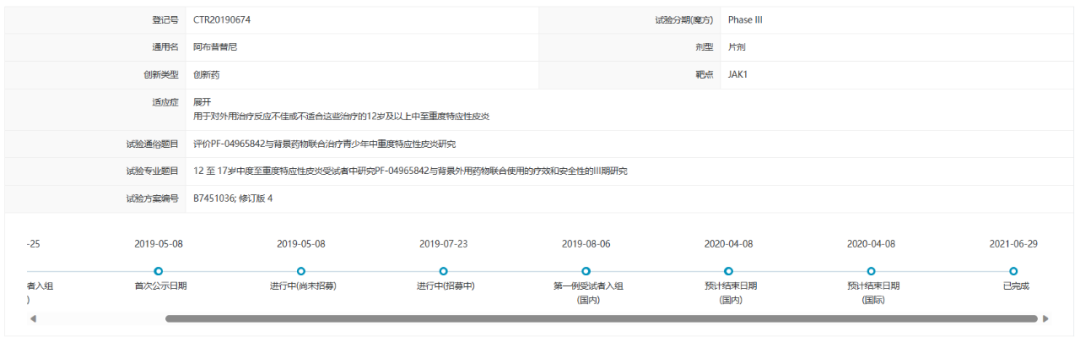
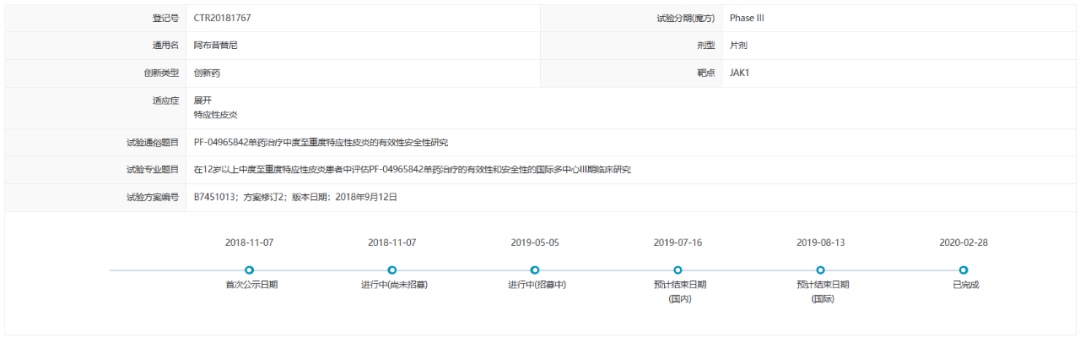
Atopic Dermatitis (Commonly Known as Eczema) is the Most Common Type of Chronic Inflammatory Skin DiseaseAbrocitinib is a JAK1 inhibitor independently developed by Pfizer. The product was approved by the FDA and NMPA in January and April 2022, respectively, for the treatment of adult patients with moderate to severe atopic dermatitis.According to the PharmaCube database, a Phase III clinical trial (CTR20190674) of Abrocitinib registered in China for patients aged 12 to <18 with moderate to severe atopic dermatitis was completed on June 29, 2021. The study aimed to evaluate the efficacy and safety of Abrocitinib in combination with background topical medications for treating adolescents aged 12 to <18 with moderate to severe atopic dermatitis who had an inadequate response to or were unsuitable for topical treatment.Another Phase III study (CTR20181767) registered in China, evaluating abrocitinib monotherapy in adolescent and adult patients aged 12 years and older with moderate to severe atopic dermatitis, was also completed on February 28, 2020.
In February this year, abrocitinib received FDA approval for a new extended indication to treat atopic dermatitis in adolescents (12 to <18 years old). The FDA's approval was primarily based on positive data from four Phase III studies, including the JADE TEEN study.The JADE TEEN study is a randomized, double-blind, placebo-controlled clinical trial that enrolled 287 patients. It aims to evaluate the efficacy and safety of abrocitinib (100mg or 200mg, once daily) in adolescent patients (12 to <18 years) with moderate to severe atopic dermatitis. The primary endpoints of the study are the proportion of patients achieving an Investigator's Global Assessment (IGA) score of 0/1 at week 12 and the proportion of patients achieving a 75% or greater improvement in the Eczema Area and Severity Index (EASI-75 response) at week 75.Results showed that, compared with the placebo group, a higher proportion of patients in the abrocitinib group achieved IGA 0/1 (41.6% in the 100mg group vs 46.2% in the 200mg group vs 24.5% in the placebo group; P<0.05), and a greater proportion of patients also achieved EASI-75 response (68.5% in the 100mg group vs 72.0% in the 200mg group vs 41.5% in the placebo group; P<0.05).
Copyright © 2023 PHARMCUBE. All Rights Reserved.
Welcome to forward, share, and reasonably cite. When citing, please clearly indicate the source of the article.For reprint, please leave a message to the WeChat Official Account backend or send a message, and indicate the name and ID of the official account.
Disclaimer: The information in this WeChat article is for general reference only and should not be used directly as decision-making content. PharmaCube assumes no responsibility for any loss incurred by any party due to the use of the content herein.Online Live Streaming & Offline Salon
 ↑ Long pressScan the code, Registration Activity ↑