Pfizer's JAK3 Inhibitor Ritlecitinib Receives EMA Approval for Severe Alopecia Areata with Up to 90% Hair Regrowth

Pfizer
Pharmaceutical R&D Developer
On September 19, Pfizer announced that the European Union had approved LITFULO™ (Ritlecitinib) for marketing, intended for treating severe alopecia areata in adolescents aged 12 years and older and adults.
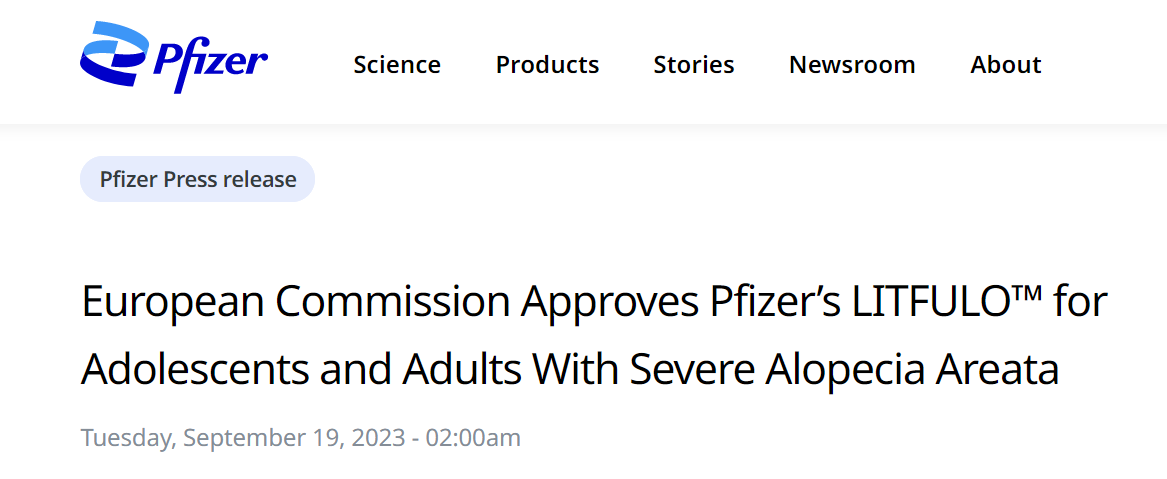
Image Source: Pfizer Official Website
FDA, EMA Approved for Marketing
LITFULO Taps into Billion-Dollar Market
According to conservative estimates by MarketDataForecast, the global hair loss market size will grow to $13.44 billion by 2026, with an average annual compound growth rate of 8.8%. The hair loss market size in China is also substantial, with Frost & Sullivan predicting that China's hair loss market will reach 41.2 billion yuan by 2026.
Alopecia areata is a hair loss condition caused by immune cell attacks on hair follicles. Relevant immune cells include T lymphocytes (especially CD8+ and NKG2D+), natural killer cells, and other inflammatory cells. It is reported that the incidence of alopecia areata in the general population is approximately 0.1% to 0.2%, of which about 7% to 10% will progress to moderate or severe alopecia areata.
Baricitinib, jointly developed by Eli Lilly and Incyte, is an oral JAK inhibitor and the first oral systemic therapy for alopecia areata approved by the FDA. In March this year, baricitinib was also officially approved for marketing in China. According to previously released study results from Eli Lilly, baricitinib can restore scalp hair coverage of over 80% in patients with severe alopecia areata.
In the current global alopecia areata market, the biggest rival to Baricitinib tablets might be Ritlecitinib. Ritlecitinib is an oral medication for alopecia areata administered once daily, with high selectivity for JAK3/TEC. Ritlecitinib was approved by the FDA for marketing in June this year for the treatment of severe alopecia areata in adolescents aged 12 years and older and adults. The EMA's approval of Ritlecitinib is based on the ALLEGRO research program, including the Phase IIb/III ALLEGRO study (NCT03732807).
This study aims to evaluate the efficacy and safety of Ritlecitinib in patients aged 12 years and above with alopecia areata, including totalis (complete scalp hair loss) and universalis (complete body hair loss). Results showed that after 24 weeks of treatment with 50mg Ritlecitinib, 13.4% of patients achieved 90% or greater scalp hair coverage (SALT≤10), compared to 1.5% in the placebo group. The study also assessed patients' self-rated health index (PGI-C), revealing that at week 24, 49.2% of patients reported "moderate" to "very much improved" alopecia conditions, versus 9.2% in the placebo group.
At the same time, Pfizer is also advancing another Phase III ALLEGRO-LT study, which aims to evaluate the safety and efficacy of Ritlecitinib in treating adult patients with alopecia areata who have a hair loss rate of 25% or more and adolescent patients aged 12 years or older with a hair loss rate of 50% or more. In China, Ritlecitinib for the treatment of alopecia areata was included in the priority review by the CDE in 2022.
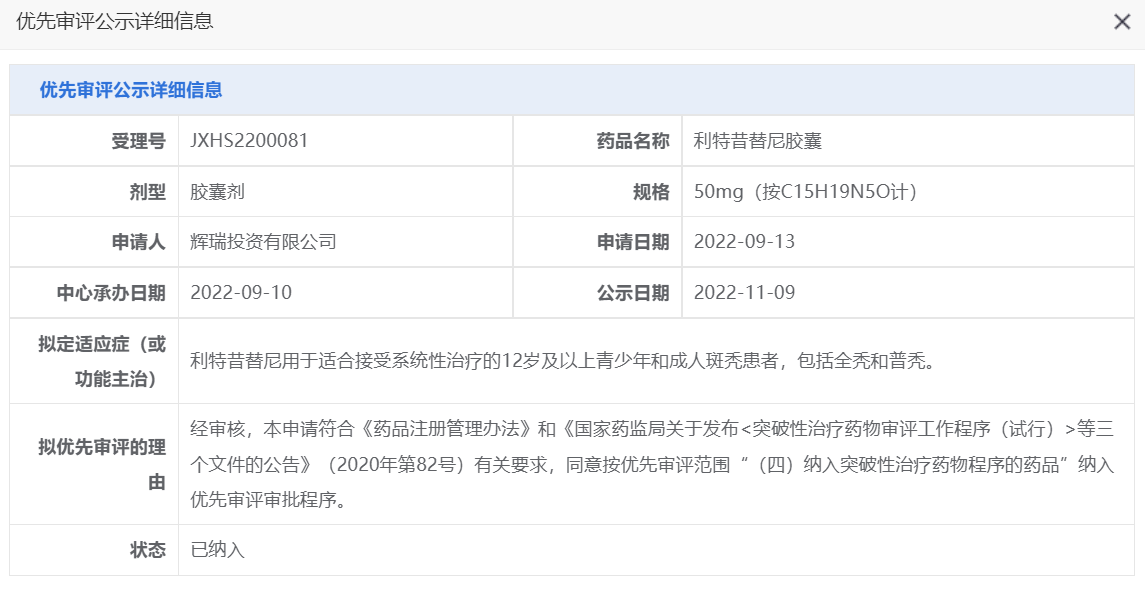
Source of the image: CDE official website
In addition to alopecia areata, Ritlecitinib is also being developed for the treatment of diseases such as vitiligo. In March this year, Ritlecitinib was included by the CDE as a breakthrough therapy for patients with non-segmental vitiligo (≥12 years old) who are suitable for systemic treatment.
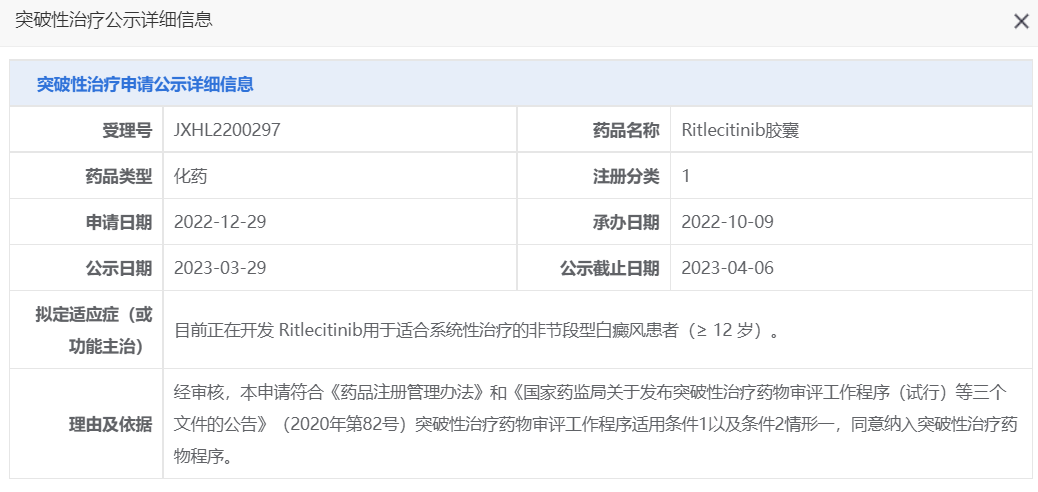
Source of the image: CDE official website
Vitiligo is a common chronic autoimmune disease, and the main treatment drugs currently used in clinical practice are topical medications, including creams, gels, and oral dosage forms, though they generally cannot cure the condition. In July 2022, Incyte/Novartis' JAK inhibitor ruxolitinib cream was approved by the FDA for the treatment of vitiligo.
Ritlecitinib is an oral capsule. Compared with the first-generation pan-JAK inhibitors, it has more advantages in reducing toxicity. In March this year, Pfizer launched a Phase III clinical study of Ritlecitinib for the treatment of non-segmental vitiligo, aiming to evaluate the efficacy, safety, and tolerability of Ritlecitinib in adult and adolescent patients with non-segmental vitiligo.
Summary
In addition to vitiligo and alopecia areata, Ritlecitinib is also undergoing clinical trials for diseases such as ulcerative colitis and Crohn's disease worldwide, which are expected to help Ritlecitinib tap into a larger market.

Editor: Cottonrose
Disclaimer: The views expressed in this article represent the author's personal opinions and do not reflect the position of Pharma Intelligence Network. We welcome exchanges and additional input in the comment section; for reprints, please be sure to credit the author and source. If there are any issues involving the content, copyright, or other aspects of the work, please leave a message on this platform, and we will address it promptly.