Baidu Lingyi Zhihui Unveils China's First Industrial-Grade Medical Large Language Model and Files for IPO

Acepodia
Developer of Cell Therapies for Cancer Treatment
A few months ago, OpenAI's GPT series stepped out of the lab, redefining the boundaries of artificial intelligence capabilities and sparking a new wave of AI research and development worldwide.
In China, Baidu's Wenxin, Tencent's Hunyuan, and Alibaba's Qwen have been successively launched. Many of these models have already leaped to the forefront globally in terms of intelligence and empowerment capabilities, rivaling Google Bard and OpenAI's ChatGPT on equal footing.
These general models are essentially the same, and can be regarded as the "foundation" of the next generation of artificial intelligence. They support a batch of applications oriented towards C-end users, but their capabilities go far beyond that. A more enormous value lies beneath the surface — deeply penetrating specific scenarios, enabling large models to achieve revolutionary reconstruction at the technical level.
However, building a model that meets professional needs is not easy. Especially in the medical field, where a vast amount of big data appears to be dormant on the surface, developers are still constrained by the scarcity of data when delving into specific application scenarios, often hindered by the quantity, quality, and acquisition cost of the data.
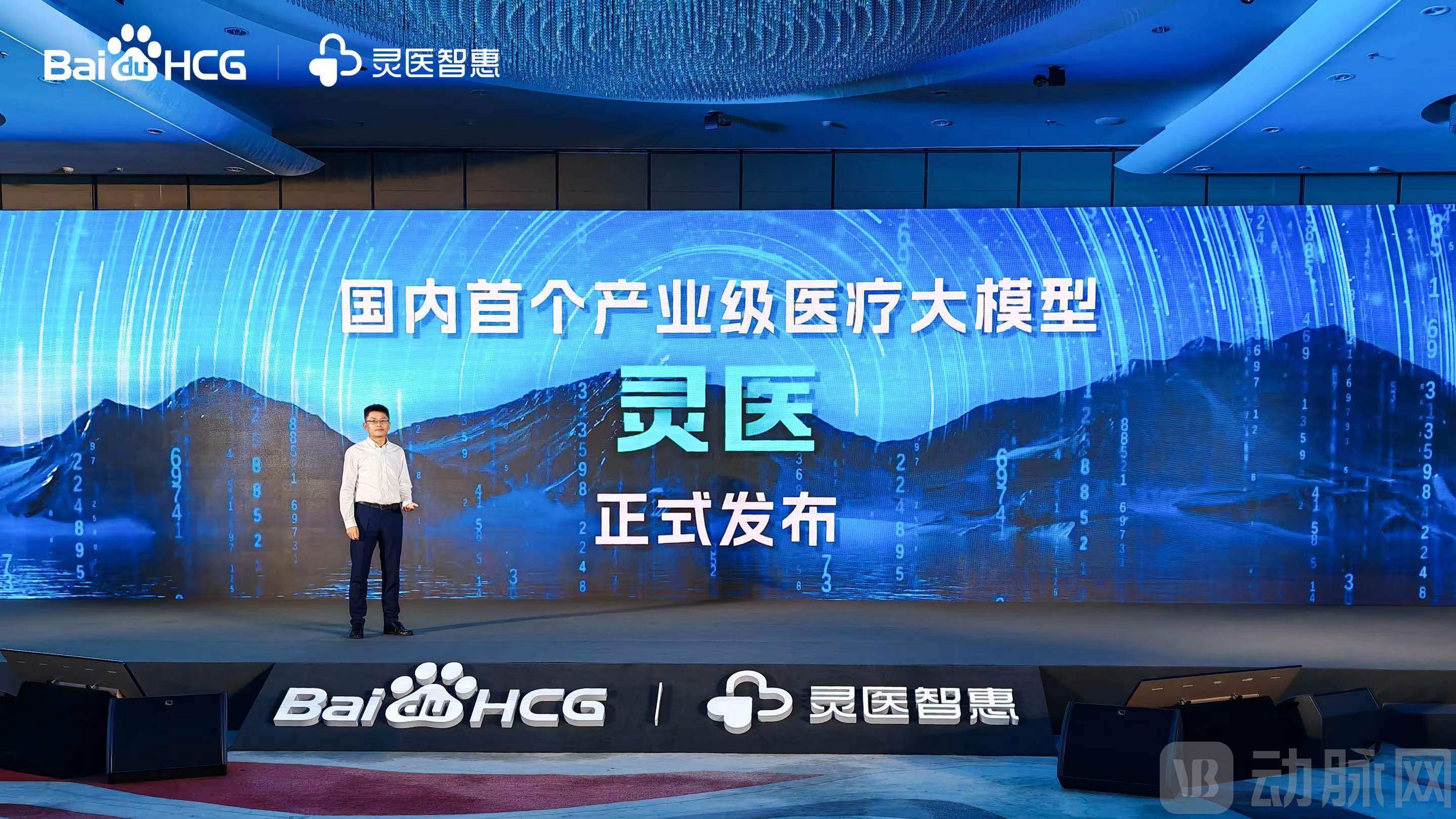
But Baidu's Lingyi Zhihui, relying on its leading position in the general large model field and its deep accumulation in medical big data governance, has successfully taken this step. At a press conference the other day, Lingyi Zhihui...China's First Industrial-GradeThe medical large model "Lingyi Large Model" answers, solving the medical challenges of the large model era.
Trillions of Medical Tokens Are Just the Foundation? Lingyi Zhihui "Demonstrates" the Essential Conditions for Building Large Medical Models
How to combine machine learning with "logical reasoning" is the "Holy Grail problem" in the field of artificial intelligence, either leaning towards reasoning or towards learning. There have been very few attempts that can truly balance the two and fully leverage AI's potential. Until now, with the advent of large language models, a deep integration of vast knowledge and data has finally been achieved, successfully breaking through the boundaries of reasoning and learning.
But in practical applications, general large models still have defects. A typical issue is that when we ask questions during study or work, AI may occasionally provide answers completely unrelated to the question or bury a small amount of useful information within lengthy text, requiring us to process it again.
Faced with such a scenario, C-end users may adjust their questioning strategy and re-ask the artificial intelligence. However, for B-end users, especially in serious fields like healthcare, a single incorrect response could, at best, result in losing a doctor's trust and, at worst, impact a user’s health, making it difficult for AI applications to be practically implemented. The consequences of such outcomes are not something the algorithm itself can bear.
Therefore, the leap from general fields to medical fields,Not only does it test the model's generalization ability to handle various types of questions across different medical scenarios, but it also ensures "precise safety," guaranteeing that every response provides users with accurate advice.

In order to meet the requirements of high generalization and high precision, Lingyi ZhihuiAlgorithms, Computing Power, DataThe three elements work together at the same time.
First, at the algorithm level. Vertical models are derived from general models, but the process of building general models is extremely complex and costly. Therefore, the vast majority of companies choose to use open-source basic models when developing large medical models, which often leads to generated models having grammatical and logical issues, making them unable to handle complex medical tasks.
In contrast, the Lingyi Large Model, built on the domestically produced Wenxin Large Model, possesses unique Chinese text reasoning, comprehension, and generation capabilities. It also incorporates multiple enhancement technologies such as knowledge augmentation, retrieval augmentation, and context augmentation, effectively improving the accuracy and diversity of the large model's output.
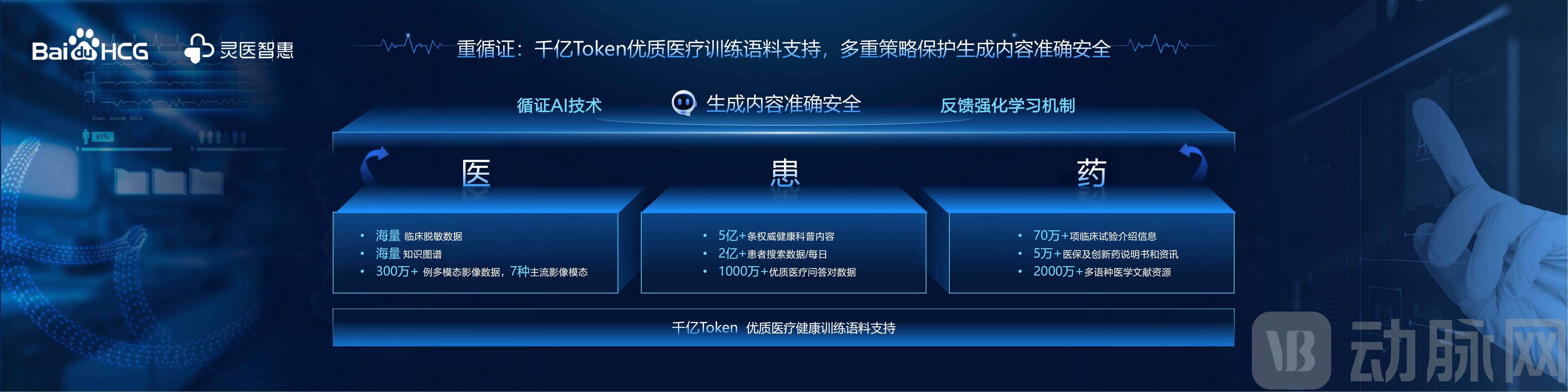
Next are the data and knowledge levels. During the model training process, Lingyi Zhihui takes into account information from three parties—doctors, patients, and medications—and has successively invested over 10 million high-quality medical Q&A data points, more than 20 million multilingual medical literature resources, over 200 million daily medical search data entries from users, and more than 500 million authoritative health science popularization contents... These massive medical training datasets, combined with a feedback reinforcement learning mechanism, ensure that every response provided by the Lingyi large model is traceable.
To ensure the accuracy and diversity of data, Lingyi Zhihui has reached deep strategic cooperation with authoritative medical knowledge bases in the industry such as Renwei Zhishu and Elsevier. They are deeply collaborating on dimensions related to smart healthcare products and services to ensure the evidence-based AI foundation. Meanwhile, they have also partnered with Gushentang, Null Hypothesis, and others, offering tailored trial experiences to more than 200 medical institutions including public hospitals, pharmaceutical and medical device enterprises, internet hospital platforms, and chain pharmacies. Additionally, a large number of R&D personnel have been dispatched to hospitals to explore the deep integration of models within medical application scenarios, further refining the model’s usability, accuracy, and safety.
Finally, at the computing power level. The construction of vertical models requires completingGeneral pre-training, domain post-pre-training, task fine-tuningThis series of technical steps aims to progressively enhance the model's performance. However, for large models, any pre-training process consumes a vast amount of data and computational resources.
Under cost pressure, many companies can only reduce the number of parameters when developing large medical models, keeping the parameters in the range of hundreds of millions to billions to afford subsequent training and optimization. Alternatively, they skip pre-training and only fine-tune for specific tasks. Meanwhile, those withTen Thousand Card ClusterAndFull Lifecycle ModelThe Lingyi Large Model supported by the development toolchain has no worries about computing power.
This means that the Lingyi large model can achieve its goals with the help of sufficient computing power.Pre-training,better optimize the underlying parameters rather than just local fine-tuning. This enables the Lingyi Large Model to continuously improve in real-world applications, bringing the accuracy of its output closer and closer to "1".
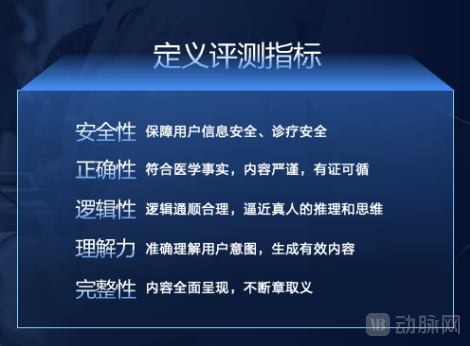
Evaluation results from a large model involving more than 100 senior doctors with over 10 years of experience from top-tier hospitals show that the Lingyi Large Model can handle doctor-patient interactions across various medical scenarios and far surpasses other large models in correctness, logic, safety, and comprehension.
Positioning "Industry-Level": The Confidence and Capabilities of Lingyi Large Model
The so-called industry-level refers to breaking away from the limitations of a single scenario, and creating an end-to-end large model solution for the entire chain around real-world medical system scenarios such as diagnosis and treatment, operations, scientific research, and education training. Compared with point-like products, linear solutions can better align with business processes, prevent data silos caused by obstructed data flow, and ensure users' safety, experience, and efficiency.
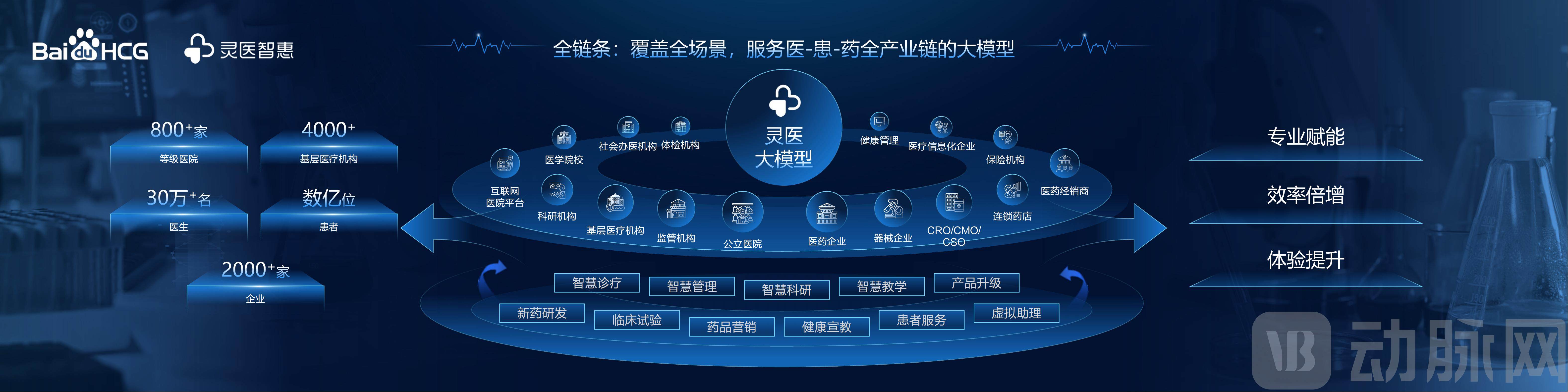
Constructing such a complex product matrix is not simple. In addition to technological breakthroughs, the rich "practical experience" from the Lingyi Large Model is equally crucial. As the first "industry-level" large medical model in China, the Lingyi Large Model has accumulated nearly 100 types of medical AI machine learning tasks and integrated the smart medical service experiences of over 800 hospitals, 2000 pharmaceutical companies, and more than 4000 grassroots medical institutions.
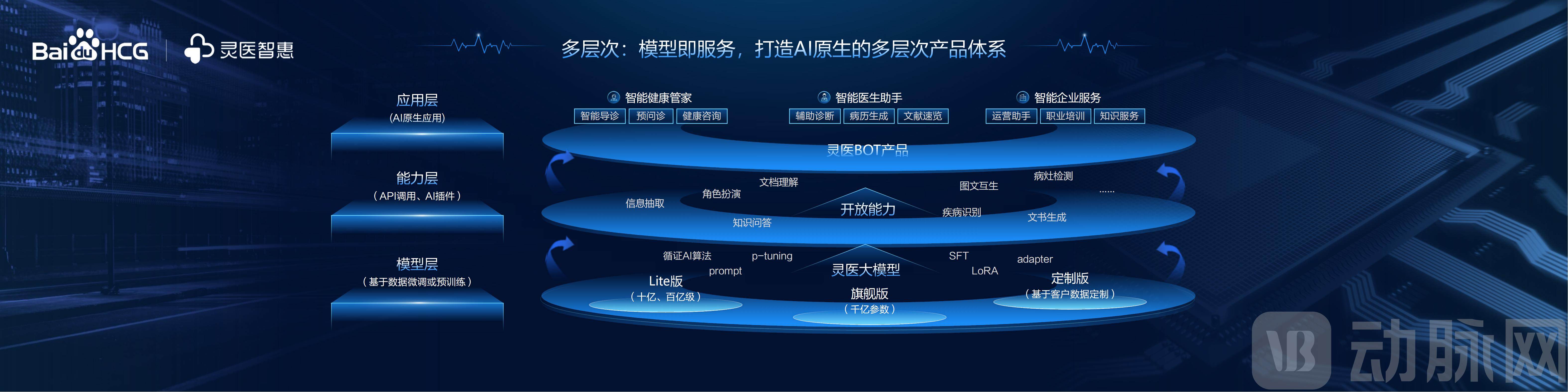
At the same time, the "industry-level" positioning also helps to advance the commercialization process of the Lingyi Large Model. Specifically, the Lingyi Large Model divides its commercial path into the capability layer, model layer, and application layer.
The medical field is so vast that even a company as large as Baidu is far from achieving full-scene coverage. Therefore, a more effective strategy is to build a large model ecosystem and work with partners to empower healthcare together.
Ability LayerThe value lies precisely in this. Lingyi Zhihui mainly focuses onAPIOrAI PluginThe approach provides services by opening up existing foundational capabilities to partners at this level, such as document understanding, medical record generation, and medical Q&A. Partners can call these capabilities via API or embed the large model's abilities into their existing product systems based on AI plugins, creating AI-native application products and continuously expanding the industrial scenarios of Lingyi.
Model LayerProvide services based on data fine-tuning or pre-training. As the foundation of the entire architecture, the Lingyi Large Model launches three versions: Lite版, Flagship版, and Customized版. Among them, the Flagship版, as a parameter model with a scale of tens of billions, mainly focuses onPublic Cloud ServicesThe method provides services to a wide range of users, achievingOut-of-the-boxThe effect ensures that users do not need to worry about deployment costs.
Lite version is forHospital clients or clients who value private dataThe model service provided is aimed at clients with high privacy requirements and low demand for substantial computational resources. This solution supports private deployment, offering two parameter levels of models—ten billion and one hundred billion—balancing model capability with deployment costs.
Finally, the customized version is mainly for customers who own high-quality data and have certain R&D capabilities. It can provide customized model training or optimization services for specific scenarios, such as specialized departments or specific diseases. Research hospitals and pharmaceutical companies are the main service targets of the customized version.
Application LayerIt provides AI-native applications for end users such as patients, hospitals, and enterprises. As an industry-level large model, its service scenarios cover the entire healthcare industry chain, incorporating public hospitals and research institutions, while also offering cutting-edge digital tools to pharmaceutical and medical device companies, internet hospital platforms, and chain pharmacies.
Specifically, these applications can currently be categorized into three major directions: intelligent doctor assistant, intelligent health steward, and intelligent enterprise service, thereby meeting the specific needs of "medical providers-patients-pharmaceuticals" respectively.
For patients, the Lingyi large model can serve as a "health管家." Empowered by the large model, the "AI Medication Instruction Manual" introduced by Lingyi Zhihui not only transforms paper instructions into audio but also provides real-time interpretation of medication-related knowledge to patients. In hospital scenarios, the "Intelligent Health管家" can offer users a better interactive experience and more accurate Q&A results to assist with patient triage and referral. Additionally, it can provide personalized health services based on comprehensive life-cycle medical and health data.

In the broader healthcare scenario, Lingyi Zhihui emphasizes "professional empowerment," offering functions such as operational assistance, vocational training, and knowledge services. Taking pharmaceutical enterprise services as an example, the Lingyi large model can help various departments of pharmaceutical companies comprehensively improve production efficiency while intelligently managing the domain knowledge accumulated by the enterprise. The core idea is to reduce various costs generated in business operations through intelligent means and assist enterprises in completing digital transformation.
At the event, Guangshengtang, a leader in Traditional Chinese Medicine (TCM) medical services, shared its collaboration with the Lingyi Large Model. Representatives stated that Guangshengtang has restructured its online diagnosis and treatment services by leveraging the underlying technical capabilities provided by the Lingyi Large Model. It has also launched an intelligent health assistant for patients, offering 24/7 precise triage, guidance, and smart customer service, supporting open-ended doctor-patient Q&A. According to the latest research data, since the collaboration began, patient satisfaction with the registration experience has increased by 12%, and the work efficiency of customer service staff has improved by 76%.
From the overall development of large models in vertical fields, what all industries' large models are doing is improving quality and efficiency, with few companies innovating in terms of scenarios. Reviewing Baidu's existing product layout, the Lingyi large model seems to have taken a similar path, using new technology to reconstruct service capabilities and deeply empower old scenarios.
However, if we delve into the underlying logic of Lingyi Zhihui's product line, it is not about redoing old industries—indeed, a transformation concerning the entire healthcare application is brewing.
According to relevant personnel from Lingyi Zhihui: With the help of large language models, Lingyi Zhihui can effectively reduce the cost of clinical data governance, assist hospitals and doctors in building more specialized databases, and thereby promote the training of intelligent algorithms for specific diseases. Empowered by large models, the development cost of individual AI applications will be significantly reduced, with savings as high as 90%.
This capability will bring disruptive changes to the AI industry. In the past, the leap from general large models to vertical large models has been slow due to factors such as the lack of medical data and the high cost of training. Now, with the support of self-developed new technology stacks, Baidu is able to govern and automatically analyze multimodal clinical data, optimize various costs generated during model training and adjustment, and thus trigger a new round of explosion in intelligent applications.
Under this trend, in the future, we may see more intelligent applications deeply empowering medical institutions and even the broader health sector.
And Baidu has laid a solid foundation for the road ahead.
The Lingyi Large Model is now officially open for invitation testing to enterprise-level customers. Scan the QR code below to apply quickly.