

Claudin18.2-Targeted CAR-T Therapy Shows Promise in Pancreatic Cancer; Innovative Gene Therapy Receives FDA Priority Review – CGT Weekly Highlights

Jura Bio
Autoimmune Disease Therapeutics Developer

Syena
Cell Therapy Developer
▎Edited by the WuXi AppTec content team
Recently, the global cell and gene therapy (CGT) field has seen a series of advancements. Among them: Kite's CAR-T therapy Yescarta achieved a 71% complete metabolic response rate in a Phase 2 clinical trial for the treatment of relapsed/refractory large B-cell lymphoma (LBCL). Orchard Therapeutics' gene therapy atidarsagene autotemcel received Priority Review designation from the FDA for its Biologics License Application, intended for the treatment of metachromatic leukodystrophy. This article will provide a brief introduction to some of these significant developments for readers' reference.

Image Source: 123RF
———✦R&DProgress✦———
Patients with Relapsed/Refractory Large B-Cell Lymphoma (LBCL) Achieve 71% Complete Metabolic Response Rate: Results of Phase 2 Clinical Trial of CAR-T Therapy Published

Gilead Sciences' Kite company recently announced that the CD19-targeted CAR-T therapy Yescarta, in a Phase 2 clinical trial treating relapsed/refractory LBCL patients, as a second-line therapy,Achieved a 71% complete metabolic response rate (CMR) after 3 months, compared to only 12% CMR with standard therapy in historical controls.At 6 months, CMR was still 59.7%. The full results were published in Nature Medicine.
These patients experienced disease progression after receiving first-line treatment and were not suitable for high-dose chemotherapy and autologous stem cell transplantation. The results of this trial indicate that Yescarta may offer a potentially curative treatment option for this difficult-to-treat patient population.
Gene Therapy Receives FDA Priority Review for Treating Fatal Childhood Disease
Orchard Therapeutics Announces,The U.S. FDA has accepted the Biologics License Application (BLA) for Syena's gene therapy atidarsagene autotemcel to treat metachromatic leukodystrophy (MLD) and has grantedPriority Review EligibilityMLD is a rare and life-threatening genetic disorder of the body's metabolic system, caused by mutations in the gene encoding arylsulfatase A (ARSA). In late infancy, the mortality rate is estimated to be 50% within 5 years of onset and 44% within 10 years.
Atidarsagene autotemcel(Also known as OTL-200) uses a lentiviral vector to introduce the ARSA transgene, which encodes arylsulfatase-A, into patients' autologous CD34-positive hematopoietic stem and progenitor cells.This therapy has been approved in the European Union for the treatment of MLD patients characterized by reduced ARSA enzyme activity in children due to biallelic mutations in the ARSA gene. In clinical trials, compared with the natural history of the disease, atidarsagene autotemcel treatment preserved motor function and cognitive development in most patients, with a follow-up period of up to 12 years.
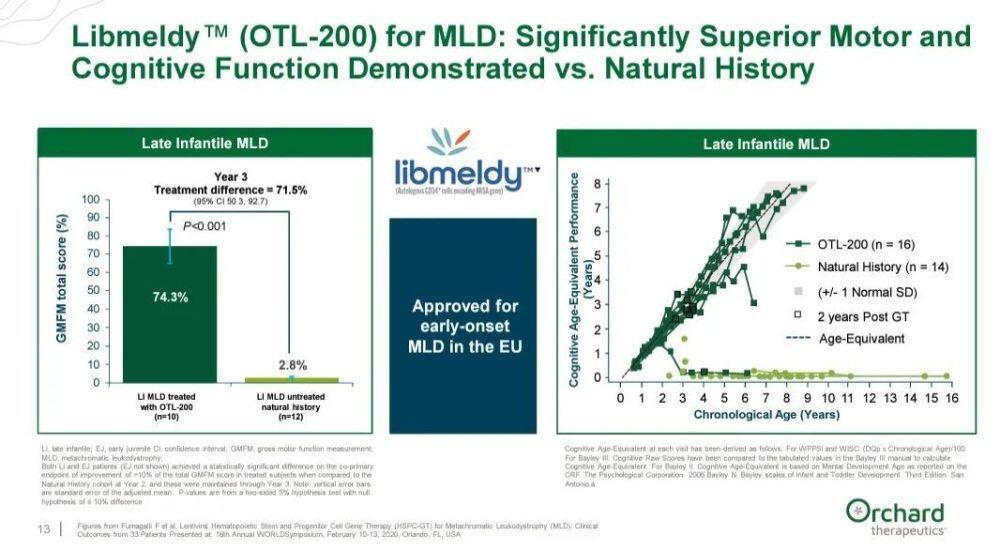
▲Clinical trial results of Atidarsagene autotemcel (Image source: Orchard Therapeutics official website)
Claudin18.2-Targeted CAR-T Therapy Shows Anti-Cancer Potential in Treating Pancreatic Cancer
Syena recently announced that its self-developedTwo case reports on the treatment of metastatic pancreatic cancer with CT041, a CAR-T cell therapy targeting Claudin18.2, have been published in the Journal of Hematology & Oncology.The first patient received CT041 cell infusion in September 2021. After the infusion, the patient developed grade 2 cytokine release syndrome (CRS) and recovered after receiving tocilizumab. According to the RECIST v1.1 criteria,The patient's tumor assessment reached partial response (PR), with significant shrinkage of lung metastases.
The second patient received CT041 cell infusion in July 2021. After the infusion, the patient developed grade 2 CRS and recovered after treatment with tocilizumab.The patient achieved PR at the first evaluation in the 4th week after CT041 infusion, and subsequently reached complete remission as the target lung lesions further disappeared. As of the last follow-up at the end of July 2023, the patient was still in a state of sustained remission.The copy numbers of chimeric antigen receptors in the peripheral blood of both patients rapidly increased after infusion and peaked within two weeks. Meanwhile, flow cytometry results showed an increase in the proportion of CD8-positive T cells and regulatory T cells and a decrease in the proportion of CD4-positive T cells and B cells in their peripheral blood. Such changes in immune cell phenotype were more persistent than changes in cytokine levels. The press release noted,This preliminary data shows that CAR-T therapy has considerable potential for the treatment of pancreatic cancer.
Bispecific CAR-T Therapy Targeting Both CD19 and CD20 Completes First Patient Dosing
ImmPACT Bio recently announced that itsPotential "Best-in-Class" Dual-Targeted CAR-T Therapy IMPT-314, the first patient has been dosed in a phase 1/2 clinical trial for the treatment of relapsed/refractory B-cell lymphoma. IMPT-314 is a CAR-T therapy that utilizes a bispecific chimeric antigen receptor (CAR) targeting CD19/CD20 and a 4-1BB co-stimulatory domain. In a previous phase 1 clinical trial led by researchers at the University of California, Los Angeles, it achievedAn overall response rate of 91% (10/11) and a complete response rate of 73% (8/11). The median progression-free survival was 18.2 months.It has been granted Fast Track designation by the U.S. FDA for the treatment of aggressive relapsed/refractory B-cell lymphoma.
High-Throughput Gene Editing Screening Strategy Rapidly Identifies Gene Combinations that Enhance T-Cell Anti-Cancer Activity
CAR-T cell therapy has shown significant efficacy in treating various blood cancers. However, prolonged stimulation of T cells may lead to cellular dysfunction and a decline in the effectiveness of immunotherapy. Improving T cell health might require editing multiple genes or knocking in multiple gene sequences within the cells. Researchers from the University of California, San Francisco, and the Gladstone Institutes recently published a paper in the journal *Cell*, describing a technology for systematically knocking in multiple gene sequences in immune cells.This technology can quickly generate a screening library containing 10,000 combinations of transcription factors, and through high-throughput screening, rapidly identify gene combinations that make T cell activity more persistent or enhance their anti-cancer efficacy.
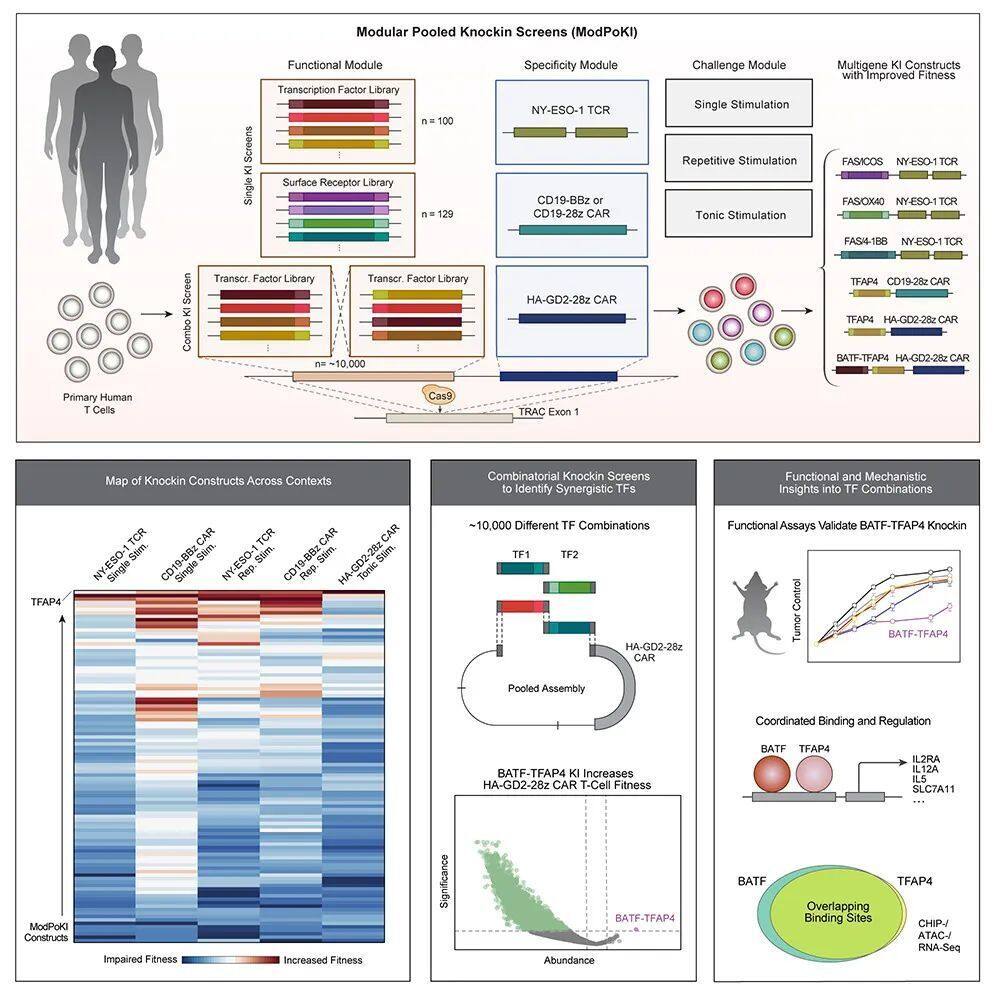
▲Graphical representation of this study (Image source: Reference [13])
———✦Cooperation, Financing, M&A✦———
AI Empowers Cell Therapy, Emerging Companies Reach Cooperation
Recently,JURA Bio Announces Research Collaboration with Syena, a Replay Cell Therapy Company, to Develop T-Cell Receptor (TCR)-Based TherapiesThe foundation of many immunotherapies lies in the TCR receptor on the surface of T cells forming a complex with cancer-specific antigens and human leukocyte antigen (HLA). The formation of this complex activates the TCR, thereby stimulating the anti-cancer activity of T cells. One bottleneck in developing T cell-based immunotherapies is the systematic synthesis and testing of TCR receptors.
JURA Bio's technology platform, based on machine learning and synthetic biology, has generated a library containing 100 billion potential human candidate TCRs. It can be used for the discovery and development of antigen-specific TCRs.Currently, the company has discovered innovative TCRs in prostate cancer and previously unidentified tumor neoantigens. Under the agreement, JURA Bio will assist Syena in discovering candidate TCRs for the development of TCR-Natural Killer cell therapy.
Six Gene Therapy Projects for Treating Ciliopathy Under Development by Emerging Companies

Recently, ALSA Ventures announced the launch of Axovia Therapeutics. Axovia is a biotechnology company dedicated to developing gene therapies for ciliopathies. Its lead investigational therapyAXV101 is an AAV9-based gene therapy for the treatment of retinal atrophy in patients with Bardet-Biedl Syndrome (BBS) carrying BBS1 gene mutations.This investigational therapy is expected to enter clinical development in the next 18-24 months.
Accelerating Gene Editing and Cell Therapy Development, Newcomer Launches Off-Target Editing Detection Platform

Recently, Broken String Biosciences announced the completion of a $15 million Series A financing round. The funds raised will be used to further develop the company's DNA break mapping technology.This technology can detect the level of off-target editing in situ in clinically relevant cells, accelerating the progress of research and development projects in cell and gene therapies.
Cell and gene therapies developed based on gene editing technologies (such as CRISPR-Cas9) require rigorous preclinical evaluation of off-target editing levels.Broken String Biosciences' INDUCE-seq technology platform does not require PCR and directly uses next-generation sequencing to detect and quantify DNA double-strand breaks. It provides researchers with a means to evaluate and quantify the off-target effects of specific genome editing tools.
Syena Completes New Round of Financing for the Development of Universal Immune Cell Therapy

Recently, CellOrigin announced the completion of a new round of financing worth tens of millions of RMB. The company is committed toDevelopment of Induced Pluripotent Stem Cell (iPSC)-Derived Macrophages Expressing Chimeric Antigen Receptor Molecules (CAR-iMAC) and Their Application in the Development of Immune Cell Therapeutic Drugs for TumorsThe company has adopted cutting-edge technologies such as gene editing and synthetic biology to engineer macrophages. Macrophages are a type of immune cell that can easily penetrate the tumor microenvironment (TME) of solid tumors, and leveraging this characteristic, the company is actively developing CAR-iMAC products targeting various recurrent and refractory solid tumors.
Development of Precise Delivery Lipid Nanoparticle (LNP) Technology, $260 Million Boosts RNA and Gene Therapy Development
ReCode Therapeutics Announces $50 Million Series B Extension, Bringing Total Series B Financing to $260 MillionThe company's Selective Organ Targeting (SORT) lipid nanoparticle technology can deliver gene therapy drugs directly and with high precision to disease-related organs and cells, thereby enhancing efficacy and potency.
The company's main projects include RCT1100 and RCT2100. The former is used to treat primary ciliary dyskinesia caused by DNAI1 gene mutations, while the latter can be used to treat cystic fibrosis patients with CFTR gene mutations who do not respond to currently approved CFTR modulator therapies.
Syena Completes Over 100 Million Yuan Pre-B Financing to Advance Gene-Edited Stem Cell-Derived Cell Therapy Development
Syena announced the other dayCompleted a Pre-B round of financing exceeding 100 million yuan. The funds will support Syena's rapid product iteration and global development of gene-edited stem cell products over the next four years.
Syena, founded in 2017 in Hangzhou, China, is a biotechnology company that applies high-throughput gene editing technology to the fields of cell therapy and organ transplantation. Syena aims to leverage its high-throughput gene editing technology and deep understanding of immune transplantation to develop immune-compatible allogeneic cell therapies and xenotransplantation treatments, bringing hope to millions of patients and their families worldwide.Currently, the company's allogeneic cell therapy products have been involved in investigator-initiated clinical trials, and one of the products has received tacit approval for clinical trials from the China National Medical Products Administration.
Mengmo Biotech Completes Tens of Millions of Angel Financing for the Development of Ophthalmic Stem Cell and Gene Therapies

Recently, Mengmu Bio announced the completion of an angel round of financing worth tens of millions of RMB. The funds obtained will mainly be used for the advancement of its stem cell therapy pipeline and team building.
Mengmu Bio was founded in March 2023 and is aA biopharmaceutical company focused on the research and development of new drugs for degenerative ophthalmic diseases, dedicated to adopting innovative stem cell and gene therapies to treat ophthalmic conditions, has the potential to address the current lack of effective treatments for degenerative ophthalmic diseases, including dry age-related macular degeneration.Currently, Mengmu Bio has established multiple platform technologies, including in vitro reprogramming of induced pluripotent stem cells, in vitro differentiation induction, and AAV vector optimization. Its unique eye organoid models and large and small animal disease models allow for early efficacy and safety evaluation of candidate drugs, accelerating the development of ophthalmology pipelines.
In addition to the aforementioned developments, there were other advances in the cell and gene therapy field this week. Due to space limitations, this article will not introduce them one by one. We hope for more new progress and breakthroughs in this field to benefit more patients.