GE HealthCare Announces $60 Billion Strategic Partnership with Kazakhstan for Localized Medical Device Manufacturing and Digital Health Infrastructure

GE Healthcare
Digital Solution Provider

Source:Instrument Family,Reproduction without authorization is prohibited, and reproduction is allowed 24 hours later.
September 19,The Kazakh government signed a strategic cooperation framework agreement with GE Healthcare, planning to invest over 600 billion US dollars (approximately 4.38 trillion RMB) in four areas, including the localized manufacturing of medical equipment.GE Healthcare stated that it will start with the localized production of ultrasound equipment in China, followed by CT scanners, angiography systems, and mammography machines.
The plan of the Kazakhstan government isIncrease the market share of domestically produced pharmaceuticals and devices to 50% by 2025.This move by GE Healthcare is highly consistent with its goals.
The signing ceremony was held in New York on the same day.Kassym-Jomart Tokayev, President of Kazakhstan, and Rob Walton, President of GE Healthcare Europe, Middle East, and Africa, attended together,And formally signed the co-rental agreement under the witness of senior officials from both parties.

At the conference, Walton also announced GE Healthcare's plan to establish a centralized national clinical image digital archive in Kazakhstan.This innovative archiving will simplify the management of patient data, reduce the overall cost of healthcare services, and enhance patient care and accessibility.
In addition,GE Healthcare also plans to further strengthen the training of medical professionals in Kazakhstan.In order to achieve this goal, the company plansEstablishment of CEHealthCare College at Astana Medical University, launching educational programs to enhance the professional qualifications of healthcare personnel. The academy is expected to commence full operations in October this year, ushering in a new era for medical education in Kazakhstan.
GE Healthcare is a global leader in medical technology, headquartered in Chicago, and currently operates in more than 140 countries. In 2022, the company reported revenues of $19 billion and a market value of $34.5 billion.In this collaboration, GE Healthcare will start with the localized production of ultrasound equipment in China, followed by CT scanners, angiography machines, and mammography units.Below,器械之家has compiled a list of representative products from GE Healthcare in these fields.
GE Healthcare Ultrasound Equipment
As one of the absolute leaders in the ultrasound industry, GE Healthcare's ultrasound technology has always been at the forefront of the industry.In 2022, GE Healthcare's ultrasound business line generated $3.422 billion in revenue for the company.
Its products are strategically positioned across high-end, mid-range, and low-end markets.The LOGIQ series, VIVID series, Voluson series, VENUE series, and ABUS series correspond to the five application markets of general imaging, cardiology, obstetrics and gynecology, critical care, and breast imaging, respectively, and all hold leading positions.Not long ago, the company also launched a new generation of intraoperative ultrasound imaging systems for guiding urological, colorectal, and pelvic floor surgeries—the bkActiv system. This system features the latest image enhancement capabilities, enabling clear ultrasound images of the prostate, kidneys, and bladder. Additionally, True-Sense technology and "smart buttons" allow surgeons to operate the system with just one hand.
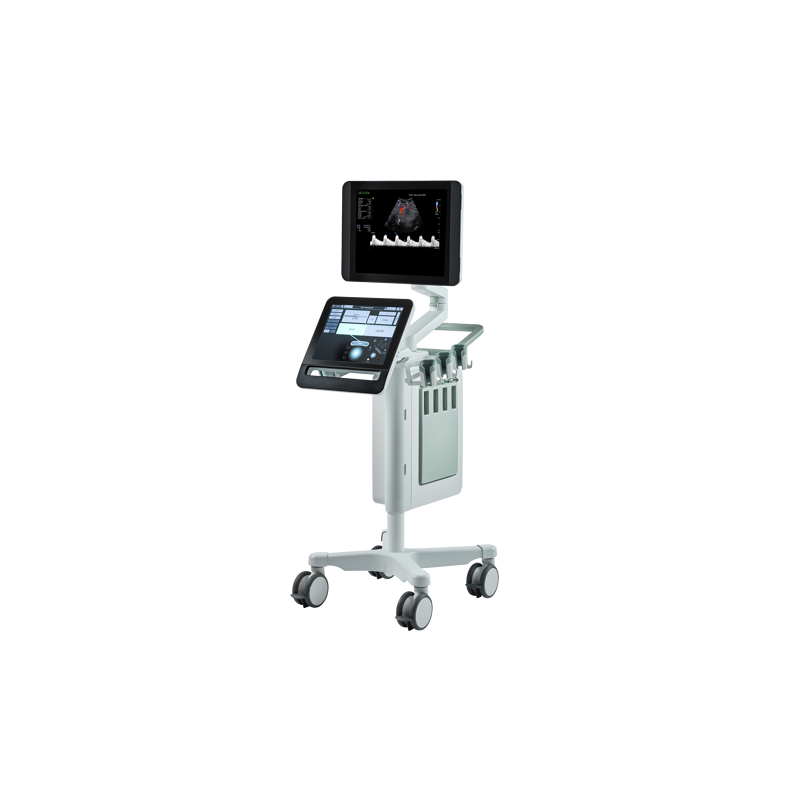
bkActiv System
It is worth mentioning that,In February this year, the company also acquired Caption Health, a developer of AI ultrasound technology, adding AI-driven ultrasound technology to its product portfolio.Further intensifies the layout of AI in medical imaging.
GE Healthcare CT Equipment
In the CT field, the company owns the high-end CT platform Revolution series.Among them, the GE Revolution CT integrates the top technologies in today's CT field, and not only possessesA unique and comprehensive "dual-low" solution,More importantly, it achieves the integration of spectral imaging, wide coverage, and speed in technology, establishing new standards in the fields of cardiovascular, neurology, oncology, respiratory, urology, and orthopedic imaging and low-dose screening. This provides a solid hardware foundation for exploring the depth and breadth of clinical applications.
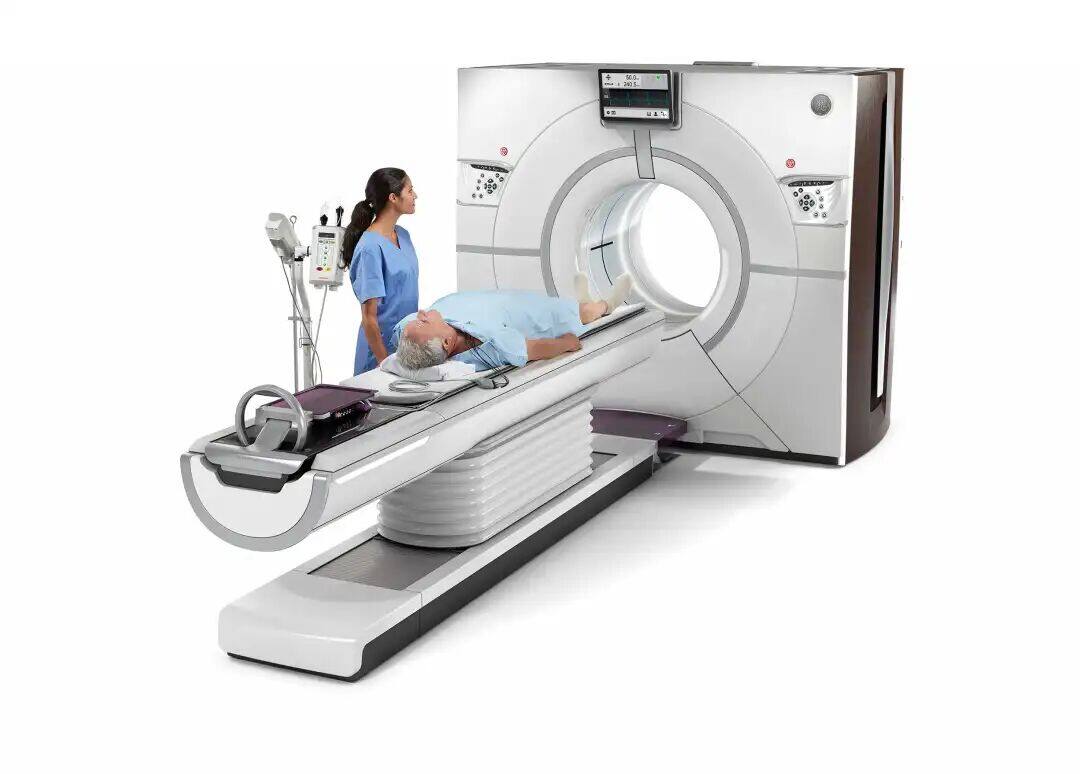
Revolution CT
In addition, GE Healthcare has also launched a device this year that is equipped with both a wide-body detector and dual instantaneous spectral imaging capabilities.Ultra-Premium CT – Revolution CT Power. This equipment utilizes GE Healthcare's most advanced 16cm wide-body Gemstone HD detector, capable of completing perfusion or CTA imaging of an entire organ, such as the heart, brain, liver, etc., with just a single rotation.
GE Healthcare DSA Equipment
GE Healthcare currently has more than ten vascular angiography (DSA) products in China, including floor-mounted and ceiling-suspended types. Among them,Discovery IGS 730 is GE Healthcare's first medical angiography X-ray machine that combines the advantages of both floor-mounted and ceiling-suspended imaging systems.This device features unique intelligent free mobility, breaking through the limitations of "surgical禁区" brought by the cantilever design, and is capable of 360° free movement.
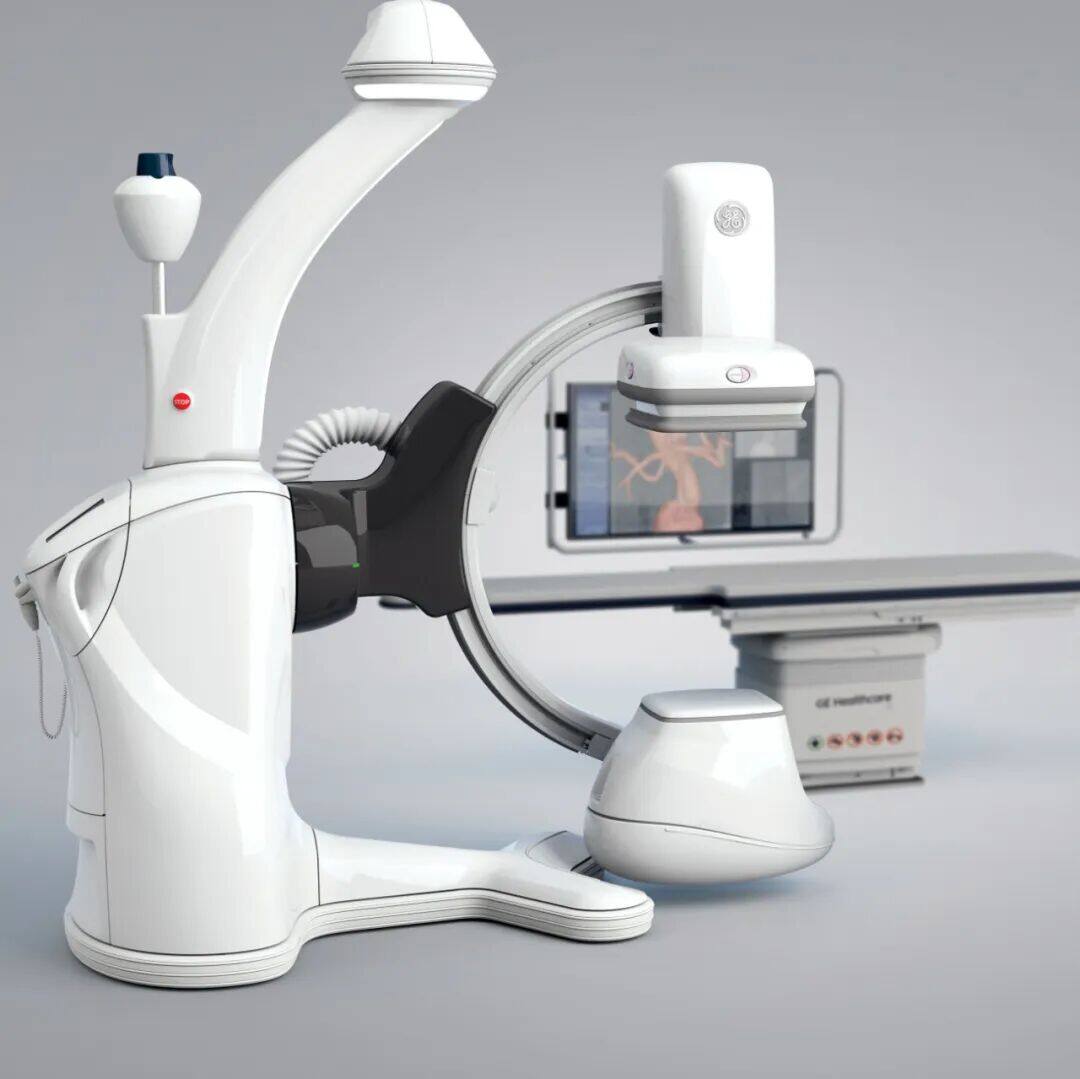
Discovery IGS 730
By applying laser-guided technology on a mobile architecture, predictable and precise movement trajectories are achieved. Additionally, the integrated Wide Bore 3D technology facilitates easier 3D tracking. The Liver Care intelligent function assists physicians by enabling one-click automatic identification of all feeding vessels surrounding liver cancer lesions.
Mammography Machine
As the inventor of the first mammography machine, GE Healthcare's currently available mammography machines in China are all part of the Senographe series. Among them,Senographe Pristina integrates GE's innovative breast tomosynthesis technology, contrast-enhanced mammography technology, and stereotactic biopsy technology, combining three into one, covering the entire pathway of breast screening, diagnosis, and treatment.Brings a brand-new solution to the entire process of early detection, early diagnosis, treatment, and postoperative monitoring for breast cancer.

Senographe Pristina
The upgraded second-generation iterative tomography technology can generate 0.5mm thin-layer images, providing true tomographic views; 1cm thick-slice images offer clear lesion pathways and contours.Studies show that iterative tomography technology and 3D grid filters with a high grid ratio of 11:1 have reduced the radiation dose of tomographic examinations. FDA exclusively certified, DBT dose equals 2D dose, making routine 3D breast examinations possible.
This collaboration will greatly enhance the medical standards in Kazakhstan, while GE Healthcare will use Kazakhstan as a starting point to extend its influence to surrounding areas, increasing its brand's presence in Central Asia.At the same time, the company is actively promoting its localization strategy in China. This "two-pronged" development strategy will further enhance GE Healthcare's global leadership and help the global healthcare cause make more significant progress.
Notably, GE Healthcare's localization strategy began to take shape as early as the end of the last century——GE opened its first office in Beijing, China in 1986.
In 1995, GE Healthcare Walar Medical Equipment Co., Ltd. was established in Beijing.Mainly engaged in the R&D and production of imaging equipment such as CT scanners, X-ray machines, angiography systems, and surgical machines. Two-thirds of GE Healthcare's global CT production comes from here.
In 1994, the GE Healthcare diagnostic pharmaceuticals production base was registered and established in Zhangjiang, Shanghai, China.And it has become GE Healthcare's largest contrast agent production base globally;
In 1996, GE and Haiying established a joint venture in Wuxi, the Haiying Wuxi factory (which has now become wholly owned by GE).Nowadays, the Wuxi factory has become GE's largest global ultrasound and probe production base.
In 2014, GE Healthcare began the research, development, and production of its magnetic resonance systems and magnets in China for the first time.It is currently the second-largest MRI factory of GE Healthcare globally and also the largest production base for MRI equipment in China.
These locations constitute GE Healthcare's five major production plants in China, meticulously covering resources for 20,000 hospitals nationwide.And has relied on this to cultivate, incubate, and service multiple innovative medical device companies, covering upstream and downstream segments of the industry chain as well as niche areas such as digitalization of medical imaging.Built the capability for R&D and production of medical devices covering from economy to high-end, with some technologies even being reverse exported globally and sold overseas.
GE Healthcare "Boundless Innovation"
In addition,To meet the future localized differentiated competition in China, GE Healthcare believes that merely having a certain quantity of localized production in China is not enough. When competitors address their weaknesses and localization and domestic production reach a certain scale, the next step of differentiation will lie in innovation.Therefore, Tihao Zhang, President and CEO of GE Healthcare China, while maintaining a strong momentum in local production and collaboration, has upgraded the China strategy and proposed a new strategic concept of "Boundless Innovation."
Against this background,Beijing Economic and Technological Development Zone Officially Designates GE Healthcare Beijing Innovation Center as the First Technology Enterprise Incubator in the Medical and Health Sector within the Zone — "GE Healthcare Innovation Incubator," Marking the First Implementation of This Concept.Subsequently, GE Healthcare established the GE Healthcare Wuxi Innovation Center in Wuxi, which covers functions such as software and hardware development, testing and verification, and product maintenance for ultrasound and patient monitoring equipment; soon, the Shanghai Innovation Center, focused on digital healthcare, will also be launched.
Currently, the Innovation Center platform has started cooperation with more than ten national digital technology enterprises, launching a total of 15 products that have obtained certification from the National Medical Products Administration and are clinically used, serving over 600 medical institutions.
--
Across the entire medical market, it can be observed that localization has become a unified move for multinational medical device companies. Many enterprises are reinforcing their presence through acquisitions, investment in manufacturing facilities, and strategic partnerships, continuously deepening their localization efforts in China.These include multinational giants such as Medtronic, Johnson & Johnson, Siemens Healthineers, Boston Scientific, Philips, Intuitive Surgical, Illumina, Olympus, and Pentax. GE Healthcare's collaboration this time will start from Kazakhstan, extending its influence to surrounding areas, and enhance its brand presence in Central Asia.
In fact, localized development can not only enhance the risk resistance of multinational corporations but also enable quicker responses and better meet the vast local market demands. On the other hand, it reflects the requirement for production stability, further reducing product costs.Not only in China, but also globally. It can be predicted that localization will continue to be one of the main trends for multinational medical device giants in the global market in the coming years. In this regard, DeviceHome will continue to follow up.
More exciting content
Welcome to follow WeChat Video Channel


Ophthalmology Giant Acquires Equity in 19 Hospitals
China's Orthopedic Leader Plans Massive Buyback
$6.2 Billion: Boston Scientific Makes a Major Move
Second in Private Tumor Sector, Third IPO Push
Increase of 265 People, Medtronic Invests 1 Billion
After Centralized Procurement and Anti-Corruption: Review of Top 100 Medical Device Companies' Strategies for China
Medtronic Partners with This Company to Enter the Home Monitoring Field
$6.5 Billion: Another Acquisition by Minimally Invasive Device Giant
60,000 Job Cuts, 20% R&D Increase: Analysis of the TOP100 Medical Device Companies
Multinational Giant Relocates High-End Equipment Factory to China


BusinessBusiness cooperation email: qxzj@landianyiliao.com