

Pan-Cancer FGFR Inhibitors Gain Broad Traction, Poised to Usher in a New Era of Targeted Therapy!

Eli Lilly
Global Pharmaceutical R&D and Production Company

Abbisko
Small Molecule Tumor Therapy Developer

Sanofi
Pharmaceutical R&D Developer

Haihe Biopharma
Developer of Innovative Anti-Tumor Drugs

Zai Lab
Innovative Global Biopharmaceutical Company

Amgen
Developer of Treatment Drugs for Serious Diseases

HUTCHMED
Biopharmaceutical Manufacturer

BridgeBio
Pharmaceutical R&D Developer
LianBio
Innovative Drug Developer
Welcome to follow Asymchem Pharma News
Recently, there has been a flurry of news about FGFR inhibitors both in China and internationally: First, Eli Lilly's clinical trial application for the FGFR3 inhibitor LOXO-435 was accepted by the CDE. Additionally, Abbisko, a Chinese company, published significant translational medicine research findings on an FGFR4 inhibitor in a prestigious international journal under the AACR. This marks the first time the company has revealed the role of EGFR activation in contributing to FGFR4 resistance in liver cancer, validating the strong correlation and cross-resistance mechanisms between the FGFR and EGFR pathways.
FGFR, or fibroblast growth factor receptor, is a member of the receptor tyrosine kinase (RTKs) superfamily and plays a role in the dynamic balance of various physiological responses in embryonic and adult tissues. RTKs are a large class of enzyme-linked receptors. During carcinogenesis, tumor cell proliferation and anti-apoptosis can result from RTKs abnormalities or oncogene activation, making cancer cells with oncogenic addiction highly sensitive to corresponding RTKs inhibitors. As a member of the RTKs superfamily, FGFRs aberrations are present in almost all tested malignant tumors, with higher incidence rates found in urothelial carcinoma, cholangiocarcinoma, breast cancer, endometrial cancer, and squamous cell carcinoma, among others. Additionally, abnormal activation of FGFRs has also been observed in lung cancer, liver cancer, breast cancer, and other tumors.
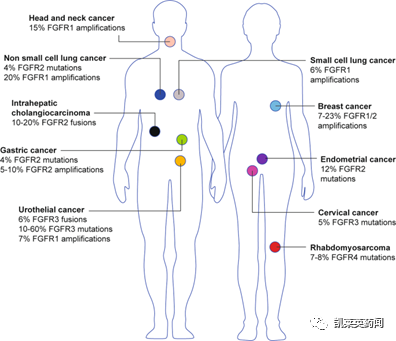
FGFR Gene Abnormally Expressed in Multiple Cancers: Four Main Variation Mechanisms Identified: (1) Overexpression of FGFR caused by gene amplification, leading to enhanced intracellular signal transduction; (2) Autocrine stimulation through the release of high-affinity FGF; (3) Point mutations in the kinase domain resulting in overactivation of FGFR; (4) Dysfunctional FGFR protein caused by fusion proteins (e.g., fusion of the FGFR3 kinase domain with the transforming acidic coiled-coil domain TACC3 leading to constitutive activation of the kinase), abnormal activation of the FGF/FGFR signaling pathway, ultimately causing carcinogenesis.
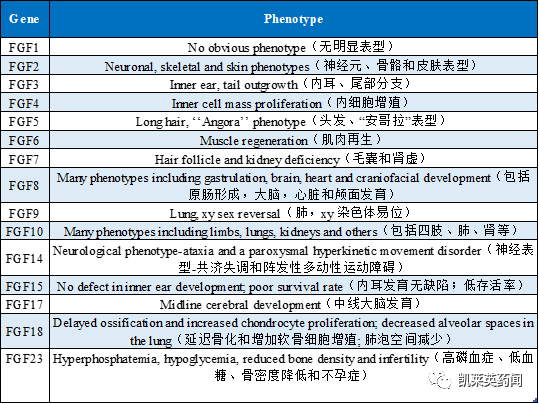
The fibroblast growth factor (FGFs) family includes 23 ligands, of which 18 are secreted ligands: FGF 1 (a FGF), FGFS 2 (b FGF), FGF 3 (INT 2), FGF 4, FGF 5, FGF 6, FGF 7 (KGF), FGF 8, FGF 9, FGF 10, FGF 16, FGF 17, FGF 18, FGF 19, FGF 20, FGF 21, FGF 22, and FGF 23. The table below shows the phenotypic distribution of some ligands.
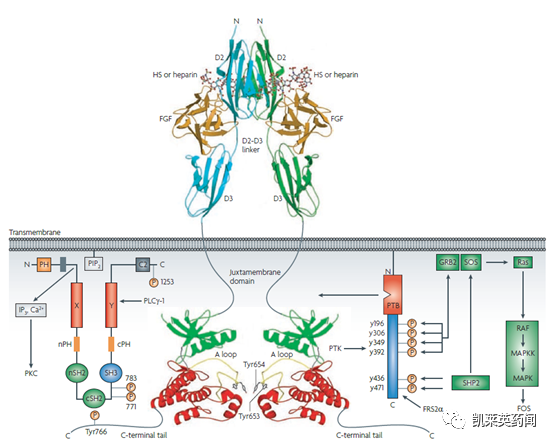
The FGFRs family includes the following types: FGFR1, FGFR2, FGFR3, and FGFR4. They all consist of three parts: an extracellular region, a transmembrane region, and an intracellular tyrosine kinase domain. The extracellular region contains three immunoglobulin-like structures (D1-D3), with the D1 region having autoinhibitory functions, while the D2 and D3 regions, as well as the linker region between D2 and D3, are involved in ligand binding. The D3 domains of FGFR1, FGFR2, and FGFR3 can undergo alternative splicing to produce two subtypes, FGFRb or FGFRc, and differences in the D3 domain determine the ligand-binding specificity of FGFRs. FGFs bind to FGFRs with the assistance of heparan sulfate glycosaminoglycans (HSGAG), inducing dimerization of FGFRs, which leads to autophosphorylation and activation of multiple tyrosine residues in their intracellular tyrosine kinase domains. Activated FGFRs activate their substrates PLCγ and signaling adaptor protein FRS2 through phosphorylation, which then activate downstream signaling pathways such as MEK/MAPK, PI3K/AKT, PKC, and STATS.
One
Market Situation
According to Frost & Sullivan, the total annual incidence of FGFR-related solid tumors globally has increased from 4.4 million in 2016 to 4.9 million in 2020, with a compound annual growth rate (CAGR) of 3.0%. It is expected to reach 6.8 million by 2035. In China, this figure reached 1.4 million in 2020, with a CAGR of 2.6% from 2016 to 2020, and is projected to reach approximately 1.9 million by 2035.
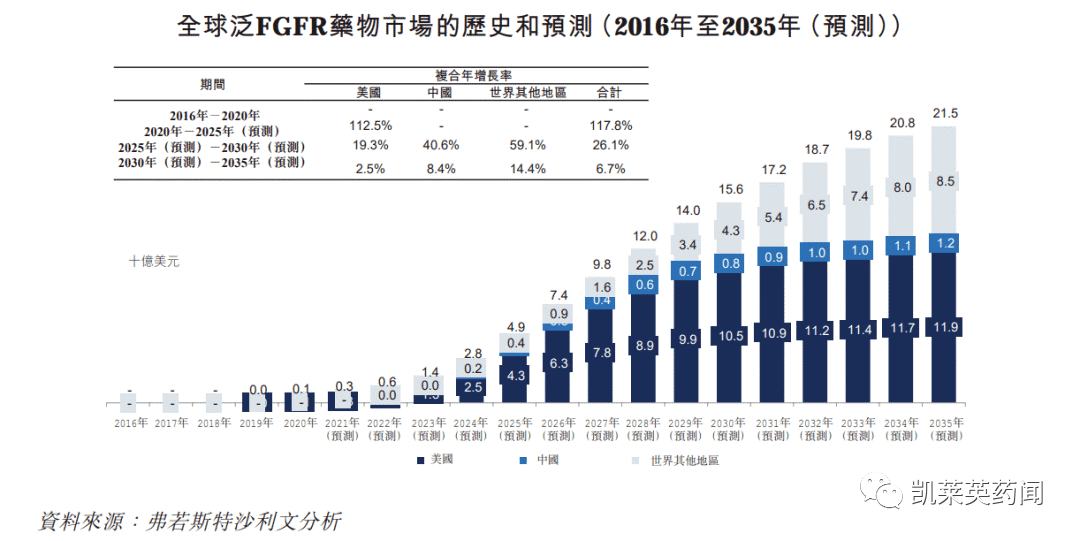
With the increase in patient volume, the market size of FGFR inhibitors will continue to expand. According to Abbisko's prospectus, the global pan-FGFR inhibitor market size is expected to reach 21.5 billion US dollars by 2035.
Two
Latest Research Progress
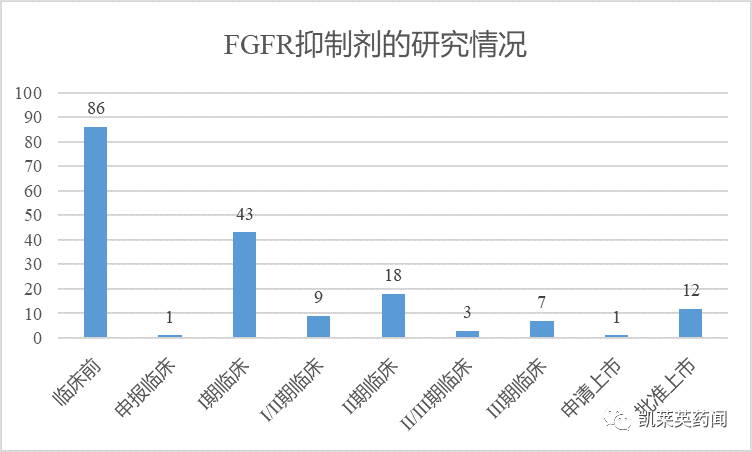
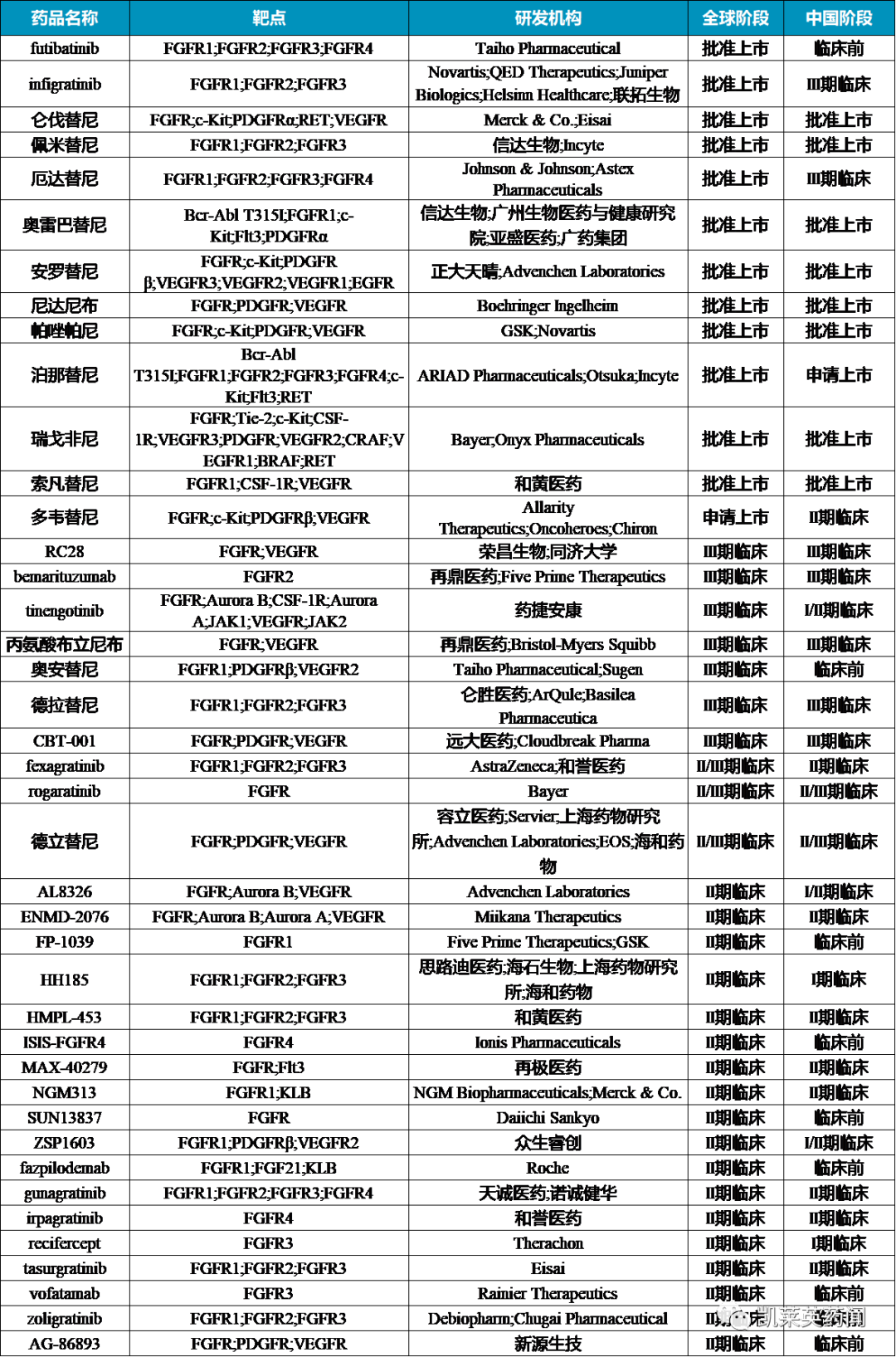
1. According to incomplete statistics, there are currently about 180 FGFR inhibitors under development, including 12 approved for marketing, 1 applied for marketing, 7 in Phase III clinical trials, 3 in Phase II/III clinical trials, 18 in Phase II clinical trials, 9 in Phase I/II clinical trials, 43 in Phase I clinical trials, and 87 in preclinical stages.
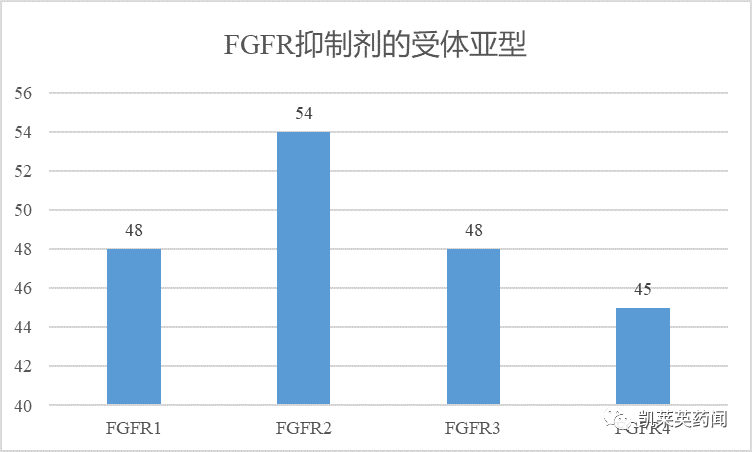
2、Receptor Subtype:The studied drugs may potentially inhibit multiple subtypes, among which 48 drugs inhibit FGFR1, 54 drugs inhibit FGFR2, 48 drugs inhibit FGFR3, and 45 drugs inhibit FGFR4.
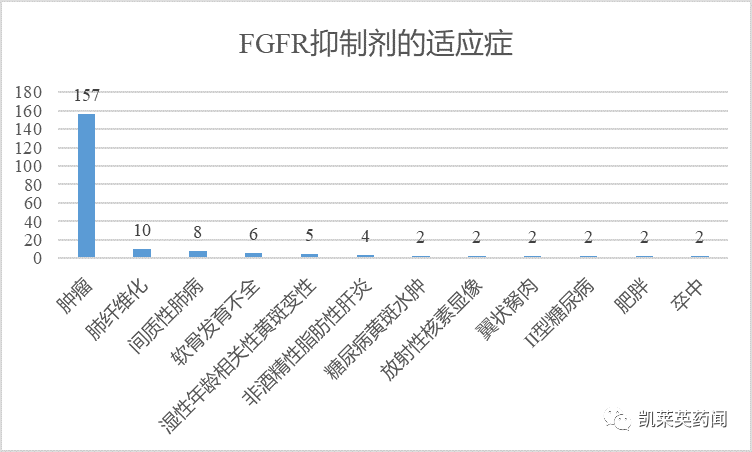
3、Indications:The indications with the most studies are, in order: cancer, pulmonary fibrosis, interstitial lung disease, achondroplasia, wet age-related macular degeneration, non-alcoholic steatohepatitis, diabetic macular edema, pterygium, type II diabetes, obesity, and stroke.
4. The statistics of the drug pipelines in Phase II and above under research are as follows:
Three
Introduction to Some Drugs
According to incomplete statistics, companies that have heavily invested in FGFR inhibitors include Pfizer, Roche, Tyra Biosciences, Sanofi, Bayer, and Novartis; major Chinese companies are Abbisko, CSPC Pharmaceutical Group, InnoCare Pharma, Innovent Biologics, LianBio, HaiHe Biopharma, and Zai Lab.
1. BridgeBio/LianBio: infigratinib
Infigratinib is an orally administered, ATP-competitive fibroblast growth factor receptor tyrosine kinase inhibitor that targets fibroblast growth factor receptor (FGFR) proteins and blocks downstream activity. In clinical studies, infigratinib has demonstrated a clinically meaningful tumor reduction rate (overall response rate) and duration of response in cholangiocarcinoma. It is currently being evaluated in clinical trials for locally advanced or metastatic gastric cancer or gastroesophageal junction adenocarcinoma, as well as other advanced solid tumors with FGFR genomic mutations.
LianBio obtained the development and commercialization rights of infragratinib for the prevention and treatment of all human cancer indications in mainland China, Hong Kong, and Macao from QED Therapeutics, a subsidiary of BridgeBio Pharma. In 2023, infragratinib received Breakthrough Therapy Designation in China for the treatment of gastric cancer.
In June 2023, LianBio announced positive topline results from a Phase IIa proof-of-concept trial of infigratinib for the treatment of Chinese patients with locally advanced or metastatic gastric cancer or gastroesophageal junction adenocarcinoma harboring FGFR2 gene amplification. The data showed that the confirmed objective response rate (ORR) for infigratinib was 25.0% (n=20), with a median duration of response (DOR) of 3.8 months. Among the participants, 57.1% had previously received two lines of systemic therapy, 33.3% had undergone three lines of systemic therapy, and 9.5% had received four or more lines of prior systemic treatment. The most common (≥20%) treatment-emergent adverse events of any grade included hyperphosphatemia, anemia, increased alanine aminotransferase and aspartate aminotransferase levels, decreased white blood cell count, reduced neutrophil count, diarrhea, constipation, palmar-plantar erythrodysesthesia syndrome, elevated lipase, increased serum alkaline phosphatase, and elevated bilirubin levels.
2. HUTCHMED: Surufatinib, HMPL-453
Surufatinib is a small molecule inhibitor of vascular endothelial growth factor receptor (VEGFR), fibroblast growth factor receptor (FGFR), and colony-stimulating factor 1 receptor (CSF-1R). It is used to treat unresectable, locally advanced or metastatic, progressive, non-functional, well-differentiated (G1, G2) neuroendocrine tumors (NET) of non-pancreatic origin. NET forms in cells that interact with the nervous system or in hormone-producing glands. It can originate in various parts of the body, most commonly in the intestines or lungs, and can be benign or malignant. Surufatinib is the first oncology candidate drug to expand into clinical trials in the United States after completing trials in China. With dual anti-angiogenic and immunomodulatory activities, it selectively inhibits tyrosine kinase activity associated with VEGFR and FGFR, modulates tumor-associated macrophages, and enhances the immune response against tumor cells. In the Phase 3 SANET-p clinical trial conducted in China, patients with low- to intermediate-grade advanced non-pancreatic NET received either surufatinib or placebo. The primary endpoint was progression-free survival (PFS), with secondary endpoints including overall response rate (ORR), disease control rate (DCR), time to response (TTR), duration of response (DoR), overall survival (OS), safety, and tolerability. Interim analysis showed that surufatinib successfully achieved the pre-specified primary efficacy endpoint of PFS, leading to the early termination of the study.
HMPL-453 is a potent and highly selective FGFR1/2/3 inhibitor that demonstrated strong activity against tumors with FGFR dysregulation in preclinical models, supporting further investigation as a monotherapy or in combination with PD-1 blockade in patients with FGFR alterations (such as fusions or mutations). In April 2023, HUTCHMED announced that it had consulted with the National Medical Products Administration ("NMPA") of China and reached an agreement to initiate the registration phase of the ongoing Phase II clinical trial of HMPL-453 for the treatment of patients with advanced intrahepatic cholangiocarcinoma harboring FGFR2 fusions. If positive results are achieved, the data from the registration phase may be used to support a future New Drug Application. The first subject in the registration phase was dosed in March 2023.
3. Zai Lab/Amgen: bemarituzumab
Bemarituzumab is a potential first-in-class targeted antibody developed by Five Prime (acquired by Amgen). It blocks the binding and activation of fibroblast growth factors (FGFs) to FGFR2b, thereby inhibiting several downstream oncogenic signaling pathways and potentially delaying cancer progression. Bemarituzumab has not yet been approved for marketing and is currently under investigation as a targeted therapy in FGFR2b-overexpressing gastric cancer and gastroesophageal junction cancer. It is also being studied in other solid tumors with FGFR2b overexpression, including squamous non-small cell lung cancer. To date, bemarituzumab has been granted Breakthrough Therapy Designation by the FDA and NMPA. Zai Lab holds the exclusive rights to develop and commercialize bemarituzumab in Greater China (mainland China, Hong Kong, Macau, and Taiwan).
In July 2023, Zai Lab announced that the global pivotal Phase 3 clinical study FORTITUDE-101 of bemarituzumab for first-line treatment of gastric cancer had completed the first patient dosing in mainland China. FORTITUDE-101 is a global study aimed at evaluating bemarituzumab for first-line treatment of gastric cancer, initiated by Zai Lab's partner Amgen. In early 2024, Zai Lab will join the global Phase 3 study FORTITUDE-102 for first-line treatment of gastric cancer, initiated by Amgen. This study is evaluating bemarituzumab in combination with chemotherapy and nivolumab, compared to placebo combined with chemotherapy and nivolumab, for patients with FGFR2b overexpression who have untreated advanced gastric cancer and gastroesophageal junction cancer.
4. Abbisko: fexagratinib, Irpagratinib
Fexagratinib(ABSK091) is a highly potent and selective FGFR1/2/3 inhibitor. Clinical trial results conducted outside of China have shown preliminary efficacy in treating urothelial carcinoma and other types of solid tumors. In November 2021, Abbisko initiated a Phase II trial in mainland China for fexagratinib in urothelial carcinoma patients with FGFR2 or FGFR3 alterations. In February 2022, Abbisko established a partnership with BeiGene to develop a combination therapy of fexagratinib and tislelizumab for urothelial carcinoma with FGFR2/3 alterations.
In addition to urothelial carcinoma, the company also plans to conduct clinical trials of fexagratinib in other solid tumors. In March 2022, the company received orphan drug designation from the U.S. Food and Drug Administration for fexagratinib in the treatment of gastric cancer.
In December 2022, Abbisko announced the preliminary Phase II efficacy and safety results of fexagratinib in China for patients with urothelial cancer harboring FGFR2 or FGFR3 alterations. Initial efficacy data showed that, as confirmed by the Independent Review Committee ("IRC"), the objective response rate (ORR) in metastatic urothelial cancer patients with FGFR3 alterations (including mutations and/or fusions) was 30.7% (4/13), with an ORR of 44% (4/9) in patients with FGFR3 mutations. These findings are consistent with the results from the BISCAY trial of fexagratinib conducted outside of China in a similar patient population. Preliminary safety data indicated that fexagratinib at a dose of 80 mg twice daily was well-tolerated in Chinese patients, with no drug-related Grade 4 or higher adverse events reported. These results support the further development of fexagratinib in ongoing Phase II trials.
Irpagratinib (ABSK-011) is an orally administered, potent, and highly selective small molecule inhibitor of FGFR4. Preclinical studies have shown that this compound has a strong inhibitory effect on tumors with overactivated FGFR4 receptors. In preclinical studies, compared to competitive products, ABSK-011 demonstrated superior potency and anti-tumor efficacy, along with favorable physicochemical properties.
In December 2022, Abbisko announced the preliminary Phase I efficacy and safety results of ABSK-011 as a second-line treatment for patients with FGF19-overexpressing hepatocellular carcinoma. The data showed that ABSK-011 demonstrated good efficacy in FGF19+ HCC patients. In patients with high FGF19 expression, the ORR was 22% (4/18); in the cohort receiving 160mg twice daily, the ORR was 33.3% (2/6). Additionally, ABSK-011 exhibited good tolerability across all cohorts.
5. HaiHe Biopharma: HH185
HH185 (3D185) is a small molecule inhibitor of FGFR1/2/3, which received clinical approval from the NMPA in January 2018. Preclinical studies have shown that HH185/3D185 has strong anti-tumor activity, excellent PD-PK characteristics, low toxicity, high bioavailability, and also exhibits CSF1-R targeting effects, making it suitable for combination therapy with PD-1/PD-L1 in the field of cancer immunotherapy. In April 2018, HaiHe Biopharma Co., Ltd. and 3D Medicines reached a strategic cooperation agreement for the development of HH185 in Greater China (Mainland China, Taiwan, Hong Kong, and Macao). In September of the same year, the scope of the strategic cooperation was further expanded, with 3D Medicines obtaining global authorization for HH185 to conduct research, development, production, and commercialization for the treatment of cancer and pulmonary fibrosis.
6. Sanofi: SAR442501
SAR442501 is an anti-FGFR3 monoclonal antibody developed by Sanofi, currently under development for achondroplasia. Achondroplasia (ACH) is an autosomal dominant genetic disorder associated with short-limbed dwarfism and represents the most common form of human dwarfism, with an incidence rate of 3.72 to 4.60 per 100,000 live births. ACH is caused by mutations in the FGFR3 gene, where activation of FGFR3 and its downstream intracellular signaling pathways inhibits chondrocyte differentiation and proliferation, thereby impairing endochondral ossification and leading to disproportionate short stature. Currently, there are no approved drugs targeting the FGFR3 ligand or FGFR3 and its downstream signaling pathways. In May 2023, the IND for SAR442501 was accepted by the CDE.
References
1、Goetz R, Mohammadi M. Exploring mechanisms ofFGF signalling through the lens of structural biology[J]. Nature reviewsMolecular cell biology, 2013, 14(3): 166-180.
2、Eswarakumar V P, Lax I, Schlessinger J.Cellular signaling by fibroblast growth factor receptors[J]. Cytokine &growth factor reviews, 2005, 16(2): 139-149.
3、Beenken A, Mohammadi M. The FGF family: biology,pathophysiology and therapy[J]. Nature reviews Drug discovery, 2009, 8(3):235-253.
4. Official Accounts: PharmCube, China Times



"Views"Click once