

AI-Powered TCR-NK Therapy Advances as JURA Bio and Syena Announce Strategic Collaboration and $16.1M Funding
Jura Bio
Autoimmune Disease Therapeutics Developer

Syena
Cell Therapy Developer

Replay
Next-Generation Genomic Medicine Technology Researcher
▲October 21, General Cell Drug Development Forum · Free for a Limited TimeRegistration in Progress
September 24, 2023 / eMedClub News /--Recently, JURA Bio announced a collaboration with genome writing company Replay's subsidiary Syena collaborates,Development of T-cell receptor (TCR)-based treatments, such as novel TCR-NK therapies. In addition, the company recentlyRaised $16.1 million in seed funding to support the mission of introducing machine learning into the field of cell therapy.. It is worth mentioning that, this year,Syena's TCR-NK product has received FDA approval for IND applications targeting two types of cancer indications, as a first-in-class therapy.。
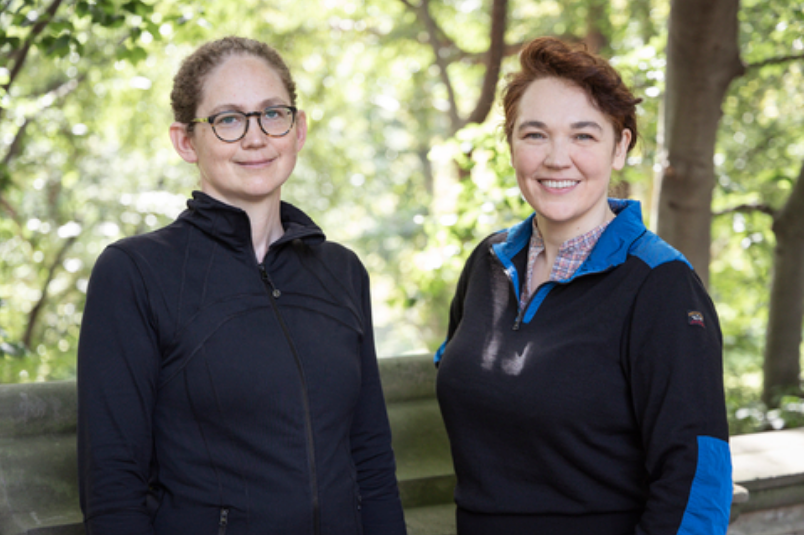
▲JURA Founders: Julie Norvill and Elizabeth Wood
Image Source: biospace
JURA Bio Partners with Syena
Promote the Development of TCR-NK Therapy
JURA Bio's Unique Artificial Intelligence Tools, Synthetic Protein Design ToolkitA differentiated approach to discovering TCRs will help advance Syena's novel TCR-NK therapy into clinical trials., and to jointly develop new treatments to address cancers with highly unmet medical needs.
JURA Bio will receive an upfront payment as well as research funding during the collaboration period. The financial terms of the agreement were not disclosed. If the option is exercised, Replay and its cell therapy company Syena will be responsible for global development and will hold worldwide exclusive commercialization rights to all TCR-NK therapies arising from the collaboration. JURA Bio will be eligible to receive development, regulatory, and commercial milestone payments, tiered deferred option payments based on global net sales of TCR products generated through the collaboration, and royalties on the use of at least one licensed technology product.
JURA Bio Secures $16.1 Million in Financing,
The prediction map for TCR-antigen-HLA binding will be completed.
eMedClub
In addition to the partnerships with Replay and Syena,JURA Bio also announced the completion of a $16.1 million financing round (over 100 million RMB)., led by Michael Chambers, John Ballantyne, Fontus Capital, and Josh Elkington.This funding will accelerate the mapping of the adaptive immune system, with the goal of completing the predictive map of TCR-antigen-HLA binding by the end of 2024., which is supported by a ready-made library of over 10 billion synthesized human T cells and their cognate antigens and HLA. During this period, it will also expand machine learning-based gene synthesis into the design and discovery of B cell receptors.
Most existing generative machine learning workflows often face some bottlenecks when testing their candidate selections. JURAEstablished an ML-first workflow, which includes the relevant basic chemistry, physics, and biology, andDeveloped a statistical framework for evaluating model quality, allowing them to build and train flexible and reliable models from large amounts of data. JURA Bio is able to propose, construct, and physically analyze candidate products at a scale that was once unimaginable.
Jura Bio's ML-improved gene synthesis technology has generated a ready-made library of 100 billion potential human and enhanced TCR candidates., paving the way for the discovery and development of antigen-specific TCRs.The company has alreadyHigh-value TCRs for prostate cancer and other key neoantigen targets have been discovered, which have never been documented in critical HLA types before.
In another example, JURA has generated polyclonal candidate libraries for six melanoma patients who are refractory to MART-1-specific adoptive cell therapy. Six refractory melanoma patients did not respond to the transplantation of autologous cells from healthy donors. Using an off-the-shelf TCR candidate HLA-matched variational synthetic library, JURA identified 10 candidates for expansion and engineering.Create a truly personalized treatment polyclonal candidate library for each individualThe company also manufactures peptide and virus-scale antigen libraries to help determine the potential mechanisms of autoimmunity. "With the ability to screen at the scale of human peptides, we can not only understand many potential treatments but also gain a better understanding of the underlying heterogeneity of autoimmune diseases," said Everett Meyer, director of the Stanford University Cellular Immunotolerance Program.
Dr. George Church, founder and chair of the Scientific Advisory Board at JURA Bio, stated, "AI-ML and multiplex libraries are powerful tools on their own, but when combined, they create significant synergy, referred to as ML-ML variational synthesis. This has the potential to generate billions to trillions of potential candidates."

▲JURA Co-founder: George ChurchImage Source: Internet
It is worth mentioning that,George Church has an impressive resume,Held positions at Harvard University, MIT, the Blavatnik Institute, the Wyss Institute, the Broad Institute, Regenesis, and the Shenzhen Institute of Advanced Technology, and was a co-founder of 16 companies as of 2018.Encouraged by her mentor George Church, Julie Norville devoted herself to cell therapy research, avoiding the highly competitive cancer field (a "red ocean") and shifting focus to autoimmune diseases. She subsequently co-founded Jura Bio with former MIT researcher Elizabeth Wood, bringing on board mentor George Church as a co-founder.
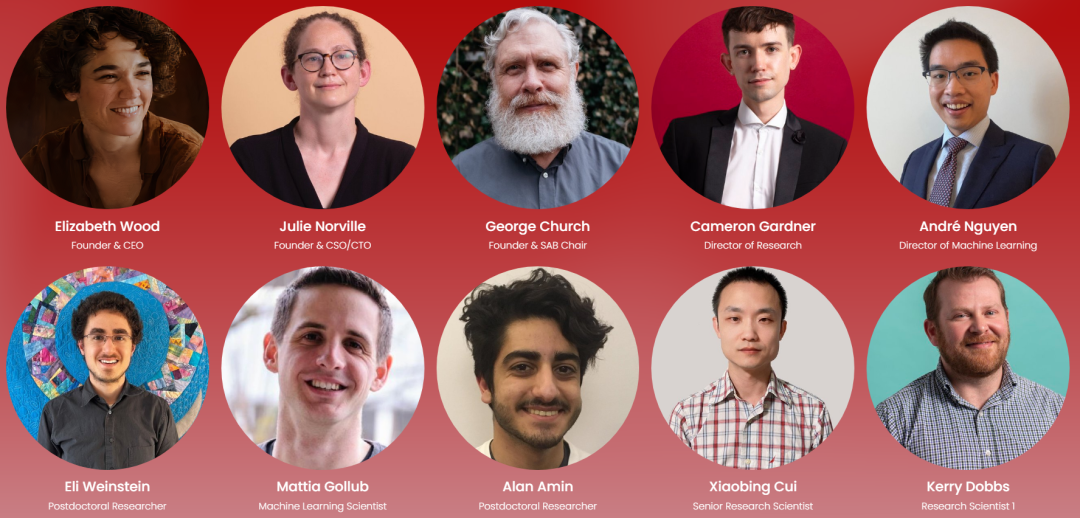
▲JURA Bio TeamImage Source: JURA Official Website
TCR-NK's IND Application Approved by FDA
NY-ESO-1 TCR/IL-15 NK is an adoptive natural killer (NK) cell,T-cell receptor (TCR) with enhanced affinity for NY-ESO-1-specific umbilical cord blood-derived NK cells. These cells are designed to express CD3, IL-15, and TCR, using the same manufacturing method as engineered CAR-NK, whose safety and efficacy in lymphoma have been demonstrated. The Phase 1 study of NY-ESO-1 TCR/IL-15 NK is expected to begin in the third quarter of 2023, which is alsoThe First TCR-NK Clinical Study for Hematologic Malignancies.
TCR-engineered NK cells via unique natural receptorsRetaining their intrinsic ability to target tumor cells, NK cells kill tumor cells lacking major histocompatibility complex (MHC) through the "missing self" mechanism.,Reduced the likelihood of disease escape through the primary mechanism of acquired resistance.Previous studies have confirmed that NY-ESO-1 TCR / IL-15 NK cells do not kill healthy human cell lines from organs such as the heart, lungs, liver, and kidneys.
It is reported that Syena's TCR-NK platform was established based on the discoveries of Dr. Katy Rezvani, a professor at MD Anderson Cancer Center and co-founder of Syena, and the platform has been exclusively licensed by MD Anderson.Its goal is to develop a series of validated novel cancer antigens, including NY-ESO-1 and other undisclosed TCRs, to create potential first-in-class therapies."NY-ESO-1 is highly expressed in some multiple myeloma patients and associated with poor prognosis, so this clinical study will be key to further understanding the potential of TCR-NK therapy in hematologic malignancies," said Dr. Katy Rezvani.
Conclusion
Exciting Live Broadcast Preview
Press and hold to scan the QR code and participate immediately ↓
Recommendation
1
September 26 (Tuesday) 19:00-21:00
Process Development and Critical Quality Control Analysis of ADC Drugs


Dian Dian "Share”、“Like" and "In View",Give me a little recharge~