

Kunshi Biotech, Nanjing Gulou Hospital, and Jiangsu Institute of Cell Therapy Drug Research Enter Strategic Clinical Collaboration on CAR-M for Autoimmune Diseases
Rock Roc Biotechnology
Macrophage Chimeric Antigen Receptor Therapy Developer
Disclaimer: Due to limited expertise, errors are inevitable, and some information may not be the most up-to-date. Feel free to point out any issues in the comments. This article is solely for the introduction of medical and health-related drugs, not a recommendation of treatment plans (if applicable); it does not constitute any investment advice.
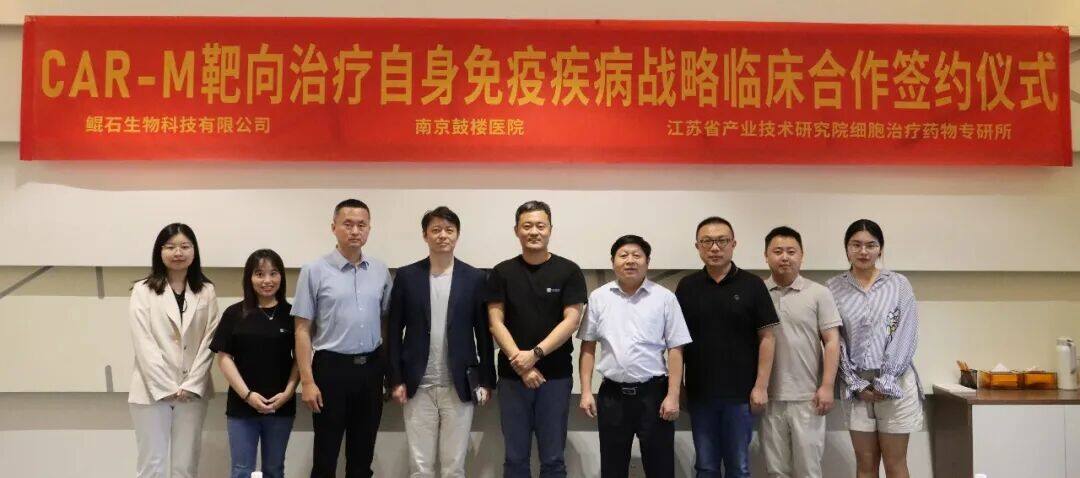
(Left 3: Professor Shi Ming, Executive Director of the National and Local Joint Engineering Laboratory for Tumor Biotherapy in Jiangsu Province; Left 4: Dr. Yin Jianguo, Chairman of Suzhou Industrial Park Biotech Development Co., Ltd.; Center: Dr. Yin Xiushan, CEO of ROC ROCK Biotechnology; Right 4: Professor Sun Lingyun, Director of the National Regional Medical Center at Nanjing Drum Tower Hospital and President of the Second Affiliated Hospital of Anhui Medical University)
Autoimmune diseases are a group of conditions in which the immune system mistakenly attacks the body's own tissues and organs, such as systemic lupus erythematosus, rheumatoid arthritis, multiple sclerosis, inflammatory bowel disease, etc. These diseases often cause long-term suffering for patients, severely impacting their quality of life. Current treatment methods can usually only control symptoms rather than cure the diseases, and they come with a range of side effects.
Systemic lupus erythematosus (SLE) is a heterogeneous chronic autoimmune disease. The presence of various autoantibodies represented by antinuclear antibodies (ANA) in the serum and multi-system involvement are the two main clinical features of SLE. Traditional treatments include immunosuppressants, biologics, and antimalarial drugs, which have many limitations and an urgent need for safer and more effective therapeutic approaches.
Professor Sun Lingyun's team from Gulou Hospital, Nanjing University, has successfully solved the global challenge of treating refractory systemic lupus erythematosus after 18 years of relentless efforts, reducing the 5-year mortality rate of this disease from 45% to 16%. The team was the first internationally to carry out allogeneic mesenchymal stem cell therapy for autoimmune diseases such as systemic lupus erythematosus, and successfully promoted the application of their research results to 35 units within and outside the province. Since 2007, they have treated more than 1,700 cases with mesenchymal stem cell transplantation without any treatment-related deaths. The effective rate of their treatment for refractory systemic lupus erythematosus can reach about 60%, which is quite remarkable. The Phase 1 and Phase 2 clinical studies of the team’s umbilical cord blood mesenchymal stem cell injection for lupus nephritis were approved in June 2022, and the research is currently proceeding smoothly.
In systemic lupus erythematosus, CD19, as a protein on the surface of B cells, is involved in disease flare-ups. At the same time, CD19 is also a target for several CAR-T therapies currently approved for treating hematological malignancies. In recent years, a team from the University of Erlangen-Nuremberg in Germany has used CD19-targeted CAR-T therapy to treat six lupus patients. So far, no relapse has been observed in the longest-followed patient (17 months), and none of the patients are using any systemic lupus erythematosus medications. This suggests that lupus may be an easier target for CAR-T cell therapy than B-cell tumors.
Professor Ming Shi's team from Xuzhou Medical University, dedicated to the research and development of CAR-T cells and exploratory clinical trials, has completed clinical treatment for over 600 cancer patients. The team developed humanized CD19 CAR-T and BCMA CAR-T, pioneering the use of CD19 plus BCMA dual-target CAR-T cell therapy for advanced multiple myeloma. They also expanded the indications of CAR-T by utilizing the B-cell depletion effect of dual-targeted CAR-T cells to treat refractory autoimmune diseases in neurology, such as chronic Guillain-Barré syndrome, neuromyelitis optica, and myasthenia gravis. In January 2021, the team successfully cured a Pakistani patient using CD19 CAR-T + BCMA CAR-T combination therapy for multiple myeloma. In 2022, the 21.3-month long-term follow-up results of this therapy were published in the top international academic journal *J Clin Oncol*. Among the 62 infused patients, the objective response rate (ORR) was 91.9%, with complete or better responses (sCR+CR) at 59.6%. Additionally, 77% (43/56) of patients achieved MRD negativity, with good long-term safety. The efficacy surpasses the two marketed BCMA CAR-T products.
The Potential of CAR-M Targeted Therapy in Autoimmune Diseases
Macrophages, as the main force of innate immunity, possess functions such as phagocytosis, antigen presentation, and secretion. They are the first line of defense in the immune system against pathogens and the primary executors in phagocytosing dead and aging cells to maintain the body's dynamic balance. Engineered macrophages hold broad therapeutic prospects and enormous potential for treating tumors and systemic diseases. As a leading company in China for CAR-M therapy, ROC ROCK Biotechnology has already demonstrated forward-looking results in treating solid tumors such as breast cancer, ovarian cancer, and gastric cancer, showcasing the significant therapeutic possibilities of CAR-M in solid tumors. Dysfunctional B cells are the culprits behind autoimmune diseases like lupus erythematosus. There are multiple ways to eliminate these B cells, including commonly used lymphodepletion. However, due to insufficient depth and incomplete depletion, relapses often occur. By engineering macrophages to precisely identify dysfunctional B cells hidden deep within various tissues that cannot be eliminated, we aim to achieve the treatment of autoimmune diseases and lupus erythematosus.
Strategic Clinical Collaboration: Entering a New Era
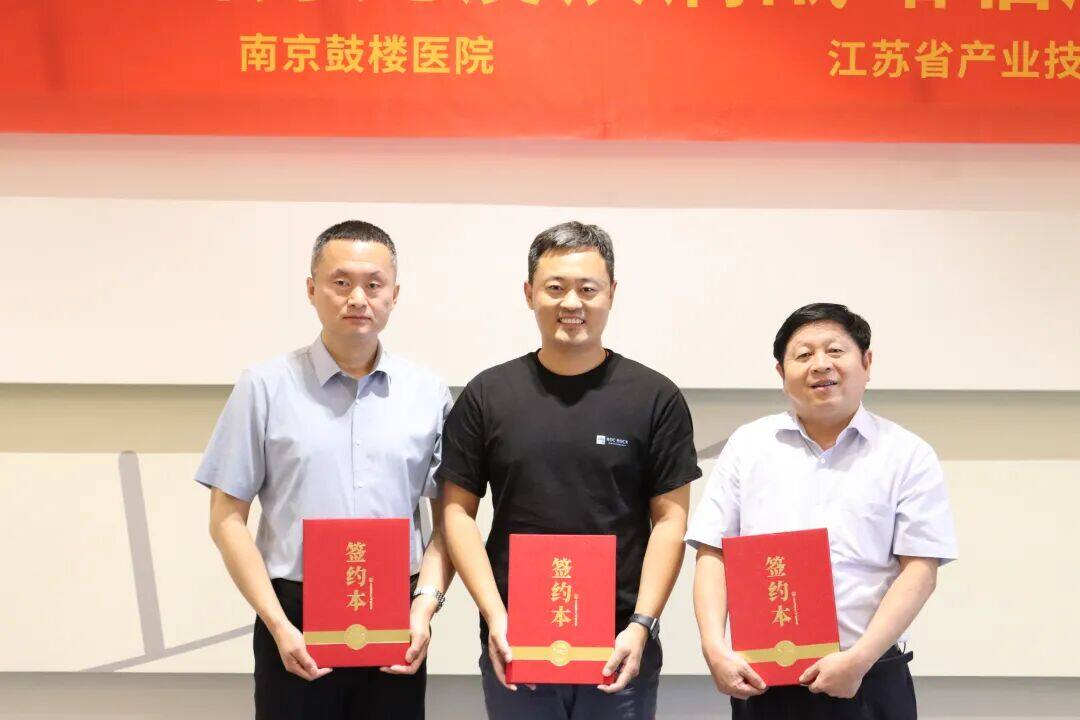
This cooperation agreement marks that ROC ROCK Biotechnology, Nanjing Drum Tower Hospital, and the Cell Therapy Drug Research Institute of Jiangsu Industrial Technology Research Institute have entered an international uncharted territory in the field of cell therapy. It also represents that China's cell therapy sector has entered a new phase driven by original research and development. This collaboration is also a proactive attempt at multi-party industry-academia-research cooperation in the Yangtze River Delta region. By pooling the expertise and resources of all parties, it aims to advance scientific research and progress in the field of autoimmune diseases, accelerate the R&D and clinical application of CAR-M targeted therapy, and bring more effective treatment options to patients.
This collaboration will undoubtedly deepen the cooperation and exchange among the three parties in the field of immune diseases, advancing towards a higher level and higher quality. Taking this as a new starting point, we will work together to create a new situation of "win-win cooperation."
Source of the Article: ROC ROCK Biotechnology