

Thermo Fisher's $4.2B FEI Acquisition as Growth Catalyst Amid China's Domestic Push Led by Academicians

Thermo Fisher Scientific
Biotechnology Product Developer
"The craze of Chinese people buying scientific research instruments has saved countless foreign companies!" This statement made by the Vice Minister of Science and Technology more than ten years ago still holds true.
Thermo Fisher's Q2 Revenue Drops 3% Amid Declining Demand in China's Biotech Sector
Thermo Fisher Scientific CEO Says U.S., China Customers More Cautious on Research Instrument Purchases. Despite Weak Demand for Research Instruments, Thermo Fisher’s Electron Microscopes See Strong Growth, Driving 10% Year-over-Year Increase in Q2 for the Analytical Instruments Segment.
The electron microscope is the growth secret of Thermo Fisher Scientific in the winter, but it is one of the most severely restricted major scientific instruments for basic research in China.
Whoever masters the most advanced scientific instruments holds the initiative in technological development. High-end microscopes are tools for understanding fine structural information. In 2022, Peking University alone spent 40 million yuan on purchasing high-end microscopes, with all the supplied brands being foreign companies such as Zeiss, Leica, and Thermo Fisher Scientific.
But unlike more than a decade ago, in the high-end microscope field, a group of domestically produced enterprises have emerged, gradually reclaiming the territory of scientific research instruments.
In the past, the market space for scientific research instruments was limited and overlooked. However, keen institutions have now noticed the changes in this field and are bravely placing their bets.
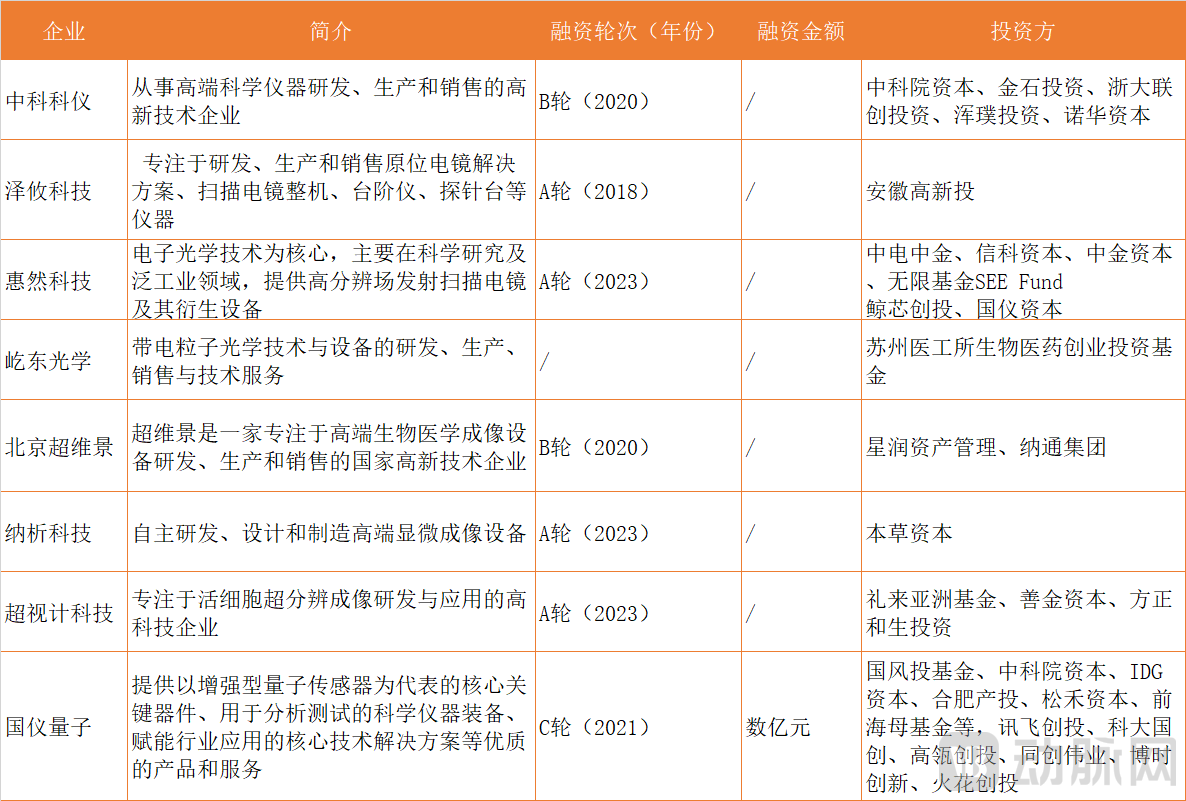
Some Financing Events in China's High-End Microscope Field
Research institutes and universities have become the main force in breaking through this field. Several academicians have embarked on entrepreneurial ventures to transform scientific research, and high-end microscope technology has achieved repeated breakthroughs.
At the same time, in downstream applications, high-end microscopes have also begun to move out of laboratories and onto the fast track of development in the high-end manufacturing industry. The demand for high-end microscopes in China's downstream biomedicine, new energy, and semiconductor research and development and manufacturing fields has greatly increased.
In the life sciences industry, high-end microscopes can observe structures at the viral, organelle, sub-organelle, and atomic levels, making them an essential tool for life science research; over 80% of life science research is related to microscopes.
How difficult is the development of high-end microscopes? Almost every major breakthrough in high-end microscopes has received a Nobel Prize.
Microscopy technology itself (not including research findings discovered through microscopy) has won the Nobel Prize five times, with the most recent being the 2017 Nobel Prize in Chemistry awarded for cryo-electron microscopy.
High-end microscopes include many categories, such as laser confocal microscopes, two-photon microscopes, super-resolution fluorescence microscopes, electron beam microscopes, and ion beam microscopes. Among these, scanning electron microscopes (SEM) and transmission electron microscopes (TEM) are essential instruments for cutting-edge scientific research, with a high level of external dependence. In 2018, they were listed by the Science and Technology Daily as one of the 35 key "bottleneck" technologies critical to the nation.
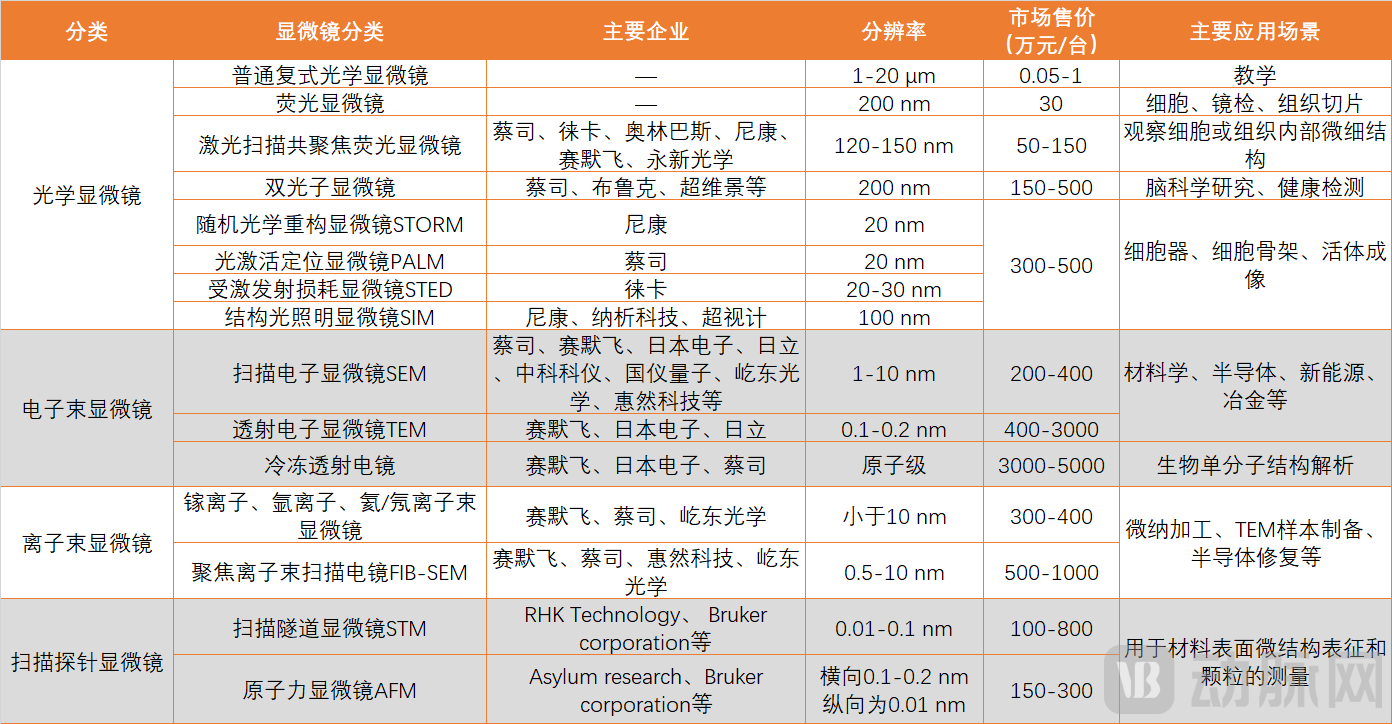
Source: CAS Venture Capital
High-end microscopes have been a bottleneck for many years, but in the past two years, several domestic startups have secured financing, and listed companies in related fields have also achieved rapid growth in performance.
Why Has This Field, Which Has Been "Strangled" for Years, Gained More Attention in Recent Years?
On the one hand, scientific research needs have long relied on overseas supply, and may face the risk of supply disruption at any time. The acceptance of domestic brands by Chinese universities is increasing.Against this backdrop, the localization process of high-end microscopes in China has accelerated significantly. The annual procurement amount for electron microscopes by Chinese universities reaches hundreds of millions of yuan. According to VCBeat, in 2022, Peking University spent over 40.05 million yuan on microscope procurement, with most equipment being imported. Other universities in China are also steadily releasing procurement demands.
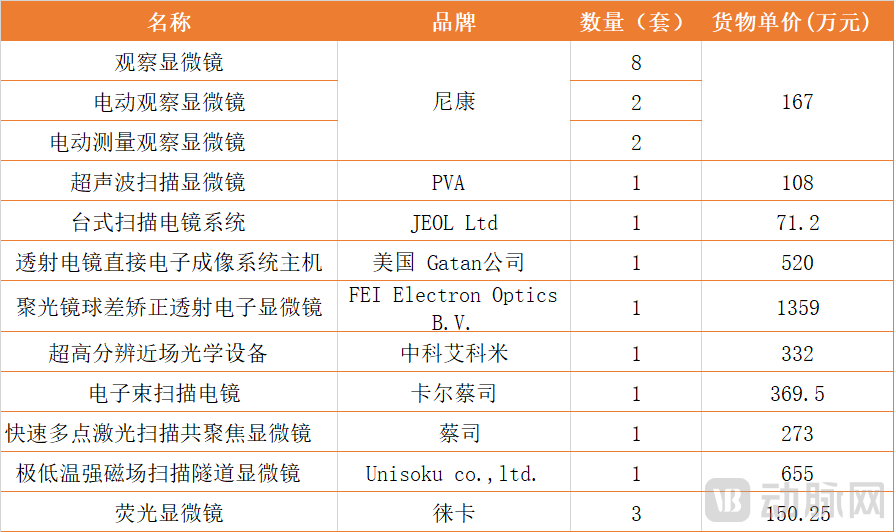
2022 Peking University High-End Microscope Bidding and Procurement List
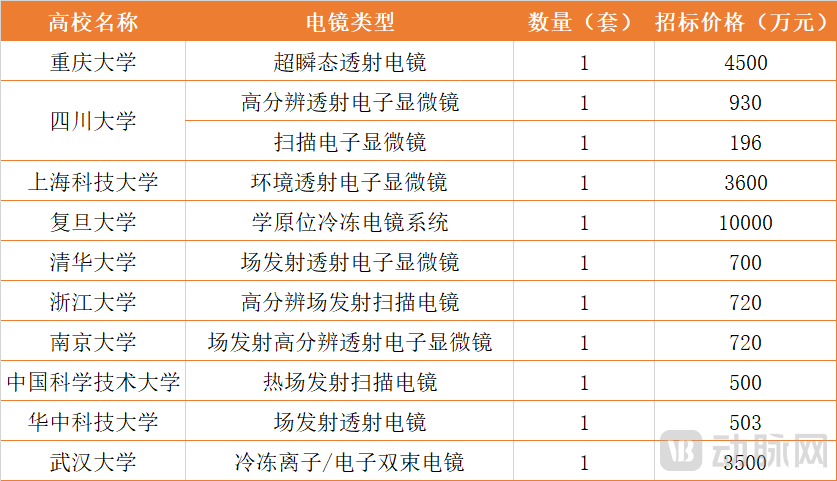
High-End Microscope Bidding Requirements of Some Universities in China in 2023
The surge in demand in the scientific research market is not the only reason why multiple domestic investment institutions are investing in the high-end microscope field.
On the other hand, high-end microscopes have hitched a ride on the fast-moving train of development in the new energy and semiconductor industries within the industrial field.In the field of electron microscopy, the proportion of industrial applications has begun to surpass that of scientific research applications, accelerating the transformation of technological innovations in basic research into profitable companies.
Wei Qiang, an investor at CAS Venture Capital, once stated in the article "After the Clouds Part — The High-Quality Domestic Replacement of Microscopes Is Worth Expecting" that the development of scientific instruments is closely related to the level of a country's manufacturing industry. Advanced manufacturing drives the demand for high-end instruments and equipment, while high-end instruments support technological progress and the upgrading of the manufacturing industry. China’s pursuit of high-level self-reliance in science and technology, as well as the security and stability of industrial and supply chains, has brought development opportunities for domestically produced scientific instruments. For example, China’s new energy, new materials, and semiconductor industries are currently in a period of rapid development. These industries have a relatively high and rigid demand for electron microscopes, and industrial applications have opened up market space for domestically produced electron microscopes.
The scanning electron microscope is the most widely used electron microscope product in the new energy industry. Some insiders have vividly described that the scanning electron microscope has received an "unexpected" windfall in the new energy lithium battery industry.
The high-end upgrade of Chinese manufacturing, coupled with the penetration of high-end microscopes in fields such as education, life sciences, nanotechnology, and semiconductor technology, has led to multiple institutions betting on high-end microscopes due to the development opportunities brought by technological innovation and industrial revolution.
The industry is rapidly shifting, and the moment for high-end microscopes is about to arrive.
This judgment can be confirmed from the financial reports of optical microscopes in China.
Three listed companies in China can produce high-end optical microscopes: Motic, Sunny Optical Technology, and Yongxin Optics.
Ningbo Yongxin Optics' main businesses include two major segments: optical microscopes and optical components. Yongxin Optics has gradually broken through the bottleneck technology of optical microscopes from contract manufacturing, and is the first company in China to achieve mass production of confocal microscopes.
Yongxin Optics previously manufactured optical microscopes for brands like Zeiss and Nikon under contract. However, in the past two years, its self-owned brand of high-end optical microscopes has started experiencing rapid growth in the scientific research market. In 2022, the revenue from Yongxin Optics' high-end optical microscope brand, the NEXCOPE series, exceeded 100 million yuan, marking a nearly 70% year-on-year increase, with scientific research high-end microscopes growing by over 100%. In the first half of this year, Yongxin Optics' high-end optical microscope performance continued to maintain rapid growth, achieving sales revenue of 187 million yuan in its optical microscope business, a year-on-year increase of 16.49%.
The main driver of Yongxin Optics' performance growth comes from high-end series products such as bio-fluorescence microscopes, with incremental demand primarily from research institutions, hospitals, and biopharmaceutical customers.
The price of a single high-end microscope ranges from millions to tens of millions, and the size of the entire market in China is still uncertain.
First, let's look at optical microscopes. According to data from Zhiyan Consulting, the market size of optical microscopes in China reached 5.548 billion yuan in 2021. High-end optical microscopes are dominated by the "Big Four" in optics (Leica, Zeiss, Olympus, Nikon). Among them, according to research data from Western Securities, the market space for confocal microscopes in 2021 was approximately 2.52 billion yuan.
Next, let's look at electron microscopes. The electron microscope market is currently in a phase of breaking the domestic production void, with the market mainly dominated by life science instrument giants Thermo Fisher Scientific, ZEISS, JEOL, and Hitachi.
In China, scanning electron microscope enterprises include Zhongke Instruments, Guoyi Quantum, Huiran Technology, Yidong Optics, Gangyan Neike, Jushu Technology, Baishichuang, Dashu Technology, Qiyue Technology, and other companies.
In terms of market size, the domestic electron microscope market in China reached approximately 6 billion yuan in 2022, with a market growth rate of around 10%.
The key point of investing in life science tools is to find products with relatively large single-item space among many categories.
High-end microscopes come in various types, and even the flagship microscope products of top suppliers have their own focuses.
Which Segmented Products Are Favored Among the Many Microscopes?
After interviewing multiple investment teams in the industry, we learned that, apart from the company's technical strength, the market space for the product and the competitive landscape are also important considerations. Two-photon microscopes, super-resolution fluorescence microscopes, electron beam microscopes, and ion beam microscopes are areas of key focus.
The above-mentioned major types of microscopes have unique value in different scientific research and industrial scenarios.
The value of two-photon microscopy lies in its becoming a tool for brain science research. The miniaturized three-photon microscope developed by the Chinese company Chaowei Jing首次实现了自由行为动物非侵入式深脑成像解决方案, which can penetrate the entire cortex and corpus callosum of a mouse brain, enabling direct observation and recording of the CA1 region of the hippocampus while avoiding brain tissue damage caused by implanted Grin Lenses.
Brain science is a rapidly growing field, with China's Brain Project officially launched in 2021, expecting an investment of up to 50 billion yuan over five years. Two-photon microscopes, as research tools in brain science, will benefit from the development in this field.
Super-resolution fluorescence microscopy is expected to be used for drug screening, with considerable market prospects. In 2014, the Nobel Prize in Chemistry was awarded to three scientists who made outstanding contributions to super-resolution fluorescence microscopy technology. This technology allows optical microscopes to break through the resolution limit set by diffraction, enabling them to observe fine structures within cells with ultra-high clarity and track protein movements. The emergence of super-resolution fluorescence microscopy has provided us with a deeper understanding of the complex structures and functions of many biological systems.
The field of super-resolution fluorescence microscopy has seen a major financing deal. Eikon Therapeutics, a California-based company in the U.S., secured $517.8 million in its Series B funding round, leveraging super-resolution fluorescence microscopy technology to observe protein movements within cells in real time. Eikon Therapeutics was founded by Dr. Eric Betzig, who won the Nobel Prize in 2014.
In China, there are also companies布局this technology. Guangzhou Chaoshiji Biotechnology Co., Ltd., which develops super-resolution fluorescence microscopes, has received investments from multiple institutions including Qiming Venture Partners, CAS Star, Xiechuang Fund, Lilly Asia Ventures, and Shanjing Capital.
In electron beam microscopes, the three major categories—Scanning Electron Microscope (SEM), Transmission Electron Microscope (TEM), and Cryo-Transmission Electron Microscope—each have their own strengths. In 2016, Thermo Fisher Scientific acquired FEI, a microscope manufacturer, for $4.2 billion to obtain electron microscope solutions.
Scanning Electron Microscopes Ride the Fast Track of New Energy and Semiconductor Industries' Growth; Due to the Expansion of Downstream Application Scenarios, Scanning Electron Microscopes Account for 70% of the Electron Microscope Market Share. High-Resolution Transmission Electron Microscopes Can Cost up to 7 Million Yuan Each; According to VCBeat Statistics, High-Resolution Transmission Electron Microscopes Are the Most Purchased Type of Electron Microscope by Universities This Year. Cryo-Electron Microscopes, a Well-Known High-End Research Instrument, Are Increasingly Utilized in the Life Sciences Field to Study Protein Structures. Fudan University's Cryo-Electron Microscope Tender This Year Reached a Price of 100 Million Yuan.
Ion beam microscopes are mainly used for transmission electron microscope sample preparation, circuit repair, and chip reverse engineering. In this field, Thermo Fisher Scientific and Zeiss have the highest market share, with domestic participants including Huiran Technology and Yidong Optics.
In the high-end microscope field, "Made in China Renaissance" is more appropriate than "Made in China Replacement" to describe this industry.
Because in the 1960s, China once stood at the technological peak of advanced microscopes.
In 1958, Huang Lanyou, who had returned from studying in Germany, and Wang Daheng from the Changchun Institute of Optics, jointly developed China's first transmission electron microscope. At that time, the gap between China and foreign countries was not significant.
Zhang Ze, academician and founder of QiYue Technology, who developed the in-situ high-temperature scanning electron microscope (SEM), once regretfully stated: "In 1958, our country had its own transmission electron microscope, but now, it's gone. Meanwhile, TESCAN, a company that started R&D around the same time as China, has now become one of the mainstream international manufacturers, holding a significant position in the scanning electron microscope field."
After the reform and opening up, under the impact of imported brands, coupled with the fact that high-end manufacturing and the biopharmaceutical industry were not well developed at the time, the domestic market's demand for high-end microscopes was also limited. The motivation for domestic independent research, development, and iterative upgrades was insufficient, leading to a gradual widening of the gap between China and foreign countries in the field of high-end microscopes.
It was not until recent years, driven by industrial growth and influenced by geopolitical factors, that the development of high-end scientific research instruments in China gradually accelerated. On March 13, 2021, the Outline of the 14th Five-Year Plan for National Economic and Social Development and the Long-Range Objectives Through 2035, issued by the state, explicitly emphasized the need to persistently strengthen basic research, build major science and technology innovation platforms, and enhance the research and manufacturing of high-end scientific instruments.
With the large-scale investment in domestic scientific research funds, a group of enterprises achieving independent research and development have emerged in China. In the battle to regain autonomy over high-end scientific research instruments, what challenges do domestic enterprises still need to address?
First, we need to achieve independent research and development of core components. Currently, many core components of high-end microscopes in China are subject to bottlenecks.There is still a significant gap in the level of certain domestically produced core components, and reliance on overseas supplier chains faces instability.
Super Dimension Vision, a company that develops two-photon microscopes, once told VCBeat in an interview, "The first 'commercial trial' project we did was a two-photon light sheet microscope. One of its core components, the zoom lens, was only available from a U.S. company. We could purchase it normally when we were conducting research or using it in small-scale applications, but once we decided to industrialize the product, the U.S. company stopped supplying it, which directly caused the project to fail."
The domestic revival of high-end microscopes is closely related to the maturity of the industrial chain development. The development of China's biopharmaceutical, new energy, and semiconductor industries has driven demand, and similarly, the upstream parts and components industrial chain needs to be completed.
The second major challenge is the industrialization challenge.To productize high-end precision scientific research instruments, the reliability and stability of the products must be solid. Whether good stability can be achieved involves materials and processes. For the localization of high-end microscopes in China, the bigger issue is not a technical problem but an engineering and process problem.
If we only look at the data from published papers, there are quite a few university teams in China that are capable of building high-end microscope platforms. However, the journey from scientific research to industrialization is long, and teams that can achieve industrialization are scarce in China.
Recently, the release of Huawei Mate 60 represents a breakthrough in China's chip sector, which has long been a bottleneck. In 2018, transmission electron microscopes and scanning electron microscopes, like chips, were listed among the 35 "bottleneck" technologies restricting the development of China's industry. Over the past five years, several technologies on this list have achieved localization in production. The localization of high-end microscopes in China has seen rapid progress in recent years, and it is believed that success will eventually be achieved.
References:
This key industry, which is comparable to the chip industry, has regressed instead of progressing over the past twenty years. There is not a single strong player in all of China — VCBeat
Beyond the Clouds —— The High-Quality Domestic Replacement of Microscopes is Worth Expecting | CASVC Apple π —— CASVC
2023 Perspective on the "Path Underfoot" in the Scanning Electron Microscope Industry – Luke Ren Studio
Entropy Intelligence Technology Stuns with the Release of Super-Resolution and Confocal Microscopy Imaging Analysis System —— BioValley
Exclusive Interview with Academician Zhang Ze: The Bowl of Science Must Be Held in Our Own Hands——DeepTech