Molecular Property, Bioavailability, and Permeability Analysis of Bayer's Compound Dataset

Bayer
Pharmaceutical Product R&D Developer
On February 8, 2023, JMC magazine reported on the molecular properties, bioavailability, and permeability data analysis of the Bayer compound series released by researchers from the pharmaceutical development team at the German pharmaceutical giant Bayer. These data and correlation analyses have significant practical implications for drug molecule design. As stated in the article, "These property−structure relationships are combined to provide design guidelines for bioavailable drugs in both traditional and 'beyond rule of 5' (bRo5) chemical space." Based on the detailed and specific content of the original text, the author shares these insights with readers.
The corresponding author of the original text is Daniel H. O’ Donovan, and the other three authors, Claudia De Fusco, Lara Kuhnke, and Lara Kuhnke, are all from Bayer AG in Germany.
The main body of the original text is quite lengthy, fortunately, the author summarized the conclusive key points for optimizing F% (oral bioavailability) and permeability at the end. The tweet will also present these points to everyone at the end.
Compared with other types or routes of administration, oral small-molecule drugs have numerous advantages, which will not be elaborated here. For oral small-molecule drugs, the goal of medicinal chemists is to design compounds with high oral bioavailability (F%) to achieve predictable and robust exposure in clinical settings.
Many factors, such as dissolution from solid to liquid phase (solubility), first-pass metabolism in the liver (hepatic metabolism), intestinal metabolism, and chemical instability, can lead to incomplete bioavailability. However, passage through the intestinal wall (permeability) is the key determinant of F%. These processes can be simulated using in vitro and in vivo tests, enabling drug designers to efficiently address issues related to low F%. In drug chemistry research, problems associated with drug metabolism and pharmacokinetics (DMPK) can be resolved through property-based design. For instance, molecular design teams create new chemical structures to modulate molecular properties such as logD and molecular weight, leveraging established relationships between these properties and DMPK characteristics to guide the optimization of oral bioavailability, permeability, and related parameters.
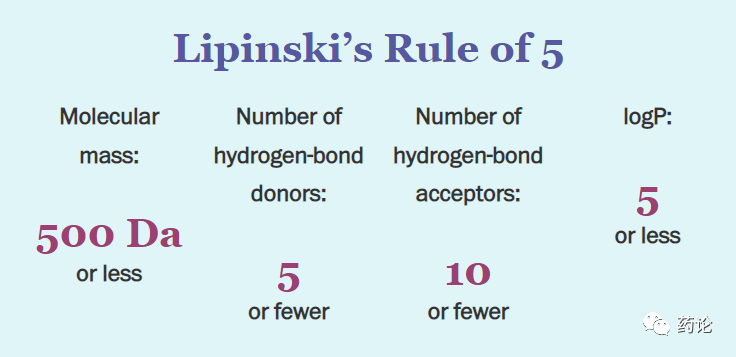
Lipinski’s Rule of Five (Source: Reference 6)
Several key papers have elucidated the relationship between molecular properties and F%, starting with the groundbreaking "rule-of-five" (Ro5) introduced by Lipinski and colleagues and expanded by Veber et al. In 2001, Lipinski, a senior medicinal chemist at Pfizer, proposed the five fundamental rules for screening drug-like molecules, abbreviated as Rule of 5 (Ro5), also known as the "five rules," since they are all related to the number five. Both authors recommended that molecular properties should be constrained within specified ranges or adjusted to maximize the likelihood of achieving high oral bioavailability. Similarly, authors from Pfizer introduced the "Golden Triangle," outlining the logD and molecular weight ranges to maximize the potential for low clearance and high oral absorption. Other authors have proposed effective computational solutions for predicting DMPK behavior based on chemical structure, molecular properties, or in vitro assay data. Several composite parameters based on molecular properties have been developed to maximize "drug-likeness," among which ligand lipophilic efficiency (LLE) is perhaps the most widely used. LLE combines potency and lipophilicity into a single parameter, while researchers at Pfizer proposed lipophilic metabolic efficiency (LipMetE) as a corollary that integrates hepatic metabolism and lipophilicity. A team from Roche recently demonstrated that LipMetE is proportional to the logarithm of the in vivo half-life (t1/2).
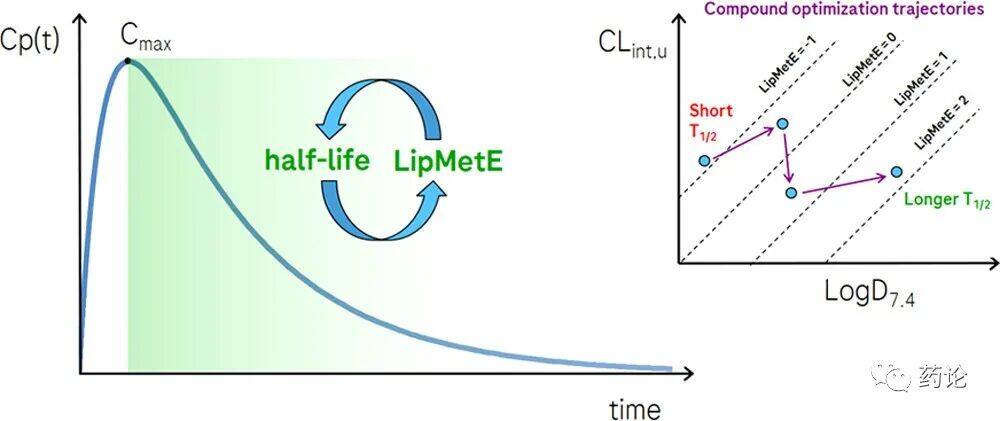
Figure 1. Source: Reference 3
Composite parameters have also been applied to drug design for "beyond Rule of Five" (bRo5) compounds. By using a simple multi-parameter scoring function, DeGoey and colleagues at AbbVie demonstrated that designing orally bioavailable bRo5 compounds is possible. In another paper, colleagues at AstraZeneca attempted to identify chemical properties related to the bioavailability of proteolysis-targeting chimeras (PROTACs), an emerging drug modality with molecular weights and characteristics far exceeding the boundaries of Ro5 space. Authors from Novartis also reassessed the Ro5 concept, noting that as drug properties evolve, prescribed limits become less critical. Similarly, Tinworth and Young from GSK suggested that Ro5 limits, such as molecular weight, may be less important than logD and the number of aromatic rings in predicting permeability and solubility of drug-like compounds. Taken together, these studies indicate that while structure−property correlations and constraints may be useful in molecular design, it is challenging to reconcile Ro5-based design rules with the recent shift in drug discovery within the bRo5 space.
To identify trends in molecular properties that could guide the optimization of oral bioavailability and permeability, Bayer researchers examined data from approximately 2,000 compounds in the Bayer Pharmaceuticals compound collection for which rat bioavailability data had been measured. Using a large amount of available Caco2 permeability assay data (over 20,000 compounds), the permeability data of the Bayer compound set was analyzed and compared with calculated molecular properties such as cLogD7.5, molecular weight, and calculated pKa. Unless otherwise specified, calculated logD values were used throughout the study to maximize the dataset available for analysis. When comparing measured and predicted logD values, the Bayer cLogD7.5 model provided an excellent prediction with a Pearson correlation R² = 0.90.
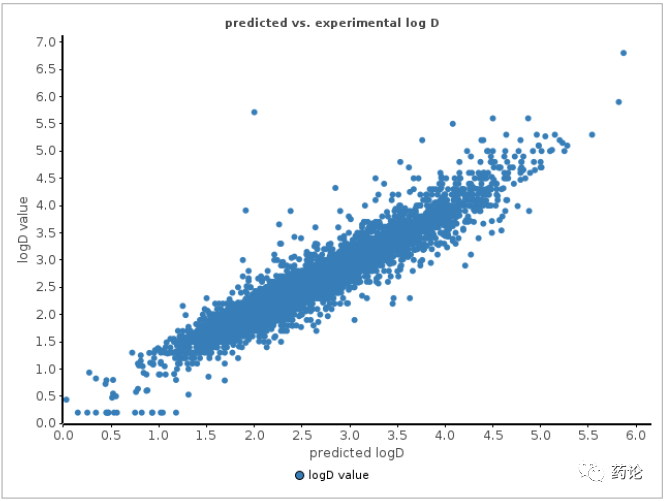
Figure 2. Experimental and Predicted logD7.5 (Reference 4)
Similarly, for basic and acidic compounds that are partially or fully ionized at physiological pH (approximately 7.5), the advent of reliable pKa calculations has proven to be particularly useful. Researchers at Bayer identified trends between pKa and permeability, which could assist the medicinal chemistry community in optimizing DMPK properties. The researchers incorporated both Ro5 and bRo5 compounds in their analysis to derive overarching trends not limited by subsets of chemical space. Overall, this study summarized established parameters of drug-likeness while also shedding light on new and useful design guidelines based on drug molecular properties to facilitate the optimization of F% and permeability.
Before explaining this article, there are a few basic concepts that need to be reviewed again:
✔Lipophilicity is the tendency of a compound to preferentially partition into nonpolar lipid media rather than into aqueous phases. It plays a crucial role in determining other properties of a drug.
A traditional method for evaluating lipophilicity is to examine the two-phase distribution of a compound between immiscible nonpolar and polar liquids. Typically, octanol is used as the nonpolar phase, while a buffered aqueous solution serves as the polar phase. The measured distribution values are expressed as Log P and Log D.
The Log P value depends on the distribution of neutral molecules in the two phases, while the Log D value depends on the distribution of molecules in their neutral form plus the distribution of molecules in their ionized form. Ions have a greater affinity for the polar aqueous phase than for the non-polar organic phase. The proportion of ionized molecules depends on the pH of the aqueous solution, the pKa of the compound, and whether the compound is an acid or a base. For acidic compounds, the ratio of neutral molecules to anions in the solution decreases as the pH increases, so the Log D also decreases as the pH increases. Conversely, for basic compounds, the ratio of neutral molecules to cations in the solution increases as the pH increases. Therefore, the Log D also increases as the pH increases.
✔Drug molecules encounter various membrane barriers in living systems, including gastrointestinal (GI) epithelial cells, capillary walls, hepatocyte membranes, glomeruli, restrictive organ barriers [such as the blood-brain barrier (BBB)], and target cell membranes.
The permeability of a compound varies depending on the membrane, and this difference arises from variations in the lipid system of the cell membrane (passive diffusion), the expression of membrane transport proteins (active transport), or the tightness of cell junctions (paracellular pathway).
The membrane permeability of compounds involves different mechanisms, including passive diffusion, active transport, endocytosis, efflux, and paracellular pathways.
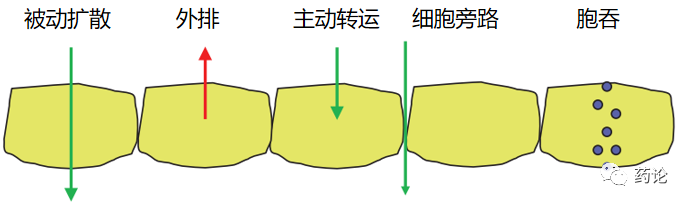
Main Membrane Permeability Mechanisms (Source: Reference 6)
The permeability of a compound is the integration of all feasible permeation mechanisms mentioned above. The term "absorptive transport" is often used to describe the permeation of a compound from the gastrointestinal tract into the bloodstream. As shown in Figure 2, absorptive transport results from the combined effects of passive diffusion (driven by concentration gradients and pH effects), active transport (driven by transporter affinity), and paracellular permeation (driven by molecular size, polarity, and concentration gradients). Conversely, the term "secretory transport" is commonly used to describe the permeation of a compound toward the gastrointestinal tract, which results from the combined effects of passive diffusion and efflux.
The research focused on three key parameters (solubility, liver metabolism, and permeability) to determine their impact and correlation with oral bioavailability. Researchers from Bayer Pharmaceuticals first addressed solubility because it plays a critical role in bioavailability—compounds must dissolve to be absorbed. However, using kinetic solubility data (PBS or citrate buffer medium, pH 6.5), zero correlation was observed with rat bioavailability (R² < 0.01, n = 2018 compounds). The researchers were not surprised by this result since kinetic solubility is merely an approximation of the more relevant thermodynamic solubility parameter. Although kinetic solubility can help exclude in vitro assays potentially affected by compound precipitation, its correlation with oral bioavailability may be low. Moreover, in vivo pharmacokinetic studies are typically conducted using pre-dissolved amorphous substances at low doses, which reduces the influence of dissolution rate and solubility on measured F%. Rapid pH changes during intestinal transit also aid in compound dissolution, especially for compounds that may be ionized at lower pH levels. Based on these considerations, drug discovery teams often measure solubility in simulated gastric and intestinal fluids or at different pH levels to better assess the impact of solubility under biologically relevant conditions.
Study on the Correlation Between Caco2 Cell Permeability (Apparent Permeability Coefficient, Apical to Basolateral, i.e., Papp A-B), Rat Hepatocyte (Rat Heps) Metabolic Stability, and F% is More Valuable. The Linear Regression of F% with Papp A-B and Rat Heps on a Logarithmic Scale Shows Moderate Correlation (R² = 0.26). Heatmap Plots of These Three Parameters Reveal a Clear Trend Consistent with the Expected Impact of Permeability and Liver Metabolism on F%. Empirically, Intestinal Permeability and Drug Efflux are the Most Successful DMPK Optimization Parameters in Preclinical Candidate Selection. Among All Preclinical Candidate Compounds Used for Oral Administration at Bayer, Not a Single Example of Poor Permeability in the Caco2 A-B Papp Assay Has Been Found.
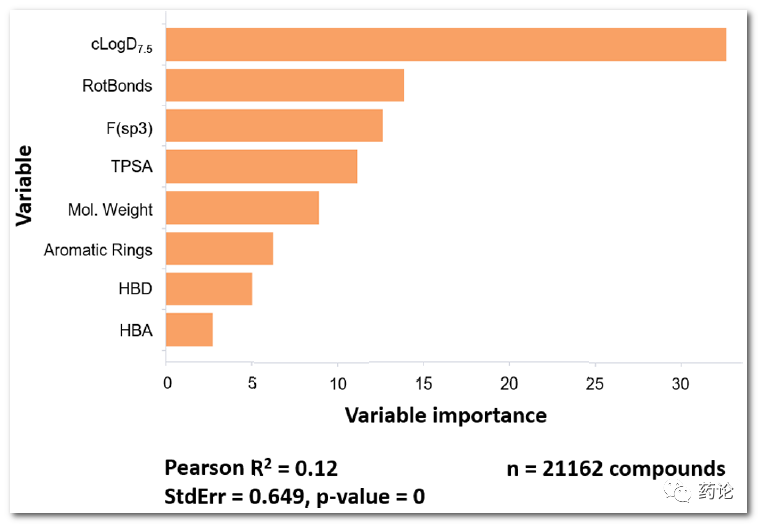
Figure 3. The relative importance of eight commonly used molecular property descriptors as variables in a linear regression model with respect to the logarithm of metabolic stability in rat hepatocytes (L/h/kg). (Reference 1)
Although hepatic metabolism is a key determinant of bioavailability, the structure−property relationships behind metabolism have been extensively covered in previous reports, i.e., among commonly used molecular properties, lipophilicity may be the strongest predictor of hepatic metabolism, as it is thought that lipophilic compounds bind more strongly to metabolic enzymes through hydrophobic interactions. Consistent with this effect, a regression analysis examining eight commonly used molecular properties identified cLogD7.5 as the most important single variable determining rat hepatocyte stability. This analysis was performed using a larger dataset (n = 21,163 compounds) compared to oral bioavailability data. The number of rotatable bonds (rotBonds), fraction sp3 (F(sp3)), and topological polar surface area (TPSA) were the next most significant variables in the researchers' analysis. This result is consistent with previous authors describing the importance of these properties in determining hepatic clearance.
It should be noted that the predictive power of this regression analysis is limited, and several of these attributes may also be interrelated; for example, compounds with higher molecular weight tend to have higher lipophilicity. The relationship between these properties and liver metabolism is also not strictly linear. Nevertheless, this simple model highlights the importance of lipophilicity in determining hepatic clearance, with other molecular properties contributing less significantly.
Next, the researchers attempted to analyze the relationship between calculated properties and the permeability measured in Caco2 cell assays. Throughout the study, compounds with recovery rates below 65% in the Caco2 assay were excluded to ensure only meaningful data was included. Low solubility may be a factor contributing to low recovery rates, as 49% of the excluded compounds showed solubility ≤1 mg/L. In contrast, only 23% of the included compounds (Caco2 recovery rate above 65%) displayed the same level of low solubility.
Regression Analysis Review of Caco2 Papp A-B with the Eight Attribute Descriptive Parameters in Figure 3 Above: Lipophilicity is once again emphasized as the most important determinant of permeability, closely followed by molecular weight, and then hydrogen bond donor (HBD) count. Given the importance of lipophilicity to permeability, the figure below explores the relationship between cLogD7.5 and Papp A-B. To examine the interaction with molecular weight, researchers categorized compounds into low (≤400), medium (400 < x ≤ 600), and high (x > 600) molecular weight ranges. The resulting graph highlights the expected trend that smaller molecules benefit from higher average permeability. In extreme cases of low (cLogD7.5 < 0.5) and high lipophilicity (cLogD7.5 > 5), the average permeability approaches zero. However, outliers do exist, particularly among high logD compounds (cLogD7.5 > 5.5), where several permeable examples can be found.
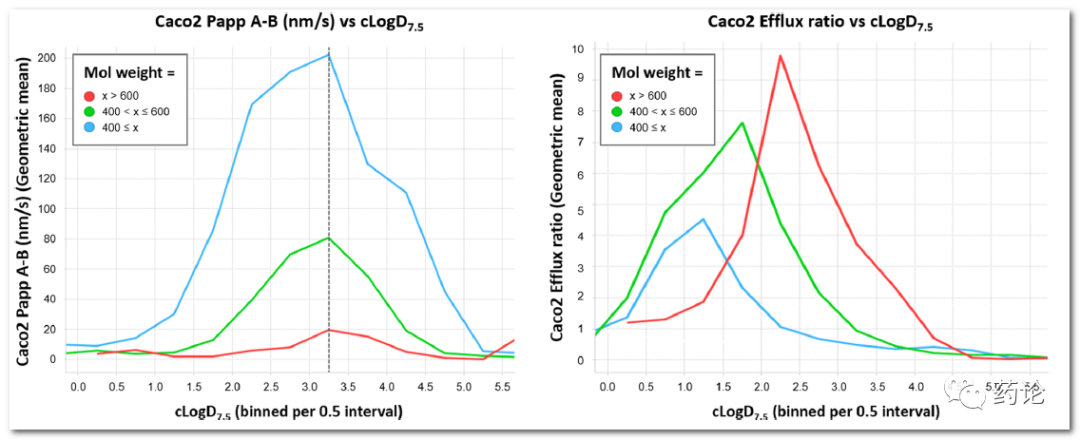
Figure 4. (Left) Relationship between cLogD7.5 and the geometric mean of Caco2 Papp A-B (nm/s) (Reference 1)
Notably, the researchers observed a "sweet spot" for compounds with a cLogD7.5 of 3.25, which exhibited the highest average permeability. This value remained constant, regardless of the molecular weight range considered. The result is highly consistent with the optimal cLogD=3 value proposed by DeGoey et al. in their analysis of high molecular weight bRo5 compounds. Meanwhile, an analysis by Bayer researchers indicated that this optimum value remains unchanged even for smaller compounds with a molecular weight ≤ 400.
Researchers also investigated the relationship between lipophilicity and efflux ratio (ER) in Caco2 permeability assays. Consistent with previous observations on Papp, a trend of lower efflux ratios for compounds with lower molecular weight was noted. However, contrary to the relationship with Papp, there were differences in cLogD7.5 values when the efflux ratio approached its maximum, in which case the efflux ratio varied with molecular weight.
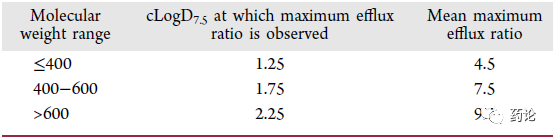 Figure 5. Relationship between molecular weight and maximum efflux ratio in Caco2 permeability assay (Reference 1)
The fact that the cLogD7.5 value with the highest average efflux varies with molecular weight contrasts with the previously observed situation for Papp, which consistently reaches its maximum permeability at cLogD7.5=3.25. Based on this result, Bayer researchers recommend that drug design teams differentially optimize the logD value depending on whether the issue is related to Papp A-B or efflux.
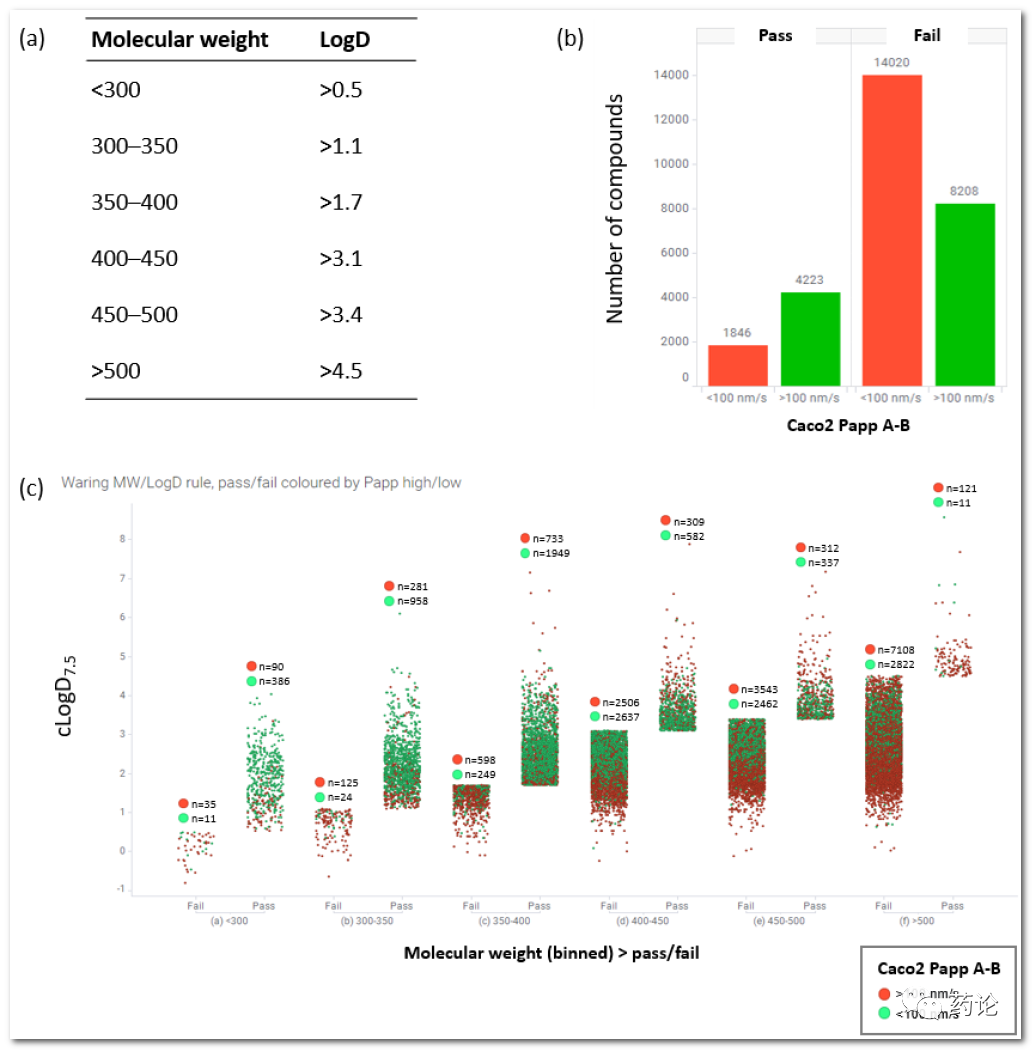 Figure 6. Waring Guiding Principles for the Analysis of the Ability to Differentiate Hypertonic Compounds from Hypotonic Compounds (Reference 4)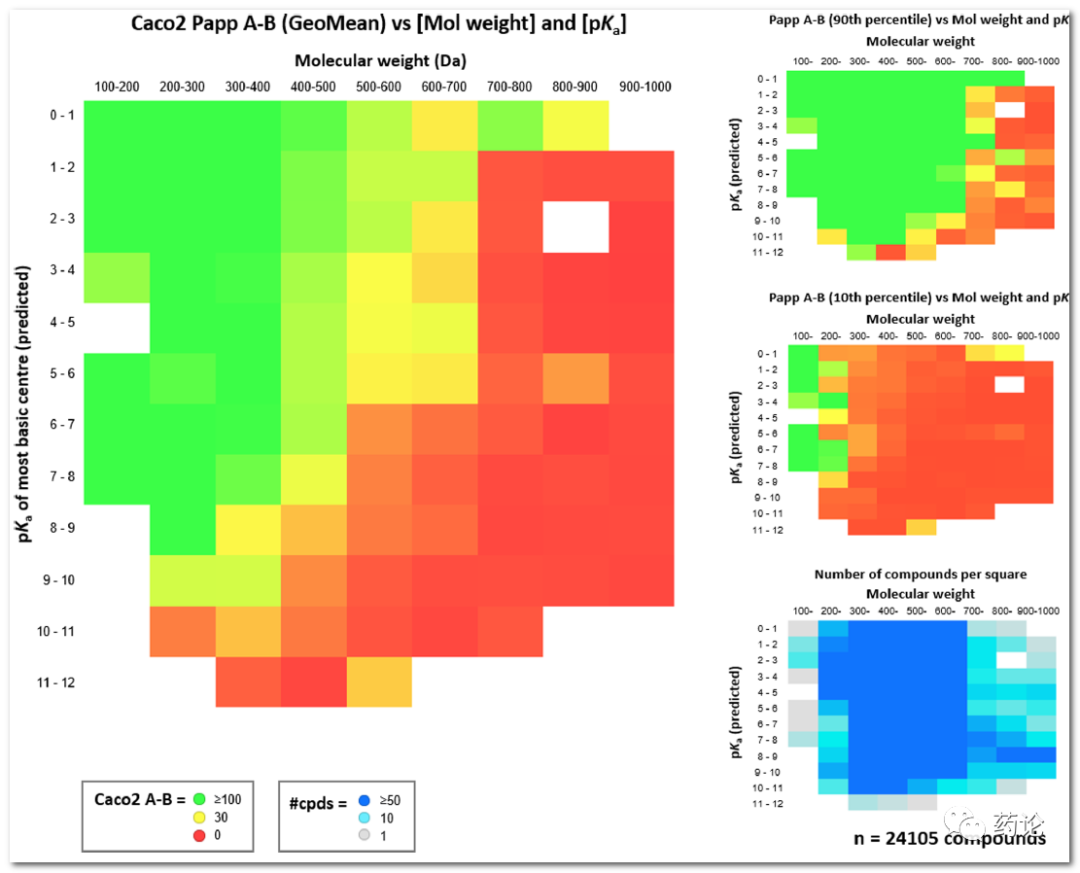
Figure 7. (Left) Heatmap plot of Caco2 Papp A-B (nm/s) versus molecular weight (Da) and the predicted pKa of the most basic center for 24,105compounds. (Source: Reference 1)
Figure 7 confirms the trend that Papp A-B permeability becomes more challenging as molecular weight increases. Investigating the interplay between molecular weight and pKa, the dataset can be subdivided into non-basic compounds, which are unprotonated at physiological pH 7.5 (i.e., the upper half of the heatmap, compounds with pKa ≤ 6), and basic compounds, which are expected to be partially or fully ionized at physiological pH (pKa > 6). This subdivision into basic and non-basic compounds reflects the profound impact of charge state on passive diffusion permeability, with neutral/uncharged molecules benefiting from higher affinity and diffusion into the lipid bilayer of cell membranes.
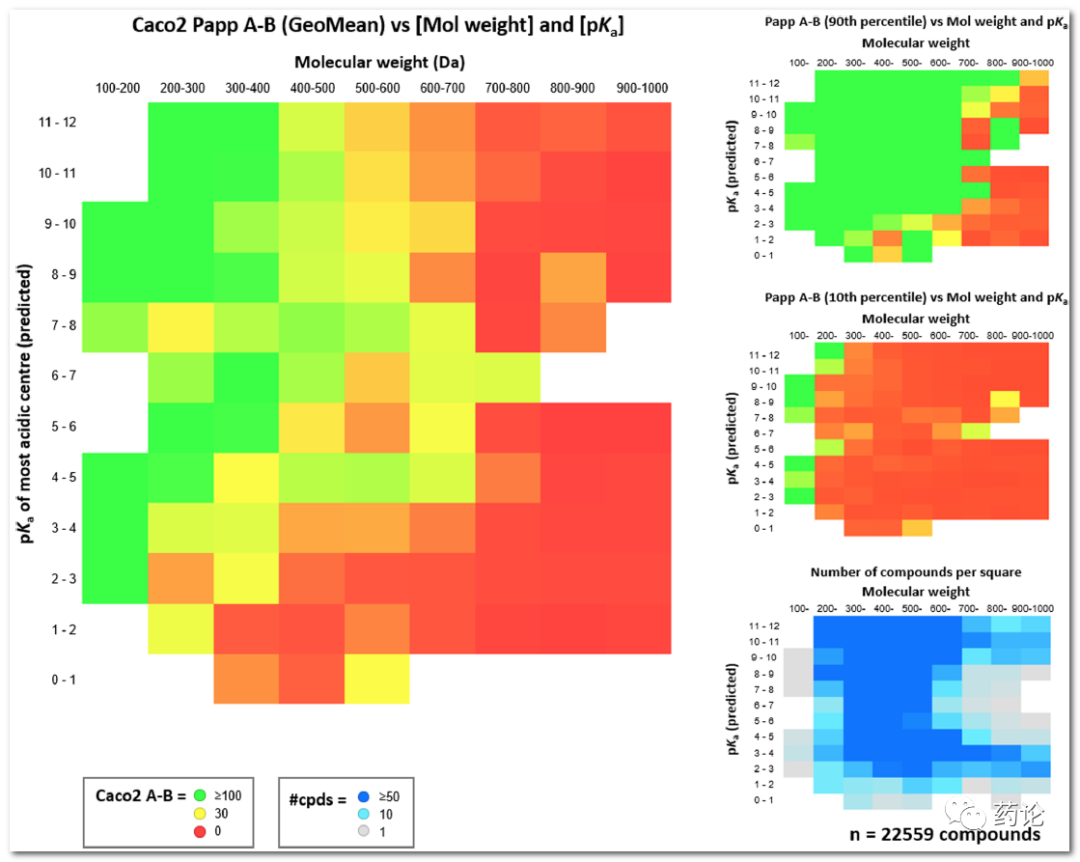 Fig. 8. Heatmap plot of Caco2 apparent permeability A-B (nm/s) versus molecular weight (Da) and the predicted pKa of the most acidic center for 22,559 compounds. (Source: Reference 1)
Using the data shown in Figures 7 and 8, the optimal molecular weight and pKa ranges for A-B permeability can be determined. These ranges depend on the ion category and can provide more detailed guidance by subdividing the data into strong acids, weak acids, weak bases, neutral compounds, and zwitterions. Zwitterions generally exhibit poor passive permeability, but highly permeable zwitterionic compounds are commonly found by limiting the pKa range of their ionization centers, even up to a molecular weight limit of 600. Researchers further observed that regardless of molecular weight, zwitterions containing strongly acidic or strongly basic centers typically exhibit poor A-B permeability.
✔Here, we introduce the abbreviations of several terms: %ABS: Absorption Percentage; TPSA: Topological Polar Surface Area; NROTB: Number of Rotatable Bonds; HBA: Number of Hydrogen Bond Acceptors; HBD: Number of Hydrogen Bond Donors.
Molecular weight is not the only reason for poor permeability. As compounds become larger, design teams introduce more molecular flexibility and polarity characteristics (hydrogen bond donors, logD-lowering functional groups, etc.) to improve drug-likeness and capture additional interactions with target molecules. These features not only hinder permeability through passive diffusion but may also lead to additional recognition elements for transporters, enhancing their efflux capability. Therefore, molecular weight can be considered a representative of multiple potential characteristics affecting permeability. To better understand the role of these factors, researchers at Bayer investigated the impact of further molecular properties on permeability. Figure 9 illustrates the relationships between HBD count, HBA count, TPSA, rotatable bonds, aromatic rings, fraction sp3, and Caco2 Papp A-B permeability and efflux. In almost every case, as the molecular characteristic values increase, the average Papp A-B permeability decreases significantly. This reflects the same effect observed with molecular weight — as compounds become larger and include more structural features, their permeability tends to decrease.
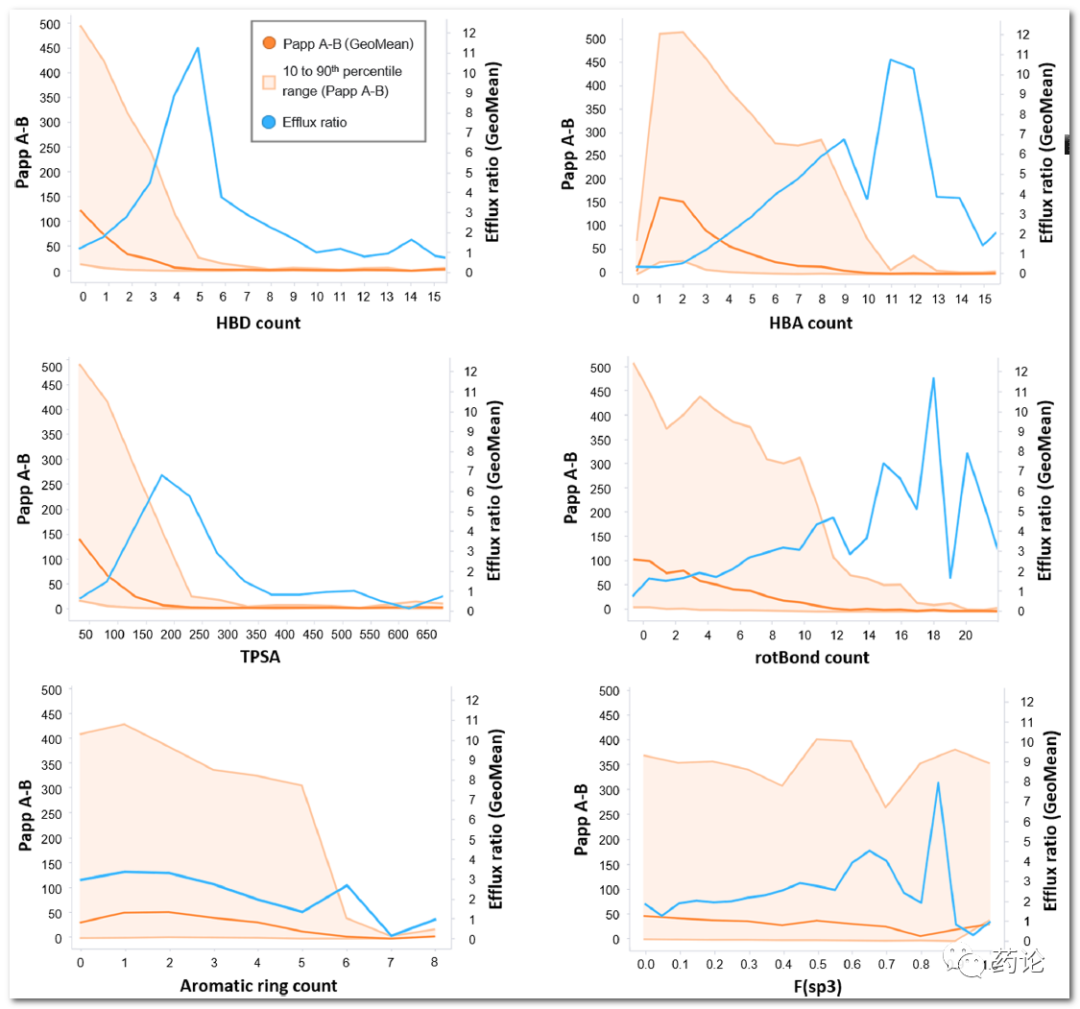
Fig. 9. Line plots of molecular properties (HBD, HBA, TPSA, rotatable bond count, aromatic ring count, and fraction sp3) versus Caco2 Papp A-B (nm/s), showing the geometric mean and the 10th to 90th percentile range in orange and the geometric mean of the Caco2 efflux ratio in blue. Values for TPSA are binned per interval of 50 Ų, and values for F(sp³) are binned per interval of 0.05. (Source: Reference 1)
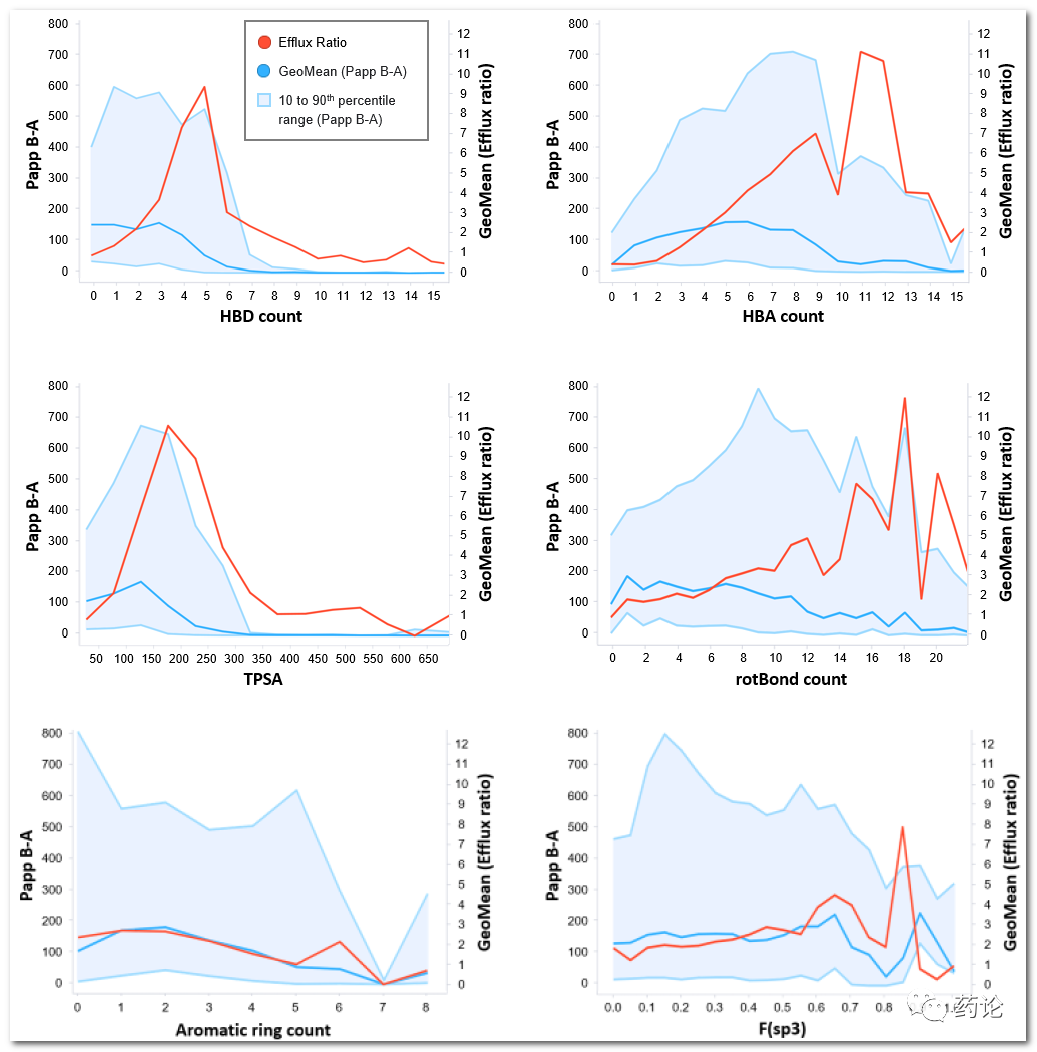
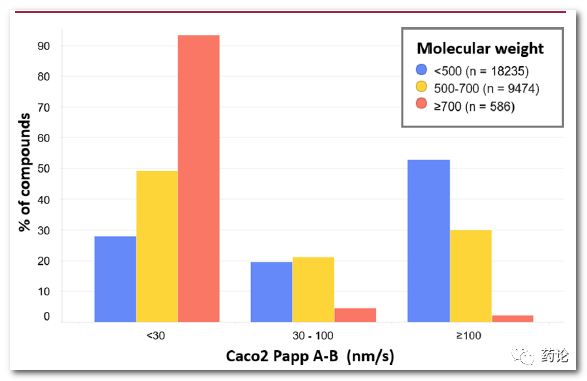 Figure 11. Bar chart showing the distribution of Caco2 apparent permeability A-B (nm/s) values for compounds with molecular weights in the Ro5-like (<500), eRo5-like (500-700), and bRo5-like (≥700) categories. (Reference 1)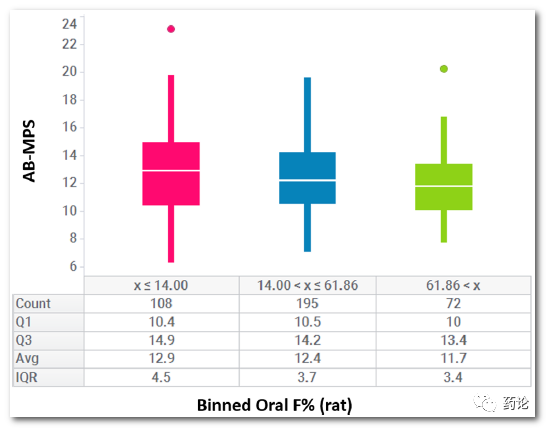
Figure 12. AB-MPS box plots for compounds with >1 Lipinski Ro5 violations and molecular weight >500, showing oral F% in the rat versus AB-MPS value, with compounds binned by quartile distribution of their bioavailability values. (Source: Reference 1)
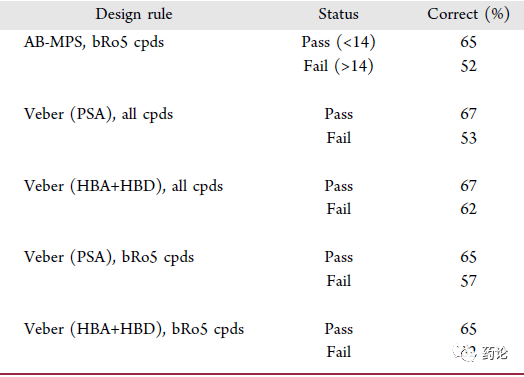
Figure 13. Percentage of compounds correctly classified as achieving acceptable bioavailability (F% > 20) using different bRo5 design guidelines (Reference 1)
Bayer researchers also considered two property-based design rules proposed by Veber et al., both of which can be used to help achieve oral bioavailability. What is notable about these rules is that they exclude molecular weight criteria, allowing them to be applied to both Ro5 and bRo5 chemical spaces. The first Veber rule suggests a critical value of PSA≤140Ų and a rotatable bond count ≤10. When applied to the entire dataset of Bayer pharmaceutical research (Ro5 + bRo5 compounds), these thresholds correctly predicted 67% and 53% of compounds with good/poor bioavailability, respectively. The second Veber rule limits the sum of HBD+HBA to ≤12, again combined with a rotatable bond count ≤10. These criteria performed slightly better, correctly predicting 67% and 62% of compounds with good/poor bioavailability. These rules also performed well when applied to the subset of bRo5 compounds defined using AbbVie standards. Empirically, all these methods appear to predict F% with reasonable accuracy, suggesting that bRo5 compounds can still be optimized by adjusting their molecular properties.
Finally, the original text summarizes the guidelines or principles for optimizing F% and permeability:
✔Oral bioavailability depends on permeability and metabolic stability. The impact of adjusting any of these parameters on F% can be roughly estimated by referring to the figure below.
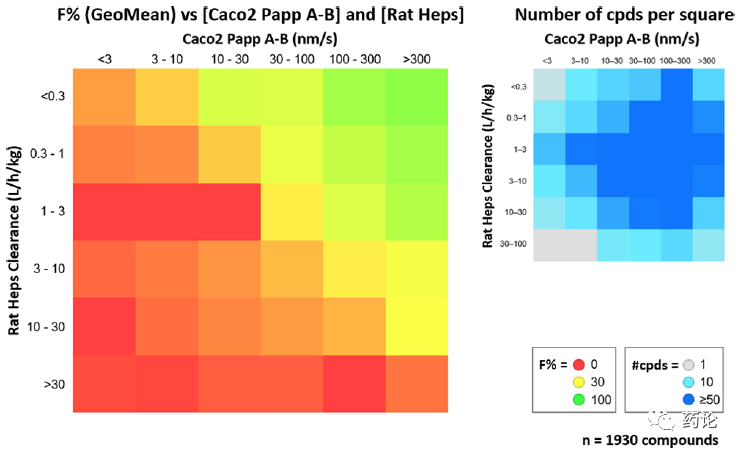
Figure 14. (Left) Heatmap of oral bioavailability (F%) in rats for 1930 compounds versus in vitro Caco2 apparent permeability (Papp) and in vitro metabolic stability in rats (A-B). (Right) The same plot colored according to the number of compounds within each data range. (Source: Reference 1)
✔These guidelines are most applicable to compounds with a molecular weight <700. Beyond this range, achieving passive permeability in Caco2 assays is often challenging. In such cases, design strategies like macrocyclization or forming intramolecular hydrogen bonds may be helpful. It should also be noted that Caco2 analysis (and other discovery assays) may not provide reliable data for such larger compounds. Other experiments, such as EPSA, might offer more useful information.
Disclaimer: The publication/reposting of this article is solely for the purpose of information dissemination, and does not represent the views of this official account or confirm the authenticity of its content. Any judgment made based on this content will be at your own risk.If there is any infringement, please inform us and we will delete it immediately!
Long press to follow this official account