Takeda Partners with AcuraStem in $580M Deal to Develop PIKFYVE-Targeting ASO Therapy for ALS
AcuraStem
Developer of New Drugs for the Treatment of Nervous System Diseases
Recently, Takeda announced a collaboration agreement with AcuraStem, a biotechnology company based in California, to develop and commercialize AcuraStem’s PIKFYVE-targeted therapies, including the innovative antisense oligonucleotide (ASO) — AS-202 for the treatment of amyotrophic lateral sclerosis (ALS).
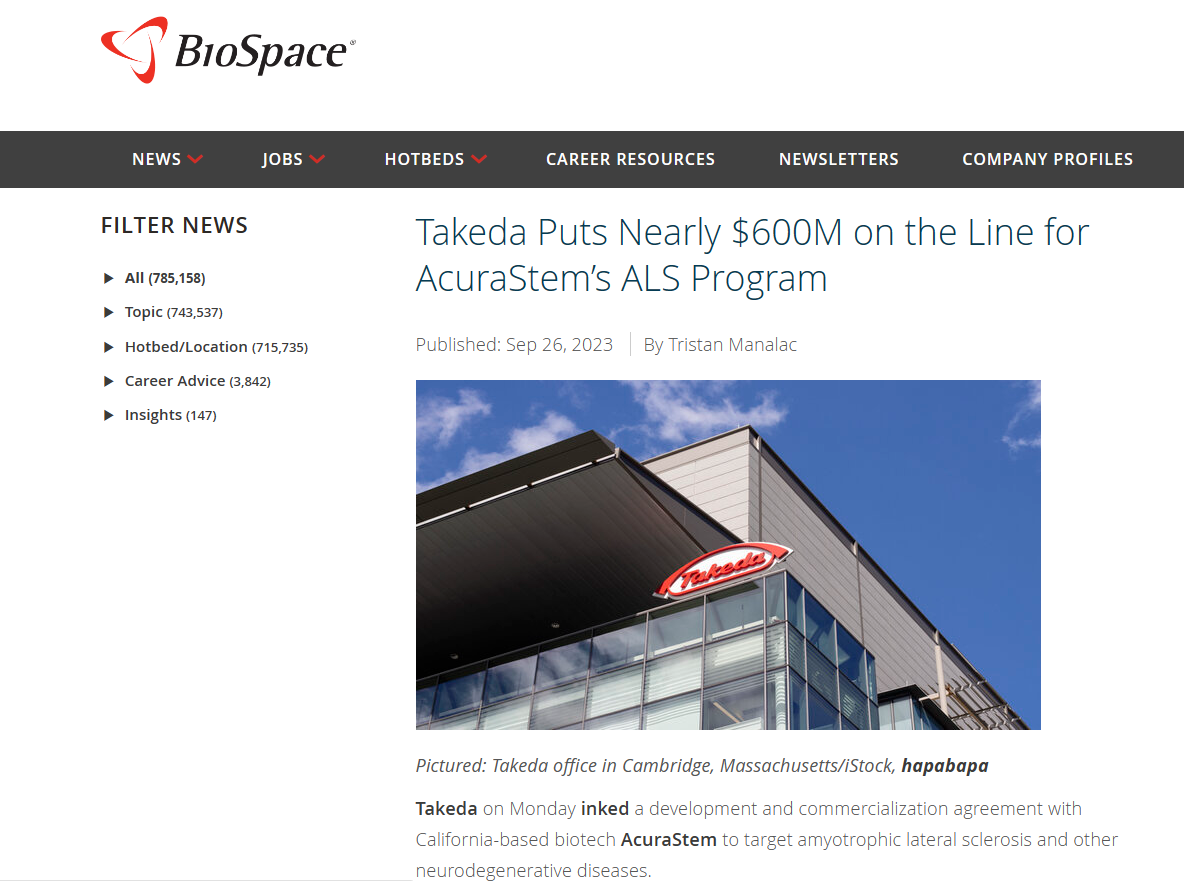
Image Source: Biospace
According to the terms of the agreement, Takeda has committed to paying up to approximately $580 million in upfront and milestone payments if the collaboration with both parties reaches all clinical, regulatory, and commercial milestones in the future. AcuraStem will also be eligible to receive tiered royalties from potential net sales of any products arising from the collaboration.
In return, Takeda will acquire AcuraStem's PIKFYVE program, whichIncluding AS-202, an investigational antisense oligonucleotide (ASO) and AcuraStem's most advanced candidate product.Takeda will obtain the global exclusive license for AS-202 and AcuraStem's other PIKFYVE-led assets.
According to the announcement, AcuraStem will be responsible for certain specific development phases to help advance the AS-202 IND feasibility study and characterize potential backup ASOs. Takeda will oversee all development activities, including clinical studies, regulatory work, and global commercialization.
AcuraStem, founded in 2016 by Alworth, Ichida, Dr. Paul August, and Dr. Qing Liu, is committed to continuously enhancing its patient-based iNeuroRx® technology platform, with the goal of discovering more effective treatments in the field of neurodegenerative indications and rapidly advancing its therapeutic programs, including the existing SYF2 and UNC13A projects for ALS and FTD.
According to the AcuraStem company website, PIKFYVE is a novel therapeutic target for ALS. The company's research shows,Using ASO therapy to suppress genes encoding kinases helps neurons eliminate toxic proteins and pathological aggregates, thereby protecting healthy neural function and preventing neurodegeneration.
This novel therapeutic mechanism was initially discovered in patient-derived disease models in the laboratory of AcuraStem co-founder Dr. Justin Ichida, exclusively licensed to AcuraStem by the USC Stevens Center for Innovation, and further developed on AcuraStem's iNeuroRx® disease modeling platform (Shi Y et al Nat Med 2018, Hung S-T et al Cell 2023). Researchers at AcuraStem further demonstrated that ASO-mediated PIKFYVE inhibition can restore motor function, reduce neurodegeneration, and improve survival in multiple in vivo models of ALS and FTD.
Sarah Sheikh, Head of Takeda's Neuroscience Therapeutic Area, said in a statement,AS-202 has a unique dual mechanism of action, which can not only address TDP-43 aggregation but also improve TDP-43 function, offering hope to meet the unmet needs of patients with debilitating neurological diseases.
Takeda's BD moves have been frequent this year, with transaction amounts often reaching hundreds of millions.
In July, a strategic discovery collaboration and licensing agreement was signed with F-star Therapeutics, a UK-based biotechnology company, to discover next-generation multispecific antibodies targeting cancer. Although the full financial details of the deal were not disclosed, the two companies stated that F-star could receive milestone rewards of up to $1 billion.
In April, French pharmaceutical company Innate Pharma SA announced that it had entered into an exclusive licensing agreement with Takeda. Under the agreement, Innate granted Takeda exclusive worldwide rights to use a set of selected Innate antibodies targeting undisclosed antigens for the development of antibody-drug conjugates (ADCs), primarily focusing on intraperitoneal diseases. According to the terms of the licensing agreement, Innate will receive a $5 million upfront payment and is eligible to receive up to $410 million in future development, regulatory, and commercial milestones if all milestones are achieved during the term of the agreement, as well as royalties on potential net sales of any commercial products arising from the license.
In January, Takeda reached another cooperation agreement with Hutchmed, which could be worth 1 billion US dollars, to develop the vascular endothelial growth factor inhibitor fruquintinib for colorectal cancer trials.
Source:
https://www.biospace.com/article/takeda-puts-nearly-600m-on-the-line-for-acurastem-s-als-program/
Editor: Pea Shooter
Disclaimer: This article is a compilation and does not represent the views of this platform. If there are any issues regarding the content, copyright, or other matters, please leave a message on this platform, and we will address it promptly.